
Why Leaves Are the Hardest Part of Pool Care
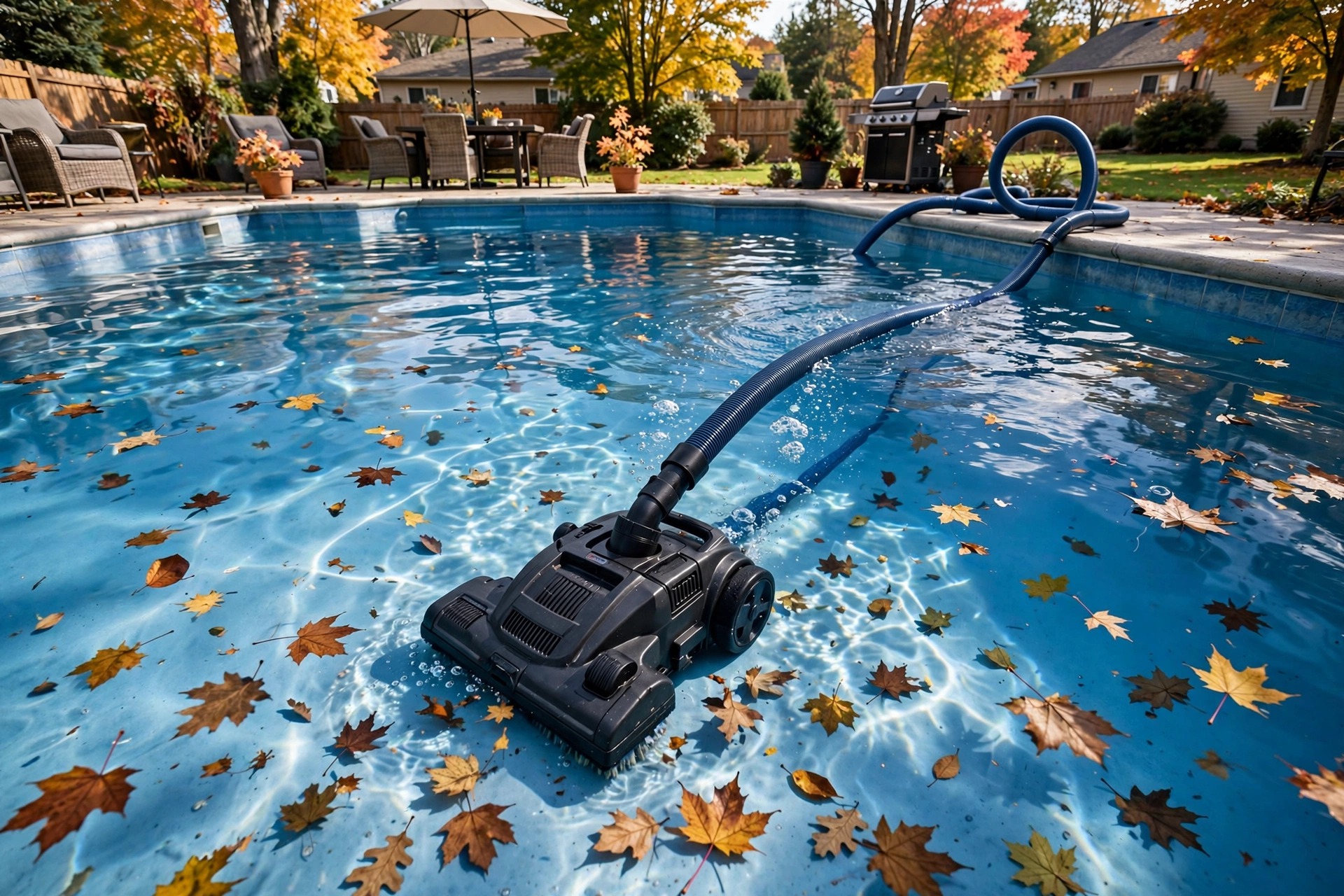
Leaves are the single hardest thing to remove from a pool. Dirt and sand fall to the floor and lie still. Leaves blow in every day during fall. They pile up in corners. They sink and turn into stains. They clog the skimmer basket. They fill the pump basket and choke the flow of water. A vacuum built only for fine dirt will stop dead when it meets a maple leaf. That is why the search for the best pool vacuum for leaves reviews is so common. Owners want a tool that can eat whole leaves, not just dust.
This guide reads like the best pool vacuum for leaves reviews pages you may have seen, but it stays simple. It covers the main types, what owners report, what to pay, and how to keep the machine alive. It is written for owners of above ground and inground pools who are tired of scooping leaves by hand.
Types of Pool Vacuums Built for Leaves: Best Pool Vacuum for Leaves Reviews
Not all pool cleaners are leaf cleaners. Most are built for dust and fine sand. A few are built for heavy leaf loads. The four main types are manual vacuum heads, suction side cleaners, pressure side cleaners, and robotic cleaners. Each one has strengths and limits.
Manual Vacuum Heads for Leaves
A manual head attaches to a telescoping pole and a vacuum hose. You connect the hose to the skimmer and push the head across the floor by hand. For leaves, the best heads have a wide body and large wheels. The wheels lift the head over clumps of leaves instead of pushing them ahead.
Manual vacuums are cheap. They cost less than fifty dollars in most pool supply stores. The work is slow, but you have full control.
The hose can clog, so check it when suction drops. Also empty the skimmer basket often, or the pump loses prime and the head goes dead.
Suction Side Cleaners
Suction side cleaners plug into the skimmer or a dedicated suction port. The pool pump pulls them along the floor at random. They are the most common automatic cleaners in America. Most retail pool equipment outlets stock several models.
For leaves, the simple disc style cleaners are weak. Their throats are narrow. They jam on the first big leaf. But a few suction models are built with large leaf canisters or wide mouths. These can handle a moderate leaf load. The canister catches the leaves before they reach the pump basket. You empty it when it fills.
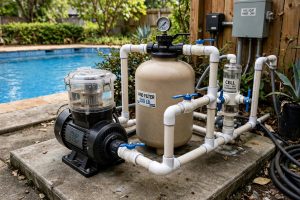
Suction cleaners cost between one hundred and five hundred dollars. They work best when the pool pump is strong and the filter is clean. If your pump is old, the cleaner may stall. Pairing the cleaner with a strong best pool pump for inground pools is the advice that shows up in owner reviews again and again.
Pressure Side Cleaners
Pressure side cleaners connect to the return line, usually through a booster pump. Water pressure drives them and fills an onboard bag. The bag sits on top of the unit and holds leaves, twigs, and even small acorns. These machines are built for leaves. Their throats are wide. Their bags are large.
Owner reviews give pressure side units the highest marks for heavy leaf seasons. A good unit can run for two hours and fill a large bag without stopping. Costs run from four hundred to eight hundred dollars, plus the booster pump if your pool lacks one.
The bag needs emptying after each run. If you let it sit full, the leaves rot and smell. Replacement bags cost twenty to forty dollars each at large home improvement retailers, where hoses and parts stay on the shelves for years.
Robotic Cleaners
Robotic cleaners run on their own motor and do not use the pool pump at all. They plug into a power supply on the deck. The best models for leaves have top-loading filter baskets with large capacity and wide intake ports. They scrub the floor and walls and trap debris inside the unit.
Robots are the easiest to use. You drop one in, press a button, and walk away. Top models cost from five hundred to over a thousand dollars. The leaf issue is the filter basket. Standard fine filters clog in minutes under a leaf rain. Owners learn to switch to a coarse leaf basket during fall. A coarse leaf basket holds whole leaves and lets water pass. Without it, the robot stops early and leaves the job half done.
Robots are quiet and use little power. They are a good pick for owners who want a hands-off week.
What the Best Pool Vacuum for Leaves Reviews Keep Saying
Across hundreds of owner reviews, the same points come up. First, throat width matters more than brand. A wide mouth swallows leaves. A narrow mouth jams. Second, debris capacity decides how long the unit runs. A small bag means the machine stops and waits for you. Third, owners prefer simple designs with few moving parts. Complex cleaners break more and cost more to fix.
Reviews also warn against one common mistake. People buy a cleaner rated for dust and expect it to handle leaves. It will not. The ratings for fine debris and for leaves are not the same. Look for words like leaf, wide mouth, large debris, and leaf canister in the reviews.
Another repeated point is the season. Reviews written in spring praise almost any cleaner. The pool is clean and the leaves are gone. Reviews written in fall tell the truth. Read the October and November reviews first. They show how the machine acts when the trees are shedding.
For upkeep basics that help any cleaner work better, guides like the pool care library explain how clean baskets and balanced water improve suction.
How to Choose the Right One
Start with your leaf load. Light load means a few leaves a day. Medium load means a daily dusting of leaves across the surface. Heavy load means handfuls of leaves on the floor every morning. For light loads, a suction cleaner with a leaf canister or a robot with a leaf basket is enough. For medium loads, step up to a pressure side unit or a wide-mouth robot. For heavy loads, most owners pick a pressure side cleaner and keep a manual head for corners.
Next, check your pool surface. Vinyl liners need soft brushes and wheels that do not scratch. Plaster and pebble finishes can take stiffer brushes. Most cleaners list the surfaces they suit. Do not run a stiff brush on vinyl.
Then check the plumbing. Suction cleaners need a working skimmer line or suction port. Pressure side cleaners need a return line and usually a booster pump. Robots need only a deck outlet, so they fit any pool. If you are unsure about your setup, ask at a local pool shop or read the pool equipment buying guides before you buy.
Size matters too. Small above ground pools do well with small robots or manual heads. An undersized cleaner in a big pool will run all day and still miss spots.
Finally, think about your own effort. Manual heads cost little but need your time. Robots cost much but need almost no time. Pressure side cleaners sit in the middle. Be honest about how much work you will do each week. The best machine is the one you will actually use.
Surface skimming helps every vacuum. A good best pool skimmer for inground pools catches leaves before they sink, which cuts the vacuum workload in half.
Cost and Price Range
Prices for leaf-capable vacuums fall into clear bands. Manual leaf heads with a hose and pole cost thirty to eighty dollars. They are the cheapest entry point. You pay with your time.
Suction side models with leaf canisters cost one hundred fifty to four hundred dollars. Add the price of replacement hoses and canisters over the years. Hoses crack in the sun and need replacing every two or three seasons.
Pressure side units cost four hundred to eight hundred dollars. A booster pump, if needed, adds three hundred to five hundred dollars. Power use rises with the booster. Budget for replacement bags at twenty to forty dollars each, one or two per season.
Robotic cleaners cost five hundred to twelve hundred dollars. Leaf baskets are often sold with the unit, but spare baskets cost extra. There is almost no repair cost in the first years. Power use is low, which is a plus.
Watch for deals in late summer. Stores clear stock before fall. Review roundups often compare prices across brands in one place.
Care and Upkeep
A leaf vacuum works hard. Keep it alive with simple care. Empty bags and baskets after every run. Full bags strain the motor or the pump. Rinse the bag with a hose. Leaves left in the bag turn to mush and clog the mesh.
Check the hose monthly. Look for cracks, splits, and weak spots. A cracked hose leaks air and kills suction. Store hoses out of the sun. Sunlight makes plastic brittle. Hang the hose on large hooks instead of coiling it tight. Tight coils pinch the hose and block flow.
Inspect wheels, tires, and brushes each season. Worn tires slip and the cleaner moves in circles. Replacement parts are cheap and easy to fit with a screwdriver.
Clean the pool filter often during leaf season. A dirty filter slows the whole system. Suction and pressure cleaners both depend on strong flow. Backwash or rinse the filter when the pressure gauge climbs. Keep the skimmer basket empty too. It is the first line of defense.
When the season ends, take the cleaner out of the pool. Rinse it, let it dry, and store it indoors or under cover. Water left inside freezes and cracks parts.
Safety Tips
Pool cleaners are safe tools, but a few rules matter. Always turn off the pump before you connect or disconnect a cleaner. A running pump can grab your hand at the suction port. This is a real risk, not a small one. The federal safety agency publishes pool safety guidance that every owner should read.
Never swim while an automatic cleaner runs. Hoses and cords can tangle around a swimmer. Keep children out of the pool during cleaning cycles.
For robots, keep the power supply away from the water. Place it on the deck, out of splash range. Do not use extension cords near the pool unless they are rated for outdoor use and plugged into a GFCI outlet.
Check cords and hoses for damage before each use. A cracked robot cord is a shock hazard. Replace it at once. Do not run a cleaner with a broken float or cracked body. It can sink and sit on the main drain, which strains the pump.
Chemicals matter too. Heavy leaf loads push the water out of balance. Leaves add tannins and acids. Test the water often in fall. Leaves that sit too long breed algae, and the cleanup can turn into a green pool. Guides that explain how to clean green pool water fast are worth reading before the problem starts.
Frequently Asked Questions
Can one vacuum handle both leaves and fine dirt? Yes, but with care. Wide-mouth leaf cleaners sometimes miss fine silt. The fix is simple. Use the leaf basket during fall and switch to the fine filter after the leaves stop. Some robots ship with both baskets. Swap them as the season changes.
How often should I run the vacuum in fall? Run it daily during heavy leaf drop. Two short runs beat one long run, and a short run keeps the bag from filling solid.
Do I still need to skim by hand? Yes. Skim the surface each morning. Surface leaves sink in a day or two. A skimmer net takes five minutes and saves the vacuum an hour of work. The vacuum handles what sinks. You handle what floats.
Will a leaf vacuum work in an above ground pool? Yes. Small robots and manual heads work well in above ground pools. Pressure side units work too if the plumbing allows. Check that the pool walls are round or oval and smooth, so the cleaner can climb. Some very small pools do best with a simple manual head.
Why does my suction cleaner keep getting stuck? Stuck cleaners usually mean weak flow or a clog. Check the skimmer basket, the pump basket, and the filter. Check the hose for air leaks. A single bad hose section can stall the whole unit. Also check for a low spot on the floor where leaves pile and jam the throat.
Is a booster pump required for pressure side cleaners? Most models need one. Some newer models run on the normal return flow. Read the box before you buy. If a booster is needed, have it wired by a licensed electrician. It is a real electrical job, not a plug-in toy.
A Short Final Word
The best pool vacuum for leaves reviews all point to the same truth. Buy for your leaf load, not for the brand name. A wide mouth and a big bag beat clever features. Read fall reviews, not spring reviews. Keep the system clean so the cleaner can do its job. Empty the bag every time. Store the unit indoors for winter. Do these simple things and the leaves become a chore, not a crisis.
References
Consumer Reports. (n.d.). Product reviews and ratings. https://www.consumerreports.org Leslie’s Pool Supplies. (n.d.). Pool supplies and equipment. https://www.lesliespool.com Lowe’s. (n.d.). Home improvement products. https://www.lowes.com Pool Warehouse. (n.d.). Pool equipment and supplies. https://www.poolwarehouse.com Swim University. (n.d.). Pool and hot tub care guides. https://www.swimuniversity.com The Home Depot. (n.d.). Home improvement products. https://www.homedepot.com The Spruce. (n.d.). Home and garden advice. https://www.thespruce.com This Old House. (n.d.). Home renovation guidance. https://www.thisoldhouse.com U.S. Consumer Product Safety Commission. (n.d.). Product safety information. https://www.cpsc.gov
Was this guide helpful?

About David Wilson
The My Garden US editorial team writes practical, in-depth home and garden guides for American homeowners — tested advice, no fluff.
You May Also Like
The Best Pool Vacuum for Automatic Cleaning: What to Know Before You Buy
March 10, 2026 0 views
Hot Tub Chemicals for Sensitive Skin: How to Soak Without the Itch
July 27, 2026 0 views
How to Balance Pool Water Chemistry: A Clear Guide for Pool Owners
June 3, 2026 0 views