
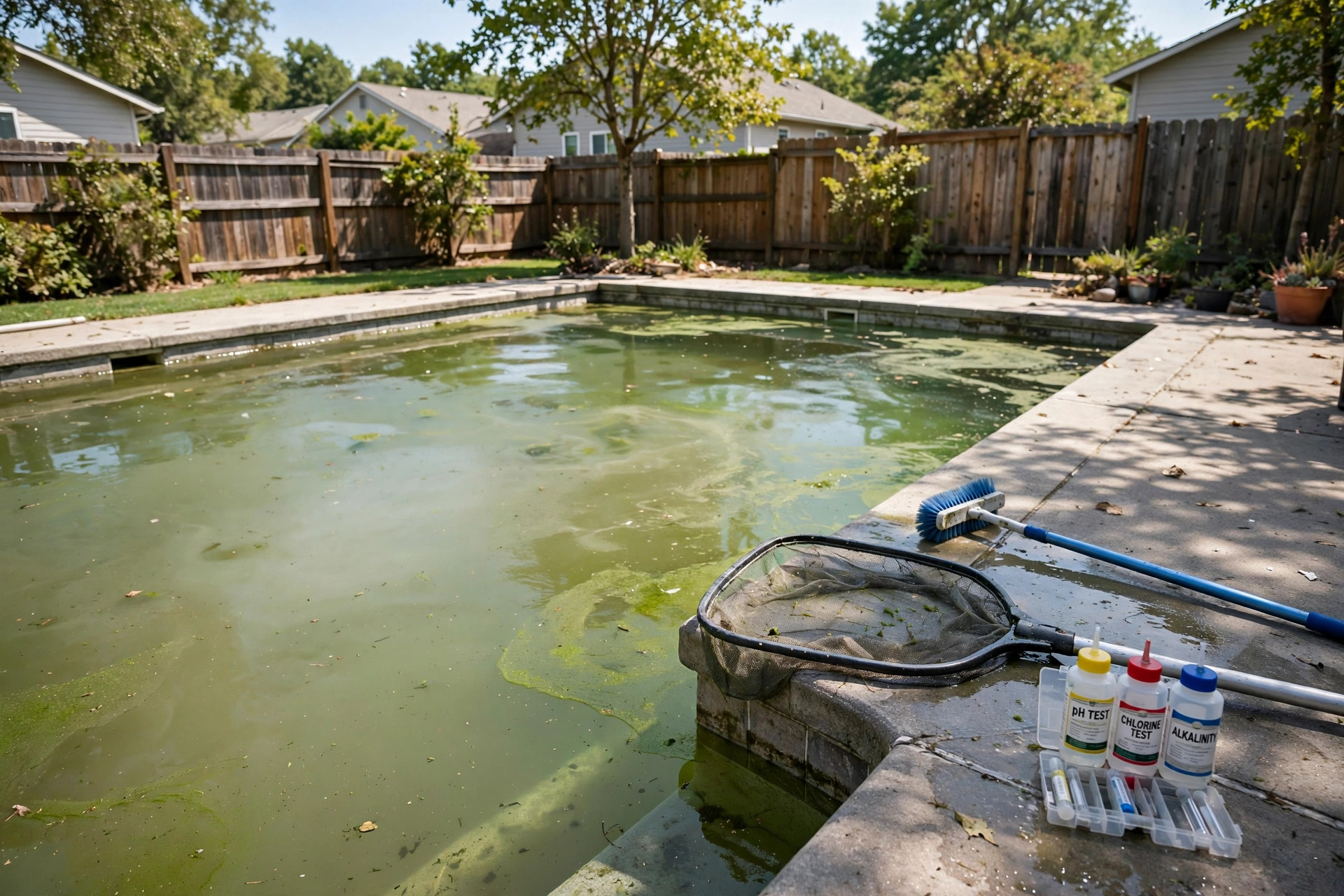

Green pool water is a common problem for pool owners. It looks bad. It feels slimy. And no one wants to swim in it. If you want to know how to clean green pool water fast, the good news is that you can do it in just a few days. You do not need to drain the pool. You do not need to hire a professional. You only need the right chemicals, a working filter, and a bit of effort.
The process is simple. You test the water. You fix the balance. You scrub the pool. You shock it with chlorine. Then you run the filter until the water turns clear. Most pools go from green to blue in three to five days. Very dark green pools may take a week. Follow the steps below and stay with it. The method works.
Why Green Water Happens
Green water means algae is growing in your pool. Algae is a tiny plant. It loves warm water and sunlight. It grows fast when chlorine levels fall too low. A storm can wash dirt into the pool and feed the algae. A broken pump can leave water still for days. A full leaf basket can choke off the flow.
Algae is not just ugly. It can make pool surfaces slippery and unsafe. It can clog filters and raise chemical use. In some cases, green water can hold bacteria that cause skin irritation. That is why fast action matters. The sooner you treat the water, the less chlorine you need and the quicker the cleanup goes.
Algae growth also raises long-term costs. A green pool uses more chemicals and wears out filter parts faster. Keeping chlorine at the right level all season is the cheapest plan. Many pool owners learn pool chemistry basics at the start of summer to avoid this trouble.
What You Need Before You Start: How to Clean Green Pool Water Fast
Gather your supplies before you begin. You will save time and avoid extra trips to the store.
First, get a pool water test kit. A liquid drop kit works best. Test strips are fine for quick checks. You need to measure free chlorine, pH, and total alkalinity. A good test kit gives you the numbers you need to treat the water right.
Second, buy pool shock. Shock is a strong dose of chlorine. Calcium hypochlorite shock is common and cheap. It comes in bags or buckets. You can find pool shock at a home improvement store or a pool supply shop. Buy enough for your pool size. A green pool often needs two or three doses.
Third, get algaecide if you want extra help. Algaecide kills algae and stops new growth. It is not required, but it can speed up the job.
Fourth, check your filter. Backwash a sand or DE filter. Clean a cartridge filter. A dirty filter cannot clear green water. If your pump is weak, your filter may need new parts. You can shop pool filters and pumps when old gear no longer does the job.
Fifth, get a pool brush and a vacuum. Brush the walls and floor before you shock. Vacuum the dead algae after. A working skimmer basket also helps catch leaves and debris during the cleanup.
The Step-by-Step Method
Follow these steps in order. Do not skip the testing and brushing steps. They make the shock work better.
Step 1: Test the Water
Test the water with your kit. Write down the results. You need to know the pH and alkalinity before you add shock. Shock works best when the pH sits between 7.2 and 7.6. If the pH is too high, the chlorine will not work well. If it is too low, the water can sting eyes and skin.
Step 2: Balance pH and Alkalinity
Adjust the alkalinity first. It should sit between 80 and 120 parts per million. Then adjust the pH to the 7.2 to 7.6 range. Use pH increaser or pH decreaser as needed. Wait a few hours between doses. Test again. Balanced water lets the shock kill algae fast.
Step 3: Remove Debris and Brush
Use a skimmer net to scoop out leaves and bugs. Empty the pump basket. Then brush the pool walls, floor, steps, and ladders. Brush with firm strokes. Algae clings to surfaces. Brushing breaks it loose so the chlorine can reach it. This step takes real effort, but it shortens the whole job.
Step 4: Shock the Pool
Add shock in the evening. Sunlight eats up chlorine, so evening doses work best. For light green water, use a normal shock dose. For dark green water, use a double or triple dose. Pour the shock around the pool edge. Keep the pump running. The water may turn cloudy or gray. That is a good sign. It means the chlorine is killing the algae.
Test the chlorine level the next morning. Keep it high until the water clears. You may need to shock again on day two or three. Read DIY pool repair guides for help with stubborn cases and odd filter problems.
Step 5: Run the Filter Nonstop
Run the pump and filter 24 hours a day until the water is clear. The filter traps dead algae. Backwash a sand or DE filter when the pressure gauge rises. Clean a cartridge filter once a day. Check product ratings and reviews if you plan to buy a new filter or pump.
Step 6: Vacuum the Pool Floor
After a day or two, dead algae will settle on the floor. Vacuum it out. Vacuum to waste if your filter allows it. This sends the dirty water out of the pool instead of through the filter. If you cannot vacuum to waste, vacuum slowly so the filter can catch the fine dust.
Step 7: Test Again and Fine-Tune
When the water turns blue but still looks cloudy, test again. Adjust the pH and alkalinity if needed. Add a clarifier to help the filter catch tiny particles. Keep the pump running. Clear water usually arrives within a day of the blue stage. Pool cleaning guides offer more detail on each of these steps.
Types of Shock and Sanitizers
Not all shock products are the same. Pick the right one for your pool.
Calcium hypochlorite is the most common shock. It is strong and cheap. It raises calcium levels, which can cloud water in pools that already have hard water. It works well for most green pool cleanups.
Sodium dichlor shock dissolves fast. It adds cyanuric acid, which shields chlorine from sunlight. Too much cyanuric acid can lock up chlorine and slow cleaning. Use it in small doses.
Liquid chlorine is simple to use. It pours straight into the pool. It adds no extra calcium or cyanuric acid. It costs more per dose but works fast.
Non-chlorine shock uses potassium monopersulfate. It clears cloudy water and boosts chlorine, but it does not kill algae on its own. It is not the best pick for green water.
After the cleanup, keep chlorine in the pool every day. A salt system, a floating chlorinator, or daily liquid chlorine all work. The goal is steady protection so algae never returns.
Cost and Price
Cleaning green pool water is not expensive. Most owners spend between 50 and 150 dollars on chemicals. The exact cost depends on pool size and how green the water is.
A basic test kit costs 15 to 30 dollars. A bucket of shock costs 30 to 70 dollars. Algaecide adds 15 to 25 dollars. A clarifier costs about 10 to 15 dollars. If you already own these supplies, the job may cost almost nothing.
Filter parts can add cost. A new cartridge runs 30 to 80 dollars. A pump motor costs far more. Regular upkeep keeps these costs low. Running the pump every day and keeping chlorine steady is cheaper than fixing a green pool twice a summer.
Prevention is the real money saver. A clean pool uses fewer chemicals all season. Test the water twice a week. Shock once a week during heavy use. Keep the filter clean. These small habits stop algae before it starts.
Care and Upkeep After the Water Clears
Once the water is clear, keep it that way. Good habits are simple.
Test the water two or three times a week. Keep free chlorine between 1 and 3 parts per million. Keep the pH between 7.2 and 7.6. Brush the pool once a week, even when the water looks fine.
Run the pump at least eight hours a day. Longer is better in hot weather. Clean the skimmer basket often. Leaves and bugs feed algae, so scoop them out daily if trees hang over the pool.
Shock the pool once a week during swim season. Shock after heavy rain or a pool party. Rain washes dirt and algae food into the water. Many swimmers burn through chlorine fast.
If your pool has a fence, check it too. A safe pool fence you install yourself keeps kids and pets away from the water while chemicals work. Water that is being treated is not safe for swimming until chlorine drops back to normal levels.
Safety
Pool chemicals are strong. Handle them with care.
Store chemicals in a cool, dry place away from kids and pets. Keep them in their original containers with labels on. Never mix different chemicals together. Mixing can cause fire or release toxic gas.
Wear gloves and eye protection when you handle shock. Do not breathe the dust. Wash your hands after use. Add chemicals to water, never water to chemicals. Read every label before you use a product.
Do not swim until the job is done. Wait until the water is clear and chlorine reads between 1 and 3 parts per million. This can take a day after the last shock dose.
Check pool drains and suction fittings for safety. Broken or missing drain covers can trap swimmers. The pool drain and suction safety page from the federal safety agency explains what to look for.
For safe chemical storage and disposal rules, see the safe handling of pool chemicals guidance from the environmental agency.
Frequently Asked Questions
How long does it take to clean green pool water?
Most pools clear in three to five days. Light green water may clear in two days. Dark swamp-green water can take a full week. The key is steady chlorine, brushing, and nonstop filtering.
Can I swim in a green pool?
No. Green water can hold bacteria and algae that irritate skin and eyes. Wait until the water is clear and the chlorine level is normal before anyone swims.
Do I need to drain a green pool?
No. Draining is rarely needed. Shock and filtering will clear the water. Draining can damage some pool liners and wastes thousands of gallons of water. Only drain if a professional tells you to.
Why is my pool still green after shocking?
The chlorine level may have dropped too fast. The pH may be too high. Or the filter may be dirty. Test the water, fix the pH, shock again, and clean the filter. Keep the pump running around the clock.
Will algaecide alone fix green water?
No. Algaecide helps, but chlorine does the real work. Use shock first. Add algaecide as a helper, not as the main treatment.
Can a hot tub turn green too?
Yes. Hot tubs can grow algae when sanitizer levels drop. Hot tub water care and spa maintenance guides from spa makers cover the right steps for small warm-water systems. If you are shopping for one, hot tub reviews for seniors can help compare models.
A Final Word
Knowing how to clean green pool water fast puts you in control. Test the water. Balance it. Brush well. Shock hard. Filter nonstop. The green will give way to blue. Stay on a simple weekly routine after that, and you will not face this problem again. A clear pool is a safe pool, and a safe pool is ready for summer.
References
Bullfrog Spas. (n.d.). Hot tubs and spas. https://www.bullfrogspas.com Consumer Reports. (n.d.). Product reviews and ratings. https://www.consumerreports.org Family Handyman. (n.d.). DIY home repair and maintenance. https://www.familyhandyman.com Hot Spring Spas. (n.d.). Hot tubs and spas. https://www.hotspring.com Leslie’s Pool Supplies. (n.d.). Pool supplies and equipment. https://www.lesliespool.com Pool Warehouse. (n.d.). Pool equipment and supplies. https://www.poolwarehouse.com Swim University. (n.d.). Pool and hot tub care guides. https://www.swimuniversity.com The Home Depot. (n.d.). Home improvement products. https://www.homedepot.com The Spruce. (n.d.). Home and garden advice. https://www.thespruce.com U.S. Consumer Product Safety Commission. (n.d.). Product safety information. https://www.cpsc.gov U.S. Environmental Protection Agency. (n.d.). Protecting human health and the environment. https://www.epa.gov
Was this guide helpful?

About Lisa Anderson
The My Garden US editorial team writes practical, in-depth home and garden guides for American homeowners — tested advice, no fluff.
You May Also Like
The Best Hot Tub for Muscle Recovery: A Plain Guide
June 3, 2026 0 views
How to Install a Salt Water Chlorinator: A Step by Step Guide
April 7, 2026 0 views
Salt Water Pool Filter Cleaning Guide
July 17, 2026 0 views