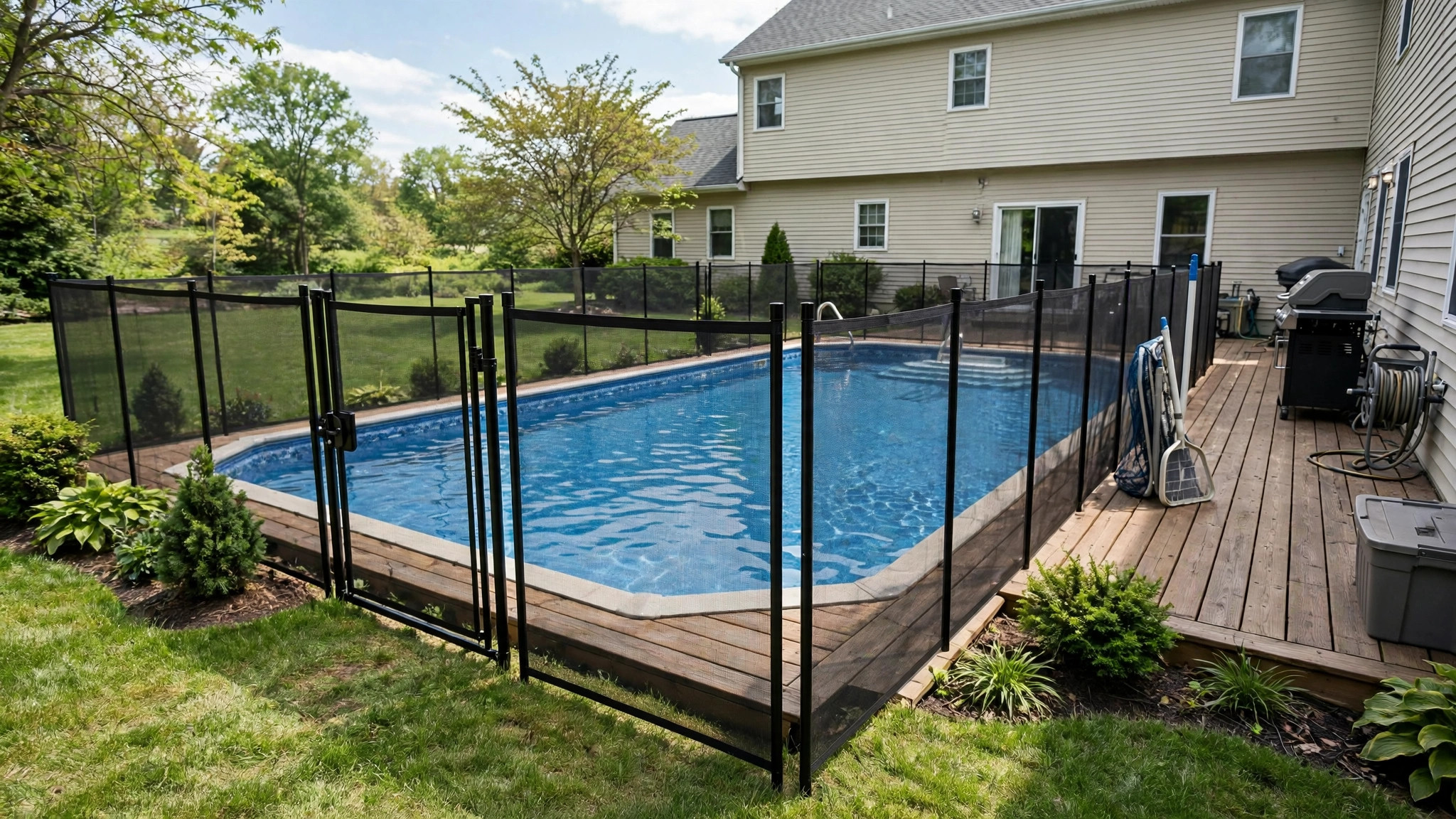
A pool fence is one of the most useful things a pool owner can add. It keeps small children and pets away from the water when no adult is near. Many homeowners hire a company to put one in. But with care and patience, you can learn how to install pool fence yourself and do a clean, safe job. This guide explains the whole process in plain words, from the first tape measure reading to the last latch check.
Why a Pool Fence Matters
Drowning is a quiet danger. A child can slip into a pool in seconds and make no sound at all. The United States Consumer Product Safety Commission has long urged pool owners to put barriers between children and water. A fence that stands at least four feet tall, with a self-closing and self-latching gate, is the first line of defense. (cpsc.gov) Even if you have an alarm system, a fence gives you a layer that works around the clock without batteries.
Many states and towns require a fence by law. Some ask for a permit before you dig. A few have exact rules about the space between fence bars and the height of the gate latch. Before you buy a single post, call your local building office or check its rules online. A fence that meets the local code keeps you out of trouble and keeps your family safer. It can also lower the risk of an insurance claim problem if a guest is ever hurt.
What to Look for Before You Buy: How to Install Pool Fence Yourself
Not all pool fences are alike. The best choice for your yard depends on your pool, your budget, and the look you want. Three main kinds are sold to homeowners who want to do the work on their own.
Mesh pool fences are the most common choice for self-installation. They come as rolls of strong woven mesh with poles that drop into holes drilled in the deck. You can take them down in the off season. They are light, fairly low in cost, and easy to handle.
Aluminum fences look more like the classic yard fence. They are sold as panels with posts. They last a long time and need little care. But they are heavier, and setting the posts in concrete takes more muscle.
Vinyl or wood fences give privacy along with safety. They cost more and need a solid post footing. Most do-it-yourself owners who ask how to install pool fence yourself choose mesh or aluminum because the kits are made for home installation.
Measure your pool area before you shop. Walk the full line where the fence will go. Note slopes, steps, plant beds, and sprinkler heads. Most kits are sold by the total length of fence they cover. Buy a little more than you think you need so you can cut panels to fit corners and curves.
Tools and Materials You Will Need
Gather everything before you start. A good list is:
– Pool fence kit (mesh with poles, or panels with posts) – Tape measure and marking chalk or spray paint – Drill with a masonry bit for deck holes, or a post-hole digger for soil – Core drill rental if the fence goes into concrete – Level, both a long one and a small post level – Rubber mallet and socket wrench set – Bags of fast-setting concrete mix, if posts need footings – Safety glasses, work gloves, and ear protection – A helper, at least for lifting panels and checking lines
Buy the hardware the maker suggests. Using the wrong bolts or anchors can void the warranty. Retailers such as Home Depot carry fence kits, rental core drills, and concrete in one trip, which saves time on a big weekend project.
How to Install Pool Fence Yourself: The Main Steps
Take the job in small pieces. Most yards can be finished in one to two days.
Step 1: Plan the layout
Draw a rough plan on paper. Mark where the fence line runs, where the gate goes, and where each section starts and stops. The gate should sit where it is easy to reach but hard for a small child to open alone. Keep the fence at least a few feet from the pool edge so no one can climb from the pool wall over the fence.
Use chalk or spray paint to mark the fence line on the deck. Mark each pole or post position. Keep the spacing even, as the maker directs. Double-check the gate opening width. A gate that is one inch too narrow will cause hours of rework.
Step 2: Check the ground and the code
Call your local utility marking service before you dig. Buried wires and gas lines are a real danger. If your town asks for a permit, have it in hand. If the fence will go into a concrete deck, rent the core drill the kit calls for. A dull or wrong-size bit will crack the deck.
Step 3: Set the first posts or drill the first holes
For a mesh fence, drill each hole to the depth and width the instructions give. Clean out the dust. Drop a pole in and check that it stands straight with the level. For an aluminum panel fence, dig each post hole, set the post, and pour concrete around it. Check the post for plumb before the concrete firms up.
Work from the gate outward in both directions. The gate is the hardest part to fit, so it is wise to set it first. When the gate frame is true and level, the rest of the sections follow it naturally.
Step 4: Hang the panels or run the mesh
For panel fences, attach each panel to the posts with the brackets the maker sent. Keep a small gap under the bottom rail so the panel does not rub the deck. Tighten bolts a little at a time so the panel stays square.
For mesh fences, lace the mesh through the poles or hook it as directed. Pull it tight but not so tight that the poles lean. Walk the line often and sight down the fence. A straight line is the sign of good work.
Step 5: Install the gate hardware
The gate is the heart of the whole system. It must close by itself from any open position. It must latch by itself without a hand pushing it down. Most codes want the latch at least 54 inches above the ground, out of the reach of small children. Test the gate twenty times. Push it, swing it, bump it. If it fails to close or latch even once, adjust the hinges until it passes every time.
Pool supply stores such as Leslie’s Pool Supplies and Pool Warehouse sell replacement latches and gate hardware if a part breaks years later. Keep the model number of your kit in a drawer so you can order parts fast.
Step 6: Walk the final check
Walk the full fence slowly. Look for gaps under the bottom wider than four inches. Shake each pole. Check that every latch clicks. Hose down the fence and the deck. Stand back and look at the line. If one section sags, fix it now while the tools are still out.
Cost and Price
A do-it-yourself mesh fence for a standard pool usually runs a few hundred to a few thousand dollars for materials, depending on length and height. Aluminum panel kits cost more. A professional installation can easily double the material cost, which is why so many owners ask how to install pool fence yourself. Tool rentals, concrete, and permit fees add a few hundred more.
Compare the cost of the fence with the cost of an accident. A fence is one of the cheapest forms of protection you can buy for a pool. Many owners pair the fence with a pool alarm for child safety, which adds a second layer for a small extra cost.
If your project includes a new above ground pool, it helps to read a full above ground pool installation cost guide before you set your budget. And if you use a ladder with an above ground pool, check our notes on the best pool ladder for above ground pools so the ladder side is as safe as the fence side.
Care and Upkeep
A fence needs little care, but it needs regular checks. Twice a year, walk the line and look at every pole, bolt, and latch. Tighten what is loose. Oil hinges with a light spray so the gate swings free. For mesh fences, wash the mesh with mild soap and a soft brush. Sun and pool chemicals wear the fibers over time, so plan to replace mesh sections when they look thin or faded.
Keep plants trimmed away from the fence. A bush can give a child a step over the top. Keep lawn chairs, tables, and pool toys away from the fence line as well. Anything that can be climbed can defeat the fence. If you need spare parts or cleaning supplies, online pool guides such as Swim University offer plain-spoken maintenance advice for owners who do their own work.
Safety Rules to Remember
The fence is only one part of pool safety. Keep these rules:
– Never leave a child alone near water, even for a moment. – Keep the gate closed and latched at all times. – Teach children to swim early, but never trust swim skill alone. – Keep a phone and rescue equipment by the pool. – Learn basic rescue and CPR.
A fence that stands four feet or higher, with bars close enough that a child cannot slip through, and a gate that latches every time, meets the common standard. The Consumer Product Safety Commission publishes pool safety guidance that every owner should read. (cpsc.gov)
Spa owners should know that many of these same ideas apply to hot tubs. A locking cover, a fence, and a watchful adult are the basics. Sites like Hot Spring and Bullfrog Spas explain cover locks and safety steps for spa owners in plain terms.
FAQ
How long does it take to install a pool fence yourself? Most mesh fence jobs take one full day for a standard pool. Aluminum panel fences can take two days because the concrete footings need time to set. Plan the layout the night before to save hours.
Do I need a permit to put up a pool fence? Many towns require one. Some also require a final inspection. Call your local building office before you buy the kit. Failing to get a permit can bring a fine and force you to move the fence.
How tall must the fence be? Four feet is the common minimum in most codes, and many makers suggest five feet for extra safety. Check your local rules, since some towns ask for more height near certain lot lines.
Can I install a mesh fence on a curved pool? Yes. Mesh fences follow curves well because the poles set into individual holes. Mark the curve in small steps and keep the spacing even. The mesh will bend to follow the line.
What if my deck is concrete? Rent a core drill and use a masonry bit of the right size. Drill to the depth the maker calls for, clean the dust, and set the pole with the anchor sleeve. The Spruce offers beginner-friendly home project guides that show deck drilling in simple steps. (thespruce.com)
Should I still get a pool alarm if I have a fence? Yes, many safety groups suggest both. An alarm sounds when something breaks the water surface or opens the gate. It is a cheap extra layer. Read our guide to the best pool alarm for child safety to compare types.
A Short Final Word
Learning how to install pool fence yourself is a task any careful homeowner can finish. Measure twice, set the gate first, and test the latch until it works every time. The fence will not watch your pool for you, but it will buy the quiet minutes that matter most. Take your time, follow the kit directions, and you will have a fence that looks clean and keeps your family safer for years.
References
Bullfrog Spas. (n.d.). Hot tubs and spas. https://www.bullfrogspas.com Hot Spring Spas. (n.d.). Hot tubs and spas. https://www.hotspring.com Leslie’s Pool Supplies. (n.d.). Pool supplies and equipment. https://www.lesliespool.com Pool Warehouse. (n.d.). Pool equipment and supplies. https://www.poolwarehouse.com Swim University. (n.d.). Pool and hot tub care guides. https://www.swimuniversity.com The Home Depot. (n.d.). Home improvement products. https://www.homedepot.com The Spruce. (n.d.). Home and garden advice. https://www.thespruce.com U.S. Consumer Product Safety Commission. (n.d.). Product safety information. https://www.cpsc.gov
Was this guide helpful?

About Jennifer Lee
The My Garden US editorial team writes practical, in-depth home and garden guides for American homeowners — tested advice, no fluff.