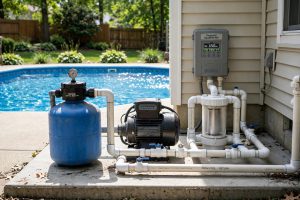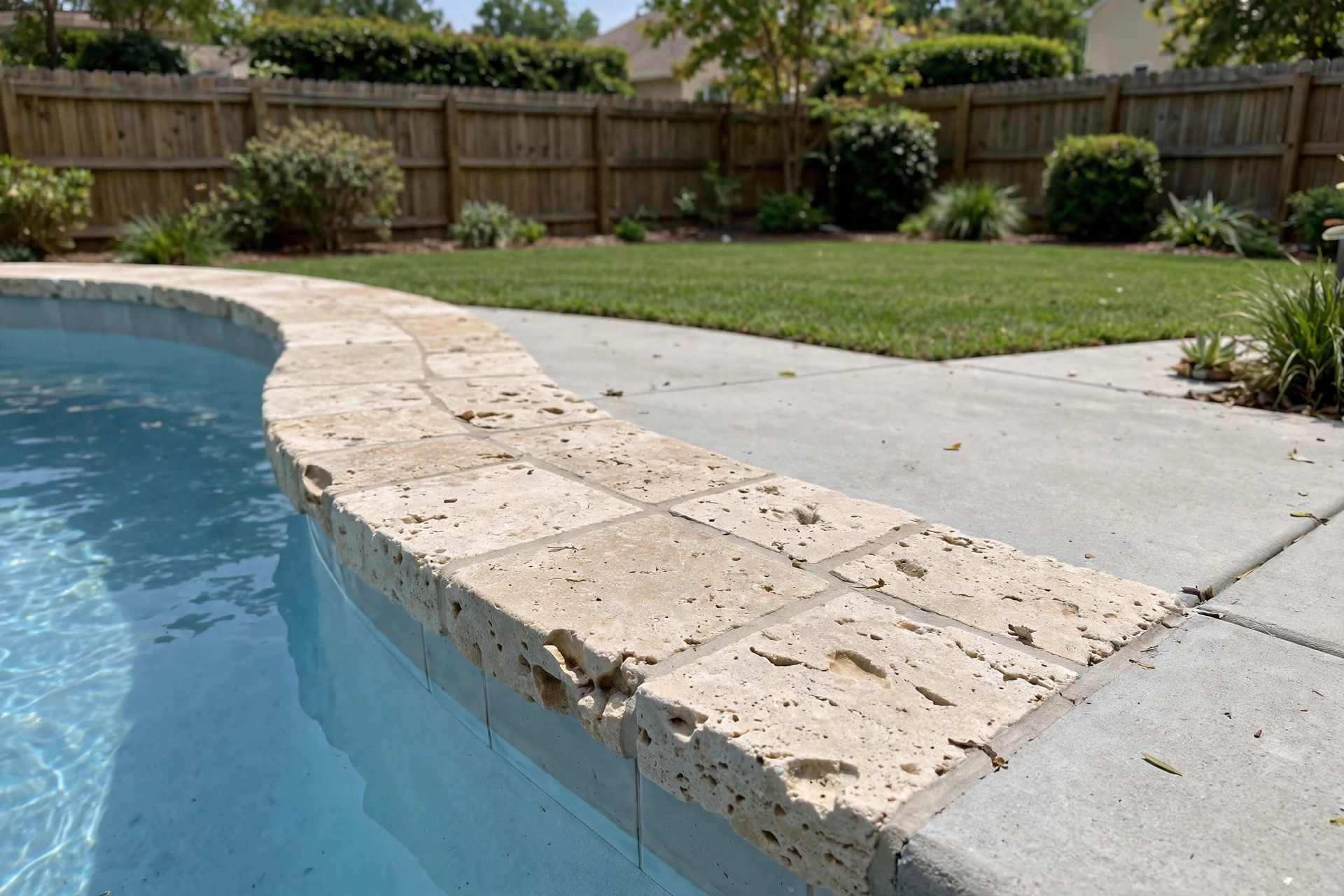

A pool coping replacement cost estimate tells you what it should take, in dollars, to replace the cap around the edge of your pool. Coping is the strip of stone, concrete, or other material that sits on top of the pool wall. It covers the joint where the pool shell meets the deck. If the coping is cracked, loose, or worn, it is time to think about replacement. Before you call a contractor, it helps to know the parts of the job, the choices of material, and the usual price ranges. This guide explains all of it in plain terms.
Why Pool Coping Matters
Coping does more work than most pool owners know. It protects the top of the pool wall from water and weather. It gives swimmers a safe edge to grip. It keeps deck water from running into the pool. And it sets the look of the whole pool area.
When coping fails, water can get behind the pool wall. In cold states, that water freezes and thaws. The freeze-thaw cycle can crack tile and push stones loose. A loose stone on the pool edge is a trip and cut hazard. Replacing bad coping is not just about looks. It is about safety and about protecting the pool shell, which is far more costly to fix.
Many owners replace coping at the same time as other work. A pool liner replacement cost estimate is often prepared in the same visit, since both jobs touch the top edge of the pool. Planning them together can save on labor and mess.
Signs Your Coping Needs Replacement: Pool Coping Replacement Cost Estimate
Walk the edge of your pool and look closely. Some wear is normal after twenty or more years. Some damage means action is needed soon.
Common signs include cracks that run through stones or concrete, coping stones that rock or lift when you press them, and mortar joints that have crumbled away. White crusty stains, called efflorescence, point to water moving through the masonry. Sharp edges on broken stone are a clear danger to bare feet. If deck water now pools at the edge instead of draining away, the coping line may have settled.
A good rule is simple. If more than a few pieces are damaged, spot repair often costs more per piece than full replacement. Contractors also find it hard to match old stone with new stone. A full run of new coping usually looks better and lasts longer.
Types of Pool Coping
The material you choose has the biggest effect on your pool coping replacement cost estimate. Each type has its own look, feel, and price.
Poured Concrete Coping
Poured concrete is the plain choice. The contractor forms it in place and pours it over the pool wall. It can be colored or stamped to look like stone. It is strong and low in cost. Its main weakness is cracking if the ground moves. Most concrete coping lasts fifteen to twenty years.
Natural Stone Coping
Travertine, limestone, and granite are the most used natural stones. Travertine stays cool underfoot and looks warm. Limestone is soft and pale. Granite is the hardest and the most costly. Natural stone costs more than concrete but often lasts thirty years or more. Each stone is cut to fit the curve of your pool.
Concrete Pavers
Pavers are factory-made blocks that lock together. They come in many colors and shapes. If one paver cracks, it can be lifted out and swapped. That makes future repair simple. Pavers sit in a bed of sand and need a firm base.
Brick Coping
Brick gives a classic look that fits older homes. It is laid like pavers but has a softer feel. Brick can spall in freeze-thaw climates, so it is best in mild states.
Aluminum Coping
Vinyl-liner pools often use aluminum coping. It is light, clean, and low in cost. It does not have the look of stone, but it does the job well and never stains.
What Drives the Cost
Six main factors shape any pool coping replacement cost estimate.
First is the linear footage. Coping is sold and installed by the linear foot, measured around the pool edge. A small pool may have eighty feet. A large pool with curves may have one hundred and fifty feet or more.
Second is the material. Concrete is the cheapest. Natural stone is the dearest. The gap can be forty dollars or more per linear foot.
Third is demolition and disposal. The old coping must be cut out and hauled away. If the bond beam under it is damaged, that adds cost.
Fourth is labor rates in your area. Pool masonry crews charge more in large cities and in states with short building seasons.
Fifth is the pool shape. Straight edges are fast to work. Free-form pools with tight curves take more cutting and more time.
Sixth is tie-in work with the deck. New coping often sits at a new height. The deck edge may need patching or a new expansion joint. Many owners use the moment to price pool deck resurfacing cost at the same time, since one crew can handle both.
Pool Coping Replacement Cost Estimate by Material
Prices below are typical installed ranges per linear foot in the United States. They include demolition of the old coping, mortar or setting material, and labor. They do not include deck repair or major structural work.
Poured concrete coping usually runs from thirty to fifty dollars per linear foot. For a one-hundred-foot pool edge, that means three thousand to five thousand dollars.
Concrete pavers usually run from forty to sixty-five dollars per linear foot. A one-hundred-foot edge would cost four thousand to six thousand five hundred dollars.
Brick coping usually runs from forty-five to seventy dollars per linear foot. Expect four thousand five hundred to seven thousand dollars for a typical pool.
Travertine or limestone coping usually runs from fifty-five to ninety dollars per linear foot. That puts a one-hundred-foot job at five thousand five hundred to nine thousand dollars.
Granite coping usually runs from seventy-five to one hundred and twenty dollars per linear foot. Large or high-end pools can reach twelve thousand dollars or more.
Aluminum coping for vinyl pools usually runs from twenty-five to forty dollars per linear foot. It is the least costly option.
These are planning figures. A large home improvement retailer lists coping stone and masonry supplies that show how material prices vary by region. A local contractor quote is the only firm number. Get at least three written quotes and ask each one to break out material, demolition, and labor.
How to Choose the Right Coping
Start with your climate. In states with hard winters, choose stone or concrete rated for freeze-thaw cycles. Ask the supplier how the material handles ice. A pool care education site notes that water trapped behind coping is the main cause of winter damage.
Think about bare feet. Coping should feel smooth but not slippery when wet. Travertine and textured concrete grip well. Polished granite can be slick.
Match the style of your home and deck. A modern house suits clean concrete or gray stone. A brick home suits brick or warm travertine. If you plan to convert the pool later, a salt water pool conversion cost guide can help you judge whether salt-safe stone is worth the extra money, since salt water is harder on some stones.
Ask about the warranty. Good contractors warranty their setting work for one to two years. Stone suppliers may warranty the material itself.
Care and Upkeep After Replacement
New coping lasts longest with simple care. Seal natural stone every two to three years with a stone sealer made for pools. The sealer keeps water and pool chemicals out of the stone. Do not use harsh acids to clean stone. A soft brush and a mild stone cleaner are enough.
Keep the weep holes and expansion joints clear. These small gaps let water escape and let the deck move without pushing on the coping. If you see mortar crumbs in these joints, have them cleaned out. Also watch the waterline tile below the coping. Scale and calcium buildup there can creep up onto the coping edge. A plastic scraper and a tile cleaner made for pools will remove it without scratching the stone.
In cold climates, lower the water level as your winterizing plan directs and cover the pool. A national pool supply chain carries winter covers and closing kits that protect the coping edge through the off season.
Safety Notes
Pool edges should be free of sharp breaks at all times. Until repair day, mark any broken coping with tape and keep children away from that side. Federal pool and spa safety guidance stresses that the pool area should be kept free of hazards that can cause slips and cuts.
Non-slip texture matters most on the coping nosing, the rounded front edge where swimmers pull themselves up. If your old coping was polished smooth, consider a honed or tumbled finish for the replacement.
Never let standing water sit against the coping for long. It can breed algae and make the edge slick. Check that deck drains run clear after heavy rain.
Frequently Asked Questions
How long does pool coping replacement take?
Most jobs take three to five working days for a standard pool. Demolition takes one day. Setting the new coping takes two to three days. Mortar needs time to cure before the pool is refilled to the normal level.
Can I replace coping without draining the pool?
The pool must be lowered below the coping line, but it does not always need a full drain. The contractor will tell you the safe water level for your pool type. Never drain a pool fully without pro advice, since an empty pool can lift or crack in some soils.
Does coping replacement damage the pool tile?
Good crews cut the old coping away from the waterline tile with care. Some tile damage is still common on old pools. Ask your contractor to include a small tile repair allowance in the quote.
Is poured concrete coping cheaper than stone in the long run?
Poured concrete costs less up front but may need repair sooner. Natural stone costs more but can last twice as long. Over thirty years, the total cost is often close. Your climate and the quality of the install matter more than the material alone.
Should I replace the deck at the same time?
Not always, but it is worth pricing. The coping and the deck meet at one joint. If the deck is also old, one project avoids tearing up that joint twice. A pool parts supplier lists the expansion joint and sealant products used where new coping meets an old deck.
What about the area beyond the pool?
Coping is only the pool edge. The wider patio, steps, and plantings are separate costs. Home advice sites like The Spruce offer planning guides for full pool area makeovers if you want to budget the whole space.
A Short Final Word
A solid pool coping replacement cost estimate starts with three facts: your linear footage, your material choice, and your local labor rates. With those in hand, the price ranges above will put you close. Get written quotes, check references, and do not pick a contractor on price alone. Good setting work is what makes coping last. For background on pool equipment that works with your renovation, a pool equipment maker publishes product guides, and spa owners can compare notes on hot tub brands and spa makers when planning the whole backyard.
References
Bullfrog Spas. (n.d.). Hot tubs and spas. https://www.bullfrogspas.com Hot Spring Spas. (n.d.). Hot tubs and spas. https://www.hotspring.com Leslie’s Pool Supplies. (n.d.). Pool supplies and equipment. https://www.lesliespool.com Pentair. (n.d.). Pool and spa equipment. https://www.pentair.com Pool Warehouse. (n.d.). Pool equipment and supplies. https://www.poolwarehouse.com Swim University. (n.d.). Pool and hot tub care guides. https://www.swimuniversity.com The Home Depot. (n.d.). Home improvement products. https://www.homedepot.com The Spruce. (n.d.). Home and garden advice. https://www.thespruce.com U.S. Consumer Product Safety Commission. (n.d.). Product safety information. https://www.cpsc.gov
Was this guide helpful?

About David Wilson
The My Garden US editorial team writes practical, in-depth home and garden guides for American homeowners — tested advice, no fluff.
You May Also Like
Salt Water Pool for Beginners Guide
April 25, 2026 0 views
Inground Pool Steps Replacement Cost: What Homeowners Should Expect to Pay
February 28, 2026 0 views
Best Pool for Family Gatherings Ideas: A Complete Guide
January 27, 2026 0 views