
Introduction
A clean pool starts with a clean filter. The cartridge inside your filter traps dirt, leaves, body oils, and tiny bits of waste that move through the water each day. Over time, this dirt packs into the pleats. Water flow drops. The pump works harder. The water turns cloudy and dull. Many pool owners ask how to clean pool filter cartridge parts the right way, and the answer is simpler than most people expect. You need a garden hose, a bucket or large tub, a cleaning solution, and about one hour of time. This guide walks you through the full process in plain steps. It covers what tools to gather, how to remove the cartridge safely, how to rinse and soak it, and how to know when cleaning is no longer enough. Whether you own an in-ground pool or a hot tub that uses a cartridge filter, these steps will help you get clear water and a longer filter life.
Why a Clean Filter Cartridge Matters: How to Clean Pool Filter Cartridge
The filter is the workhorse of your pool system. Water passes through the cartridge pleats many times each day. The pleats catch the fine particles that your skimmer basket misses. When the pleats are clean, water moves freely and chemicals can do their job. When the pleats are clogged, the pump strains to push water through. This strain shows up on your power bill and shortens the life of the pump motor. A clean cartridge also protects water quality. Dirty filters let fine debris pass back into the pool. That is why clear water often starts with regular cartridge care. Many pool care guides stress that a clean filter matters as much as balanced chemicals. Pool owners who want to cut power costs should also look at their pump habits and read about best pool pump for energy savings choices for their system size. A clean filter and an efficient pump work as a team.
What You Need Before You Start
Gather your tools before you open the filter tank. You will need a garden hose with a spray nozzle, a large plastic tub or bucket big enough to hold the cartridge, a soft brush, and a filter cleaning solution or powdered degreaser made for pool filters. Rubber gloves protect your hands from the cleaning solution. A pair of old clothes is wise, since dirty filter water can stain fabric. You may also want a spare cartridge. A spare lets you swap in a clean one right away while the dirty one soaks. Pool supply stores such as Leslie’s and large home improvement stores carry cleaning solutions, spare cartridges, and spray nozzles in one trip. Check your filter manual first. The maker of your unit, whether a major filter maker or another brand, will list the cartridge model number. That number helps you buy the right spare.
How to Clean Pool Filter Cartridge: The Full Process
Follow these steps in order. The whole job takes about an hour, plus soaking time.
Step 1: Turn Off the Pump and Release Pressure
Safety comes first. Switch off the pool pump at the breaker or the equipment switch. Never open the filter tank while the pump is running. Find the air relief valve on top of the filter tank and open it slowly. You will hear air escape as the pressure drops. Federal safety guidance for pool equipment stresses that pressure must be released before any filter service. Wait until the gauge reads zero. This step takes only a minute, and it keeps you safe.
Step 2: Remove the Cartridge
Unclamp or unbolt the filter tank lid. Lift the lid straight up and set it aside. You will see the cartridge sitting inside, often on a small center post. Lift the cartridge out with both hands. It may be heavy with trapped water. Carry it to an open area of the yard where dirty water can drain onto grass or gravel. Look at the pleats. Note the color of the dirt. Brown dirt is normal soil. Green tint may mean algae. A gray, greasy film points to body oils and sunscreen. This quick look tells you how deep the cleaning must go.
Step 3: Rinse Between the Pleats
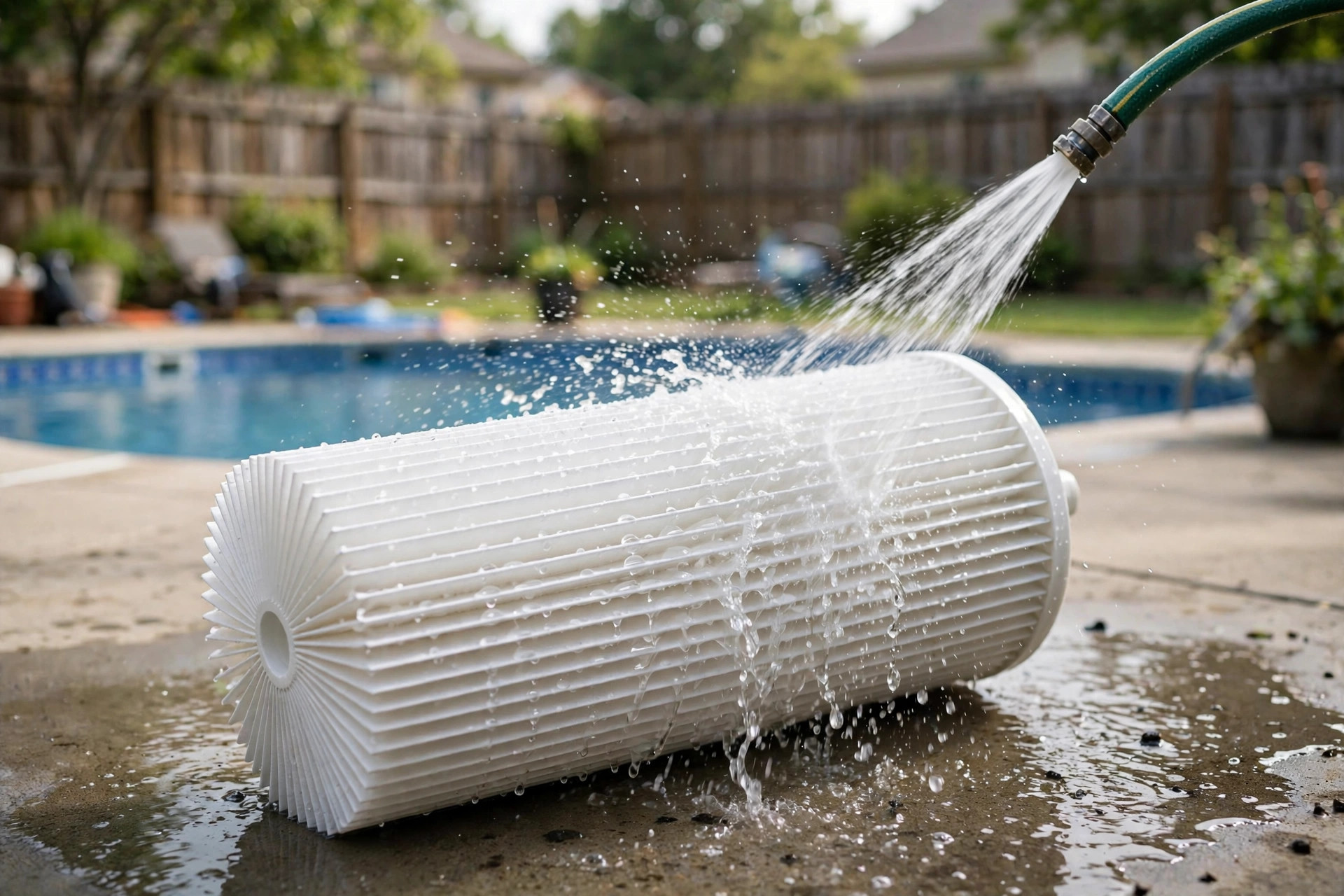
Hold the garden hose with a strong spray nozzle. Start at the top of the cartridge and work down. Angle the spray at 45 degrees so water pushes between the pleats, not straight down at them. A direct straight spray can drive dirt deeper into the fabric. Rotate the cartridge as you rinse. Work your way around until the water runs clear. This rinsing step removes most loose dirt. Many home guides for pool filter cartridge cleaning describe this same angled-spray method. Take your time. Five to ten minutes of steady rinsing beats a quick splash.
Step 4: Soak for a Deep Clean
Rinsing alone does not remove oils and fine grime. For a deep clean, mix your filter cleaning solution in the large tub following the label directions. Some owners use a mix of water and powdered degreaser sold for pool filters. Others use a diluted dish soap made for grease, though pool-specific products work best. Place the cartridge in the tub and let it soak. A light cleaning needs one hour. A heavy cleaning needs overnight, up to eight hours. Soaking loosens oils, sunscreen, and mineral film from the pleats. Large equipment makers recommend this soak step for cartridges that have served a full season. If you have a spare cartridge, this is when the spare earns its keep. You can run the pool on the clean spare while the dirty one soaks.
Step 5: Rinse Again and Reinstall
After soaking, rinse the cartridge once more with the hose. Use the same angled spray. Rinse until the water runs fully clear and no soap or solution remains. Chemical residue can cause foamy pool water. Set the cartridge in the sun for a short time to dry the surface, then place it back in the filter tank. Seat it on the center post. Replace the lid and tighten the clamp or bolts evenly. Close the air relief valve. Turn the pump back on. Open the relief valve for a moment to bleed out trapped air, then close it again. Watch the pressure gauge. It should read near the clean-filter level marked in your manual. Your pool filter cartridge cleaning job is done.
Types of Filter Cartridges and How Cleaning Differs
Not all cartridges clean the same way. Standard pleated cartridges are the most common. They have folded fabric around a plastic core, and the steps above suit them well. Antimicrobial cartridges have a special coating that fights germs. Clean these with gentle products only. Harsh acids can damage the coating. Hot tub cartridges are smaller versions of pool cartridges. They clog faster because hot water and heavy bather loads add more oils. Spa owners clean these every two to four weeks. Well-known spa brands publish cleaning schedules for their tub filters. If you own a hot tub, you may also find a hot tub cover lifter installation guide useful when you service the whole tub area. Cartridge filters on saltwater pools need the same rinsing steps, but watch for mineral scale. A diluted acid bath can remove scale, though you should follow your manual and use gloves and eye protection.
Signs Your Cartridge Needs More Than a Rinse
Cleaning keeps a cartridge working, but no cartridge lasts forever. Most last one to three years with good care. Learn the signs of a worn cartridge. If the pressure gauge rises quickly after cleaning, the pleats may be worn thin. If the fabric looks frayed or the pleats collapse when wet, it is time to replace. Bands or straps that snap are another clear sign. Torn end caps let dirt pass straight through. A cartridge that stays gray or brown even after a full overnight soak has reached the end of its life. When replacement time comes, order replacement cartridges by the exact model number from your manual. A wrong-size cartridge leaves gaps, and unfiltered water will flow through those gaps.
How Often to Clean Pool Filter: A Simple Schedule
How often to clean pool filter cartridges depends on use. A good rule is to rinse the cartridge every four to six weeks during swim season. Soak it deeply once or twice per season. Pools near trees need more frequent rinsing, since leaves and pollen clog pleats fast. Pools that host swim parties need an extra rinse after heavy use. Hot tubs need rinsing every two to four weeks because of oils and heat. Mark your cleaning dates on a calendar or a simple wall chart near the equipment pad. Steady habits beat rescue cleaning. A cartridge that is rinsed on schedule lasts longer and cleans better than one that is ignored all summer and scrubbed hard in the fall.
Cost and Price: What Cleaning Saves You
Cleaning your own cartridge costs very little. A bottle of filter cleaner costs about ten to twenty dollars and lasts many cleanings. A spray nozzle costs a few dollars if you do not own one. A spare cartridge costs between thirty and one hundred dollars depending on size and brand. Compare that with the cost of neglect. A clogged filter raises the electric bill because the pump runs longer and harder. It also burns through pool chemicals faster, since cloudy water needs more treatment. Replacing a burned-out pump motor costs several hundred dollars. Paying a pool service to clean the filter costs fifty to one hundred dollars per visit. Doing the job yourself, on schedule, is one of the cheapest habits in pool care. Owners who watch every dollar can stretch a cartridge to three years with careful rinsing and deep soaking.
Care and Upkeep Through the Seasons
Cartridge care follows the seasons. In spring, give the cartridge a deep soak before the first swim. This clears winter storage film. In summer, rinse every month and check the pressure gauge weekly. In fall, rinse after leaf season ends, since leaves and tannins stain the pleats. In winter, remove the cartridge if you close the pool. Rinse it, let it dry fully, and store it indoors where it will not freeze. Freezing water inside the pleats can crack the plastic core. Hot tub owners in cold climates should keep a clean spare on hand, since tubs often run all winter. If your tub sits under a shelter, you may enjoy reading about best hot tub gazebo for privacy options for the area around it. Year-round, keep the equipment pad clean. Dirt and leaves around the filter tank get pulled into the system and add to your cleaning load.
Safety Notes
Pool filter service is safe when you follow basic rules. Always turn off the pump before you open the tank. Always release tank pressure through the air relief valve. Never look into an open tank while the system is under pressure. Wear gloves when you handle cleaning solutions. Keep solutions away from children and pets. Store them in a locked cabinet, separate from pool chlorine. Never mix cleaning products with each other or with chlorine. Mixed chemicals can release harmful fumes. National water quality guidance reminds pool owners that clean water and safe chemical storage go hand in hand. Work in daylight so you can see what you are doing. If your filter tank lid uses many bolts, tighten them evenly in a star pattern to keep the seal flat.
Frequently Asked Questions
Can I use a pressure washer to clean my pool filter cartridge? A pressure washer is too strong for most cartridges. High pressure can tear the pleated fabric and force dirt deeper into the folds. A garden hose with a firm spray nozzle gives enough force without damage. If you already own a pressure washer, keep it far away from the cartridge.
Is vinegar good for cleaning pool cartridge filters? Cleaning pool cartridge filter with vinegar works for light mineral scale. Soak the cartridge in a mix of one part white vinegar to four parts water for a few hours, then rinse well. Vinegar will not cut heavy body oils as well as a pool filter degreaser. Use the right product for the kind of dirt you face.
How do I know when the cartridge must be replaced instead of cleaned? Replace the cartridge when the pressure stays high after a full clean and soak. Frayed fabric, broken bands, collapsed pleats, and torn end caps all mean replacement time. Most cartridges last one to three years. Write the install date on the end cap with a marker so you can track its age.
Should the pump run while I clean the filter? No. The pump must be off and the tank pressure must read zero before you open the lid. Running the pump with an open filter can spray water and injure you. It can also pull air into the system. Always power down first.
Can I clean the cartridge in my pool? Do not wash the dirty cartridge in the pool. The dirt you rinse out would flow right back into the water you are trying to keep clean. Rinse the cartridge on the lawn or driveway, where dirty water drains away from the pool.
Does a dirty filter really raise my electric bill? Yes. A clogged cartridge forces the pump to work harder to move the same amount of water. The pump runs longer, draws more power, and wears out faster. Regular cleaning is one of the simplest ways to keep energy costs down.
A Final Word
Knowing how to clean pool filter cartridge parts is a basic skill every pool owner should have. The job is simple, cheap, and fast once you have done it twice. Rinse on schedule. Soak deeply each season. Replace the cartridge when the pleats wear out. These three habits keep your water clear, your pump healthy, and your costs low. A clean filter does quiet work all summer long, and it asks for only an hour of your time in return.
References
Hayward. (n.d.). Pool equipment and automation. https://www.hayward.com Hot Spring Spas. (n.d.). Hot tubs and spas. https://www.hotspring.com Leslie’s Pool Supplies. (n.d.). Pool supplies and equipment. https://www.lesliespool.com Pentair. (n.d.). Pool and spa equipment. https://www.pentair.com Pool Warehouse. (n.d.). Pool equipment and supplies. https://www.poolwarehouse.com Swim University. (n.d.). Pool and hot tub care guides. https://www.swimuniversity.com The Home Depot. (n.d.). Home improvement products. https://www.homedepot.com The Spruce. (n.d.). Home and garden advice. https://www.thespruce.com U.S. Consumer Product Safety Commission. (n.d.). Product safety information. https://www.cpsc.gov U.S. Environmental Protection Agency. (n.d.). Protecting human health and the environment. https://www.epa.gov
Was this guide helpful?

About James Carter
The My Garden US editorial team writes practical, in-depth home and garden guides for American homeowners — tested advice, no fluff.
You May Also Like
Best Hot Tub for Small Spaces: A Complete Buyer’s Guide
March 5, 2026 0 views
How to Raise Pool Alkalinity Levels the Safe Way
September 7, 2026 0 views
How to Remove Phosphates from Pool Water: A Clear Guide for Home Owners
April 23, 2026 0 views