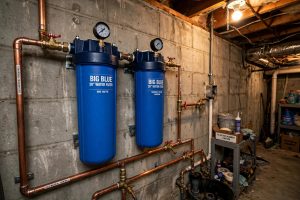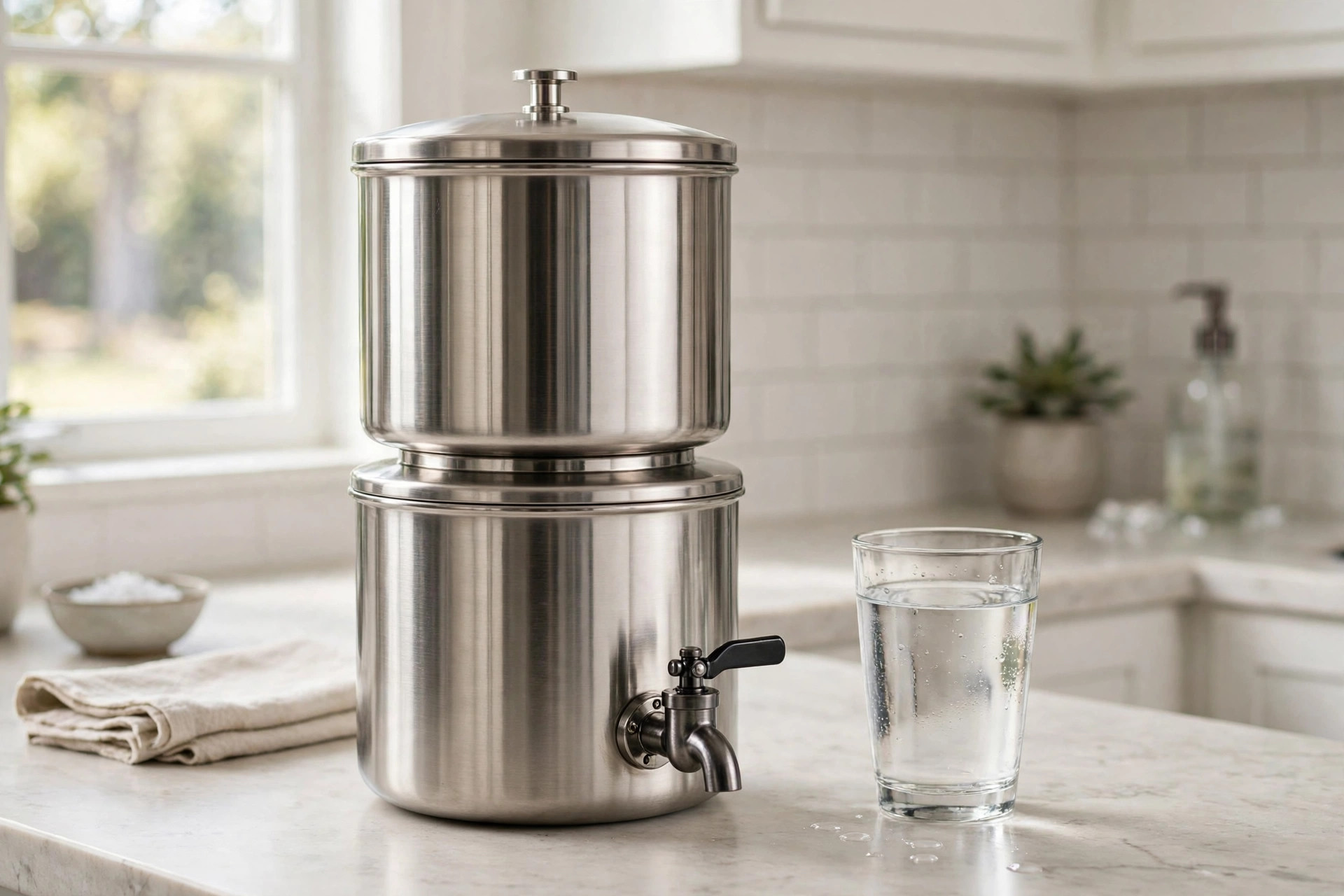

A gravity water filter for emergency reviews usa shoppers read can be hard to judge. Many models look the same. Prices vary a great deal. Claims on the box do not always match real use. This guide explains what these filters do, how they work, and which traits matter when the power is out or the tap water is not safe. It draws on what is known about point-of-use filters, safe drinking water practice, and home water systems in the United States.
Why It Matters
Safe drinking water is one of the first needs in an emergency. Floods, storms, and boil-water advisories happen in every state. When the water main breaks or the treatment plant loses power, the tap cannot be trusted. A gravity water filter for emergency reviews usa homeowners consult offers a simple answer. It needs no electricity. It needs no water pressure. You pour water in the top chamber. Gravity pulls it down through the filter. Clean water collects in the lower chamber.
The Environmental Protection Agency publishes guidance on emergency water safety. Its emergency disinfection pages explain why filtration plus safe storage matters when normal treatment fails. A home page at the Environmental Protection Agency gives the basics on water safety during disasters.
Gravity filters are also useful in daily life. Many families use one to cut chlorine taste or to reduce sediment. Because the unit sits on the counter, there is nothing to install. This makes it a good backup for renters and for homes where plumbing work is not practical. Readers looking at bigger fixed systems may also want to read about whole house water filtration cost installed.
What to Look For: Gravity Water Filter for Emergency Reviews Usa
Filtration Level
Not all filters remove the same things. A good emergency unit should handle bacteria and protozoa. Many also reduce chlorine, sediment, and unpleasant taste. Some claim virus removal. Viruses are much smaller than bacteria. Most gravity filters do not remove viruses by size alone. In the United States, viral risk in treated tap water is low, but in floodwater it can be real. For full safety, some guides pair filtration with a second step such as boiling or chemical disinfection.
Capacity and Flow Rate
Gravity filters work slowly. A typical countertop unit holds two to three gallons. It may take an hour or more to filter a full chamber. For a family of four, plan for at least two fillings per day. Larger systems exist. Think about how much water your household drinks each day. Then choose a size that will not leave you waiting.
Element Life and Replacement Cost
The filter elements are the running cost. Most last from several hundred to several thousand gallons, depending on water quality and the brand. Check the rated life before you buy. Divide the element price by the rated gallons. That gives the true cost per gallon. A cheap unit with short-lived elements can cost more over time than a dearer one with long life.
Materials and Build
Look for food-grade plastic or stainless steel housings. Stainless steel lasts longer and is easy to clean. Make sure the spigot is sturdy and seals well. A leaking spigot wastes filtered water and can let in germs.
Types and Options
Ceramic Elements
Ceramic filters have been used for over a century. The ceramic shell traps sediment, bacteria, and protozoa by size. Many have a carbon core that also cuts chlorine and improves taste. Ceramic elements can be scrubbed clean when they clog. This extends their life. They are a proven choice for emergency use.
Carbon and Ceramic Combinations
Many popular units pair a ceramic outer shell with an activated carbon core. The ceramic stops particles and microbes. The carbon adsorbs chemicals that cause bad taste and odor. These combination elements are common in reviews because they handle the two complaints most buyers have: taste and safety.
Hollow-Fiber Membrane Units
Some newer filters use hollow-fiber membranes. These are light and filter quickly for their size. They are common in camping gear but also appear in home units. They do not improve taste the way carbon does. For emergency drinking water they are sound, but many buyers pair them with a separate carbon stage.
How to Read Reviews
Reviews are this article’s focus, so read them well. Look for reviews that name the water source. A filter tested on city tap water tells you little about floodwater use. Look for reviews that state how long the unit has been in use. First-week reviews praise the look. Six-month reviews tell you about flow loss, spigot leaks, and element life. Be wary of reviews that repeat the maker claims word for word. Trust reviews that mention small faults. A review that says flow slowed after two months and scrubbing fixed it is more honest than one that says all is perfect.
Retailers carry a wide range of models. The Home Depot and Lowe’s sites list countertop gravity filters with buyer reviews that can help you compare flow and build quality.
Cost and Price
Countertop gravity filters in the USA usually cost between 60 and 400 dollars. Small single-element units sit at the low end. Large stainless steel systems with four elements sit at the high end. Replacement elements run from 25 to 120 dollars each.
Think in cost per gallon. If a 100-dollar element treats 3,000 gallons, the cost is about three cents per gallon. Compare that with bottled water at one dollar or more per gallon. The filter pays for itself fast in an emergency and keeps paying in daily use.
Installation cost is zero. There is no plumber to call and no pipe to cut. This is a clear edge over fixed systems. For comparison, fixed work such as a hot water recirculating pump cost installed shows how fast plumbing projects add up.
Hidden Costs
Two costs catch buyers off guard. First, shipping. Large stainless steel units are heavy, and freight can add 20 to 40 dollars. Second, extra chambers or stands. Some units need a separate stand to fit a glass under the spigot. Check the photos and the box contents list before you order. A unit that needs 30 dollars of add-ons is not the bargain it seemed.
Care and Upkeep
Priming
Most elements must be primed before first use. Priming means pushing water through the dry filter to wet it fully. Some kits include a priming washer or bulb. Follow the maker steps. An unprimed element flows very slowly or not at all.
Test It Before You Need It
Do not wait for a storm to learn your filter. Set it up on a calm weekend. Fill it, time the flow, and taste the water. Check for leaks at the spigot and the seams. Write down the date and the flow time. That note is your baseline. If flow later drops by half, you will know the elements need a scrub. A dry run also shows you how much counter space the unit takes and where to store the spare elements.
Cleaning
Ceramic elements clog over time as they trap sediment. When flow slows, remove the element and scrub it lightly with a clean pad under running water. Do not use soap on the element. Soap can lodge in the pores and taint the taste. Rinse well and put it back.
Storage
If you keep the filter as an emergency backup, store the elements dry in a clean bag. A damp element in a warm box can grow mold. Before use after long storage, clean the chambers with mild soap, rinse well, and prime the elements again. Keep a spare set of elements sealed in their packs.
The Family Handyman site offers plain guides on cleaning and caring for home water gear. For brand-specific water products, the Aquasana home page lists its own filter lines and care notes.
Safety
A gravity filter is a tool, not a promise. Use it with care.
– Start with the clearest water you can find. Heavy mud will clog any element fast. Let muddy water settle in a bucket first. Pour off the clear top water into the filter. – Never assume floodwater is safe after one pass. The Environmental Protection Agency warns that floodwater can carry sewage, fuel, and chemicals that simple filters cannot remove. – Change elements on schedule. An old element can crack or channel, letting germs pass. – Keep the lower chamber clean. Wash it with mild soap and rinse it often. Germs can grow in stored water after a day or two. – In a declared emergency, follow local boil-water orders even if you own a filter. Officials base orders on risks a home filter may not cover.
Fixture makers also publish water safety material. The Kohler, Delta Faucet, and Moen home pages carry product and water-quality information for American homes.
FAQ
Do gravity water filters remove viruses?
Most do not remove viruses by filtration alone. Viruses are far smaller than the pores in ceramic or membrane elements. In city tap water the virus risk is low. In floodwater it is higher. For full safety, boil the filtered water for one minute, or use an approved chemical treatment after filtering.
How fast does a gravity water filter work?
Slowly. A common two-chamber unit filters about one gallon per hour with clean elements. Flow drops as the elements load up with sediment. Scrubbing ceramic elements restores much of the speed. Plan your daily water needs around this rate.
Can I use a gravity filter every day, not just in emergencies?
Yes. Many families use one daily for better taste and fewer chemicals. Daily use keeps the elements wet and working. It also means the unit is ready the moment an emergency hits. There is no learning curve when you already use it.
What water can I put in it?
Tap water, well water, rainwater, and clear stream water all work. Avoid water with fuel, oil, or chemical spills. Filters do not remove dissolved chemicals well. If the water smells of fuel or chemicals, do not drink it even after filtering.
How do I know when to replace the elements?
Watch the flow rate. A sharp drop after cleaning means the element is spent. Also track gallons if your unit has a counter or if you keep a log. Follow the maker rated life. When in doubt, replace. Elements are cheap next to the risk. Keep one spare set sealed and dated so you are never caught without one.
Are gravity filters worth it for renters?
Yes. There is nothing to install and nothing to change in the plumbing. The unit sits on the counter and moves with you. For renters who also want to save water, it is worth checking low flow toilet rebates by state usa for other easy savings.
A Short Final Word
A gravity water filter for emergency reviews usa families can rely on is a simple machine that does one job well. It turns doubtful water into safer drinking water with no power and no plumbing. Choose a unit with proven bacteria and protozoa removal, size it for your household, and keep spare elements on hand. Care for it, clean it, and it will be ready when the tap cannot be trusted. For project ideas around the home, the This Old House home page is a steady source of plain, tested advice.
References
Aquasana. (n.d.). Water filtration systems. https://www.aquasana.com Delta Faucet. (n.d.). Kitchen and bathroom faucets. https://www.deltafaucet.com Family Handyman. (n.d.). DIY home repair and maintenance. https://www.familyhandyman.com Kohler. (n.d.). Bathroom and kitchen fixtures. https://www.kohler.com Lowe’s. (n.d.). Home improvement products. https://www.lowes.com Moen. (n.d.). Faucets and plumbing fixtures. https://www.moen.com The Home Depot. (n.d.). Home improvement products. https://www.homedepot.com This Old House. (n.d.). Home renovation guidance. https://www.thisoldhouse.com U.S. Environmental Protection Agency. (n.d.). Protecting human health and the environment. https://www.epa.gov
Was this guide helpful?

About David Wilson
The My Garden US editorial team writes practical, in-depth home and garden guides for American homeowners — tested advice, no fluff.
You May Also Like
Well Water Testing Near Me Cost 2026: What Homeowners Pay
April 13, 2026 0 views
Interior French Drain System Cost Basement: A Complete Guide
February 11, 2026 0 views
Best Well Pressure Tank Reviews 2026 USA
January 21, 2026 0 views