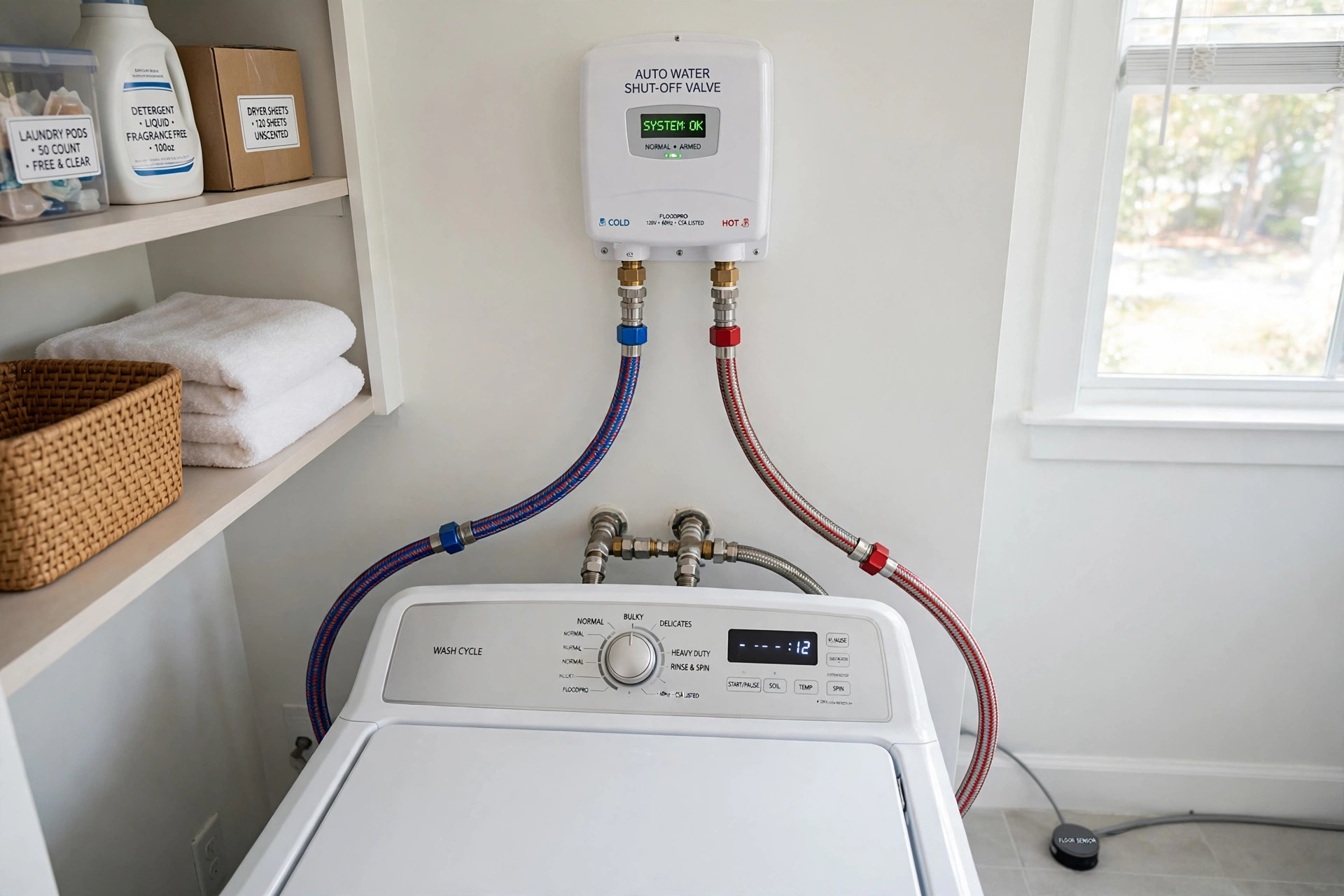

A washing machine hose is one of the most common causes of water damage in American homes. A hose can crack. A coupling can work loose. When it does, water can pour out at full pressure while no one is home. Automatic washing machine shutoff valve reviews show that a small device on the water line can stop this flood before it spreads. This guide explains what these valves do, which types exist, how to choose one, what they cost, and how to keep them working.
Why an Automatic Shutoff Valve Matters
Water damage from washing machines costs American homeowners a large sum each year. Insurance records show that supply hose failures rank near the top of all appliance-related water claims. A single burst hose can release a great deal of water in minutes. It can soak floors, walls, and furniture. It can reach the floor below in a two-story home.
Most of this damage is avoidable. An automatic shutoff valve watches the water line and closes it when something goes wrong. Some models sense a leak on the floor. Others sense a hose burst. The better models do both. Reviewers who install these valves often say they sleep better at night. They run the washer while at work. They leave home on trips with less worry.
Homeowners with older rubber hoses gain the most. Rubber hoses weaken with age and can fail without warning. Braided steel hoses last longer, but they are not perfect. A shutoff valve adds a second layer of defense. It is cheap insurance against one of the worst things that can happen in a laundry room.
What an Automatic Washing Machine Shutoff Valve Does: Automatic Washing Machine Shutoff Valve Reviews
An automatic washing machine shutoff valve sits on the hot and cold water lines that feed the washer. In normal use, water passes through freely. The valve stays open while the washer fills. When the valve detects trouble, it closes the lines in seconds.
There are two main ways these devices detect trouble. The first is a sensor placed on the floor near the washer. When water touches the sensor, it signals the valve to close. The second is a flow sensor inside the valve. If water flows longer than normal, or at a rate that suggests a burst, the valve shuts off. Many reviewers prefer models that use both methods together.
Some valves also watch for slow leaks. A drip from a hose coupling may not trigger a burst sensor. A floor sensor will catch it. This matters because slow leaks can rot subflooring over months without anyone noticing.
A few advanced models connect to the home Wi-Fi. They send an alert to the phone when they shut off. They let the owner check the valve status from anywhere. For owners who want a wider net of protection, a smart water leak detector on the floor behind the washer can back up the valve. Reviews of smart water leak detector reviews 2026 usa models show they pair well with shutoff valves in busy laundry rooms.
Types of Automatic Shutoff Valves
Reviews of these products fall into four main groups. Each has strengths and weak points.
Battery-Powered Floor-Sensor Valves
These are the most common type. A control unit mounts on the wall above the washer. Two hoses run from the unit to the washer. A sensor pad or probe lies on the floor. When the sensor gets wet, a motor inside the unit closes both valves.
Reviewers like these for three reasons. They need no plumbing skill to install. They cost less than wired models. They work even when the valve and the sensor are far apart. The weak point is the battery. Owners must change it each year. If the battery dies, some models fail open, which means no protection. Check the low-battery warning feature before buying.
Electric Solenoid Valves
Solenoid valves plug into a wall outlet. They use an electric signal to snap the valve closed fast. Many commercial laundries use this type. Home reviewers praise their speed. They close in under a second.
The drawback is clear. They need power at all times. A power failure during a leak means no protection unless the unit has a battery backup. They also need a nearby outlet, which not every laundry room has.
Smart Valves With App Control
Smart valves add Wi-Fi or a home hub link. They report leaks by phone alert, email, or text. Some models learn the normal fill pattern of the washer. When they see unusual flow, they shut off and send a message.
Owners who travel like this type. They can check the laundry room from a hotel. Some models work with voice assistants and smart home platforms. The Ring smart home ecosystem and other platforms can join these alerts with doorbell and camera events, so one phone app covers the whole home. Reviews note that setup takes more time. The owner must join the valve to the home network and keep the app updated.
Mechanical Burst-Stop Couplers
These small fittings screw onto the supply line at the hose end. They hold a spring-loaded seal. Normal washer flow passes through. A sudden rush of water, as from a burst hose, trips the seal and stops flow. They cost little and need no power.
Reviewers treat them as a backup, not a main defense. They cannot catch slow leaks. They trip only on high flow. Some models must be reset by hand after tripping. Still, for the price, many owners add them along with a sensor-based valve.
How to Choose the Right Valve
Start with the laundry room layout. Measure the space behind the washer. Some valve units are bulky. In tight spaces, a slim wall-mounted unit or hose-end couplers fit better.
Look at the sensor type. Floor sensors catch all kinds of leaks. Flow sensors catch bursts even if water drains away from the sensor pad. Models with both score highest in reviews.
Check the battery or power needs. Battery models should give a low-battery alert you can hear or see. Electric models should include a battery backup if your area has frequent outages. Smart models should keep their last known state when Wi-Fi drops.
Read the shutoff speed. Most good valves close within a few seconds of detection. That is fast enough to limit damage to a small puddle.
Think about smart features. App alerts add real value for owners who are often away. But a simple valve with no app still does the main job. Do not pay for features you will never use.
Check compatibility with your washer hoses. Most valves fit standard three-quarter-inch hose threads. If you have an older washer with odd fittings, bring the hose to the store or check the thread size online before ordering.
For laundry rooms on an upper floor, pair the valve with a washing machine drain pan. The pan catches drips that the valve cannot stop. Reviews of best leak detector for washing machine usa options often mention pans as a smart add-on.
Cost and Price Range
Mechanical burst-stop couplers are the cheapest option. A pair for hot and cold lines often costs less than a dinner out. They give basic burst protection for little money.
Battery-powered floor-sensor valves sit in the middle range. Most home models fall between what a homeowner would pay for a mid-range small appliance and a premium one. Price moves with brand, sensor count, and smart features.
Electric solenoid valves cost about the same as battery models, but an electrician may be needed if no outlet is near. Add that labor to the total.
Smart valves with Wi-Fi and app control cost the most. The top-rated models in Consumer Reports style tests and on tech review sites like CNET and PCMag sit at the upper end. They justify the price with remote alerts and detailed flow data.
Installation adds to the cost for wired models. Battery wall-mounted units need no plumber. Most owners fit them in under an hour with basic hand tools.
Installation Basics
Most battery-powered valves are a do-it-yourself job. Turn off the house water or the laundry shutoff valves. Remove the old hoses from the wall valves. Mount the control unit on the wall. Connect the short hoses from the wall to the unit, then from the unit to the washer. Place the floor sensor behind or beside the washer. Restore water and run a test fill.
Test the valve right away. Pour a small cup of water on the floor sensor. The valve should close and the water flow should stop. Dry the sensor and reset the unit. Run the washer through a fill cycle to confirm normal flow returns.
For electric or plumbed models, many reviewers hire a plumber. A licensed plumber can add an outlet or sweat new copper lines in under two hours. The U.S. Consumer Product Safety Commission advises owners to follow all local plumbing codes and to use a licensed worker for any job that changes permanent pipes.
If you rent, check the lease before adding a wall-mounted unit. Hose-end burst couplers need no wall work and suit renters well.
Care and Upkeep
A shutoff valve needs little care, but it is not a fit-and-forget device. Test it twice a year. Wet the sensor and confirm the valve closes. Then reset it and run a fill cycle.
Change batteries on schedule. Mark the date on a calendar or set a phone reminder. Many owners change valve batteries when they change smoke detector batteries. Reviews of smart water valve shutoff reviews 2026 usa models show that dead batteries are the top reason a valve fails to act.
Inspect hoses each year. Look for bulges, cracks, and rust at the couplings. Replace rubber hoses every five years, even if they look fine. Braided steel hoses last longer but still deserve a yearly look.
Keep the sensor clean. Dust and lint can coat a floor sensor and slow its reaction. Wipe it with a dry cloth when you clean the laundry room.
For smart valves, keep the firmware updated. Makers push updates that fix bugs and improve leak detection. An outdated valve may miss new alert features.
Safety Notes
Never bypass a valve that has tripped. If it shut off, find the cause first. Check hoses, couplings, and the washer itself. Reset the valve only after the problem is fixed.
Do not rely on a valve alone if the washer sits over finished living space. Add a drain pan and a floor sensor. Some owners add a second valve on the main house line for whole-home protection.
Keep the area around the valve clear. Do not stack detergent boxes against the unit. A blocked valve is hard to reset in a hurry.
If your home has very high water pressure, add a pressure regulator. High pressure strains hoses and can wear out valve seals early. A plumber can test pressure in minutes.
Home security goes beyond water. Owners who protect against floods often review other smart defenses too. A monitored alarm from SimpliSafe or ADT, a doorbell camera from the Google Store, and coverage of smart home news from The Verge can round out a full protection plan.
Frequently Asked Questions
Do automatic shutoff valves work with all washing machines?
Most valves fit standard top-load and front-load washers. They connect with common three-quarter-inch hose threads. Check the thread size on older machines before buying.
Will the valve shut off during a normal wash cycle?
No. Normal fill cycles follow a pattern the valve allows. Flow sensors learn or accept standard fill times. If a valve trips during normal use, the sensitivity may be set too high, or a hose may be partly blocked.
How long do these valves last?
Most units last five to ten years with basic care. Battery models depend on battery changes. Mechanical parts wear with hard water. Test the unit twice a year to catch wear early.
Can I install one myself?
Battery-powered wall units are a common do-it-yourself job. No plumbing changes are needed. Electric and plumbed models often need a licensed plumber, especially where local codes require permits.
Is a shutoff valve better than a leak detector alone?
They do different jobs. A leak detector warns you. A shutoff valve acts on its own. The best setup uses both. The detector alerts you by phone, and the valve stops the water whether you respond or not.
Will my home insurance cost go down?
Some insurers offer a small discount for installed leak protection. Ask your agent. Even without a discount, the valve can prevent a claim that would raise your rates.
A Final Word
A washing machine flood is fast, costly, and common. An automatic shutoff valve is one of the cheapest ways to stop it. Reviews agree on the basics. Pick a valve with both floor and flow sensing. Test it twice a year. Change the batteries on time. Pair it with good hoses and a drain pan. With those steps, the laundry room becomes one of the safest corners of the home instead of one of the riskiest.
References
ADT. (n.d.). Home security and automation. https://www.adt.com CNET. (n.d.). Technology news and reviews. https://www.cnet.com Consumer Reports. (n.d.). Product reviews and ratings. https://www.consumerreports.org Google. (n.d.). Home and garden information. https://www.google.com Google Store. (n.d.). Smart home devices. https://store.google.com PCMag. (n.d.). Technology product reviews. https://www.pcmag.com Ring. (n.d.). Smart home security devices. https://www.ring.com SimpliSafe. (n.d.). Home security systems. https://www.simplisafe.com The Verge. (n.d.). Technology news and reviews. https://www.theverge.com U.S. Consumer Product Safety Commission. (n.d.). Product safety information. https://www.cpsc.gov
Was this guide helpful?

About James Carter
The My Garden US editorial team writes practical, in-depth home and garden guides for American homeowners — tested advice, no fluff.
You May Also Like

Best Solar Panels for Home: 2026 Reviews USA
August 1, 2026 0 views
Best Self Emptying Robot Vacuum Reviews USA
September 28, 2026 0 views
Best Video Doorbell Without Subscription USA: A Practical Guide
August 3, 2026 0 views