
A smart doorbell is only as good as the power behind it. Many homeowners buy the best doorbell transformer for smart doorbell use without a second thought about the small metal box in the closet that feeds it. That box matters more than the camera, the chime, or the app. If the power is too weak, the doorbell drops offline, the video freezes, or the chime buzzes. This guide explains, in plain terms, what a doorbell transformer does, how to choose the best doorbell transformer for smart doorbell models, and how to put it in safely.
Why the Right Transformer Matters
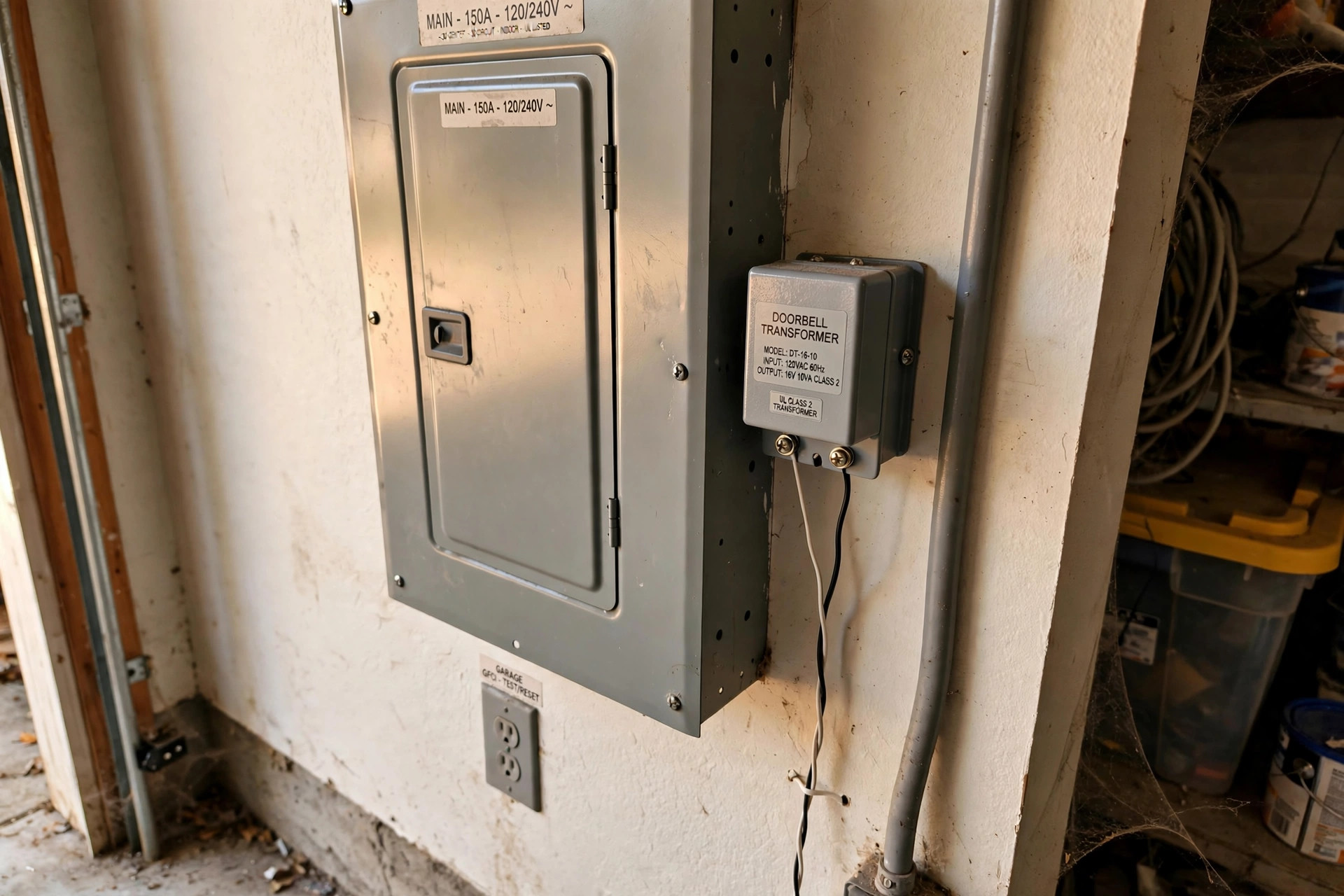
A doorbell transformer is a small device that lowers your home’s 120-volt line power down to the low voltage a doorbell needs, usually 16, 20, or 24 volts. Ordinary old doorbells ran fine on the weak 10-volt, 5-VA units that builders installed decades ago. Smart doorbells are different. A video doorbell with night vision, motion alerts, and two-way talk needs steady power, around the clock.
When the transformer is too weak, the doorbell borrows power in short bursts. The signs are familiar to many owners: the unit restarts at night when the infrared lights switch on, live video lags, or the indoor chime gives a dull hum instead of a ring. Reviews of smart doorbells on CNET often trace such faults back to an old transformer rather than a bad camera.
Choosing the best doorbell transformer for smart doorbell service is therefore not a minor detail. It is the foundation of the whole setup. A proper unit costs little, installs in under an hour, and removes a whole class of problems. Think of it as cheap insurance for an expensive device.
How to Choose: Voltage, VA, and Compatibility: Best Doorbell Transformer for Smart Doorbell
Three numbers matter on any transformer: volts, volt-amperes (VA), and compatibility with your doorbell model.
Voltage. Most smart doorbells want 16 to 24 volts AC. Ring models commonly call for 16 volts, while many Google Nest doorbells ask for 16 to 24 volts. Check your doorbell’s own label or manual before you buy. The manuals published on Ring and the Google Store list the accepted voltage range for each model. Buying the best doorbell transformer for smart doorbell units means matching this range first. A 24-volt unit on a 16-volt-only chime can burn the chime out.
VA rating. Volt-amperes measure power capacity. Old transformers were often 10 VA or lower. Smart doorbells with cameras generally need 30 VA, and some makers now suggest 40 VA for houses with two doorbells or a long wire run. The VA rating is the single most useful sign of the best doorbell transformer for smart doorbell use: two units may both say 16 volts, but the 30-VA one will hold steady where the 10-VA one sags.
Compatibility. A few points complete the picture:
– Single or dual chime. If you have a front and a back doorbell, the transformer feeds both. Size the VA rating for the pair. – Mechanical versus digital chime. Some smart doorbells need a small adapter at the chime. Read the manual. – Wire gauge. Thin, old wire drops voltage over long runs. If the run from the panel to the door is long, a 24-volt setting or thicker wire helps.
Writers at PCMag and The Verge both note the same practical rule: when in doubt, buy the 16V/30VA or 24V/40VA class of unit from a known electrical brand. Those two classes cover nearly every smart doorbell sold in the United States.
Types and Options
Doorbell transformers come in a few common forms. Any of them can serve as the best doorbell transformer for smart doorbell projects, but each suits a different home.
Standard 16V/30VA Units
This is the workhorse. It mounts on the side of the main electrical panel or a junction box, and it feeds most single-doorbell homes. If your doorbell maker asks for 16 volts, this class is the safe default. It is also the easiest to find in stores.
24V/40VA Units
The heavy-duty choice. Homes with two wired doorbells, long wire runs, or power-hungry video models do better here. Some installers choose this class by habit because it leaves headroom. Check that your chime can take 24 volts before you install one.
Plug-In Transformers
These plug into a normal outlet and send low-voltage wire to the doorbell. They are handy in apartments or rentals where opening the electrical panel is not allowed. They cannot match a hardwired unit for neatness, but they work well as a stopgap. Renters who cannot run wire may do better with a video doorbell for apartments with no wiring.
Transformer With Built-In Circuit Protection
A few units add a thermal fuse or circuit breaker that trips if the wires short. This is a small extra that can save a service call. The U.S. Consumer Product Safety Commission, on CPSC, reminds homeowners that even low-voltage circuits deserve proper parts and dry locations.
Whichever type you pick, buy from an established electrical maker and look for a UL listing mark. The best doorbell transformer for smart doorbell use is never the cheapest unmarked import; a listed unit has been tested for safety, and that matters in a device that stays powered for years.
Cost and Price
A doorbell transformer is one of the cheapest parts of a smart-home project. Typical prices in the United States:
– Standard 16V/30VA unit: about $15 to $25. – Heavy-duty 24V/40VA unit: about $20 to $35. – Plug-in style: about $20 to $30.
Professional installation, if you hire an electrician, usually adds $100 to $200 for a simple swap near the panel. A full new wire run to the front door costs more. Readers comparing total project budgets should also read about smart doorbell installation cost to see the full picture.
Do not try to save money by reusing a 40-year-old transformer. The part is cheap, and old units are the most common cause of smart doorbell trouble. Consumer Reports testing has shown again and again that stable power is what separates a reliable smart doorbell from a flaky one.
Installing It: The Basic Steps
Many handy homeowners do this job themselves. The work is simple, but it touches the electrical panel, so respect it.
1. Turn off the breaker. Find the breaker that feeds the doorbell circuit and switch it off. Test with a non-contact voltage tester. Do not trust labels alone. 2. Find the old transformer. It is usually screwed to the outside of the main panel, or on a junction box in a closet, garage, or basement. It is a small metal box with two or three low-voltage screw terminals. 3. Photograph the wiring. Take a clear photo of which wire goes to which terminal. This photo is your map. 4. Move the wires. Loosen the low-voltage terminals and move the doorbell wires to the same terminals on the new unit. Keep the pairing from your photo. 5. Mount and connect line power. Mount the new transformer, then connect its 120-volt leads to the house wiring exactly as the old one was connected, with wire nuts, inside the box. Keep low-voltage and line-voltage wires apart. 6. Restore power and test. Switch the breaker on, press the doorbell, and watch the app. The doorbell should come online and stay online.
If the panel is crowded, the wiring looks wrong, or you are not sure which breaker feeds the circuit, stop and call an electrician. Guides from SimpliSafe and ADT both stress the same point for all smart-home electrical work: a short service call is cheaper than a fire.
Care and Upkeep
A doorbell transformer has no moving parts and needs almost no care. Still, a few habits keep it healthy:
– Check it once a year. Look for buzzing, heat, or a burnt smell. A transformer should run cool and quiet. – Keep it dry. These units belong indoors, in a dry closet, garage, or basement. Never mount one where rain can reach it. – Watch for chime trouble. If the indoor chime starts to buzz or stick after years of quiet service, the transformer may be failing. Replacements are cheap. – Recheck after adding devices. If you add a second doorbell or a wired camera to the same circuit, confirm the VA rating still covers the load.
Most units last 15 to 25 years. If yours is older than that, replace it on principle when you install a smart doorbell. It is the cheapest reliability upgrade in the whole project.
Safety Notes
Low voltage does not mean no voltage. A doorbell transformer still connects to 120-volt house power on one side, and that side can hurt you. Always kill the breaker first. Never work in a wet panel. If aluminum wiring or cloth-insulated wire shows up, call a professional.
Buy a UL-listed unit and mount it where it can shed heat. Do not bury it in insulation. Do not hide it inside a wall cavity; it must stay accessible. Local electrical codes in most states require the transformer to be reachable without tearing out drywall, so plan the location with that rule in mind.
If you rent, check your lease before touching the panel. Many leases forbid electrical work, and a plug-in transformer or a battery doorbell is the safer path. Shoppers weighing wired against battery models may also like the roundup of the best video doorbell without subscription options, since power choice and subscription cost often go together.
FAQ
What is the best doorbell transformer for smart doorbell models in general? For most homes, a UL-listed 16-volt, 30-VA unit from a known electrical brand is the best doorbell transformer for smart doorbell use. It matches what most makers specify and leaves enough headroom for night vision and motion alerts.
Can I use my old transformer with a new smart doorbell? You can try, but it often fails. Old units were usually 10 volts and 5 to 10 VA, which is too weak for a camera doorbell. If the doorbell restarts, lags, or the chime hums, the transformer is the first thing to replace.
Do I need 16V or 24V? Follow your doorbell’s manual. Most Ring and Nest models accept 16 volts; many also accept 24. Use 24 volts only if both the doorbell and the indoor chime are rated for it.
How many VA do I need for two doorbells? Size for the pair. Two camera doorbells on one circuit generally want a 40-VA unit. A single doorbell is usually fine on 30 VA.
Where is the transformer usually located? Look on or near the main electrical panel, or in a closet, garage, attic, or basement junction box. It is a small metal box with low-voltage screw terminals.
Can a bad transformer damage my smart doorbell? It can cause repeated brownouts that corrupt settings and shorten the unit’s life. In rare cases, a failing transformer sends irregular voltage that harms the chime. Replacing a suspect unit is cheap protection.
A Short Final Word
The best doorbell transformer for smart doorbell projects is not glamorous, but it decides whether the glamorous part works. Match the voltage, buy enough VA, choose a UL-listed unit, and install it with the breaker off. Do that, and your smart doorbell gets the steady power it was designed for, day and night, for years.
References
ADT. (n.d.). Home security and automation. https://www.adt.com CNET. (n.d.). Technology news and reviews. https://www.cnet.com Consumer Reports. (n.d.). Product reviews and ratings. https://www.consumerreports.org Google Store. (n.d.). Smart home devices. https://store.google.com PCMag. (n.d.). Technology product reviews. https://www.pcmag.com Ring. (n.d.). Smart home security devices. https://www.ring.com SimpliSafe. (n.d.). Home security systems. https://www.simplisafe.com The Verge. (n.d.). Technology news and reviews. https://www.theverge.com U.S. Consumer Product Safety Commission. (n.d.). Product safety information. https://www.cpsc.gov
Was this guide helpful?

About David Wilson
The My Garden US editorial team writes practical, in-depth home and garden guides for American homeowners — tested advice, no fluff.
You May Also Like
DIY Home Security System Reviews 2026 USA: What to Buy and Why
August 19, 2026 0 views
Best Window Locks for Double Hung USA: A Simple Buyer’s Guide
March 10, 2026 0 views
Best Smart Bulbs for Recessed Lighting USA
April 16, 2026 0 views