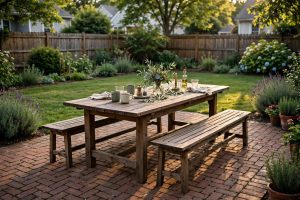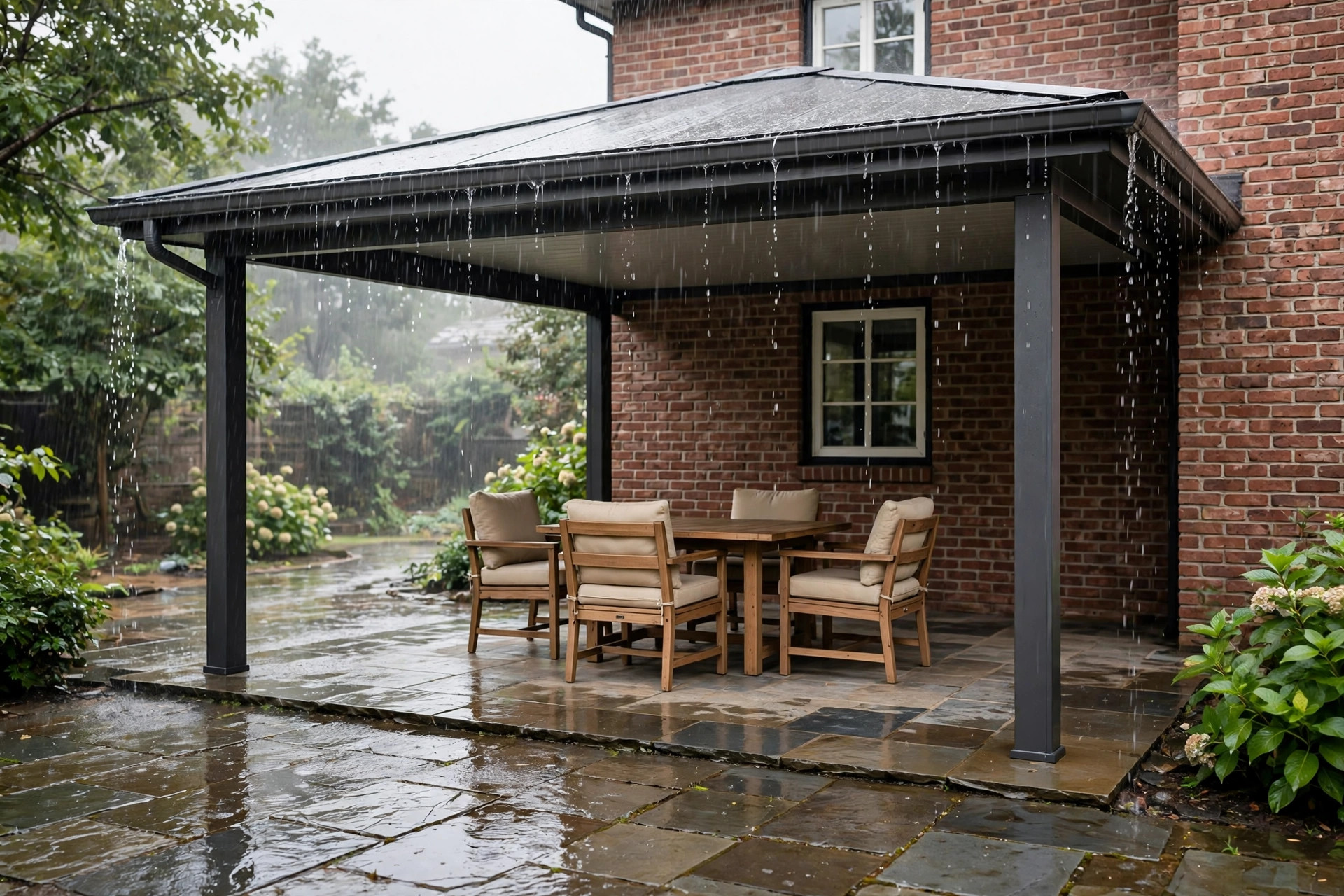

A patio is one of the best parts of a home. Families eat there. Friends gather there. Children play there. But rain can spoil the use of a patio for many days of the year. A wet deck stays slippery. A damp cushion starts to smell. An outdoor meal ends early. For this reason, many owners look for the best patio cover for rain protection. A good cover changes the patio from a fair-weather space into a place the family can use in almost any weather.
This guide explains what a patio cover is, which types are on the market, and what to look for before a purchase.
Why a Patio Cover for Rain Protection Matters
Rain does more than make the patio wet for one afternoon. Over time, water breaks down the things that make a patio pleasant. Wood decks absorb water and then swell. The boards can warp or split. Paint and stain wear off sooner. Metal chair legs develop rust at the joints. Fabric cushions hold moisture, and mold can grow in the stuffing.
A patio cover stops this damage at the source. It keeps rain off the furniture, the grill, and the floor. Dry furniture lasts longer. The family saves money on repairs and replacement. There is also the comfort side. With a cover, the patio can be used while rain falls outside it. A morning coffee on the porch stays dry. A cookout goes on even when clouds pass over. Many owners find that they use their patio twice as often after a cover goes up.
There is one more reason. A well-built cover adds value to the home. Buyers like outdoor rooms that can be used in bad weather.
Types of Patio Covers: Best Patio Cover for Rain Protection
Not all covers work the same way. Some are built to last decades. Others are meant for one season or one party. The main types are listed below.
Fixed Roof Covers
A fixed roof cover is a permanent structure. It is attached to the house on one side and held up by posts on the other. The roof may be made of metal panels, polycarbonate sheets, or wood boards covered with shingles. Some owners build a full solid roof that matches the house. Others use louvered panels that can be tilted to let in light.
Fixed covers give the best protection from rain. A solid roof stops almost all water. A pitched roof sends the water away from the seating area. These covers also stand up to wind better than any other type. The main drawback is cost, and a contractor is often needed for the work.
Retractable Covers
A retractable cover can be opened and closed. The most common form is the retractable awning. It rolls out from a housing that is fixed to the wall of the house. A hand crank or a small motor moves the fabric in and out. When the sun is strong, the awning comes out. When the owner wants full sky, it rolls back in.
Retractable awnings can handle a light shower but should be rolled up before heavy rain or wind. They suit owners who want shade in summer and open sky in spring.
Freestanding Canopies and Gazebos
A freestanding canopy has its own frame and does not touch the house. The frame is usually aluminum or steel tubing. The top is a fitted fabric cover or a hard plastic shell. Pop-up canopies are the simplest form. They fold up like an umbrella frame and can be moved from place to place.
Canopies suit renters and owners who want cover over part of the yard. A pop-up canopy will not stand up to a strong wind, and water will pool in the fabric during a steady rain unless the top has a good slope. Hard-top gazebos are stronger and shed water well, but they cost more.
Simple Tarps and Shade Sails
The cheapest option is a plain waterproof tarp tied to posts, trees, or the house. A shade sail is a nicer version of the same idea. It is a shaped piece of tensioned fabric with corners anchored to posts or walls. Shade sails are usually made for sun, not rain, but waterproof versions do exist.
Tarps and sails can work well if they are hung with a clear slope so water runs off. Owners should check the setup after every storm, since the anchors can loosen.
How to Choose the Best Patio Cover for Rain Protection
Choosing comes down to a few practical questions. Answer them in order and the choice gets clear.
First, how much rain must the cover handle. A light drizzle is easy. A hard downpour is another matter. Owners in wet regions should favor fixed roofs or hard-top covers with a steep pitch.
Second, how large is the area to cover. Measure the patio before shopping. A cover that is too small leaves the edges of the furniture in the rain. A cover that is too large may need extra posts or a permit.
Third, how long should the cover last. A fixed roof can last twenty years or more. A good canopy fabric lasts five to eight years. A cheap pop-up canopy may last two seasons. A deep seating patio set is a long-term buy, and it deserves a cover that lasts as long as the set does.
Fourth, who will install it. Fixed roofs and large retractable awnings often need a contractor. Canopies and tarps can be set up by the owner with simple tools.
What to Look For When You Buy
Once the type is chosen, the details of the product make the difference between a cover that lasts and one that leaks.
Fabric and Material
For fabric covers, look for polyester or acrylic canvas with a waterproof coating. The coating may be polyurethane or PVC. Heavier fabric, measured in denier, resists tears better. A fabric labeled water resistant will shed light rain but may leak in a hard rain. For real rain protection, the fabric should be labeled waterproof.
For hard covers, look at the panel material. Metal panels are strong and shed water well. Polycarbonate panels let in light while blocking rain. Wood roofs look warm and match many homes, but they need regular sealing.
Pitch and Drainage
Water must have a way to leave the cover. A flat top will pool water, grow heavy, and sag or tear. The best designs have a slope of at least one inch of drop for every foot of run. Fixed roofs should include gutters or drip edges that move water away from the patio and the house wall. Canopies should be set up so the high side sits against the house and the low side faces the yard, never the other way.
Frame Strength
The frame carries the weight of the cover plus the weight of rain and sometimes snow. Aluminum frames are light and will not rust. Steel frames are stronger but must be coated to stop rust. Wood posts are strong and look good, but they need to be rated for ground contact and set in concrete.
Anchoring
Every cover must be fixed to something solid. Freestanding canopies need stakes, weights, or bolts to a deck. Wall-mounted awnings need to be bolted into the framing of the house, not just the siding.
Cost and Price
Prices run from very low to very high. A simple waterproof tarp costs a few dollars. A pop-up canopy costs between fifty and three hundred dollars. A quality retractable awning costs between one thousand and four thousand dollars, plus installation. A freestanding hard-top gazebo costs between one thousand and five thousand dollars. A fixed roof cover, built by a contractor, can cost between five thousand and twenty thousand dollars or more, based on size and materials. A cheap cover that fails in the first storm and must be replaced is the worst buy of all.
Labor is part of the price. Get written quotes from at least two contractors for any fixed work. Ask what the quote covers.
Owners who buy a waterproof cover for a patio heater will find the same price logic applies. A thick, well-stitched cover costs more but lasts longer and protects better than a thin one.
Care and Upkeep
Fabric covers should be cleaned once or twice a year with mild soap and water. Harsh cleaners can strip the waterproof coating. The cover should be fully dry before it is folded or stored for winter, or mold will grow in the folds.
Hard covers need less care. Metal and polycarbonate panels can be washed with a garden hose. Check the screws and bolts once a year and tighten any that have worked loose. Clear leaves and twigs from gutters and drip edges so water can run free.
After any strong storm, walk around the cover and look for damage. Small tears in fabric can be patched with repair tape made for outdoor canvas. Bent frame parts should be replaced, not straightened, since the metal is weaker after it bends.
In regions with snow, brush heavy snow off the cover before it piles up. Most patio covers are not built to carry a deep snow load.
Safety
A patio cover is a structure over the heads of the family, so safety matters. First, never use an open flame under a fabric cover. Grills, fire pits, and patio heaters should sit well clear of any fabric or low roof. Heat and sparks can set fabric alight in seconds.
Second, respect the wind rating. Roll up retractable awnings and take down pop-up canopies when strong wind is forecast. A canopy that becomes a sail can hurt people and damage the house. Store the wind limits from the manual where they can be found.
Third, make sure water runs away from the house. A cover that dumps rain against the foundation can cause water damage in the basement or crawl space. Gutters should carry the water at least a few feet from the wall. Downspouts should point toward the yard, not the house.
Fourth, check local rules. Many towns require a permit for a fixed roof structure. Some homeowner associations limit the color or style of covers. A quick call to the town office before building saves trouble later.
Fifth, think about electricity. If the patio has lights or a ceiling fan under the cover, all wiring must be rated for outdoor use. An electrician should do this work.
Frequently Asked Questions
What is the best patio cover for rain protection? For steady heavy rain, a fixed solid roof with a good pitch is the best choice. It stops nearly all water and stands up to wind. For light rain and fair budgets, a quality retractable awning or a hard-top canopy works well.
Can a retractable awning stay out in the rain? Most can handle a light shower if the pitch is steep enough for water to run off. They should be rolled up before heavy rain or wind. Water that pools in the fabric can stretch it or break the arms. Owners who want to leave a cover out in all weather should choose a fixed roof instead.
How long does a patio cover last? A fixed roof can last twenty years or more with basic care. A hard-top gazebo lasts ten to fifteen years. Quality awning fabric lasts five to eight years before the coating wears thin. Cheap pop-up canopies often last two to four seasons. The frame usually outlasts the fabric.
Do I need a permit for a patio cover? It depends on the town and the type of cover. Freestanding canopies and awnings rarely need a permit. Fixed roof structures often do, since they are classed as construction. The owner should check with the local building office before work starts.
What is the cheapest patio cover that still stops rain? A heavy-duty waterproof tarp, hung with a clear slope between solid anchor points, is the cheapest option that truly stops rain. A pop-up canopy with a waterproof top is the cheapest ready-made option. For a small patio, a screen for the patio door plus a small canopy can make the space usable without a big spend.
How do I stop water from pooling on my patio cover? Give the cover a clear slope. Tighten the fabric so it has no sags. For awnings, adjust the pitch arms to the steepest setting during rain. Clear leaves and debris that can form dams. If pooling keeps happening, the cover may be too large for its frame, and a smaller size or a stronger frame may be needed.
A Short Final Word
The best patio cover for rain protection is not the costliest one. It is the one that fits the rain, the patio, and the budget. Measure first. Pick a type that suits the climate. Look for waterproof materials, a good pitch, and a strong frame. Keep up with small care tasks. Do these things, and the patio will stay dry and useful for years.
Owners who are also refreshing their outdoor seating can browse ideas at IKEA or Wayfair, where many styles of weather-ready patio furniture are sold. Product test results from Consumer Reports can also help compare outdoor gear before a purchase.
References
IKEA. (n.d.). Outdoor furniture and patio. https://www.ikea.com
Wayfair. (n.d.). Patio furniture and outdoor living. https://www.wayfair.com
Consumer Reports. (n.d.). Product reviews and ratings. https://www.consumerreports.org
Was this guide helpful?

About Emily Rodriguez
The My Garden US editorial team writes practical, in-depth home and garden guides for American homeowners — tested advice, no fluff.
You May Also Like
How to Hang String Lights on Patio: A Simple Guide
March 4, 2026 0 views
Outdoor Fireplace Kit for Patio Reviews: What Buyers Say Before You Buy
April 9, 2026 0 views
Outdoor Planter Boxes for Patio Railing: A Simple Buying Guide
August 11, 2026 0 views