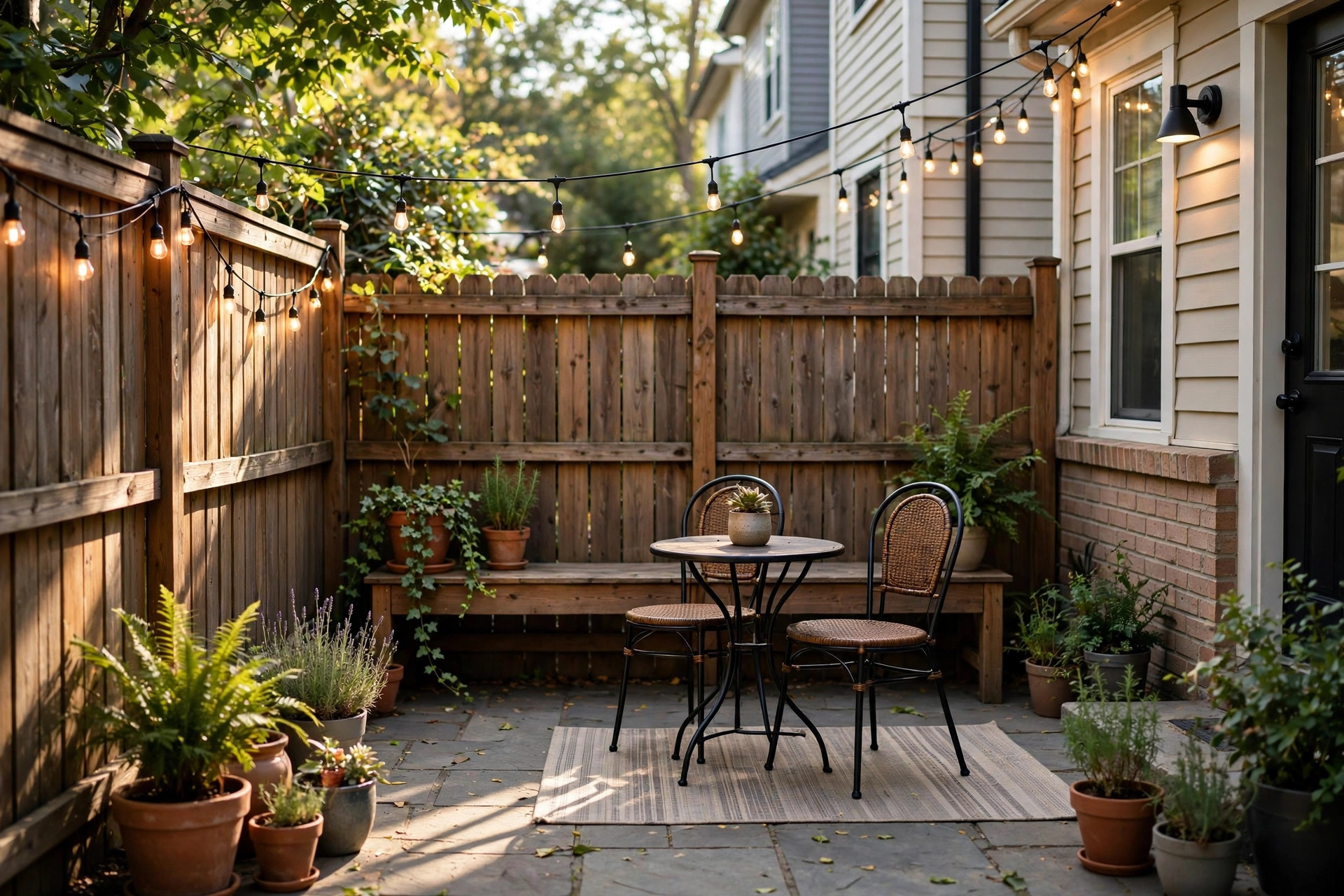

Patio furniture for townhouse backyard ideas can turn a small strip of yard into a place you use every day. Many townhouses come with a backyard that is narrow, deep, and short. The space may be only twenty feet across and thirty feet long. Some yards are even smaller. A wise plan makes such a yard feel open and useful. A poor plan makes it feel cramped.
The aim is simple. Choose pieces that fit the space. Leave room to walk. Give the yard a clear use. This guide shows how to pick patio furniture for a townhouse backyard. It covers layout, materials, cost, care, and safety. It answers common questions. It helps you buy once and buy well.
Why Small Yards Need a Different Plan
A townhouse backyard is not a small version of a large yard. It is a different kind of space. Walls or fences stand close on two or three sides. The home itself takes up one edge. The deck or patio slab is often small.
Furniture made for big yards swamps this space. A six-chair dining set may eat half the yard. A long chaise lounge may block the door. When the furniture is too large, the yard feels like storage. No one wants to sit there.
The right patio furniture for townhouse backyard ideas respects the scale. Slim chairs. Round tables. Benches that double as storage. Each piece earns its place. The yard then feels calm and open. You will use it more than you expect.
Measure First, Shop Second: Patio Furniture for Townhouse Backyard Ideas
Before you buy anything, take a tape measure. Walk the yard. Write down the length and width. Note the back door. Note the gate. Note where the sun falls in the morning and the afternoon.
Mark the paths you must keep clear. You need at least thirty inches of walking space. The path from the back door to the gate matters most. The path around a grill matters too.
Tape off the floor plan with painter’s tape. Place tape where a table would sit. Place tape where chairs would go. Sit in the empty space for a day. You will learn where the shade falls. You will see where the view is best. Then shop.
This one step prevents the most common error. Many people buy first and then learn the pieces do not fit. Measure first and you avoid returns.
Pick One Main Use
A small yard can do one job well or many jobs badly. Pick one main use. Let it guide every choice.
The most common uses are:
Quiet sitting. Two chairs and a small table. A place for morning coffee. This suits a yard under one hundred square feet.
Small dinners. A bistro table and two or four chairs. This suits hosts who eat outside often.
A lounge corner. A small loveseat or two armchairs. This suits readers and evening talk.
A grill zone. A compact grill and a prep cart. This suits cooks. Keep the grill away from the door and the fence. Follow local fire codes.
Once you pick the use, match the furniture to it. Do not buy a dining set when you mostly want a reading spot. The furniture should serve the life you live, not the life you imagine.
The Best Furniture Types for Townhouse Yards
Bistro Sets
A bistro set is a small round table with two chairs. It fits on a four-foot square of patio. It is the classic choice for a townhouse yard. It works for coffee, meals, and cards. Many fold flat for storage. Look for powder-coated steel or cast aluminum.
Slim Armchairs and Loveseats
Deep lounge chairs feel good but eat space. Slim armchairs with firm cushions fit better. A loveseat seats two in the space of two chairs. If you want a soft feel, consider a best outdoor sectional sofa for small patios made for tight spaces. Choose one sized for a porch, not a pool deck.
Benches With Storage
A storage bench does two jobs. It seats two people. It holds cushions, tools, and toys inside. Place it against the fence. It saves floor space and cuts clutter.
Folding and Stacking Chairs
Extra seating helps when guests come. Folding chairs lean flat against a wall. Stacking chairs pile in a corner. Both free the yard on a normal day. Buy chairs that match your main set so guests do not notice the change.
Classic Wood Chairs
Adirondack chairs suit a relaxed yard. They are wide, so measure before you buy. If you are tall or broad, read a guide on the best adirondack chair for tall people before you order. A chair that fits your body gets used. One that does not becomes decoration.
Choose Materials That Survive the Weather
Townhouse yards often lack sheds. Furniture stays outside all year. The material decides how long it lasts and how much care it needs.
Aluminum. Light and rust-proof. It lasts for years with little care. It is the safest pick for most buyers.
Steel. Strong and heavy. It resists wind. It can rust if the coating chips. Check joints each spring.
Teak and eucalyptus. Wood looks warm and natural. It needs oil or sealant once a year. It turns silver-gray if you leave it alone. Many people like the gray.
Wicker and rattan. Synthetic wicker lasts longer than natural. Real rattan cracks in rain and sun. Choose resin wicker for a yard without cover.
Plastic and polywood. Recycled plastic lumber, sold by makers like Polywood, needs almost no care. It is heavy and stays put in wind. Colors fade slowly over many years.
Fabrics. Cushion fabric must be outdoor-rated. Look for solution-dyed acrylic. It resists sun and mildew. Plain cotton cushions rot in one season. Waterproof or quick-dry pillows help after rain; see reviews of waterproof outdoor throw pillows for patio for ideas that hold up.
Retailers such as Wayfair and IKEA carry pieces sized for small patios, and guides at The Spruce can help you compare materials side by side.
Arrange the Yard in Zones
A yard feels larger when it has clear zones. Divide the space into two or three parts. The parts can be small. What matters is that each has a purpose.
The door zone. Keep the first three feet outside the back door clear. This is where you step out with food or drinks. A small mat and a hook for a bag are enough.
The main zone. This holds the main furniture. Center the best seat on the best view. In a townhouse yard, the view may be the fence. Dress the fence with plants or a trellis. Then the chair has something pleasant to face.
The corner zone. Corners are dead space unless you claim them. A corner bench fits well here. A tall planter in a corner draws the eye up. A small water feature in a corner adds sound and hides traffic noise.
Keep lines clear. You should see from the door to the far fence without a chair blocking the view. Long sight lines make small spaces feel big.
Light the Yard for Evenings
Most people use their yards after work. Good light doubles the hours you enjoy it.
String lights are the simplest fix. Hang them from the fence to the house. They cost little and need no wiring. Solar lights charge by day and glow by night. Place them along the path.
A lantern on the table sets a mood. Battery candles are safe near fabric. Avoid open flame near cushions and wood fences. If you use a fire pit, keep it far from the house and the fence. Check local rules. Many towns limit open fires in small yards.
Lamp and lighting ideas from HGTV can show how little light a small yard needs to feel warm.
Add Shade Without Losing Space
A townhouse yard can be a heat trap. Fences block the breeze. Sun bounces off walls. Shade matters.
A small umbrella shades a bistro table. A cantilever umbrella swings over a loveseat without a pole in the way. Shade sails stretch from wall to fence. They cost more but cover a large area.
Pergolas are popular but heavy for small yards. A wall-mounted awning gives shade and folds away. It keeps the floor clear. Whatever you pick, anchor it well. Wind gusts hit hard between buildings.
Consumer Reports tests shade products for strength and UV protection. Their ratings help you avoid a cheap umbrella that flips in the first storm.
What It Costs
Prices for patio furniture for a townhouse yard vary by material and brand. These are rough ranges in U.S. dollars.
– Bistro set: 80 to 400 dollars. – Two slim armchairs: 150 to 600 dollars. – Small loveseat: 200 to 900 dollars. – Storage bench: 100 to 350 dollars. – Round dining table for four: 150 to 700 dollars. – Umbrella with base: 60 to 300 dollars. – String lights: 15 to 60 dollars. – Outdoor cushions, set of four: 40 to 150 dollars.
A full small-yard setup often costs 400 to 1,200 dollars. Start with the main pieces. Add lights and decor over time. Buy the best frame you can afford. You can replace cushions later. You cannot fix a weak frame.
Home Depot and Lowe’s stock budget sets, while Frontgate and Article sell higher-end small-space lines if you want to spend more.
Care and Upkeep
Outdoor furniture lasts longer with small, regular care. Do it at the start and end of each season.
Clean frames. Wash aluminum, steel, and plastic with soap and water. A soft brush lifts grime from joints. Rinse well. Dry in the sun.
Care for wood. Scrub teak with a wood cleaner once a year. Oil it if you want the brown color. Let it weather if you like the gray. Tighten bolts each spring. Wood shrinks and shifts with the seasons.
Wash cushions. Remove covers if they zip off. Machine-wash on gentle. Air-dry. Do not leave foam cores in the rain. Store cushions in a deck box or a storage bench during storms.
Cover or store. Covers keep off rain and bird droppings. They also trap moisture, so use breathable covers. In winter, store folding pieces indoors if you can. Wind and ice wear out joints.
Check hardware. Tighten screws and bolts twice a year. Replace rusted screws with stainless ones. A wobbly chair is a warning. Fix it before it breaks.
Guides from Bob Vila and This Old House walk through seasonal care step by step for each material.
Safety in a Tight Yard
Small yards bring furniture close to the house, the fence, and the grill. Keep safety in mind.
– Keep grills at least ten feet from the house and the fence. Never grill under an awning. – Anchor umbrellas with a heavy base. A falling umbrella can hurt a child or break a window. – Keep fire pits away from wood fences and dry plants. Check town rules first. – Choose stable chairs for older guests. Low, deep seats are hard to rise from. – Keep paths lit at night. One trip on a step can end a summer of use. – Store cushions dry. Damp cushions grow mold. Mold can harm people with allergies. – Check fence-mounted items. A heavy planter on a weak fence can fall.
The CPSC offers safety notes on outdoor products. Read them before you hang heavy items or set up a fire feature.
Common Errors to Avoid
Buying too big. Measure twice. A table that seats six rarely fits a townhouse yard.
Blocking the door. The back door must open fully. Leave a clear swing path.
Too many small items. Ten small pots and three tiny chairs look cluttered. Fewer, larger pieces look calm.
Ignoring the fence. The fence is your backdrop. Paint it, stain it, or cover it with plants. An ugly fence ruins good furniture.
No storage plan. Cushions, toys, and tools need a home. A storage bench or deck box keeps the yard tidy.
Forgetting drainage. Water pools on flat patios. Slope furniture feet or use risers. Do not let wood legs sit in standing water.
FAQ
What is the best furniture layout for a narrow townhouse backyard? Place the main seating at the far end of the yard. Keep the middle clear as a path. Put storage along the fence. This draws the eye through the space and makes it feel longer.
How much furniture fits in a 10 by 20 foot yard? A yard that size holds a bistro set, two lounge chairs, and a storage bench with room to walk. It also holds a small dining set for four. Do not try to fit both. Pick one main set and add small extras.
Should I choose a dining set or lounge chairs? Choose by how you spend time outside. If you eat outside most nights, buy the dining set. If you read and talk, buy lounge chairs. A bistro set does a little of both and suits most small yards.
How do I make a townhouse backyard look bigger? Use one color family. Keep sight lines open. Raise the eye with tall plants or a trellis. Use a mirror on a shaded fence with care. Fewer pieces in matching tones always look larger than many mixed pieces.
What is the lowest-maintenance patio furniture? Aluminum frames with sling fabric need the least care. Recycled plastic lumber is a close second. Both survive rain and sun with a simple wash. Avoid natural wood and cotton cushions if you want to do nothing.
Can I put a fire pit in a small townhouse backyard? Sometimes, but check local codes first. Many towns ban open fires near homes. A tabletop propane fire feature is often allowed and safer. Keep any flame far from fences, plants, and the house.
A Short Final Word
A townhouse backyard is small, but it is yours. A few well-chosen pieces can make it the best room of the house. Measure first. Pick one use. Buy frames that last. Keep the paths clear. Add light and shade. The yard will reward you every evening you step outside.
References
Article. (n.d.). Modern furniture. https://www.article.com Frontgate. (n.d.). Outdoor furniture and decor. https://www.frontgate.com IKEA. (n.d.). Home furnishings. https://www.ikea.com Lowe’s. (n.d.). Home improvement products. https://www.lowes.com Polywood. (n.d.). Outdoor furniture. https://www.polywood.com The Home Depot. (n.d.). Home improvement products. https://www.homedepot.com The Spruce. (n.d.). Home and garden advice. https://www.thespruce.com Wayfair. (n.d.). Furniture and home goods. https://www.wayfair.com
Was this guide helpful?

About Lisa Anderson
The My Garden US editorial team writes practical, in-depth home and garden guides for American homeowners — tested advice, no fluff.
You May Also Like

Patio Furniture Covers for Winter Storage: A Practical Guide
March 8, 2026 0 views
How to Refinish Teak Outdoor Furniture: A Plain Guide for Every Owner
March 10, 2026 0 views
The Best Patio Lights for Evening Entertaining
June 25, 2026 0 views