Most outdoor rug guides start with "hose it down." That is fine if you have a hose. If you live in an apartment, a condo, or a house where the spigot is on the other side of the building, you need another way. The good news is that a bucket, a brush, and some dish soap handle nearly every outdoor rug job. If you are new to outdoor rug care without a hose, start with the basics below.
Table of Contents
Table of Contents
This guide covers the full no-hose routine: daily and weekly upkeep, deep cleaning with a bucket, spot treatments for common stains, and how to dry the rug so it never smells musty.
Outdoor Rug Care without a Hose: Know Your Rug First
When it comes to outdoor rug care without a hose, getting the details right makes all the difference.

Many homeowners find that outdoor rug care without a hose is easier than they expected once they know the basics.
Outdoor rugs come in a few main materials, and each likes slightly different care.
Polypropylene. The most common outdoor rug material. It shrugs off water, resists stains, and dries fast. It handles scrubbing well. Most of the advice in this guide was written with polypropylene in mind.
Polyester. Similar to polypropylene but a bit softer. Clean it the same way, just go easier on the scrubbing.
Natural fibers. Jute, sisal, and similar plant fibers look great but hate soaking. If your rug is natural fiber, keep water use light. Damp cleaning only, and dry it fast. Linen rug care guides recommend a controlled surface-cleaning method for these materials: a lightly dampened sponge, no soaking, and drying flat in a shaded, ventilated spot.
Recycled plastic. Tough and nearly waterproof. You can be generous with water and soap.
Check the label on the back of your rug before you start. If it says dry clean only or warns against water, believe it.
The Weekly No-Hose Routine
Many homeowners find that outdoor rug care without a hose is easier than they expected once they know the basics.
The key to outdoor rug care without a hose is choosing the right approach for your space and budget.
Regular light care beats rare deep cleans. Spend ten minutes a week and your rug will look good for years.
Shake it out. Take the rug to the edge of the patio or balcony and shake it hard. You will be amazed how much dust and grit falls out. For big rugs, fold it in half and shake one side at a time.
Sweep or vacuum. A broom works, but a vacuum with the beater bar turned off is better. Vacuum both sides if you can. Grit that sits in the fibers grinds them down every time someone walks across. Safavieh's care instructions for their outdoor rugs stress suction-only vacuuming for exactly this reason.
Spot check. Walk the rug and look for new stains. Fresh stains come out easily. Old stains set and become permanent residents.
Air it out. Every week or two, hang the rug over a railing, a fence, or a couple of chairs for a few hours. Air circulation keeps mildew away. Consumer Reports specifically recommends this for people without hose access: hang the rug, let air do the work.
Deep Cleaning With a Bucket
The key to outdoor rug care without a hose is choosing the right approach for your space and budget.
With a little planning, outdoor rug care without a hose can fit even a busy schedule.
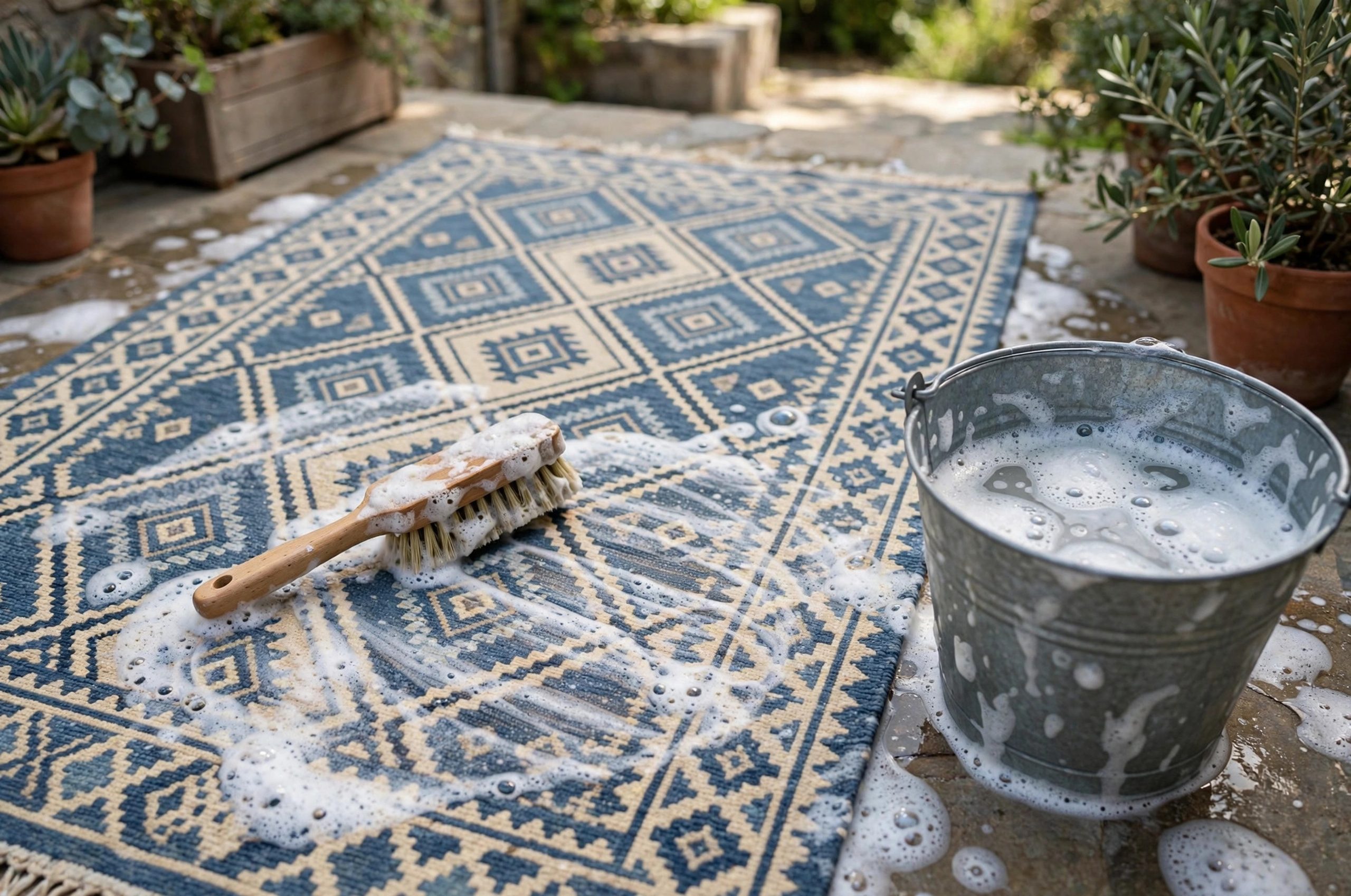
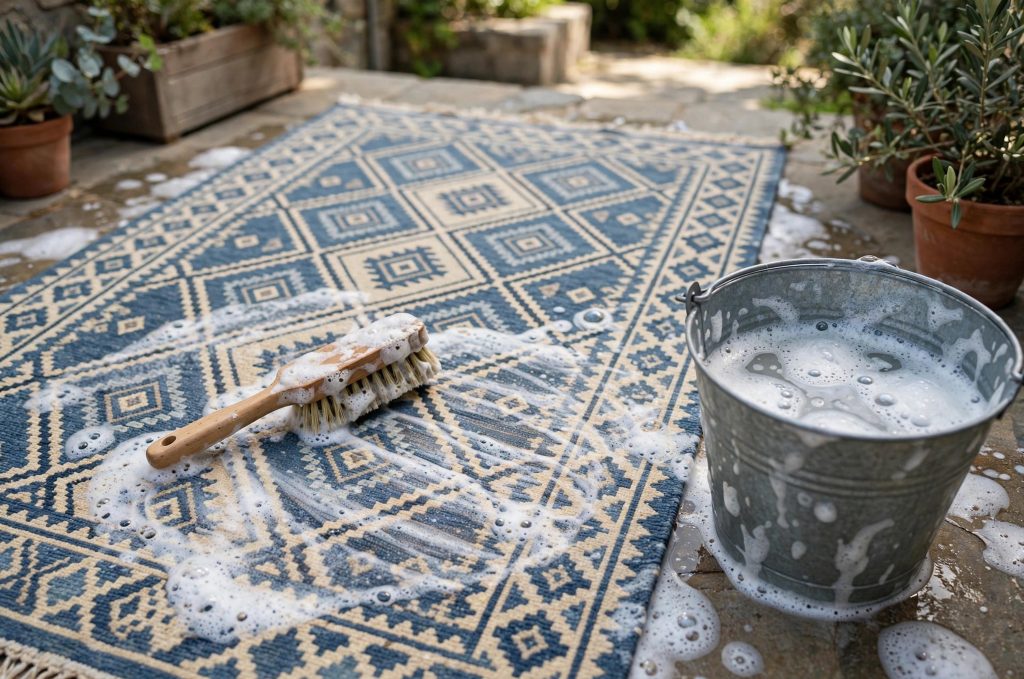
Once or twice a season, give the rug a real wash. Here is the no-hose method.
What you need. Two buckets, mild dish soap or a gentle laundry detergent, a soft-bristle brush or deck brush, clean rags or old towels, and a spray bottle if you have one.
Step 1: Prep. Shake and vacuum the rug first. Move it to a spot where you can work, ideally in the sun. Sunlight helps it dry later.
Step 2: Mix your solution. Fill a bucket with warm water and add a small squirt of dish soap. You want it barely sudsy. Too much soap leaves a sticky film that attracts dirt. A bucket-based method tested for rugs without pressure washers uses this same light-soap approach.
Step 3: Scrub in sections. Dip the brush in the soapy water and scrub a section of the rug in the direction of the weave. Work in squares about three feet across so you do not lose track. Pay extra attention to traffic paths and spots under chairs.
Step 4: Rinse with clean water. This is where people mess up. Soap left in the fibers turns the rug into a dirt magnet. Fill the second bucket with clean water and go over each section with a clean rag or a fresh brush, wringing often. Change the rinse water when it gets cloudy. A step-by-step guide from cleaning experts confirms that buckets of clean warm water work fine as a rinse when no hose is available.
Step 5: Blot up excess water. Press old towels into the rug to pull out as much water as you can. The less water left in the fibers, the faster it dries and the lower the mildew risk.
Step 6: Dry completely. Lay the rug flat in the sun if you can. If space is tight, hang it over a railing so air reaches both sides. Flip it once. Do not put furniture back on it until it feels dry all the way through. Press your fingers deep into the pile. If you feel any dampness, give it more time.
Spot Cleaning Common Stains
With a little planning, outdoor rug care without a hose can fit even a busy schedule.
Before you start, it helps to understand how outdoor rug care without a hose works in real homes.
Treat stains the day they happen. Here is how to handle the usual suspects.
Food and drink. Blot up what you can with a dry cloth. Never rub. Rubbing pushes the stain deeper and spreads it. Mix a little dish soap with warm water, dab it on with a cloth, then blot with clean water. Repeat until the spot is gone.
Grease from the grill. Sprinkle baking soda or cornstarch on the spot and let it sit for fifteen minutes to pull up the oil. Brush it off, then clean with the soap solution.
Mildew. Mix one part white vinegar with three parts water in a spray bottle. Spray the spot, let it sit ten minutes, scrub lightly, and blot dry. For stubborn mildew on synthetic rugs, a weak bleach solution works, but test a hidden corner first and rinse well. Gloster's official care sheet for their Sunbrella outdoor rugs recommends a mild detergent solution for spot cleaning and warns against harsh chemicals.
Pet accidents. Blot up the liquid, then clean with an enzyme-based pet stain cleaner from the pet aisle. Enzyme cleaners break down the proteins that cause lingering smell. Regular soap does not.
Sunscreen and oils. Dish soap is your friend here. It is made to cut grease. A drop of soap on a damp cloth, worked into the spot, then blotted with clean water.
Always test any cleaner on a hidden corner first. Even gentle products can surprise you on some dyes.
With the basics clear, outdoor rug care without a hose becomes straightforward.
Drying Without a Yard
Before you start, it helps to understand how outdoor rug care without a hose works in real homes.
A good plan for outdoor rug care without a hose saves time, money, and frustration.
Drying is the hard part of no-hose rug care, especially in an apartment. A damp rug that cannot dry grows mildew in a day or two.
Use the railing. Drape the rug over a balcony railing so both sides get air. This is the single best apartment drying method.
Create airflow. If you must dry indoors, open windows and point a fan at the rug. A dehumidifier in the room speeds things up a lot.
Never fold it damp. Rolling or folding a damp rug traps moisture in the middle. It will smell within days. Wait until it is fully dry.
Sun is best. UV light kills mildew and freshens the fibers. Even a few hours of direct sun makes a difference. Care tips from rug makers consistently rank sun-drying as the top finishing step.
Off-Season Storage
A good plan for outdoor rug care without a hose saves time, money, and frustration.
For most people, outdoor rug care without a hose comes down to a few smart choices.
If your climate has a real off-season, store the rug instead of leaving it out to suffer.
Clean it fully first. A dirty rug in storage becomes a stained rug by spring. Let it dry completely. Roll it, never fold it. Folding creases the backing and can crack it. Store it in a dry spot like a garage, basement, or closet. A breathable canvas bag keeps dust off. Skip the plastic bag, which traps any leftover moisture.
If you have no indoor storage, at least move the rug to the most sheltered spot you have and cover it with a breathable tarp. Check on it after heavy rain.
Making Rugs Last Longer
For most people, outdoor rug care without a hose comes down to a few smart choices.
If you are new to outdoor rug care without a hose, start with the simplest option and build from there.
A few habits stretch the life of any outdoor rug.
Buy for your cleaning reality. If you have no hose, a flat-weave polypropylene rug is the easiest to keep clean by hand. Dirt sits on the surface instead of hiding in deep pile, and a damp cloth handles most messes. Low-maintenance rug makers design their polypropylene rugs around exactly this: vacuum now and then, wipe spots with a damp cloth, and skip the complicated routine.
Rotate it. Turn the rug end to end once a season. Traffic wears one path hardest. Rotation spreads the wear.
Use a rug pad. A pad made for outdoor use keeps the rug from sliding, adds cushion, and lets air flow underneath. That airflow fights mildew.
Lift furniture sometimes. Chairs and table legs press dents into the pile. Move pieces a few inches now and then, or use furniture cups to spread the weight.
Keep it out of standing water. A rug sitting in a puddle after every rain will not last. Fix the drainage or move the rug.
When the rug is truly worn out, replace it without guilt. Outdoor rugs are meant to be used hard. Buying two affordable rugs and rotating them can actually cost less over time than nursing one expensive rug.
Choosing Your Next Rug
If you are new to outdoor rug care without a hose, start with the simplest option and build from there.
When this one wears out, shop with no-hose care in mind. Flat-weave polypropylene rugs are the easiest to clean by hand because dirt sits on the surface instead of hiding in deep pile. Lighter colors show dirt faster but dry cleaner looking. Darker colors hide dirt but fade faster in sun. Our guide to the best fall outdoor rug for porches covers seasonal picks, and a good welcome mat at the door keeps half the dirt off the rug in the first place. For hard surfaces under the rug, see the best outdoor tile for screened porches. A little care goes a long way with outdoor rug care without a hose.
References
When it comes to outdoor rug care without a hose, getting the details right makes all the difference.
- Buy Area Rugs. (n.d.). Safavieh Martha Stewart global rug: Care instructions. https://buyarearugs.com/collections/rectangular-rugs/products/safavieh-martha-stewart-global-msro226f-grey-light-grey-rug
- Consumer Reports. (n.d.). How to care for outdoor rugs. https://www.consumerreports.org/outdoor-rugs/how-to-care-for-outdoor-rugs-a1155940785/?itm_source=parsely-api
- Gloster. (n.d.). Outdoor rugs care and maintenance sheet. https://d23zy84q2vn4qy.cloudfront.net/PDF/GlosterPDFs/Gloster+Outdoor+Rugs+Care+Sheet.pdf
- Green Decore. (n.d.). Outdoor rug care tips. https://www.greendecore.co.uk/collections/garden-patio-rugs/products/liza-outdoor-recycled-plastic-rug-aqua-blue-yellow?_pos=2&_fid=84f87270b&_ss=c
- Jute Rugs US. (n.d.). Alora dark gray outdoor rug: Care notes. https://juterugs.us/products/alora-outdoor-indoor-area-rug-dark-gray
- Pressure Washer Universe. (n.d.). How to clean outdoor rug without pressure washer. https://pressurewasheruniverse.com/how-to-clean-outdoor-rug-without-pressure-washer/
- The Rugs. (n.d.). How to clean an outdoor rug: Hose, scrub and dry. https://the-rugs.com/blogs/how-to-guides-for-home-owners/how-to-clean-outdoor-rug
- Woman and Home. (n.d.). How to clean an outdoor rug: 6 easy steps from experts. https://www.womanandhome.com/homes/how-to-clean-an-outdoor-rug/
Many homeowners find that outdoor rug care without a hose is easier than they expected once they know the basics.
Was this guide helpful?

About My Garden US
The My Garden US editorial team writes practical, in-depth home and garden guides for American homeowners — tested advice, no fluff.
You May Also Like
How to Clean Outdoor Pillows Mildew: A Plain Guide to Fresh Patio Cushions
February 10, 2026 1 views
How to Anchor Gazebo to Patio: A Safe and Simple Guide
April 7, 2026 2 views
Outdoor Curtains for Gazebo: Waterproof Reviews You Can Trust
July 28, 2026 2 views