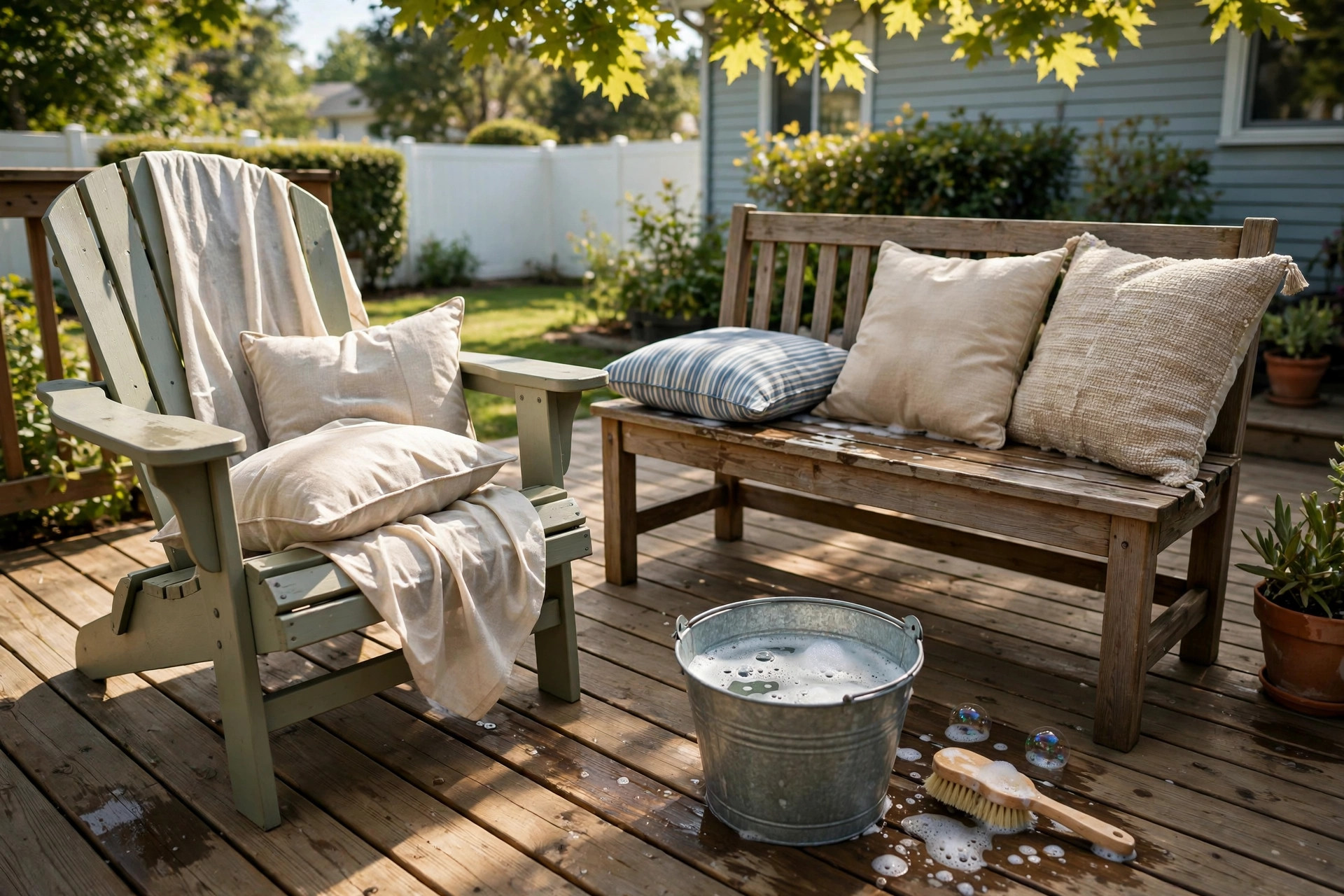

A green or black patch on a porch pillow is a common sight by late summer. If you have wondered how to clean outdoor pillows mildew, you are not alone. Warm air, damp nights, and shaded corners let mildew grow on fabric that looks dry to the eye. The good news is that most pillows can be saved. A mild cleaner, a soft brush, and a sunny afternoon are often enough to bring them back. This guide walks through the full job in simple steps, from spotting the problem to keeping it from returning.
Why Mildew Grows on Outdoor Pillows
Mildew is a type of fungus. It feeds on tiny bits of dirt, pollen, and dead skin that settle on fabric. It loves warmth and moisture. Pillows left out through humid nights or put away while still damp give it the perfect home. Even high quality outdoor fabric can grow spots if it stays wet for days. Shaded porches, spots under umbrellas, and low corners of sectionals are the usual trouble places.
The damage goes beyond looks. Mildew leaves dark stains that get harder to remove the longer they sit. It also weakens thread and filling over time. In worst cases the smell alone makes a chair you loved hard to use. Learning how to clean outdoor pillows mildew early, at the first sign of spots, saves money and keeps your patio ready to use. Most experts say to treat pillows at least once or twice a season, and guides at The Spruce note that fast action stops small spots from spreading across the whole cushion.
Certain climates make the job harder. Humid states and coastal towns see mildew almost year round, since night air rarely drops below the damp mark. A pillow that feels dry at noon can hold moisture in its core from the night before. Shade also plays a role. A porch under a big tree stays cooler and wetter than a sunny deck. If your seats sit in shade most of the day, check them more often. Knowing how to clean outdoor pillows mildew in these spots is less about one big wash and more about a habit of small checks.
What You Will Need: How to Clean Outdoor Pillows Mildew
Gather your supplies before you start. A mild dish soap, a bucket of warm water, and a soft brush cover most jobs. White vinegar and oxygen bleach are the two extra helpers for tough cases. You will also want a garden hose, clean towels, and a sunny spot to dry the pillows. Skip the harsh stuff. Regular bleach can fade fabric, and a stiff wire brush can tear weave. Care guides from Bob Vila and the home stores like Lowe’s agree that gentle tools do the best work on outdoor fabric.
Check the care tag on each pillow first. Some covers can be removed and put in the washer. Others must be cleaned by hand. If the tag warns against certain cleaners, follow it. Makers of outdoor furniture, such as Polywood, often publish care notes for their fabric lines, and those notes are worth a quick read before you begin.
How to Clean Outdoor Pillows Mildew, Step by Step
Work on a calm, dry day. Morning is best, so the sun can dry the pillows all afternoon.
Step 1: Knock Off Loose Dirt
Take the pillows outside. Slap them against a clean surface or shake them hard to knock off dust and loose spores. Use a dry soft brush to sweep the mildew spots. This step keeps the spots from smearing deeper into the fabric when you add water.
Step 2: Rinse With the Hose
Spray each pillow with plain water from a garden hose. A medium spray is fine. Do not use a pressure washer. Strong water can push mildew deeper and break the fabric. Wet the whole pillow so the cleaning mix spreads even.
Step 3: Mix a Mild Soap Wash
Add a squirt of dish soap to a bucket of warm water. A spoonful or two is plenty. Dip your soft brush in the mix and scrub the spots in small circles. Give the whole pillow a light pass too, since spores hide in clean looking spots as well. Let the soap sit for ten to fifteen minutes. This is the same gentle method used in many guides on how to clean outdoor furniture cushions, and it works well on pillows of all shapes.
Step 4: Treat Stubborn Spots
If spots stay dark after the soap wash, move to a stronger mix. White vinegar in a spray bottle is a good next step. Spray the spots, wait ten minutes, and scrub again. For heavy cases, mix oxygen bleach powder with warm water as the box directs. Apply it to the spots and let it sit for up to an hour. Scrub once more. Oxygen bleach lifts stains without the harm that liquid chlorine bleach causes, and it is sold at retailers like Home Depot.
Step 5: Rinse Clean
Hose the pillows down until the water runs clear and no soap foam is left. Soap left in the fabric can attract dirt later. Turn the pillows and rinse both sides. Squeeze them gently to push out extra water, but do not wring them like a towel. Twisting can bend the filling out of shape.
Step 6: Dry in the Sun
Set the pillows upright in full sun with air moving around them. Turn them every hour or two. Sunlight itself helps kill leftover spores, and fast drying stops new mildew from forming while the pillow is wet. Most pillows need four to eight hours. Never put a damp pillow in a storage box. It must be fully dry first, down to the middle of the filling.
Types of Mildew Remedies: Soap, Vinegar, and Oxygen Bleach
Three cleaners cover almost every case. Pick the mildest one that works.
Mild soap suits light spots and regular spring cleaning. It is cheap, safe for every fabric, and gentle on stitching. Use it as your first try each season.
White vinegar suits spots that soap alone will not lift. Its acid breaks down mildew without harsh fumes. Rinse it off well, since the smell fades as it dries. Testing groups at Consumer Reports have looked at many household cleaners and note that simple acids like vinegar handle light mildew on outdoor fabric well.
Oxygen bleach suits deep or old stains. It works slower than chlorine bleach but is far safer for color and fiber. Always test a hidden corner first. If color holds, go ahead. Never mix it with other cleaners, and follow the box timing.
Some store bought mildew sprays also work, but read the label to make sure they are safe for your fabric type. Natural fiber covers need a lighter hand than acrylic outdoor fabric.
Always start with the weakest cleaner. Many light spots come off with soap alone, and you never need to go further. Jump to a stronger mix only when the spot stays dark after the first wash and rinse. Keep notes as you work. If vinegar did the job on one pillow, it will likely do it again next time, and you can skip the guessing. For pillows with deep piping or trim, work the brush into the folds. These tight spots trap moisture and are where mildew often starts.
What Cleaning Costs
A full clean is one of the cheapest home jobs. Dish soap and vinegar likely sit in your kitchen already. A box of oxygen bleach powder costs a few dollars and treats dozens of pillows. A soft scrub brush may cost a few more dollars if you do not own one. All told, most people spend under fifteen dollars. Compare that to new outdoor pillows, which can run twenty to sixty dollars each at shops like IKEA or Frontgate, and the savings are clear. An hour of work each season protects a full set.
Keeping Pillows Free of Mildew
Cleaning is only half the job. These habits keep spots from coming back.
Store pillows under cover when rain is due. A deck box or a covered bench works. For pieces that stay out all season, weatherproof patio furniture covers add a strong shield against damp nights and morning dew. Pick covers that fit loosely so air can still move underneath.
Give pillows air every day. Stand them on edge for a while instead of leaving them flat in the seat. Wet filling dries slow, so anything that speeds airflow helps. If you have room, hang them over a railing after a storm.
Wash the pillows once each spring and once at season end, even if they look clean. A regular wash removes the pollen and dust that mildew feeds on. When you buy new pillows, look for waterproof outdoor throw pillows with mold resistant filling. Quick dry foam and solution dyed acrylic hold up far better in wet climates. Design sites like HGTV show how these modern fabrics keep patios looking fresh with less work.
Safety
Mildew is a mild irritant, not a disaster, but treat it with care. Wear gloves and keep the pillow at arm length while you scrub. People with asthma or allergies should work upwind and may want a dust mask. Keep cleaners off plants and grass. Rinse any runoff into soil with plain water after the job. Never mix vinegar with bleach or oxygen bleach with other cleaners. Read every label before you mix or spray, and keep children and pets away until the pillows are rinsed and dry.
Frequently Asked Questions
Can I put outdoor pillow covers in the washing machine?
Yes, if the care tag allows it. Use cold or warm water on a gentle cycle with mild soap. Skip the dryer. Air dry in the sun. Removable covers are the easiest to keep clean, since a machine wash reaches places a brush cannot.
Will vinegar damage outdoor fabric?
White vinegar is safe for most outdoor fabrics, including acrylic and polyester blends. Still, test a hidden spot first. Rinse well after use. Do not use it on natural stone or metal frames nearby, since the acid can mark those surfaces.
How do I remove mildew from pillows I cannot unzip?
Clean the whole pillow by hand with the steps above. Soak is not possible, so rely on thorough scrubbing and rinsing. Stand it on edge in the sun and flip it often. A fan nearby speeds drying. If the inside stays damp for days, mildew will return, so take your time with the drying step.
How often should I clean my outdoor pillows?
A light wash twice a season is enough for most homes. In hot, humid areas, or under trees that drop pollen, wash monthly. A quick brush off each week takes a minute and stops dirt from building up.
Is it cheaper to clean pillows or buy new ones?
Cleaning almost always wins. A full clean costs a few dollars in supplies. New quality outdoor pillows cost far more. Only replace pillows when the fabric is torn, the filling has clumped for good, or the smell stays after two deep cleans.
A Final Word
Knowing how to clean outdoor pillows mildew is a small skill that pays off every summer. A bucket, a brush, and a sunny day turn spotted pillows back into seats you want to use. Treat spots early, dry pillows fast, and store them dry. Your patio will look better, smell better, and last longer for the small effort. The whole habit takes less time than a trip to the store.
References
Bob Vila. (n.d.). Home improvement advice. https://www.bobvila.com Consumer Reports. (n.d.). Product reviews and ratings. https://www.consumerreports.org Frontgate. (n.d.). Outdoor furniture and decor. https://www.frontgate.com HGTV. (n.d.). Home and garden ideas. https://www.hgtv.com IKEA. (n.d.). Home furnishings. https://www.ikea.com Lowe’s. (n.d.). Home improvement products. https://www.lowes.com Polywood. (n.d.). Outdoor furniture. https://www.polywood.com The Home Depot. (n.d.). Home improvement products. https://www.homedepot.com The Spruce. (n.d.). Home and garden advice. https://www.thespruce.com
Was this guide helpful?

About Jennifer Lee
The My Garden US editorial team writes practical, in-depth home and garden guides for American homeowners — tested advice, no fluff.
You May Also Like
How to Winterize Outdoor Furniture Cushions: A Complete Guide
June 21, 2026 0 views
Best Outdoor Bench for Garden Reviews: A Practical Buyer’s Guide
September 19, 2026 0 views
The Best Patio Heater for Large Backyard Spaces: A Full Buying Guide
February 14, 2026 0 views