A hot grill leaves behind grease, smoke, and bits of food. If you learn how to clean BBQ tools after grilling, your tools will last for many years and your food will taste better. Dirty tongs and spatulas carry old grease into the next meal. A dirty brush can drop charred flakes onto fresh food. The job is not hard. It takes a few minutes when the grill is still warm, or a short soak when it has cooled.
This guide walks through the whole job. It covers what to gather, how to clean each type of tool, how much supplies cost, how to keep tools in good shape, and how to stay safe around heat and chemicals.
Why Clean BBQ Tools Right After Grilling
Grease is easy to wipe off when it is warm. Once it cools, it hardens into a sticky layer that is much harder to remove. Food bits left on tools can turn sour in a day or two, and that can bring bacteria to your next cookout.
Clean tools also last longer. Salt, smoke, and meat juices wear down metal over time. A quick wash after each use stops rust before it starts. The Weber support pages note that regular care of grill gear helps tools keep their shape and grip. When tools stay in good shape, you work with less effort and more control at the grill.
There is also the matter of taste. A brush that still holds last week’s burnt sauce will add a bitter edge to this week’s burgers. Cooks who take grilling seriously, like the testers at AmazingRibs.com, stress that clean gear is part of clean flavor. You would not cook with a dirty pan. The same rule fits the grill.
What You Need to Clean BBQ Tools: How to Clean Bbq Tools After Grilling
You do not need fancy products. Most of the job can be done with things already in the kitchen.
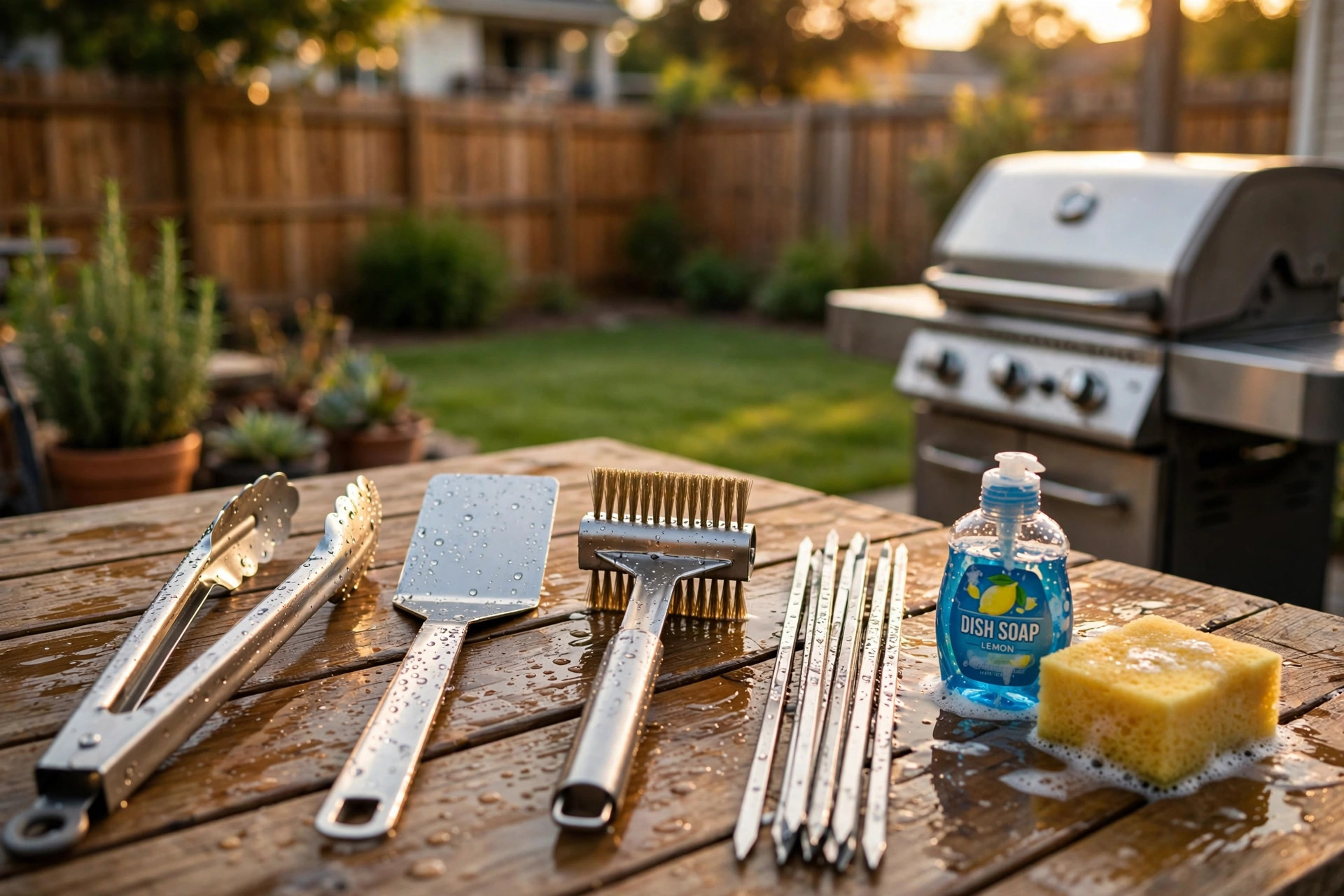
– A bucket or sink of hot water – Dish soap made for grease – A stiff brush or old toothbrush for small parts – Baking soda for tough spots – White vinegar for rust and mineral film – A dry cloth or towel – A sheet of aluminum foil
For tools with heavy buildup, a nylon scouring pad helps. Avoid steel wool on chrome or coated tools. It scratches the finish and opens the door to rust. The care guides at Char-Broil suggest soft cloths and warm soapy water for most parts, and stronger cleaners only for stubborn spots.
If your tools are stainless steel, they will hold up to firmer scrubbing. Readers of Consumer Reports tests know that stainless steel grades differ, so check the label on your set before you reach for strong cleaners.
How to Clean BBQ Tools After Grilling, Step by Step
The best time to start is while the grill is still warm. Wear heat gloves and keep a steady hand.
Step 1: Scrape the Grill Brush
The grill brush works the hardest of all your tools. Hold it over the hot grate and push it back and forth with firm strokes. The heat burns off most of the residue and the bristles sweep it away. For a brush with a wooden handle, keep the handle away from the hottest zones so it does not scorch.
Check the bristles after each use. Loose bristles can end up in food. Many grill makers, including Napoleon, advise replacing a brush when the bristles bend or fall out. A worn brush cleans poorly and can be a hazard.
Step 2: Wash Tongs, Spatulas, and Forks
Fill the sink or bucket with hot water and a good squeeze of dish soap. Drop in the tongs, spatulas, forks, and skewers. Let them soak for ten minutes. Soaking loosens grease so you scrub less.
Use the stiff brush to work each tool, front and back. Pay care to the hinges on tongs, where grease hides. For flat spatulas, run the brush along the edge to lift charred bits. If your set is the best bbq tool set stainless steel style with solid metal heads, you can scrub with more force than you would use on coated tools.
Step 3: Tackle Tough Spots with Baking Soda
Some spots will not move with soap alone. Make a paste of baking soda and a little water. Spread it on the spot and wait ten minutes. Then scrub with the nylon pad. Baking soda is mild and safe for most metals.
For rust spots, soak the tool in white vinegar for an hour. The acid loosens the rust so it wipes off. Rinse well after the soak. This trick works best on small rust patches caught early.
Step 4: Clean the Thermometer and Basting Brush
The meat thermometer needs care. Wipe the probe with hot soapy water and rinse it. Never soak the whole unit if the dial or digital head is not sealed. Dry it right away.
Silicone basting brushes can go into the dishwasher if the label says so. Natural bristle brushes do better with a hand wash in warm soapy water. Shake out the extra water and let them dry with the bristles pointing down.
Step 5: Dry Everything at Once
Wet tools rust. Dry each tool with a clean towel as soon as it is rinsed. Stand them in a dry rack or hang them where air moves. A few minutes in the sun helps, but bring wooden handles inside before they bake too long.
Step 6: Season Wooden Handles
Wooden handles dry out over the grill season. Once a month, rub them with a little food-grade mineral oil. This keeps the wood from cracking and gives you a better grip. The outdoor living guides at The Spruce Eats point out that wood care is often skipped, yet it is the part of the tool you hold every time.
Types of BBQ Tools and How Each One Cleans Up
Stainless Steel Tools
Stainless steel is the workhorse of the grill station. It takes heat, grease, and firm scrubbing. Hot soapy water is enough most days. For baked-on spots, the baking soda paste does the job. Dry them fully to stop water spots.
Chrome-Plated Tools
Chrome looks fine but scratches easily. Use only soft cloths and mild soap. Skip the scouring pads and vinegar soaks. If the chrome starts to flake, it is time for a new tool, since bare metal under the chrome will rust fast.
Wooden-Handled Tools
Wash only the metal head in the sink. Keep the wooden handle out of long soaks. A quick wipe with a damp cloth is enough for the wood. Oil the handle each month in grilling season.
Silicone and Heat-Resistant Tools
Silicone heads clean up well in the dishwasher. Hand washing works too. Check the maker’s heat rating before you leave them near open flame. Broil King (broilkingbbq.com) and other makers mark these limits on the package.
Grill Brushes and Scrapers
Coil-style brushes have no bristles to shed, which many cooks prefer. They clean up with a soak and a scrub like any metal tool. Brass brushes are softer than steel brushes and suit porcelain-coated grates. Match the brush to the grate so you do not scratch it. Traeger (traeger.com) pellet grill owners often pick coil or brass brushes to protect their grates.
Cost and Price of Cleaning Supplies
Cleaning BBQ tools costs very little. Dish soap runs two to five dollars a bottle, and one bottle lasts the whole season. A box of baking soda costs about a dollar. White vinegar costs two to three dollars a gallon. A stiff brush costs three to eight dollars and lasts for years. A pack of nylon scouring pads costs a few dollars.
If you need a new grill brush, prices run from ten to forty dollars. Coil brushes and high-end models cost more. A basic new tool set can cost twenty to sixty dollars, while heavy stainless sets run higher. Buying cheap tools every year costs more over time than buying one good set and caring for it.
When you buy paper towels for quick wipe-downs at the grill, a best outdoor paper towel holder for grill keeps them dry and within reach. It is a small cost that makes the cleanup routine smoother.
Care and Upkeep Through the Season
A little routine keeps tools ready all summer.
– Rinse tools after every cookout, even a quick one. – Deep-clean with baking soda once a month. – Check brush bristles each month and replace worn brushes. – Oil wooden handles each month. – Store tools in a dry spot, not in the rain. – Hang tools so heads do not sit in water.
At the end of the season, give everything a full wash and dry. Store the tools indoors if you can. A dry garage or shed beats a damp deck box. Pellet grill and kamado owners, such as fans of Big Green Egg, often store their tools with their grill covers to keep the whole station together.
When spring comes, check each tool before the first cookout. Look for rust, loose rivets, and cracked handles. A few minutes of care at the start of the season saves trouble later.
Safety Tips
Grills stay hot long after the food comes off. Wear heat-resistant gloves when you clean near a warm grill. Keep children and pets away from the grill area during cleanup.
Read the labels on any cleaner you use. Oven cleaners and grill degreasers can be harsh. Rinse tools well so no chemical residue touches food later. Never mix cleaners. Vent the area if you use a strong product.
Watch for loose brush bristles. A stray wire bristle in food can cause real harm. If your brush sheds, replace it at once. Many cooks now use coil brushes to avoid this risk.
Be careful with sharp edges. Skewers and forks are sharp even after cooking. Wash them one at a time and store them with points covered or facing up in a tall holder.
Frequently Asked Questions
How soon after grilling should I clean my tools?
Start right away, while the grill is still warm. A quick scrape and rinse takes five minutes. If you must wait, soak the tools in hot soapy water within a few hours. The longer grease sits, the harder it gets.
Can I put BBQ tools in the dishwasher?
It depends on the tool. Solid stainless steel tools often do fine. Wooden handles, natural bristle brushes, and thermometers with dials should stay out. Check the label first. Hand washing is always the safer choice.
What is the best way to remove rust from BBQ tools?
Soak the rusty part in white vinegar for one hour, then scrub with a nylon pad or an old toothbrush. Rinse and dry at once. For deep rust, sand the spot lightly with fine sandpaper, then oil or season the metal. If rust keeps coming back, replace the tool.
How do I clean a grill brush with stuck-on grease?
Soak it in hot soapy water for fifteen minutes. Then scrub it against the hot grate with firm strokes. A baking soda paste helps with stubborn buildup. If the bristles are bent or falling out, buy a new brush instead of fighting with the old one.
Do I need special cleaners for BBQ tools?
No. Dish soap, baking soda, and vinegar handle almost every job. Special grill degreasers help with heavy buildup, but they are not required for weekly cleaning. Simple cleaners are cheaper and rinse off more easily.
How long should a good set of BBQ tools last?
A good stainless steel set can last five to ten years with regular cleaning. Cheap thin tools may last one or two seasons. When you pair grilling with sides, even simple ones like how to grill asparagus on gas grill, clean tools make the whole cookout go more smoothly.
A Short Final Word
Learning how to clean BBQ tools after grilling is one of the easiest ways to get more from your grill. A few minutes with hot water and soap keeps tools safe, food tasty, and gear lasting for years. Make it part of the cookout routine, right alongside lighting the coals or checking the gas. Your next meal will thank you.
References
AmazingRibs.com. (n.d.). Barbecue and grilling science. https://www.amazingribs.com Big Green Egg. (n.d.). Kamado grills and outdoor cooking. https://www.biggreenegg.com Broil King. (n.d.). Gas and charcoal grills. https://www.broilkingbbq.com Char-Broil. (n.d.). Gas and charcoal grills. https://www.charbroil.com Consumer Reports. (n.d.). Product reviews and ratings. https://www.consumerreports.org Napoleon. (n.d.). Fireplaces, grills, and heating products. https://www.napoleon.com The Spruce Eats. (n.d.). Recipes and cooking guides. https://www.thespruceeats.com Traeger. (n.d.). Wood pellet grills. https://www.traeger.com Weber. (n.d.). Grills and outdoor cooking. https://www.weber.com
Was this guide helpful?

About David Wilson
The My Garden US editorial team writes practical, in-depth home and garden guides for American homeowners — tested advice, no fluff.