Introduction
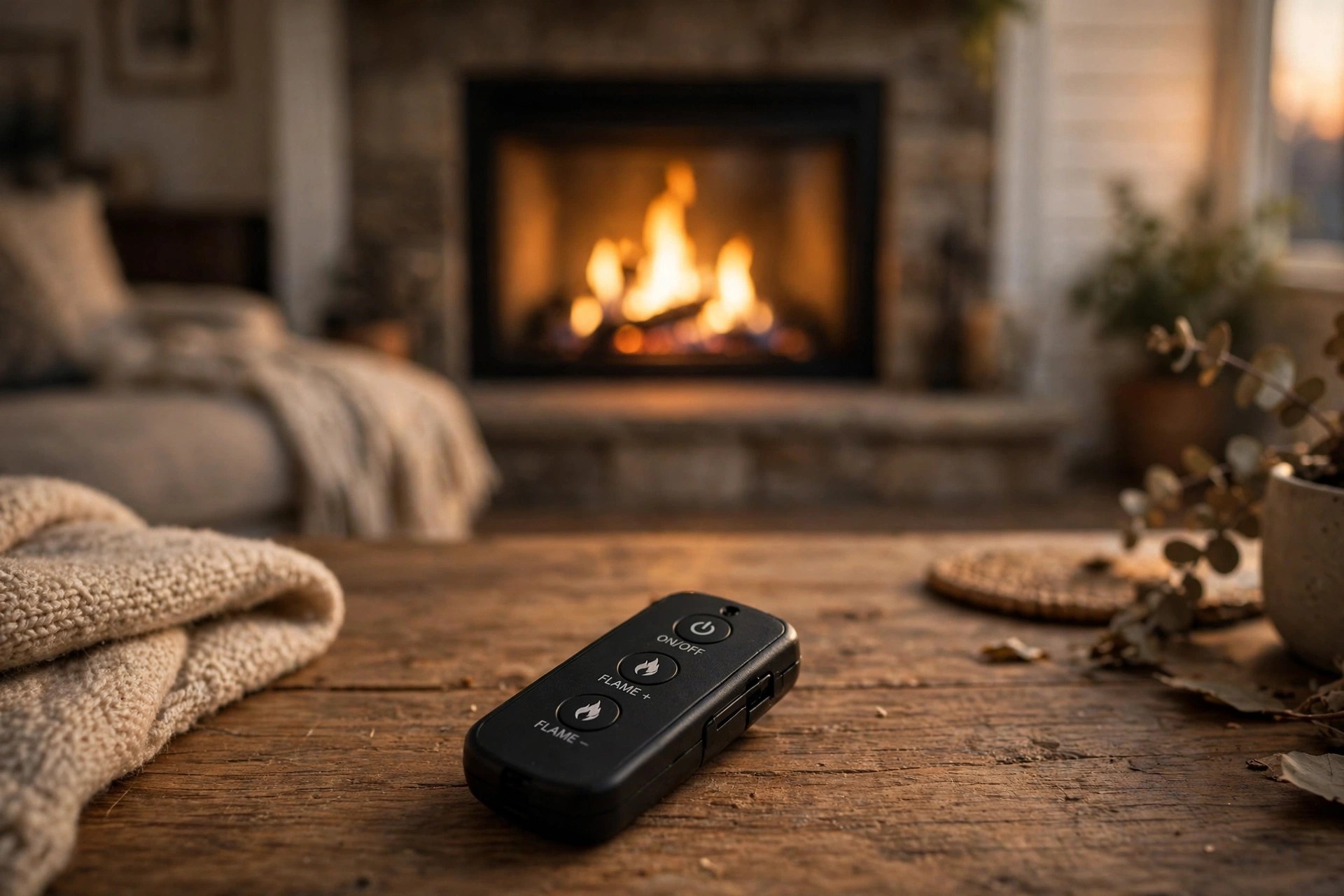
A ventless fireplace adds warmth and comfort to a home with no need for a chimney. The fire turns on with a simple press of a button. When the small remote control is lost or stops working, the pleasure of that easy fire fades fast. Many owners then begin to search for ventless fireplace remote controls for sale.
This guide will help you understand these small devices. You will learn how they work, which type fits your unit, where to find a replacement, and how much you should expect to pay. You will also learn how to care for the remote and how to stay safe when you use it.
Why a Remote Control Matters: Ventless Fireplace Remote Controls for Sale
A ventless fireplace burns gas with no vent and no chimney. The flame stays inside the firebox. A small receiver sits near the gas valve. The handheld remote sends a radio signal to that receiver. The receiver tells the valve to open or close. That is the whole secret. There is no magic in it. It is a small radio and a small switch.
Why does this matter to a home owner? First, it is a question of comfort. A good remote lets you raise the flame or lower it from your chair. Some remotes read the room temperature. They turn the flame up or down on their own to hold the heat steady.
Second, it is a question of safety. Many remotes include a child lock and a safety shutoff. When you shop for ventless fireplace remote controls for sale, look for these safety features on the box.
Third, it is a question of fit. A remote made for one brand may not speak to the receiver of another brand. Knowing which kind your fireplace needs is the most important step of all.
What to Look for Before You Buy
Start by finding the name of your fireplace. Look for a metal plate inside the firebox or on the side of the unit. It will list the brand and the model number. Write these down. Then look for the receiver. It is a small black or gray box near the valve. It may have a switch with three marks: ON, OFF, and REMOTE.
There are three broad types of remote kits sold today.
The first type is the basic on and off remote. It turns the flame on and off. It has two or three buttons. It is simple and cheap. Many older units use this kind.
The second type is the thermostat remote. It has a small screen. It reads the room temperature from a sensor in the handheld unit. You set a target heat. The remote tells the fireplace to work harder or rest. It keeps the room near your chosen temperature. This type saves gas and keeps the room steady.
The third type is the timer remote. It lets you set the fire to run for a chosen time, such as one hour or three hours. Then it shuts the flame down on its own. Some timer remotes also include a thermostat. These are the most costly, but they offer the most control.
Before you order, check which type your receiver can take. Some receivers only accept a basic signal. Others accept a thermostat signal. If you buy a thermostat remote for a receiver that only takes a basic signal, the heat control will not work. The on and off buttons may still work. That is a waste of money. Check the manual for your unit. If the manual is lost, the maker often keeps copies on its site. You can find installation and care guides for fireplaces and home improvement advice for gas units from trusted home resources.
Also check the radio frequency. Most fireplace remotes use 315 megahertz. Some use 433 megahertz. The remote and the receiver must share the same frequency. The box or the manual will list this detail.
Another point to check is the battery type. Most handheld units use small coin batteries or AAA batteries. The receiver box often uses AA batteries. Keep spare batteries in a drawer. A dead battery is the most common cause of a remote that seems broken.
Types and Options on the Market
When you look at ventless fireplace remote controls for sale, you will see two main paths: original parts and universal kits.
Original parts come from the maker of your fireplace. They match your unit by design. If you own a unit from a well known brand, the maker may sell the exact remote that came with it. This is the safest choice. The signal will match. The features will match. The manual will show you how to pair it. The Napoleon fireplaces site and the Heatilator site are good places to study how brand remotes and receivers pair with specific units.
Universal kits come from third party makers. They include both a handheld remote and a new receiver box. You wire the receiver to your gas valve. Then the remote speaks to the new receiver. This is a good choice when the original remote is no longer made. It is also a good choice when the old receiver box is broken. Universal kits cost a bit more, but they give you a fresh start.
There is also a smart home option. Some newer kits link to a home network so you can control the fireplace from a phone. This adds comfort, but it also adds parts that can fail. Keep the simple handheld remote as a backup.
A last option is a simple wall switch. It is not a remote, but it does the same job for a fixed spot on the wall. It is a matter of taste.
Cost and Price
Prices for ventless fireplace remote controls for sale fall into clear bands. A basic on and off remote often costs between twenty and forty dollars. A thermostat remote often costs between forty and ninety dollars. A timer remote with a screen can cost between ninety and one hundred fifty dollars. A full universal kit with a new receiver often costs between fifty and one hundred twenty dollars.
These are guide prices only. Prices move with brand, features, and season. Winter brings higher demand. If your remote is not urgent, you may find a better price in the warm months.
When you compare prices, read the full listing. Some low prices are for the handheld remote only, with no receiver. If your receiver is also broken, you will need the kit. A remote alone will not help you. Some listings say “replacement remote” but mean “remote only.” Read the fine print before you click.
Shipping adds cost too. A small remote ships for little money. A kit with a receiver weighs more. Look for free shipping offers. Many large stores offer it above a set order size. The Home Depot site and the Lowe’s site both list fireplace parts with clear shipping terms.
If you buy from a local hearth shop, expect to pay a bit more than online. In return you get advice from a person who knows fireplaces. That advice can be worth the extra cost. A wrong part bought online may cost you twice.
How to Pair a New Remote
Pairing means teaching the receiver to hear your new remote. The steps are simple. They vary a little by brand, but the pattern is the same.
First, put fresh batteries in both the remote and the receiver. Weak batteries cause more pairing failures than any other thing.
Second, find the learn button on the receiver. Turn the receiver switch to REMOTE. Then press and hold the learn button. A small light may blink.
Third, press the ON button on the handheld remote and hold it for a few seconds. The light on the receiver should change or beep. That means the code is learned.
Finally, test it. Press ON. The flame should light if the pilot is lit. Press OFF. The flame should die down. If nothing happens, check the batteries, the pilot light, and the gas line, then try again.
If pairing fails three times, stop. Call the maker or a hearth shop. Do not open the gas valve or change wires unless you know what you are doing. Gas work is not a place for guesswork.
Care and Upkeep
A remote control is a small tool. It lasts for years with light care.
Keep it dry. Do not set it on a damp table. Do not leave it in a bathroom. Water ruins the small circuit board inside.
Keep it cool. Do not rest it on the mantel right above the fire. Heat can warp the case and drain the battery fast.
Change the batteries once a year. Pick a date you will recall, such as the start of heating season. Fresh batteries keep the signal strong. Weak batteries can send a faint signal that only works at close range. Many owners think the remote is broken when only the batteries are weak.
Clean the remote with a dry cloth. If the buttons feel sticky, wipe the case with a cloth that is barely damp. Then dry it at once. Never spray cleaner into the seams.
Store a spare remote in a safe place if you buy a kit with two. Tell the family where it is. A lost remote on a cold night is no fun.
Check the receiver box once a year too. Make sure the wires are firm and the box sits clear of the hot firebox walls. Dust it with a dry brush. If you see burned marks on the case, stop using the unit and call a technician.
Safety
A ventless fireplace is safe when it is used as the maker directs. The remote control adds ease, but it does not change the safety rules.
Keep the manual. It lists the clearances you must keep around the unit. Curtains, paper, and wood must stay back at the stated distance. Do not let children play near the glass. The glass gets very hot.
Never leave a ventless fireplace running when you leave the house. Never leave it running while you sleep. The timer remote helps here. Set it to shut the fire down after a set time. That is good practice even if you plan to stay awake.
Make sure your home has working carbon monoxide alarms. Test them once a month. Change their batteries on schedule. Ventless fireplaces burn clean, but no gas flame should run without this guard in place. The EPA site offers clear facts on indoor air and gas appliances.
Use the child lock if your remote has one. Small children love buttons. A locked remote keeps small hands from lighting the fire.
If you smell gas, do not use the remote. Do not use any switch. Leave the house. Call the gas company from outside. This rule matters more than any other.
If your area limits ventless fireplaces, obey the local code. Some towns and some states restrict their use. A hearth shop in your town will know the local rules. The Consumer Reports site and Bob Vila’s site also discuss codes and safe buying habits for home heating products.
Where to Shop
You can find ventless fireplace remote controls for sale in three places.
Local hearth shops carry original parts for the brands they sell. The staff can match your model number to the right remote. They can also test your old remote to see if it is truly dead. This saves you from buying a new part you do not need.
Large home stores carry universal kits and some original parts. You can see the box and read the label in the store. The price is often fair. The choice is wide.
Online stores offer the widest choice of all. Read reviews from other buyers. Look for reviews that name your brand and model. The Spruce site has buying guides that can help you compare models before you order.
Be careful with very cheap listings from unknown sellers. A remote that costs half the normal price may be a poor copy. Buy from sellers with a clear return policy.
Frequently Asked Questions
Will any remote work with my ventless fireplace?
No. The remote must match your receiver by brand, model, and radio frequency. Check your model number first. Then buy the original part or a universal kit that includes a new receiver.
My remote stopped working. Is it broken?
Maybe not. Change the batteries first. This fixes most cases. Then try pairing the remote again. If it still fails, the remote or the receiver may be worn out. A hearth shop can test the parts for you.
Can I use a thermostat remote with an old unit?
Only if your receiver accepts a thermostat signal. Check the manual. If the receiver only takes a basic on and off signal, buy a basic remote or a universal kit with a new receiver made for thermostat control.
How do I find the model number?
Look for a metal rating plate inside the firebox or on the side of the unit. It lists the brand, the model, and the serial number. Take a photo of it with your phone. Bring the photo to the store. It makes matching parts much easier.
Are universal kits safe?
Yes, when they are made by a known brand and wired as the manual directs. Follow the wiring diagram with care. If you are not sure about any step, ask a technician to do the wiring.
Where can I find ventless fireplace remote controls for sale near me?
Local hearth shops are the best first stop. Large home stores are the second. Online stores give the widest choice. Compare the price, the return policy, and the reviews before you buy.
A Final Word
A small remote holds a big place in the daily joy of a ventless fireplace. It lets you call up the flame with one touch. When it is lost or worn out, the search for ventless fireplace remote controls for sale can feel like a chore. It need not be.
Write down your brand and model number. Learn whether you need a basic, thermostat, or timer remote. Choose an original part or a good universal kit. Pair it with fresh batteries. Then care for it with light, steady habits.
For related parts, you may also want to read about gas fireplace inserts in our buying guide, learn more from our guide to ventless gas fireplaces, or explore smart thermostat gas fireplaces for modern control options.
A warm room, a steady flame, and a remote that answers on the first press. That is the goal. With the right part in hand, it is easy to reach.
References
Bob Vila. (n.d.). Home improvement advice. https://www.bobvila.com Consumer Reports. (n.d.). Product reviews and ratings. https://www.consumerreports.org Family Handyman. (n.d.). DIY home repair and maintenance. https://www.familyhandyman.com Heatilator. (n.d.). Fireplaces and fireplace products. https://www.heatilator.com Lowe’s. (n.d.). Home improvement products. https://www.lowes.com Napoleon. (n.d.). Fireplaces, grills, and heating products. https://www.napoleon.com The Home Depot. (n.d.). Home improvement products. https://www.homedepot.com The Spruce. (n.d.). Home and garden advice. https://www.thespruce.com This Old House. (n.d.). Home renovation guidance. https://www.thisoldhouse.com U.S. Environmental Protection Agency. (n.d.). Protecting human health and the environment. https://www.epa.gov
Was this guide helpful?

About Michael Thompson
The My Garden US editorial team writes practical, in-depth home and garden guides for American homeowners — tested advice, no fluff.