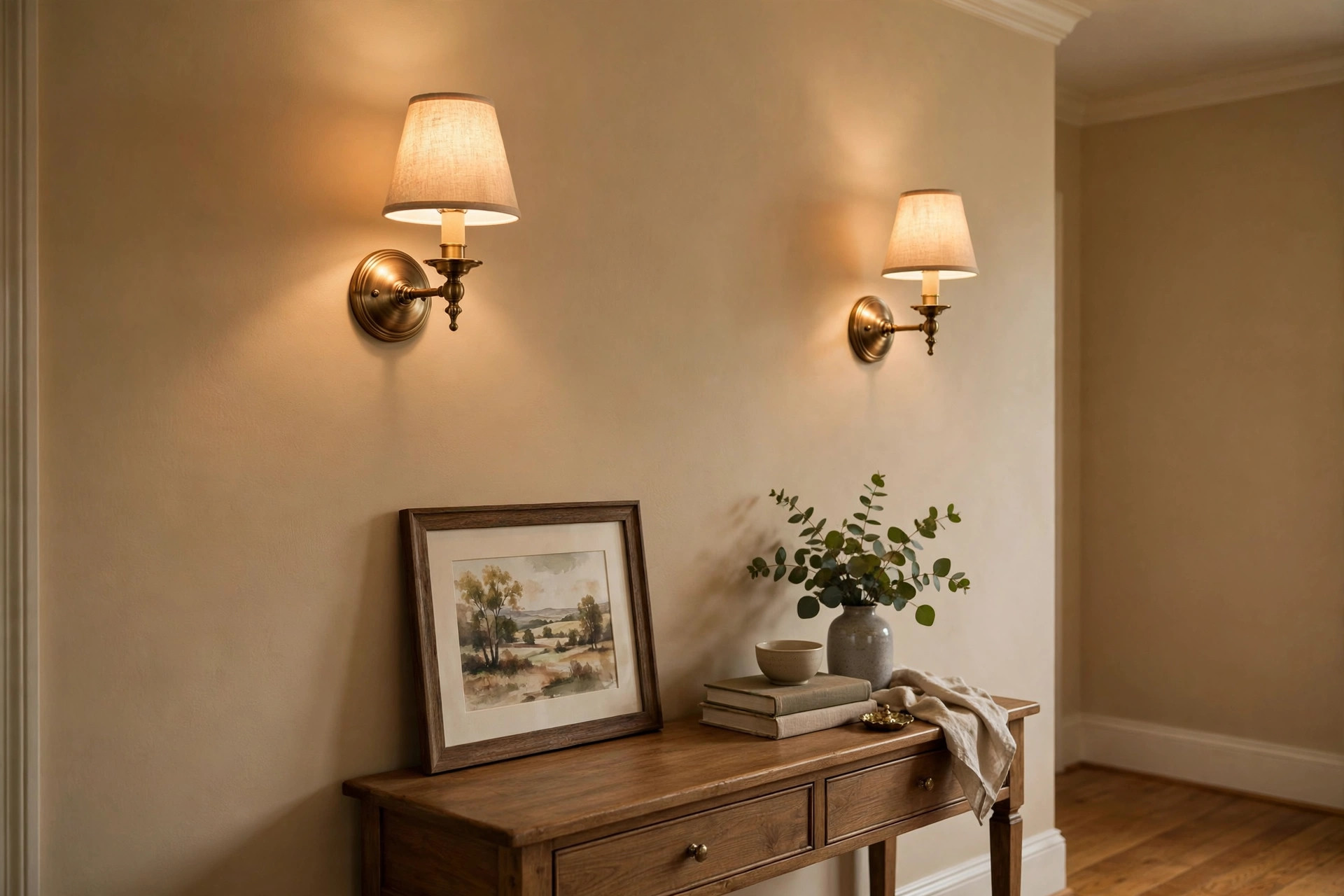

Wall lights are among the oldest forms of home lighting. In early American homes, candles in wall holders lit the rooms. Later, gas and then electric sconces took their place. Today the indoor wall sconces usa online deals shoppers find cover every style, from plain to ornate. The deals can be real. The choice can be large. And the wrong pick can sit in a box for a year.
This guide keeps the matter plain.
Why Indoor Wall Sconces Matter
A room lit only from the ceiling often feels flat. Shadows fall in the same places. Faces look tired. Corners stay dark. Sconces fix this by putting light where people actually look. They wash walls with a soft glow. They mark a path down a hall. They frame a mirror or a piece of art. The result is a room that feels finished, even when the furniture is plain.
The second reason is economy. A pair of sconces with low wattage bulbs can light a hallway better than one bright ceiling fixture, and for less power. Light Emitting Diode lamps, now common in sconces, draw little current and last for years. Programs such as those at ENERGY STAR list models that meet strict efficiency rules, which helps the shopper who wants lower bills.
The third reason is choice. A wall sconce does not need floor space. It does not crowd a table. In small apartments and narrow halls, this is a real gain. Renters who cannot change ceiling wiring can often add plug-in sconces with a cord, which hang on a hook or bracket and need no electrician.
Finally, deals matter. Online sellers in the United States run constant sales on lighting. Prices swing with seasons, clearances, and new model lines. A sconce that costs ninety dollars in March may cost sixty in September. Knowing when and where to look turns a nice fixture into a smart buy.
What to Look For When You Shop: Indoor Wall Sconces Usa Online Deals
Light Direction
Sconces throw light in three main ways. Up-light models send light toward the ceiling, which softens a room. Down-light models push light toward the floor, which is good for reading spots and paths. Dual-direction models do both at once, and they are popular for halls and stairs. Pick the direction by the job. A dark hallway wants up and down. A bedside wants a shade that bends light toward the book.
Size and Scale
Measure before you buy. A sconce that is twelve inches tall can crowd a narrow hall. A tiny fixture can look lost on a wide wall. As a plain rule, match the fixture to the wall. On a wall six feet wide, a pair of sconces each about eight to ten inches tall looks balanced. Flank a mirror with sconces that are roughly one quarter the mirror height. These are guides, not laws, but they keep rooms from looking wrong.
Shade and Finish
Glass, fabric, metal, and wood all appear in sconce shades. Opal glass gives a soft, even glow. Clear glass shows the bulb and feels bright. Fabric shades warm a room but need dusting. Finish sets the tone of the room. Brushed nickel and matte black suit modern rooms. Polished brass and bronze suit older ones. The Lighting advice at The Spruce shows how finish choices tie a room together.
Bulb Type
Most sconces today take a standard screw base lamp. Choose LED lamps for long life and low heat. For a hallway, eight hundred lumens per fixture is plenty. For a reading nook, more may be wanted. Warm white, around twenty seven hundred kelvin, feels like old incandescent light. Daylight, around five thousand kelvin, feels sharp and is better for task work.
Hardwired or Plug-In
Hardwired sconces connect to the house wiring and are switched from the wall. They look clean but need an electrician to install, unless a box is already in place. Plug-in sconces run on a cord to the nearest outlet. They are the friendlier choice for renters. Some models now use batteries and remote controls, though battery units give less light and need charging.
Types and Options for American Homes
Classic Arm Sconces
The arm sconce has a bracket that holds a shade away from the wall. It is the old standard. It suits dining rooms, studies, and entries. Many American makers offer them in brass, nickel, and oil-rubbed bronze. Prices range widely, which makes them a good place to hunt for deals.
Flush and Half-Flush Sconces
These sit close to the wall. They suit tight spots such as stair landings and small baths. Because they take less depth, they also suit rooms where people walk close to the wall. They are often the cheapest style, and online lighting sales list them in sets of two or four.
Swing-Arm Sconces
A swing arm reaches out and moves. It is the classic bedside light. One unit on each side of the bed frees the nightstands. Many swing arms plug in, so no wiring is needed. The moving joint should feel firm. A loose joint droops, and a drooping shade points light at the floor.
Picture and Accent Lights
Narrow bars that wash art or a mantel are a special kind of sconce. They mount above the frame and throw light down across it. Battery models exist for renters. For a serious picture, hardwired units with good color rendering show the art as it truly is.
Vanity and Bath Sconces
Bathrooms have their own rules. Fixtures near sinks and tubs must carry a damp rating at least, and a wet rating near a shower. Many shoppers pair sconces with vanity light bars for sale usa when they redo a bath. Side sconces at face height beat a single bar overhead for shaving and makeup, because the light falls even on both cheeks.
Candle-Style Sconces
These copy the old candle holder, often with a small faux flame lamp. They suit colonial and farmhouse rooms. They give a warm, low light. They are best as accent light, not as the main light of a room.
Cost and Price: What the Deals Really Mean
A plain indoor sconce in the United States can cost as little as twenty dollars. A mid-range fixture from a known brand runs forty to one hundred twenty dollars. Designer pieces pass two hundred dollars with ease. Online deals shave these numbers. It is common to see twenty to forty percent off list price during holiday sales and end-of-season clearances.
Read the price with care. A deal on a single sconce may not beat the regular price of a two-pack. Shipping adds up. A fixture priced at thirty dollars with twelve dollars shipping costs more than a forty dollar fixture with free shipping. Return shipping matters too. Lighting is fragile and bulky. Check the return policy before you order, and keep the box until the fixture is mounted and tested.
Timing helps. January and July bring clearance waves as stores make room for new lines. Black Friday week brings deep cuts, though the stock can be thin. Contractors buy in late winter, which can push prices up on plain models. Watch a fixture for two weeks if you can.
Sets are often the best value. Makers sell sconces in pairs for halls and bedrooms. The per-fixture cost in a pair is usually lower than buying two singles. When you compare indoor wall sconces usa online deals across sellers, compare the same item number, since styles repeat under different names.
Bulbs are a second cost. Many sconces ship without lamps. Budget five to fifteen dollars per LED lamp. Dimmable lamps cost more. If the sconce will run on a dimmer, buy lamps marked dimmable, or the light may flicker.
Care and Upkeep
Wall sconces ask little of their owners. Dust the shades every few months. A soft cloth and a light touch do the work. Glass shades can come off for washing with warm water and mild soap. Fabric shades need a dry brush or a lint roller. Never soak a fabric shade.
Check the mounting now and then. A sconce that loosens from the wall should be tightened at once. Heat and vibration work screws loose over the years. If a fixture runs hot with the old incandescent lamps, switch to LED lamps, which run far cooler and cut the heat at the shade.
Outdoor-rated sconces used indoors, such as in a damp bath, need the gasket checked once a year. A cracked gasket lets steam reach the socket. Replace it before rust starts. The home improvement guides at HGTV carry simple checklists for seasonal fixture care.
Safety Notes for Buyers and Owners
Lighting deals with electricity, and respect is due. Turn off the breaker before any hardwired install. Test the wires with a simple tester. If the old box is loose in the wall, call an electrician. A heavy fixture on a weak box is a hazard.
Mind the ratings. A fixture rated for dry locations only does not belong in a steamy bath. A damp-rated fixture belongs near the sink. A wet-rated fixture belongs in the shower zone. The paper label inside the shade tells the rating. Keep it.
Cord safety matters for plug-in models. Run the cord down the wall in a neat channel, not across a walkway. Do not hide cords under rugs, where heat builds. Keep cords away from heaters and from the reach of small children. The safety guidance at the U.S. Consumer Product Safety Commission covers cord and fixture hazards in plain terms.
Bulb wattage limits are real. Every fixture carries a maximum wattage on its socket or label. Stay under it. LED lamps make this easy, since a lamp that gives the light of an old sixty watt bulb draws only about nine watts.
Where Shoppers Find the Deals
Large home centers carry wide lines of sconces at plain prices, and their sites run rolling sales. Specialty lighting sites such as Lumens carry deeper lines from many brands, with frequent promotions. Marketplaces list endless options, but the buyer must check the seller rating and the return terms.
Manufacturer sites are worth a look. Brands such as Philips run their own stores and sales. Their pages also carry full specifications, which help when comparing models across sellers. Review sites such as Consumer Reports test lighting for brightness, color, and life, which gives the buyer facts beyond the sales copy.
The U.S. Department of Energy publishes plain guidance on home lighting choices and on the savings from efficient lamps. A short read there can sharpen any shopper’s judgment before money changes hands. For the do-it-yourself installer, the home improvement stores post wiring guides that show standard mounting steps.
Frequently Asked Questions
How high should I mount a wall sconce?
In a hallway, the center of the fixture usually sits sixty to sixty six inches above the floor. This puts the light near eye level for most adults. Beside a bed, mount the shade about forty eight to fifty two inches above the floor, or a few inches above the pillow top. In a bath, side sconces sit at face height, about sixty inches up. These are starting points. Low ceilings call for lower mounts. Tall art calls for lights sized to the art.
Do I need an electrician to install a sconce?
For a plug-in or battery sconce, no. For a hardwired sconce where a box and switch already exist, a careful homeowner can often do the swap, with the breaker off. For new wiring, a new box, or any doubt at all, hire a licensed electrician. The cost of an hour of labor is small next to the cost of a wiring fault.
Are online sconce deals trustworthy?
Most are. The risk is not fraud so much as mismatch. Colors on screens lie. Sizes surprise. Read the dimensions line by line. Check the return policy. Buy from sellers with a clear American address and a working phone line. When a price looks far below every other seller, check that the listing is for the same brand and model number, not a copy.
How many sconces does a hallway need?
Space them six to eight feet apart on long runs. A short hall of ten feet takes one pair. A hall of twenty feet takes two pairs or three singles. The goal is even light with no dark gaps. When in doubt, mock it up. Tape paper outlines on the wall at night and look at the effect with a flashlight before you drill.
Can sconces be the only light in a room?
In small rooms, yes. A bedroom or study can run on sconces alone if the count is right and the lamps are bright enough. In kitchens and large living rooms, sconces work best as a second layer with ceiling light. They also pair well with other fixtures; many buyers plan sconces alongside dining room chandeliers for sale usa for the dining room or kitchen island pendants for sale usa for the kitchen, so each layer has its own switch.
Do LED sconces save real money?
Yes. An LED lamp uses about one sixth the power of the old incandescent it replaces and lasts many times longer. In a house with a dozen sconces burning each evening, the yearly saving is plain to see on the bill. The higher lamp price pays back within a year or two of normal use.
A Final Word
The best deal is not the lowest price. It is the right fixture, bought once, mounted well, and kept for years. Measure the wall. Know the job the light must do. Check the rating, the bulb, and the return policy. Then buy with a clear head. The sconces will do the rest, quietly, every evening, for a long time to come.
References
Consumer Reports. (n.d.). Product reviews and ratings. https://www.consumerreports.org ENERGY STAR. (n.d.). Energy efficient products. https://www.energystar.gov HGTV. (n.d.). Home and garden ideas. https://www.hgtv.com Lamps Plus. (n.d.). Lighting and home decor. https://www.lampsplus.com Lowe’s. (n.d.). Home improvement products. https://www.lowes.com Lumens. (n.d.). Lighting and ceiling fans. https://www.lumens.com Philips. (n.d.). Lighting products. https://www.philips.com The Home Depot. (n.d.). Home improvement products. https://www.homedepot.com The Spruce. (n.d.). Home and garden advice. https://www.thespruce.com U.S. Consumer Product Safety Commission. (n.d.). Product safety information. https://www.cpsc.gov U.S. Department of Energy. (n.d.). Energy efficiency and renewable energy. https://www.energy.gov Wayfair. (n.d.). Furniture and home goods. https://www.wayfair.com
Was this guide helpful?

About Robert Taylor
The My Garden US editorial team writes practical, in-depth home and garden guides for American homeowners — tested advice, no fluff.
You May Also Like
Ceiling Fans Lights American Homes Guide
April 27, 2026 0 views
Deck Cap Lights Buying Guide USA: How to Choose the Best Lights for Your Deck Posts
May 18, 2026 0 views
Reading Floor Lamps Reviews Buying Guide USA
February 21, 2026 0 views