
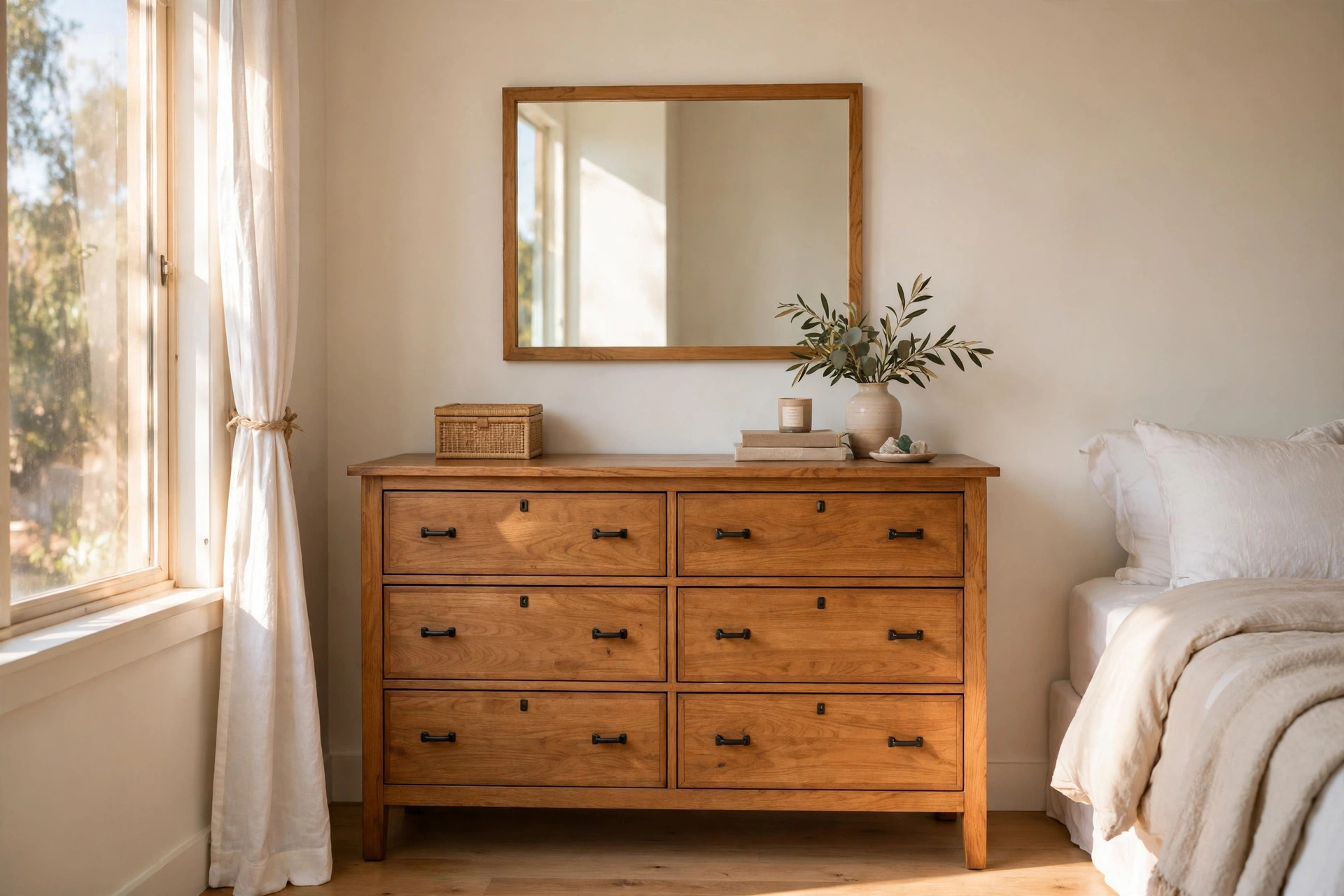

A dresser with a mirror is one of the most useful pieces in a bedroom. It holds clothes. It gives a place to check your hair and face each morning. It also makes a room feel larger and brighter. When people search for “bedroom dressers mirror california homes usa,” they are usually looking for a dresser that comes with a mirror attached or sold with one, in a style that suits the light and space of a California home. This guide walks through the subject in plain terms. It covers why the piece matters, what to look for, the main types, the cost, the upkeep, and the safety points worth knowing. It ends with answers to common questions.
Why a Dresser With a Mirror Matters
A bedroom dresser does hard daily work. Shirts, socks, and sweaters pile up without one. A mirror on top of it does daily work too. Most people look in a mirror before they leave the house. They check a collar. They fix their hair. They make sure nothing is out of place. When the mirror sits on the dresser, the two tasks come together in one spot. There is no need to walk to the bathroom for a last look.
The mirror also changes the feel of the room. A mirror throws daylight around. In California homes, where sun is strong through much of the year, a dresser mirror can bounce that light into dark corners. The room looks wider, and a small bedroom feels less tight.
A dresser mirror can also act as the visual center of the bedroom. The dresser often stands against the main wall. The mirror rises above it like a frame for the whole wall. A framed mirror gives the wall a finished look. An unframed mirror gives a cleaner, more modern look.
What to Look for When You Choose One: Bedroom Dressers Mirror California Homes Usa
Size comes first. Measure the wall before you shop. A dresser should fit with room to spare on each side. Leave at least a few inches of space at each end so the piece does not look squeezed. Check the height of the mirror too. A tall mirror needs a wall with clear space above the dresser. In rooms with low ceilings or windows above the dresser, a wide, short mirror may fit better.
Next, think about who will use the dresser. A mirror for a child should sit lower. A mirror for an adult of average height works at standard dresser height. If the dresser is shared by two people, a wide mirror lets both use it at once. Tilt mirrors, which lean back at a slight angle, help shorter users see their full face.
The quality of the mirror matters more than most buyers expect. A good mirror is clear and flat, while cheap ones bend the image at the edges. Move your head side to side in front of it; if your face warps, the glass is poor. Look for a solid wood or metal frame that holds the glass firm.
Drawer construction decides how long the dresser lasts. Pull each drawer open in the store. It should glide smooth and sit level. Look inside the drawer. Dovetail joints, where the wood corners lock like puzzle pieces, are the strongest sign of good work. Drawers with metal ball-bearing slides open and close well for years. Stapled drawers with thin sides tend to loosen over time.
The material sets the price and the look. Solid wood dressers cost more and last longer. They can be sanded and refinished after years of use. Dressers made from engineered wood or MDF cost less. They are lighter and look fine, but they dent more easily and are hard to repair. Many buyers read furniture buying guides before deciding which material fits their budget.
Style should match the rest of the room. A dark walnut dresser with a beveled mirror fits a classic bedroom. A white or light-oak dresser with a plain mirror suits the bright, airy look common in many California design ideas. A mid-century piece with tapered legs gives a retro feel.
Types and Options
Dressers with mirrors come in several main forms. The most common is the dresser with an attached mirror. The mirror bolts to the back of the dresser and stands upright. It moves with the dresser when you rearrange the room. This is the simplest choice and the most common in stores.
A second option is the dresser with a loose mirror sold as a set. The mirror hangs on the wall above the dresser or leans on it. This gives more freedom. You can hang the mirror higher or lower than the maker planned. You can also replace the mirror later without replacing the dresser.
Some older-style dressers come with a tri-fold mirror of three panels. It is handsome but takes more space, and the moving parts need care.
Dresser sizes vary. A small three-drawer dresser fits a tight corner or a child room. A six-drawer double dresser holds a full wardrobe for one adult. A nine-drawer dresser serves a couple or a master bedroom. The mirror size usually matches the dresser width. A narrow dresser gets a narrow mirror. A wide dresser gets a wide mirror.
Finishes range from natural wood to painted colors. Natural oak, cherry, and walnut show the grain and warm a room. White, gray, and black painted finishes suit modern rooms. Some makers offer two-tone pieces, such as a wood top with painted drawers. Many shoppers browse dresser and mirror collections to compare finishes side by side before they buy.
Mirror shapes matter too. A rectangle is the classic choice. An arch or oval mirror softens the room. A round mirror on a dresser gives a calm, balanced look. The shape should echo other shapes in the room, such as the headboard or the window frames.
Cost and Price
Prices for a bedroom dresser with a mirror vary widely. At the low end, a basic dresser and mirror set from a large chain store can cost between 200 and 400 dollars. These pieces use engineered wood and simple hardware. They work well for a guest room or a first apartment.
In the middle range, from about 500 to 1,200 dollars, you find solid wood dressers with better drawers and glass. Many modern dresser sets and pieces from mid-range makers sit in this band. The finish is richer. The mirror is clearer. The set will last a decade or more with normal use.
High-end dressers with mirrors, from 1,500 dollars and up, come from craft makers and premium brands. They use hardwoods like cherry or walnut, with fine joinery and beveled mirrors. Buyers who want a showpiece for a master bedroom shop this range, often starting with bedroom furniture inspiration.
Delivery and setup add to the cost. A large dresser may need white-glove delivery, where the crew carries it in and sets it up. That can add 100 to 200 dollars. Many households also pair the dresser with storage pieces for the entryway to keep the whole home’s look consistent. If the mirror must be hung on the wall, you may need a handyman for an hour. Factor these costs in before you fall in love with a piece.
Care and Upkeep
A dresser with a mirror asks for little care, but regular care keeps it looking new. Dust the wood once a week with a soft, dry cloth. Once a month, wipe it with a cloth dampened with mild soap and water, then dry it right away. Never let water sit on wood. It leaves rings and dull spots.
Polish is not needed often. A light coat of furniture wax or oil twice a year feeds the wood and keeps the finish rich. Use products made for wood. Avoid silicone sprays, which build up a sticky layer over time. If you are unsure what your piece needs, check wood furniture care advice for your finish type.
Clean the mirror with a glass cleaner or a mix of water and white vinegar. Spray the cleaner on the cloth, not on the mirror. Spray aimed at the glass can seep behind the frame and damage the silver backing. Wipe in a gentle S pattern to avoid streaks. Clean the mirror once a month, or when fingerprints show.
Check the hardware twice a year and tighten loose drawer pulls. If a drawer sticks, rub a white candle on the wooden runners to smooth the glide. Tighten a loose mirror bolt, since a wobbling mirror is a hazard.
Keep the dresser out of strong direct sun if you can. Long hours of hot California sun can fade the finish on the side that faces the window. A curtain or a slight shift of the dresser solves the problem. If the dresser must sit in sun, a light finish shows fading less than a dark one.
Safety
A dresser with a mirror needs a few safety steps. The first is anchoring. Tall or top-heavy dressers can tip forward if a child climbs the drawers. Every dresser should be fixed to the wall with the anti-tip kit that comes in the box. If the kit is missing, buy one at a hardware store. The job takes ten minutes and a screwdriver. Safety groups have clear guidance on furniture anchoring, and it is worth following.
Mirror glass can break. Keep heavy objects off the dresser top near the mirror edge. Do not let children hang on the mirror or swing it on its mounts. If the mirror is a separate wall-hung piece, make sure the wall anchors hold its full weight. A falling mirror is a serious danger.
Check the edges of older mirrors. Very old mirrors can develop a dark edge where the silver backing wears. They can also lose glass chips at the frame line. A chipped mirror should be replaced or taken to a glass shop for repair. Do not leave sharp glass where hands reach.
Place the dresser so the mirror does not throw a bright beam into a sleeping face at dawn. In California, the morning sun is strong. Angle the dresser or the mirror so the reflected light lands on a wall or the floor instead of the bed. This is a small comfort point that many buyers only learn after the first morning.
Frequently Asked Questions
Should the mirror match the dresser exactly? It should match in style, but it does not need to be from the same set. The frame of the mirror should share the dresser tone and general shape. A wood-framed mirror suits a wood dresser. A thin metal frame can suit a modern dresser. Many people mix a store-bought mirror with a family dresser and get a fine result, especially after browsing mirror and decor ideas for pairing tips.
What size mirror fits a double dresser? A good rule is to pick a mirror about two-thirds to three-quarters as wide as the dresser. A 60-inch dresser pairs well with a mirror 40 to 45 inches wide. The mirror should be tall enough for the main user to see their face and shoulders. For a shared dresser, go wider so two people can use it at once.
Is a dresser with an attached mirror better than a separate wall mirror? Each has strengths. An attached mirror is simple. It moves with the dresser and needs no wall work. A separate wall mirror gives more choice of height and lets you replace the mirror alone. Renters often prefer the attached kind, since it needs no holes in the wall. Owners often prefer the wall mirror for the custom look. Homes with other wood pieces, such as sofa console tables for the living room, often repeat the dresser’s wood tone in the mirror frame for a tied-together feel.
How do I keep a mirror from wobbling? Tighten the mounting bolts first. Most wobble comes from a loose bolt or a worn washer. If the bolts are tight and the mirror still moves, check that the dresser itself sits level. A dresser that rocks will make the mirror shake. Slide a thin wood shim under the short leg. Then recheck the mirror.
Can I put a dresser with a mirror in a small bedroom? Yes, and it may be the best choice for a small room. The mirror makes the room look larger. Pick a dresser that fits the wall with a few inches to spare. Choose a mirror that is wide rather than tall if the ceiling is low. Light finishes, like those in many small-space decorating guides, keep a tight room feeling open. Avoid a tri-fold mirror in a small room, since the side panels need clearance.
A Final Word
A bedroom dresser with a mirror is a quiet workhorse. It stores the clothes, shows the face, and brightens the room. For a California home, where light is plenty and space is often dear, the right dresser mirror set earns its place every day. Measure the wall. Check the drawers. Look in the mirror before you buy. Anchor the piece to the wall. Then enjoy a bedroom that starts each morning in order. Buying guides for recliners and seating can help with the rest of the room, and readers who want more ideas can find them in home decorating collections, modern furniture catalogs, and affordable furniture stores alike.
References
Apartment Therapy. (n.d.). Home design ideas and inspiration. https://www.apartmenttherapy.com Article. (n.d.). Modern furniture. https://www.article.com CB2. (n.d.). Modern furniture and decor. https://www.cb2.com Consumer Reports. (n.d.). Product reviews and ratings. https://www.consumerreports.org Crate and Barrel. (n.d.). Furniture and home decor. https://www.crateandbarrel.com HGTV. (n.d.). Home and garden ideas. https://www.hgtv.com Houzz. (n.d.). Home design and remodeling. https://www.houzz.com IKEA. (n.d.). Home furnishings. https://www.ikea.com The Spruce. (n.d.). Home and garden advice. https://www.thespruce.com U.S. Consumer Product Safety Commission. (n.d.). Product safety information. https://www.cpsc.gov Wayfair. (n.d.). Furniture and home goods. https://www.wayfair.com West Elm. (n.d.). Modern furniture and home decor. https://www.westelm.com
Was this guide helpful?

About Sarah Mitchell
The My Garden US editorial team writes practical, in-depth home and garden guides for American homeowners — tested advice, no fluff.
You May Also Like

Living Room Ottomans for Florida Homes: A Practical Guide
May 17, 2026 0 views
Modern Wall Bookshelves: A Guide for American Homes
September 15, 2026 0 views
Couch Throw Pillows Texas Homes USA: A Practical Buying Guide
January 9, 2026 0 views