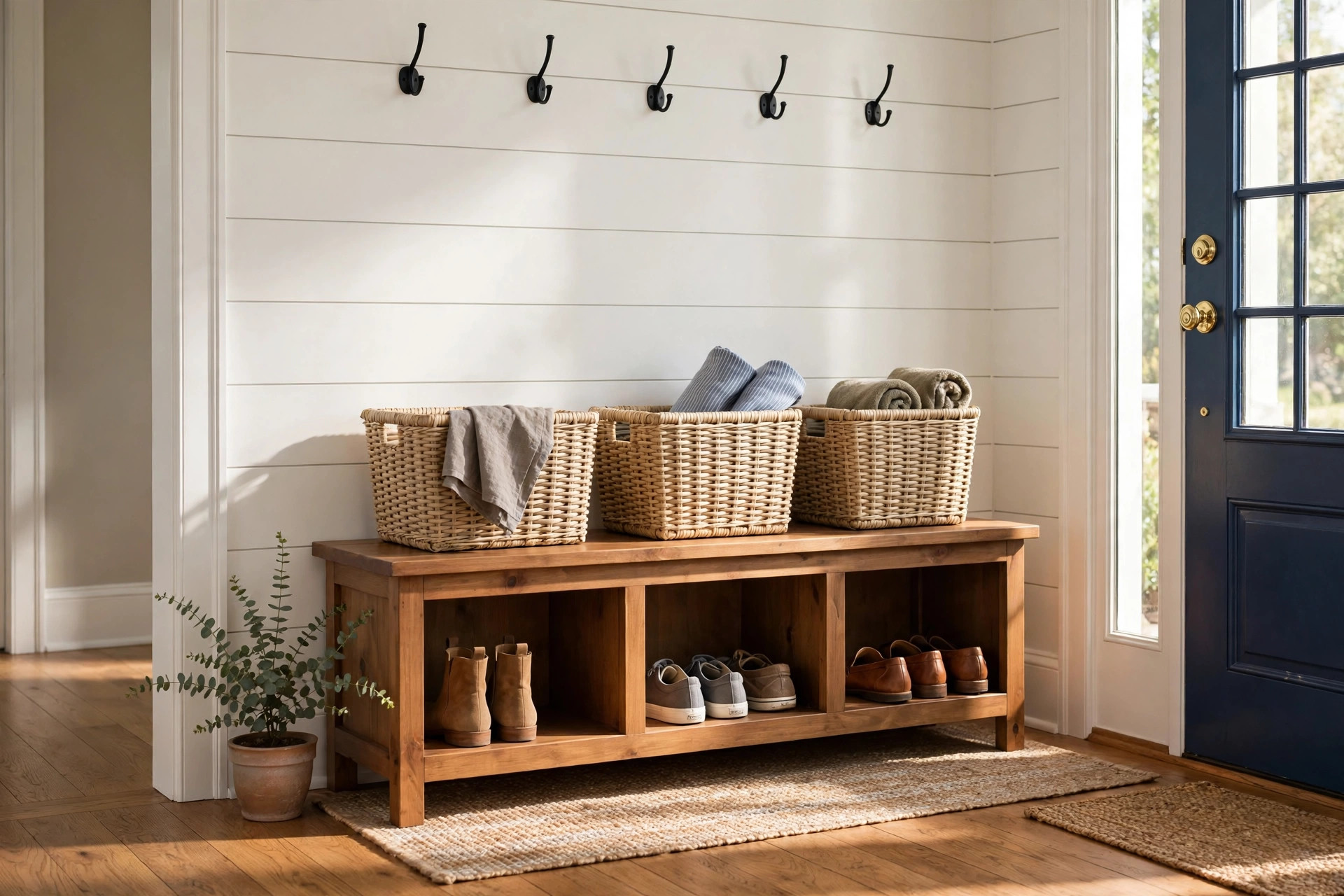

An entryway is the first room a guest sees. In many houses it is also the busiest spot. Shoes pile up near the door. Bags fall on the floor. Keys go missing. This is why so many shoppers search for entryway storage benches california homes usa. A good bench gives a place to sit, a place to hide shoes, and a place to keep the small things of daily life in order. It does all of this in one piece of furniture that fits near the front door.
California homes come in many shapes. Some are old craftsman houses in Pasadena. Some are ranch homes in the Central Valley. Some are condos in San Diego and apartments in San Francisco. The bench that works in a wide suburban foyer may not work in a narrow city hall. This guide walks through what matters when you shop. It covers size, material, style, price, care, and safety. It also answers the questions buyers ask most often.
Why It Matters
The entryway sets the tone of the whole house. A neat entry feels calm. A messy entry feels rushed. Most people leave the house through this space every day. Most people return through it every evening. It takes the wear of the whole household.
A bench with storage solves two problems at once. First, it gives a seat for putting on shoes. This is a small comfort that older people and small children need. Second, it hides the clutter that gathers by the door. Open cubbies hold shoes. A lift top holds hats and gloves. Hooks on the back hold coats and dog leashes.
In California the entry often faces the sun for much of the day. Heat and light can fade cheap finishes. Dust from dry months settles on every flat surface. A bench with a wipeable top and closed storage keeps dust off the contents. For homes near the coast, salt air can rust metal parts. For homes inland, heat can dry out weak wood joints. The right bench takes these local facts into account.
There is also the question of space. Many California homes were built with small foyers. Some have no foyer at all. The front door opens straight into the living room. A slim bench can mark the entry zone in such a home. It tells the eye where the door area ends and the living space begins. It also keeps shoes from drifting across the rug.
What to Look For: Entryway Storage Benches California Homes Usa
Size and Fit
Measure before you shop. Measure the width of the wall where the bench will stand. Measure the depth from the wall to the door swing. Measure the height of any window or wainscoting behind it. Write the numbers down and carry them with you.
A common bench is 36 to 48 inches wide and 16 to 18 inches deep. This fits most foyers. For a narrow hall, look for a bench 12 to 14 inches deep. For a wide entry, a bench 60 inches wide can anchor the wall. Leave at least 3 inches of clear space on each side. Leave the door swing fully clear.
Seat height matters too. Most benches are 17 to 19 inches high. This is a comfortable height for sitting to put on shoes. A bench much lower feels like a step stool. A bench much higher strains the knees.
Material
Solid wood is the classic choice. Pine is light and low cost. Oak and acacia are hard and take wear well. Rubberwood is a firm middle choice. Look for corner joints that are glued and screwed, not only stapled. A wood top can be refinished if it gets scratched. Many buyers like solid wood benches at Crate & Barrel for this reason.
Engineered wood with veneer costs less. It looks smooth and even. It can swell if water sits on it, so wipe spills fast. Metal frames are strong and suit modern rooms. Check that the frame is powder coated to resist rust. Upholstered tops add comfort. They need fabric that can be cleaned. Leather or faux leather wipes clean with a damp cloth. Woven fabric may need a stain guard.
Baskets and bins often come with the bench or are sold to fit it. Wicker baskets suit a coastal or farmhouse look. Fabric bins soften a modern room. Plastic bins work in a garage entry or mudroom where mud and rain are common.
Storage Type
Open cubbies are the simplest form. They hold shoes and are easy to reach. They show clutter, so they need some order to look neat. Closed cabinets hide everything. They suit a formal entry. A lift top opens to a deep well. It swallows hats, scarves, and sports gear. Drawers hold small items like keys and mail.
Think about who uses the door. Children reach low cubbies well. Older people may struggle to bend to the lowest shelf. A mix of high and low storage serves the whole family. Some benches add a back with hooks. This turns one piece into a small hall tree.
Style
California style runs from Spanish revival to mid century to coastal casual. The bench should speak the same language as the room. A bench with turned legs fits a traditional house. A low bench with clean lines fits a modern one. Warm wood tones suit many California rooms, and you can find benches in warm wood tones at West Elm to match.
Types and Options
The market offers several clear types. The shoe bench is the most common. It has two or three open shelves for shoes and a flat top for sitting. Some add a cushion. It is low cost and easy to place.
The storage chest bench has a hinged top. The seat lifts to reveal a deep box. It holds off season items, dog supplies, or cleaning gear. It needs space above to open fully. Do not place it under a low shelf.
The hall tree bench joins a bench to a tall back with hooks and sometimes a top shelf. It gives the most function in one footprint. It needs a wall to stand against. It can feel large in a tiny entry, so check the height. Most run 68 to 72 inches tall.
The upholstered bench has a padded top. It looks soft and inviting. It suits a formal foyer where shoes are kept elsewhere. Some have storage under the seat. The padding needs fabric that resists stains.
The narrow console bench fits halls less than 36 inches wide. It may have only one shelf. It holds a few pairs of shoes and a basket. Pair it with entryway mirrors to make the space feel wider.
For homes that blend rooms, a bench can sit at the foot of a stair or behind a sofa. Many shoppers compare console tables for the sofa when they plan an open layout. Others like the soft seat of living room ottomans for extra seating that can move around.
When you browse online, modern benches at Article and contemporary pieces at CB2 show how clean lines look in real rooms. For wide choice across prices, you can browse storage benches at Wayfair and filter by width, material, and rating.
Cost and Price
Prices vary by material and brand. A basic pine shoe bench with two shelves often costs 60 to 120 dollars. An engineered wood bench with doors or drawers often costs 120 to 250 dollars. A solid wood bench from a name maker often costs 250 to 600 dollars. A full hall tree with hooks and a tall back often costs 200 to 500 dollars.
Shipping can add to the cost. Large benches may ship flat with assembly needed. Assembly takes 30 to 90 minutes with simple tools. Two people make the work faster.
Think in terms of cost per year. A 400 dollar bench that lasts 15 years costs less per year than a 100 dollar bench that breaks in two years. Check the warranty. A one year warranty is common. A longer warranty on the frame is a good sign.
Sales cluster around holiday weekends. Labor Day, Memorial Day, and Black Friday bring wide discounts on furniture. Floor models at local stores can cost 20 to 40 percent less. Measure the floor model the same way you would a new one, since store samples may lack baskets or hardware.
Care and Upkeep
Wood needs simple care. Dust the bench once a week with a soft dry cloth. Wipe the top with a damp cloth when it looks dull. Dry it at once. Never soak wood. Every year or two, rub a thin coat of furniture oil or wax into solid wood tops. This feeds the wood and hides small marks.
In sunny California entries, move the bench a few inches now and then so fading is even. A runner rug under the bench catches grit from shoes. Grit is what scratches finishes. Shake the rug outside once a week.
Upholstered seats need care by fabric type. Vacuum fabric tops each month with a brush head. Blot spills at once. Do not rub. Rubbing pushes the stain deeper. For leather tops, wipe with a damp cloth and use leather conditioner twice a year. Keep leather out of direct hot sun, which dries and cracks it.
Check hardware twice a year. Tighten screws on legs and hinges. A bench that rocks may only need one screw turned. Replace worn basket liners. If a cubby shelf sags, move heavy boots to the floor.
For more room ideas, ideas for small entryways at IKEA show smart low cost layouts. Real room photos help you see scale. You can study photos of real California entryways on Houzz to see how benches sit beside doors, rugs, and art.
Safety
A bench is a seat, so it must hold weight. Check the listed weight limit. Most benches hold 200 to 250 pounds. This is enough for one adult. It is not enough for two adults plus a child. Do not let children stand on the bench. A bench can tip if weight shifts to the front edge.
Anchor a tall hall tree to the wall. Use the strap or bracket that comes in the box. This is vital in homes with small children. It is also wise in earthquake country, which much of California is. An anchored unit will not walk across the floor in a tremor.
Place the bench where it does not block the door. In a fire, every exit must be clear. Keep the path from the door to the hall at least 36 inches wide. Do not pile boxes on the bench so high that they fall on a child.
Check for sharp edges. Run your hand along corners and under the seat. Cheap metal frames may have rough welds. Sand a rough wood edge with fine sandpaper and touch up the finish. If the bench has a lift top, test that it stays open on its own. A lid that falls can pinch small fingers. Soft close hinges are worth the small extra cost.
FAQ
What size entryway storage bench fits a small California foyer? Measure your wall first. For a narrow foyer, choose a bench 30 to 36 inches wide and 12 to 14 inches deep. Leave the door swing clear. A bench with open cubbies keeps the look light. A mirror above it makes the space feel larger.
Are entryway storage benches california homes usa buyers prefer made of solid wood? Many buyers choose solid wood for its long life. Pine, acacia, and rubberwood are common. Solid wood can be sanded and refinished. Engineered wood costs less but does not repair as well. Pick solid wood if you want the bench to last more than ten years.
How much should I spend on a good bench? Plan 120 to 300 dollars for a well made bench with real storage. Basic shoe benches cost less. Solid wood and hall tree styles cost more. Judge by joinery, weight limit, and warranty, not only by price.
Can one bench work for a family with kids and pets? Yes. Choose a bench with low open cubbies for kids and a lift top for pet gear. Pick a wipeable top. Avoid light fabric that shows paw prints. Anchor any tall unit to the wall.
Where should the bench go if my front door opens into the living room? Place the bench just inside the door, at a right angle to the wall if space is tight. It marks the entry zone. Add a rug under it. This keeps shoes off the living room floor and gives guests a clear place to stop.
How do I keep an entryway bench from looking cluttered? Give every item a home. One basket per person works well. Keep only daily shoes in the cubbies. Move off season shoes to a closet. Wipe the top each week. A small tray for keys and mail stops the drift of small things.
For entryway styling help, entryway makeover tips from HGTV cover paint, light, and layout. Storage ideas from Apartment Therapy show how small entries stay neat with baskets and hooks.
A Final Word
The best bench is the one that fits your door, your family, and your daily habits. Measure first. Choose a material that suits your climate. Pick storage that matches what you own. Spend enough to get strong joints and a fair warranty. A good bench will greet you every day for years. It will hold your shoes, your bag, and your keys. It will make the first room of your home feel calm and ready.
References
Apartment Therapy. (n.d.). Home design ideas and inspiration. https://www.apartmenttherapy.com Article. (n.d.). Modern furniture. https://www.article.com CB2. (n.d.). Modern furniture and decor. https://www.cb2.com Crate and Barrel. (n.d.). Furniture and home decor. https://www.crateandbarrel.com HGTV. (n.d.). Home and garden ideas. https://www.hgtv.com Houzz. (n.d.). Home design and remodeling. https://www.houzz.com IKEA. (n.d.). Home furnishings. https://www.ikea.com Wayfair. (n.d.). Furniture and home goods. https://www.wayfair.com West Elm. (n.d.). Modern furniture and home decor. https://www.westelm.com
Was this guide helpful?

About Jennifer Lee
The My Garden US editorial team writes practical, in-depth home and garden guides for American homeowners — tested advice, no fluff.
You May Also Like
Living Room TV Stands: Where to Buy in the USA
July 17, 2026 0 views
Modern Farmhouse Tables USA Online Deals: A Plain Guide to Buying Well
June 30, 2026 0 views
Sofa Console Tables Reviews Buying Guide USA: What to Know Before You Buy
April 29, 2026 0 views