The entryway is the first part of the home that guests see. It is also the last part you see before you walk out the door. A mirror in this spot does more than show your face before you leave. It brings light into a dark hall, and it makes a small space feel larger. This entryway decorative mirrors buying guide usa was written to help American shoppers choose with care. It covers sizes, shapes, frame styles, prices, hanging tips, and care. Read it through once, and you will know what to buy and how to place it.
Why an Entryway Mirror Matters
A mirror is one of the hardest working items in a home. In the entryway, it serves three purposes at once. First, it gives you a last look before you leave for work or for a night out. You can check your hair, your coat, and your shoes in one glance. Second, it throws light around the space. Most entryways get little natural light. A mirror placed near a door or a window catches what light there is and spreads it through the hall. Third, it opens up a small or narrow space. A dark hall can feel tight and closed in. A mirror on the wall makes the eye travel farther, and the hall feels wider.
A decorative mirror also sets the tone of the home. Guests form an opinion of a house within seconds of walking in. A clean, well placed mirror tells them the home is cared for. Design writers at Apartment Therapy often note that a mirror is the single fastest way to lift a plain entryway. It costs less than new furniture and takes only an hour to hang.
What to Look For: How to Choose: Entryway Decorative Mirrors Buying Guide Usa
Choosing a mirror is simple once you know what to measure and what to avoid. Start with the wall, not the mirror. Measure the width of the wall or the console table below it. Note the ceiling height. Look at what is near the mirror, such as doors, lamps, and art. Then use the points below.
Size
Size matters more than any other detail. A mirror that is too small looks lost on a big wall. A mirror that is too large crowds a small hall. As a rule, the mirror should be about two thirds as wide as the console table or bench under it. If it hangs over a narrow shelf, leave a few inches of space on each side.
For most American entryways, a mirror between 24 and 36 inches wide works well. Halls are often narrow, so a mirror of 30 inches wide and 30 inches tall suits a standard space. If your entryway is wide and open, you can go larger, up to 40 inches or more. Round mirrors are measured by their diameter. A 28 to 32 inch round mirror is a safe pick for most entries.
Shape
Shape sets the mood. A round mirror softens a space and suits almost every style. An arch mirror, with its curved top, adds height and a classic look. A rectangular mirror is more formal and works well above a long console table. Sunburst mirrors, with rays of metal or wood around the glass, act as art more than as a true mirror. They are best in spots where you do not need to check your face.
Think about the shapes already in the room. If your entry has a rectangular rug and a straight bench, a round mirror adds balance. If the room is full of soft curves, a rectangular mirror can add structure. The mirror style guides from IKEA show how one shape can change the feel of a whole wall.
Frame Style and Material
The frame is the part that ties the mirror to your decor. Wood frames suit farmhouse, rustic, and traditional homes. Black metal frames suit modern and industrial styles. Gold or brass frames suit rooms with warm tones and classic furniture. White or painted frames suit coastal and cottage styles.
Check the back of the frame before you buy. A good frame has solid joints and a wire or D-rings for hanging. Cheap frames may use thin staples that pull out over time. Solid wood and metal frames cost more but last for years. Stores like Wayfair list frame materials in the product details, so read them before you order.
Placement Height
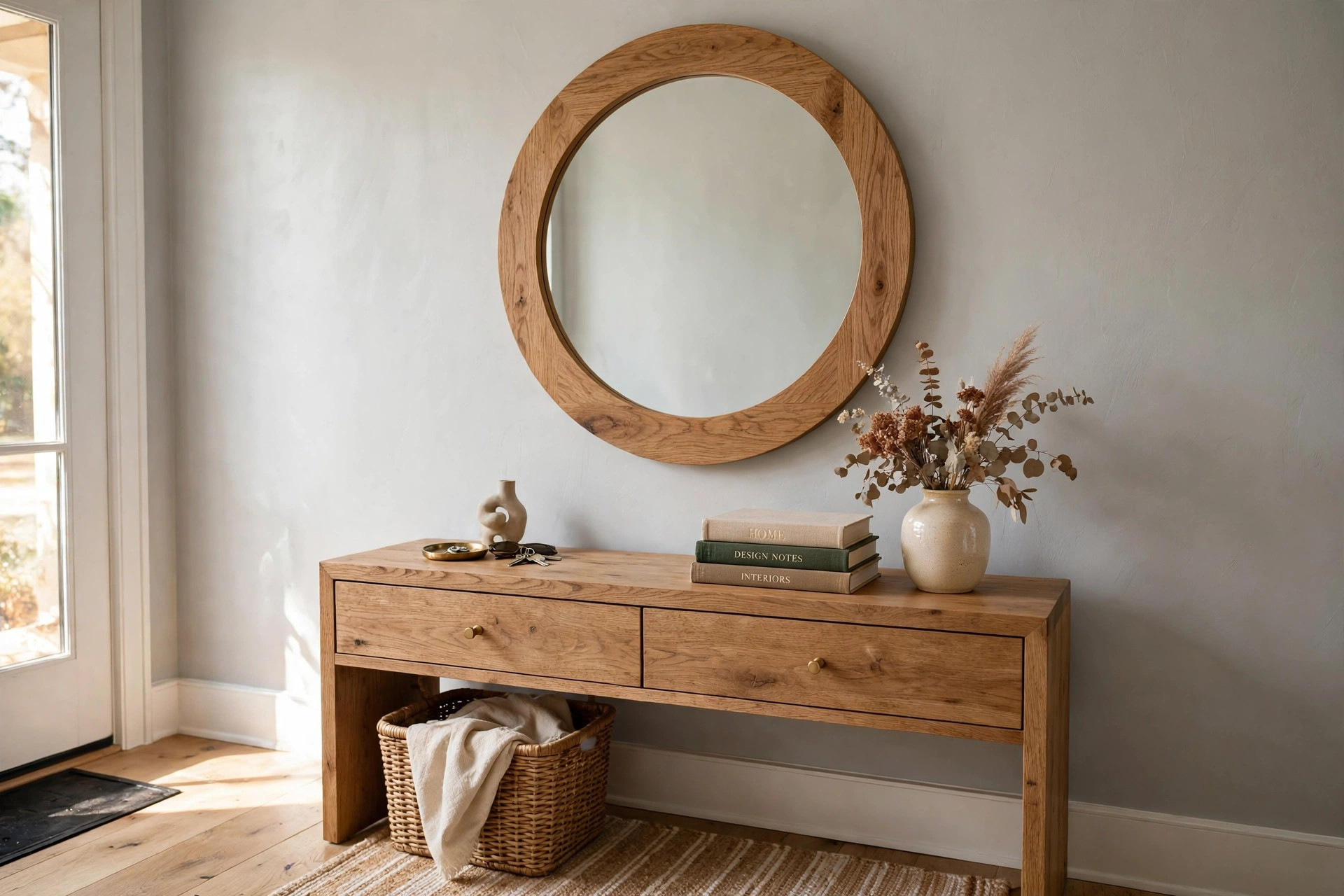
Hang the mirror so its center sits at eye level, about 57 to 60 inches from the floor. If the mirror goes above a console table, leave 6 to 10 inches of space between the top of the table and the bottom of the mirror. This gap gives the lamp or decor on the table room to breathe.
If your household has children, you may want to hang the mirror a little higher, or choose a smaller mirror placed well above their reach. A large mirror hung too low in a busy hall can get bumped by bags and coats.
Glass Quality
Not all mirror glass is equal. Good mirrors use flat glass with a true silver backing. Cheap mirrors can show a funhouse effect, where the image bends at the edges. Read reviews before you buy. Look for words like “clear reflection” and “no distortion.” A mirror that bends your face will bother you every day, so this detail matters.
Types and Options
Entryway mirrors come in a few main types. Knowing them helps you shop faster.
Round mirrors are the most popular choice for entries. They suit small walls and soften sharp corners. Many come with leather straps or wood frames.
Arch mirrors have a rounded top and straight sides. They add a sense of height. They suit entries with tall doors or high ceilings.
Rectangular and square mirrors are simple and formal. They work well above a console table of the same width.
Sunburst and starburst mirrors are decorative first. The glass in the center is small. They suit large walls where you want art with a touch of shine.
Windowpane mirrors look like old windows, with bars of wood or metal over the glass. They suit farmhouse and cottage styles.
Oversized and leaning mirrors stand on the floor and lean against the wall. They suit wide entryways and make a bold statement. They must be anchored to the wall for safety, even though they stand on their own.
Many shoppers compare options on Houzz, where real entryway photos show how each type looks in a finished room.
Cost and Price
Prices for entryway decorative mirrors in the USA fall into three groups.
Budget mirrors cost 30 to 100 dollars. These are often smaller, with simple frames of plastic or thin metal. They work fine in a rental or a first apartment. Check the glass quality in reviews, since cheap glass can distort.
Mid-range mirrors cost 100 to 300 dollars. This is the sweet spot for most buyers. You get solid wood or metal frames, clear glass, and sizes from 28 to 40 inches. Most of the best-selling mirrors at Crate and Barrel and West Elm fall in this range.
Designer and large mirrors cost 300 to 800 dollars or more. These use thick frames, hand-finished details, and the clearest glass. They suit large entryways or homes where the entry is a showpiece.
Watch for sales. Mirrors go on sale often around holidays. If you want online deals, read our guide to entryway decorative mirrors usa online deals before you buy at full price. Shipping a large mirror can add 20 to 50 dollars, so check whether the store ships free.
Care and Upkeep
A mirror needs little care, but what care it gets matters. Clean the glass once a month, or more often if the entry gets a lot of dust. Spray glass cleaner on a soft cloth, not on the mirror. Spraying the glass directly can let liquid seep behind the frame and damage the silver backing. Wipe in a Z pattern from top to bottom to avoid streaks.
Dust the frame with a dry cloth. Wood frames can be wiped with a damp cloth and dried at once. Metal frames should be kept dry to avoid rust. In humid climates, such as Florida or the Gulf Coast, check the back of the mirror once a year for dark spots. Dark spots mean the backing is failing. A mirror with a failing back cannot be fixed and should be replaced.
The cleaning guides at The Spruce recommend microfiber cloths for the clearest shine. Paper towels can leave lint and small scratches over time.
Safety
A falling mirror can cause serious harm. Hang every mirror with care.
Use wall anchors that suit your wall type. Drywall needs anchors or a stud. Plaster needs special anchors. A 30 inch mirror can weigh 15 to 25 pounds, which is too heavy for a simple nail in drywall. If you are not sure, ask a hardware store for help.
Homes with small children need extra care. Anchor large mirrors to the wall, even leaning ones. Place mirrors out of reach of toddlers. The safety pages at HGTV remind readers that heavy decor in busy halls should be secured like furniture.
Check the hanging wire or brackets twice a year. Wires can stretch and brackets can loosen. If the mirror tilts forward or feels loose, take it down and rehang it.
Frequently Asked Questions
What size mirror works best in a small entryway? A round mirror 24 to 30 inches across suits most small entries. It opens the space without crowding the wall. If the wall is very narrow, a tall thin mirror, about 20 inches wide and 48 inches tall, adds height without taking much width.
How high should an entryway mirror hang? The center of the mirror should sit at eye level, about 57 to 60 inches from the floor. Above a console table, leave 6 to 10 inches between the table top and the bottom of the mirror frame.
Are frameless mirrors good for entryways? Frameless mirrors suit modern and minimal homes. They are easy to clean and they blend into the wall. But a frame adds style and protects the glass edges from chips. For most entryways, a slim frame is the better pick.
Can a mirror go across from the front door? Yes, in most cases. A mirror across from the door greets guests with light and makes the hall feel larger. Some people avoid it for reasons of taste or tradition. If you prefer, hang the mirror on the side wall instead. Both spots work well.
What frame color works with most decor? Black and natural wood suit the widest range of styles. Black frames work with modern, farmhouse, and traditional rooms. Natural wood suits warm and casual rooms. Gold or brass frames are best when the room already has gold tones in lamps or hardware.
Should the mirror match the entryway light fixtures? It does not need to match, but it should not clash. A black mirror frame with brass sconces can look fine if the room has both colors elsewhere. When in doubt, keep the metals in the room to two at most.
A Short Final Word
A good entryway mirror is a simple thing that does a lot of work. It gives you a last look, it brings in light, and it makes the hall feel larger. Measure your wall, pick a size that suits it, choose a frame that fits your style, and hang it with care. If you are also shopping for other rooms, our guide on where to buy a bedroom dresser mirror in the USA may help, and the modern picks at CB2 show how a bold frame can lift a plain wall. For the rest of the house, see our living room TV stands buying guide usa to plan the rooms beyond the entry. Buy once, hang it well, and enjoy the brighter hall every time you walk through the door.
References
Apartment Therapy. (n.d.). Home design ideas and inspiration. https://www.apartmenttherapy.com CB2. (n.d.). Modern furniture and decor. https://www.cb2.com Crate and Barrel. (n.d.). Furniture and home decor. https://www.crateandbarrel.com HGTV. (n.d.). Home and garden ideas. https://www.hgtv.com Houzz. (n.d.). Home design and remodeling. https://www.houzz.com IKEA. (n.d.). Home furnishings. https://www.ikea.com The Spruce. (n.d.). Home and garden advice. https://www.thespruce.com West Elm. (n.d.). Modern furniture and home decor. https://www.westelm.com
Was this guide helpful?

About Lisa Anderson
The My Garden US editorial team writes practical, in-depth home and garden guides for American homeowners — tested advice, no fluff.