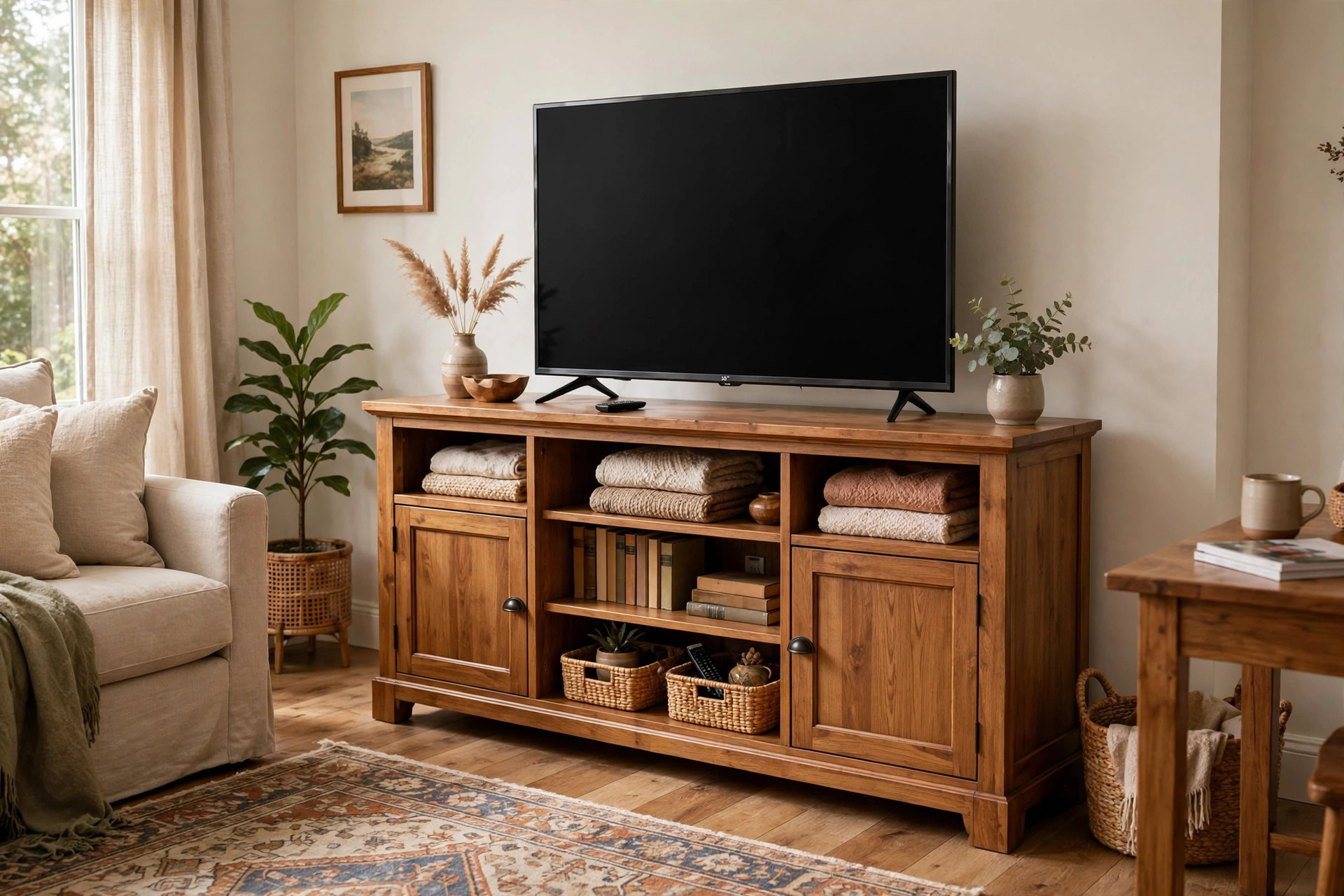
A television needs a home. The screen sits at the center of family life, and the stand below it carries the weight. This living room tv stands buying guide usa shoppers use breaks the choice down into simple steps. It covers why the stand matters, how to measure, which types fit which rooms, what prices look like across the country, and how to keep the piece in good shape for years.
The average American household keeps a television for seven to ten years. The stand often lasts even longer. A good stand is bought once and moved from room to room. A poor one wobbles, sags, or falls out of fashion in two seasons. A little study now saves money and trouble later.
Why the Stand Matters
A TV stand does more than hold a screen. It hides wires. It stores discs, remotes, and game consoles. It sets the height of the picture. A screen placed too high strains the neck. A screen placed too low forces viewers to look down all evening.
The stand also shapes the room. A dark oak console makes a living room feel grounded and traditional. A floating white shelf makes the same wall feel open and modern. Guests may not name the stand, but they feel its effect the moment they walk in.
Safety is another matter. Large screens are heavy. A 65-inch set can weigh more than 60 pounds. A weak or narrow stand tips under such weight. Homes with children and pets face real risk. A sturdy stand, fixed to the wall where needed, removes that worry.
How to Measure First: Living Room Tv Stands Buying Guide Usa
Measure before you shop. Three numbers matter.
First, the width of the television. Measure the full width of the set, not the screen size in inches. A 55-inch television is usually about 48 inches wide. The stand should be at least as wide as the television, and a few inches wider looks better. A stand much narrower than the screen looks unstable, and it is unstable.
Second, the space in the room. Measure the wall where the stand will sit. Leave at least 3 to 4 inches of clearance on each side. Mark the outline on the floor with painter’s tape. Walk around it. Make sure doors still open and paths stay clear.
Third, the viewing height. Sit in your usual seat. The center of the screen should sit at or slightly below eye level. For most sofas, that means the top surface of the stand sits 20 to 28 inches off the floor. Low stands suit floor-level seating. Taller stands suit high chairs or beds viewed from across the room.
Write the numbers down. Take a tape measure to the store, or keep the numbers by the computer when you shop online. Shoppers who measure first return fewer pieces.
Types of Living Room TV Stands
Console Stands
The console is the classic choice. A long, low cabinet with doors and shelves. It holds media players in closed sections and display items on open shelves. Consoles suit rooms with plenty of wall space. They come in wood, engineered wood, and metal frames.
Corner Stands
Corner stands fit into a room corner. They free up the main wall for art or windows. Many have a triangular or angled back. Corner units suit smaller living rooms and apartments. The trade-off is less storage than a full console.
Floating Wall-Mounted Shelves
Floating shelves fix to the wall and hold the television below or above them. No legs touch the floor. The floor stays clear, which helps cleaning and makes small rooms feel larger. Installation takes more work. The wall must hold the weight, so studs or strong anchors are required.
Entertainment Centers
Entertainment centers are full wall units. The television sits in the middle, with shelving and cabinets on both sides. They hold books, speakers, and decorations in one place. They cost more and suit large rooms. Measure the ceiling height before you order one.
Open-Frame and Industrial Stands
Open-frame stands use metal legs and open shelves. They look light and modern. Air flows around game consoles, which keeps them cool. Dust shows more on open shelves, so they need regular wiping.
Stands with Electric Fireplaces
Some consoles include a built-in electric fireplace. The flame is for looks only, but it adds warmth to a room without a real chimney. These units weigh more and need a nearby outlet. Many American buyers like them for winter evenings.
Materials and Build Quality
Solid wood stands last the longest. Oak, maple, and walnut resist dents and hold screws well. They cost more, but they age gracefully. A solid wood piece can serve for twenty years.
Engineered wood, often called MDF or particleboard, costs less. Many attractive stands use it under a veneer. It holds up well in dry rooms. It swells if it gets wet, so keep drinks and plants away from the edges.
Metal frames with wood or glass shelves give an industrial look. They are strong and easy to assemble. Glass shelves need regular cleaning but make small rooms feel airy.
Check the back panel. Thin cardboard backs are common on cheap stands. A thicker back panel keeps the whole piece rigid. If the stand will hold a heavy television, choose one with a solid back or cross bracing.
Look at the hardware. Soft-close hinges and full-extension drawer slides signal better build. Wobbly legs signal poor build. In the store, push the stand gently. It should not rock.
Storage and Cable Management
Count your devices. A cable box, a game console, a soundbar, and a streaming stick need homes. Each needs a shelf or drawer and a path for its wires.
Cable management holes matter more than buyers expect. Stands with pre-cut holes in the back let cords pass through cleanly. Without them, wires dangle down the front and gather dust. Some stands include wire clips or channels. These small features make daily life tidier.
Open shelves suit devices that need remotes and airflow. Closed doors suit clutter. A mix of both works best for most families. If you play games, leave room behind the console for air. Heat shortens the life of electronics.
Matching Your Decor
The stand should speak the same language as the room. A modern wall bookshelf pairs well with a low, clean-lined console. A traditional room with crown molding calls for a stand with framed doors and turned legs.
Wood tones should relate, not necessarily match. A walnut stand can sit beside oak floors if the tones share warmth. When in doubt, choose a neutral finish. Black, white, and natural oak fit almost any room.
Consider the rug. A luxury area rug under the seating area ties the stand into the room. The front legs of the stand can rest on the rug edge to anchor the arrangement. Designers at Houzz often show this trick in living room photos.
Farmhouse style remains popular in American homes. A modern farmhouse table in the dining corner and a distressed wood TV console in the living room create a consistent look through open floor plans. Stores like IKEA and Wayfair carry lines that mix farmhouse warmth with simple modern shapes.
Cost and Price Ranges
Prices vary widely. A basic engineered-wood stand for a 50-inch television starts around $80 to $150. These work well for guest rooms and first apartments.
Mid-range stands cost $200 to $600. This is where most American buyers shop. Solid wood veneer, soft-close doors, and good cable management appear in this range. Quality is high enough for daily family use.
High-end stands cost $700 to $2,000 or more. Solid hardwood, hand-finished details, and designer brands live here. Retailers like West Elm, CB2, Article, and Crate and Barrel focus on this range. These pieces often become the visual anchor of the room.
Entertainment centers and fireplace consoles run $500 to $1,500. Delivery fees add up on large units. Many stores charge $50 to $150 for delivery, and white-glove service costs more. Check return policies before ordering online. A stand that looks small on a screen may fill a wall in person.
Shopping Tips for American Buyers
Buy the stand for the television you have, with room to grow. A stand sized for a 65-inch set also holds a 55-inch set well. The reverse is not true.
Read the weight limit. Every stand lists a maximum weight. Add up the television and all devices. Stay well under the limit. A stand loaded to its maximum will sag over time.
Check assembly. Most stands arrive flat-packed. Assembly takes one to three hours. Look at the instructions online before you buy. If a piece needs two people, plan for help.
Think about the future. Streaming sticks replace cable boxes. Soundbars replace speaker sets. A stand with adjustable shelves adapts to these changes. Fixed shelves lock you into one layout.
Compare finishes in person when you can. Photos lie about color. A walnut finish on screen may look gray in your living room light. Bring a fabric swatch or a paint chip to the store.
Browse inspiration before you commit. Apartment Therapy and HGTV publish living room tours that show how real homes use TV stands. The Spruce offers straightforward buying advice and measurement guides.
Care and Upkeep
Dust the stand weekly with a soft cloth. Wood finishes suffer under harsh cleaners. Use a damp cloth for sticky spots, then dry the surface. Never soak engineered wood.
Tighten screws once a year. Moving the stand and daily use loosen hardware over time. A quick check with a screwdriver keeps everything firm.
Keep the stand out of direct sun. Sunlight fades wood and veneer. If the wall gets afternoon sun, use curtains during the brightest hours.
Manage heat. Game consoles and receivers run warm. Leave two inches of space around each device. Pull the stand a few inches from the wall so warm air can escape.
Check cables twice a year. Unplug, dust, and re-route. Frayed cords should be replaced. A tidy back panel also makes it easier to add new devices.
Safety
Anchor tall or narrow stands to the wall. Anti-tip kits cost little and install in minutes. The U.S. Consumer Product Safety Commission has long warned about furniture tip-overs, and televisions are among the heaviest items in the home.
Keep the television centered on the stand. An off-center set shifts the balance. The feet or base of the television should sit fully on the stand surface, not hang over the edge.
Place heavy items low. Books and large speakers belong on bottom shelves. Light decorations go on top. This lowers the center of gravity.
Keep drinks away from the television and devices. A spilled glass ruins electronics and swells wood. Use coasters on the stand surface, and keep plants on a separate table.
Frequently Asked Questions
What size TV stand do I need for a 65-inch TV?
A 65-inch television is usually about 57 inches wide. Choose a stand at least 60 inches wide. A stand 65 to 70 inches wide looks best and gives room for a soundbar and decorations on each side.
Can a TV stand hold a soundbar?
Yes. Most stands hold a soundbar on the top surface in front of the television. Make sure the stand is deep enough. A depth of 15 to 18 inches fits most soundbars without crowding the television base.
Should the TV stand be wider than the TV?
Yes. The stand should be equal to or wider than the television. A wider stand looks balanced and keeps the setup stable. A stand narrower than the screen looks top-heavy and risks tipping.
Are wall-mounted TVs better than TV stands?
Each has strengths. Wall mounting frees floor space and looks clean. A stand gives storage and needs no drilling. Renters often prefer stands. Homeowners with strong walls may prefer mounting. Many families use both: a mounted television above a low console for storage.
How much weight can a typical TV stand hold?
Basic stands hold 50 to 100 pounds. Mid-range stands hold 100 to 150 pounds. Heavy-duty stands hold 200 pounds or more. Always check the listed limit and stay under it with all devices counted.
What is the best material for a TV stand?
Solid wood lasts longest and looks best with age. Engineered wood costs less and suits most rooms. Metal frames suit modern rooms and give good airflow for electronics. Choose based on budget, style, and how long you plan to keep the piece.
A Short Final Word
A TV stand is a quiet piece of furniture. It never draws the eye the way a sofa does. Yet it works every day, holding the screen the family gathers around. Measure your space, choose honest materials, and buy a little more stand than you think you need. The right choice will serve your living room for many years, through new televisions and new seasons of life.
References
Apartment Therapy. (n.d.). Home design ideas and inspiration. https://www.apartmenttherapy.com Article. (n.d.). Modern furniture. https://www.article.com CB2. (n.d.). Modern furniture and decor. https://www.cb2.com Crate and Barrel. (n.d.). Furniture and home decor. https://www.crateandbarrel.com HGTV. (n.d.). Home and garden ideas. https://www.hgtv.com Houzz. (n.d.). Home design and remodeling. https://www.houzz.com IKEA. (n.d.). Home furnishings. https://www.ikea.com The Spruce. (n.d.). Home and garden advice. https://www.thespruce.com Wayfair. (n.d.). Furniture and home goods. https://www.wayfair.com West Elm. (n.d.). Modern furniture and home decor. https://www.westelm.com
Was this guide helpful?

About Emily Rodriguez
The My Garden US editorial team writes practical, in-depth home and garden guides for American homeowners — tested advice, no fluff.