A fine rug can change a whole room. It adds warmth underfoot. It brings color and pattern to plain floors. It quiets the sound of footsteps. For many American homes, a luxury area rug is also the single largest decor purchase in the room. This luxury area rugs buying guide USA walks through the choices in plain terms. It covers materials, sizes, prices, and care. By the end, you will know what to look for and what questions to ask before you buy.
Why a Luxury Rug Matters
Most rooms feel unfinished without a rug. Hard floors look cold. They echo. A rug softens the space. It gives the eye a place to rest. A luxury rug does this work at a higher level. The fibers are finer. The knots are tighter. The colors are deeper and more lasting.
A luxury rug is also built to last. A cheap machine-made rug may wear thin in five years. A hand-knotted wool rug can last fifty years or more. It can pass from one generation to the next. In that sense, it is more than decor. It is an asset for the home.
There is another reason. Rugs protect floors. Wood floors scratch and fade in sun. A rug shields the surface. It takes the wear so the floor does not have to.
What to Look For When You Buy: Luxury Area Rugs Buying Guide Usa
Buying a luxury rug is not like buying a small accessory. Keep these points in mind.
Material
Wool is the classic choice. It is soft, warm, and strong. It hides dirt well. It bounces back after furniture presses on it. Most fine handmade rugs are wool.
Silk is finer still. It has a soft shine. Silk rugs often cost more. They suit low-traffic rooms such as formal living rooms and studies.
Cotton is common in flatweave rugs. It is light and easy to clean. It costs less than wool. It is less durable.
Some rugs blend fibers. A wool and silk blend gives a gentle sheen at a lower price than pure silk. Bamboo silk and viscose mimic the look of silk for less money. They feel soft but stain more easily.
How the Rug Is Made
Hand-knotted rugs are the top tier. Each knot is tied by hand on a loom. A fine rug may hold two hundred knots per square inch or more. This work takes months. The price reflects the labor.
Hand-tufted rugs are made faster. Yarn is punched through a backing with a tool. They look plush. They cost less. They do not last as long as hand-knotted pieces.
Flatweave rugs have no pile. Kilims and dhurries are flatweaves. They are light and easy to move. They suit casual rooms.
Machine-made rugs can copy luxury patterns at low prices. The look is there. The depth and life of a handmade piece is not.
Knot Count and Density
Sellers may quote knots per square inch. Higher counts mean finer detail. A rug with fine detail can carry a complex pattern. Do not treat the number as the whole story. A well-made rug with a medium count beats a sloppy rug with a high count. Touch the rug. Turn it over. The back should show the pattern clearly. That is a sign of honest work.
Size and Proportion
Measure the room before you shop. In a living room, the front legs of sofas and chairs should rest on the rug. All four legs on the rug is even better. Common living room sizes are 8 by 10 feet and 9 by 12 feet.
Under a dining table, the rug should extend at least two feet past the table on all sides. Chairs must stay on the rug when pulled out.
In a bedroom, place a rug under the lower two-thirds of the bed. Or use runners on each side. A rug that is too small looks lost. When in doubt, size up.
Color and Pattern
Choose colors that work with what you own. A rug can tie a room together. It can also be the star. If your furniture is plain, a patterned rug adds life. If your furniture is busy, a quieter rug calms the room.
Remember that colors shift in different light. Ask for a swatch or try the rug at home. Many sellers allow a home trial. View it in morning and evening light before you decide.
Types of Luxury Area Rugs
The market offers many styles. A few stand out.
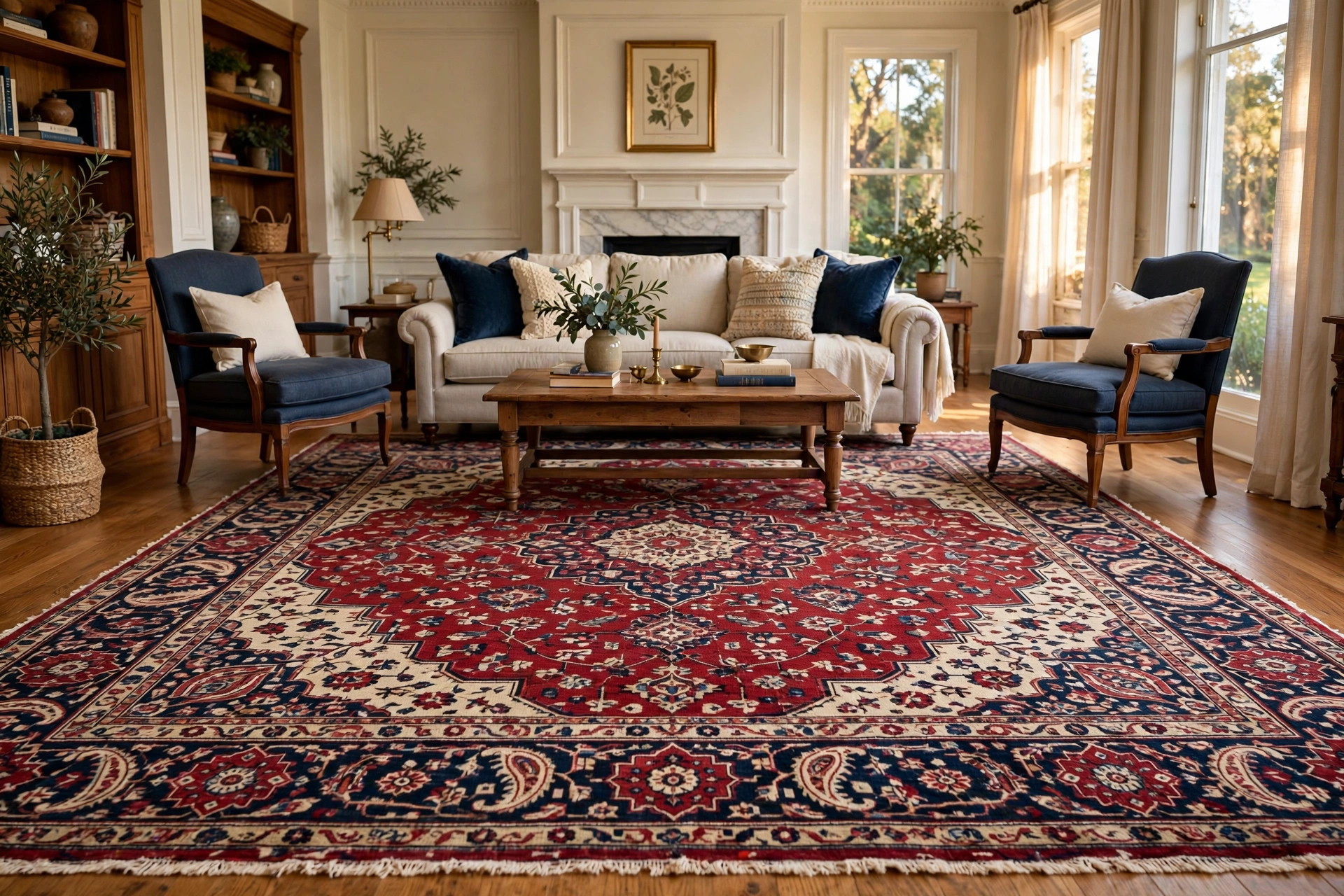
Persian and Oriental rugs are the old masters. Names like Tabriz, Kashan, and Heriz tell of weaving regions. Each has its own pattern language. These rugs hold value well.
Moroccan rugs are simple and modern in feel. Beni Ourain rugs show dark lines on cream wool. They fit calm, modern rooms.
Contemporary and transitional rugs mix old motifs with new colors. They bridge classic and modern furniture. Many American buyers choose this style.
Tibetan and Nepalese rugs are thick and soft. They often use undyed wool in natural tones. The look is quiet and warm.
Flatweave kilims suit hallways and kitchens. They are thin, so doors clear them. They clean with ease.
Cost and Price Ranges
Luxury rugs span a wide price range. A small hand-tufted rug may start near two hundred dollars. A mid-size hand-knotted wool rug often runs from one thousand to five thousand dollars. Large fine pieces can reach ten thousand dollars or more. Antique rugs with rare patterns go higher still.
Several factors set the price. Material matters. Silk costs more than wool. Knot count matters. Finer knots take more time. Size matters. Large rugs take longer to weave. Origin matters. Rugs from famous weaving regions carry a premium.
Set a budget before you shop. Decide what matters most to you. Is it size? Material? Pattern? A clear order of needs keeps you from overspending on looks alone.
Sales are common. Many retailers discount rugs often. Compare prices across stores before you buy. A rug that seems rare in one shop may sit in three others.
Where to Shop
You can buy luxury rugs in stores and online. Local rug shops let you touch the wool and see true colors. The staff can teach you about weave and origin. They may allow a home trial.
Online stores offer vast choice. Sites like IKEA and Article carry modern styles at fair prices. West Elm and CB2 offer design-led pieces. Crate & Barrel stocks classic and modern rugs. Check return policies before ordering. Shipping a large rug back can be costly.
For design ideas, browse Houzz to see rugs in real rooms. The Spruce offers plain guides on sizing and care. Apartment Therapy shows how rugs work in small homes. HGTV features room makeovers where the rug sets the tone.
Care and Upkeep
A luxury rug needs simple, steady care. Vacuum it weekly. Use suction only. Avoid beater bars on fine pile. They can pull fibers loose.
Rotate the rug once or twice a year. Sun and traffic wear unevenly. Rotation spreads the wear.
Clean spills fast. Blot, never rub. Rubbing pushes the stain deeper. Use plain water first. Test any cleaner on a hidden corner.
Have the rug washed by a professional every few years. Rug specialists know how to handle dyes and fibers. Regular carpet cleaners may use harsh methods. Ask for references.
Use a rug pad. A pad stops slipping. It adds softness. It protects both rug and floor. Choose a pad made for your floor type.
Keep pets’ nails trimmed. Sharp claws snag pile. Place mats at doors to cut down on tracked dirt.
Safety Notes
Rugs can slip on hard floors. A good pad with grip stops this. This matters most in homes with children and older adults.
Some rugs shed at first. Wool rugs often shed loose fibers for weeks. This is normal. It fades with vacuuming.
Check for odors. New rugs may smell of wool or dye. Air the rug in a ventilated room. Strong chemical smells may signal poor dyes. Return rugs that smell harsh.
Fire safety matters near hearths. Keep rugs clear of fireplace openings. Wool resists flame better than synthetics, but no rug belongs against open fire.
If anyone in the home has allergies, vacuum often. Wool rugs hold less dust than many expect, but regular cleaning keeps air clean.
Pairing Your Rug With the Room
A rug should work with the rest of the room. Think about the pieces around it. A modern farmhouse tables texas homes usa guide can help you match wood tones to rug colors. Warm wood suits warm rug tones. Dark wood pairs well with deep reds and blues.
Window coverings frame the rug from above. Read a window curtain panels reviews buying guide usa before choosing fabrics. Curtains and rugs share the color story of a room. They should speak to each other, not fight.
Wall pieces complete the look. A modern wall bookshelves for sale usa search shows storage that matches many rug styles. Keep wood finishes in the same family as the rug’s warm or cool tones.
Frequently Asked Questions
How can I tell a hand-knotted rug from a machine-made one?
Turn the rug over. On a hand-knotted rug, the pattern shows clearly on the back. The knots look slightly uneven, like honest handwork. On a machine-made rug, the back often has a stiff backing that hides the weave. Fringe on handmade rugs is part of the warp threads. On machine rugs, fringe is often sewn on.
How long does a luxury rug last?
A hand-knotted wool rug can last fifty years with care. Some last a century. Hand-tufted rugs last less, often ten to fifteen years. Machine-made rugs may last five to ten years in busy rooms. Care matters as much as build. Regular cleaning and rotation add years.
What size rug fits a living room?
Most living rooms take an 8 by 10 or 9 by 12 foot rug. The front legs of the main seating should sit on the rug. For large rooms with sectionals, try 10 by 14. Measure first. Tape the outline on the floor with painter’s tape. Live with the outline a day before you buy.
Are expensive rugs worth the money?
It depends on your needs. A luxury rug lasts far longer than a cheap one. The cost per year can be lower. Handmade rugs also keep value better. If you plan to stay in your home for years, a fine rug is a sound buy. If you move often or have young pets, a mid-range rug may serve better.
How do I clean a luxury rug at home?
Vacuum weekly with suction only. Blot spills at once with a clean cloth. Use plain water before any soap. Never soak the rug. For deep cleaning, call a rug specialist. Home steam cleaners can damage dyes and shrink wool.
Should I buy wool or silk?
Wool suits most homes. It is tough, warm, and forgiving. Silk is finer and more delicate. It shines softly in low light. Silk rugs belong in rooms with light foot traffic. Many buyers choose wool for family rooms and silk for studies or formal rooms.
A Short Final Word
A luxury area rug is a long-term choice. Take time with it. Feel the fibers. Study the pattern. Check the size in your own room. Ask about material, weave, and care. A good seller welcomes these questions. When you find the right piece, it will serve your home for decades. It will grow more beautiful as it ages. That is the true mark of luxury. It does not fade. It settles in and becomes part of the home.
References
Apartment Therapy. (n.d.). Home design ideas and inspiration. https://www.apartmenttherapy.com Article. (n.d.). Modern furniture. https://www.article.com CB2. (n.d.). Modern furniture and decor. https://www.cb2.com Crate and Barrel. (n.d.). Furniture and home decor. https://www.crateandbarrel.com HGTV. (n.d.). Home and garden ideas. https://www.hgtv.com Houzz. (n.d.). Home design and remodeling. https://www.houzz.com IKEA. (n.d.). Home furnishings. https://www.ikea.com The Spruce. (n.d.). Home and garden advice. https://www.thespruce.com Wayfair. (n.d.). Furniture and home goods. https://www.wayfair.com West Elm. (n.d.). Modern furniture and home decor. https://www.westelm.com
Was this guide helpful?

About Sarah Mitchell
The My Garden US editorial team writes practical, in-depth home and garden guides for American homeowners — tested advice, no fluff.