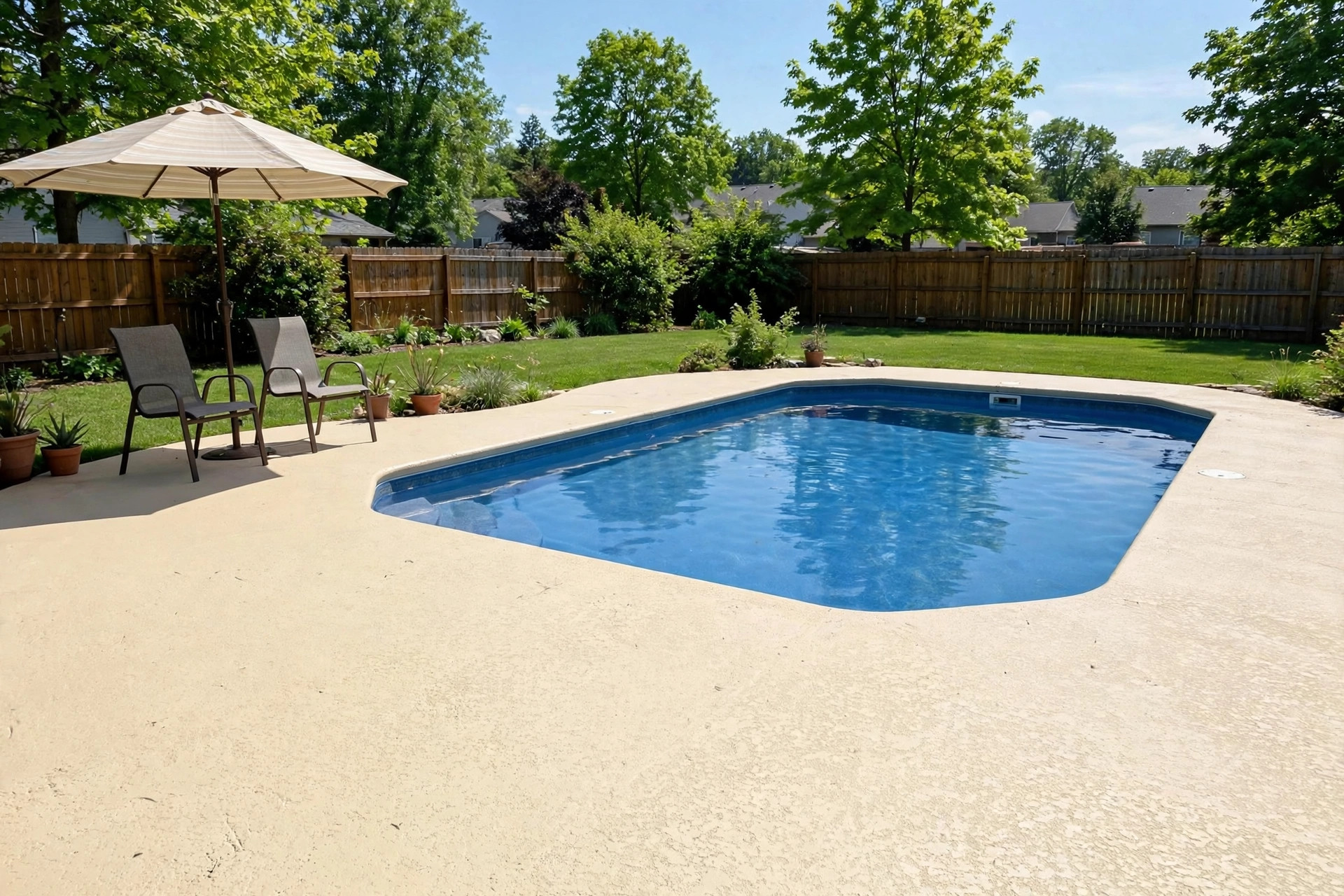

Introduction: The Promise of a Barefoot-Friendly Pool Deck
On a hot summer day, an uncoated concrete pool deck can feel like a hot skillet. Many pool owners read cool deck coating for pool area reviews before they buy, because the claims sound almost too good. A coating that keeps a deck 30 percent cooler. A surface that feels gentle on bare feet. A finish that resists fading and wear.
This article gathers what real buyers report. It explains what cool deck coating is and how it works. It walks through the main types, the costs, and the upkeep. It also covers safety. The goal is simple. Help you decide if a cool deck coating fits your pool area.
Why a Cooler Pool Deck Matters: Cool Deck Coating for Pool Area Reviews
Every pool owner knows the midday dance. You walk to the water on your toes. You hop from one shady spot to the next. Standard concrete soaks up heat from the sun. On a 95 degree day, the surface can climb well above 140 degrees. That is painful on bare feet. It can even burn tender skin.
Cool deck coating was first made for pool areas in hot states like Arizona and Texas. The coating reflects a large share of the sun’s heat. The deck still gets warm, but it stays much cooler than bare concrete. Children and pets feel the difference most. A dog’s paws burn on hot concrete too. A cooler deck means safer play for everyone.
A coated deck also looks better. Plain concrete stains and fades. A fresh coating gives the deck a clean, even color. Many buyers say this was the surprise benefit. They bought the coating for comfort. They kept it for the look.
What Cool Deck Coating Is and How It Works
Cool deck coating is an acrylic or cement-based overlay. It is applied over existing concrete in a thin layer. The surface is slightly rough, like fine sandpaper. That texture is not an accident. The tiny ridges reflect sunlight in many directions. This cuts heat absorption.
The Heat-Reflecting Design
The coating gets its name from an old brand, Kool Deck. Today many brands use the same idea. Light colors reflect more heat than dark colors. White and light tan are the coolest choices. Most buyers who read cool deck coating for pool area reviews choose a light shade for this reason.
The surface also stays breathable. Moisture from the slab can pass through the coating. This keeps the bond strong. It also keeps the deck from blistering in heat. Good coatings are made for pool chemicals. They resist chlorine splash and sun fade.
How It Compares to Plain Concrete
Plain concrete is smooth and gray. It stores heat all day. Cool deck coating breaks up the smooth surface. The texture scatters light and heat. The result is a deck that feels warm but not scorching. Many owners say they can now walk barefoot at two in the afternoon. That is the test that matters most.
Types and Options
Not all cool deck coatings are the same. Buyers will find three main groups on store shelves and contractor menus.
Acrylic Cement Overlays
The classic type is an acrylic-modified cement. It is mixed with water and troweled or sprayed onto the deck. Brands such as Quikrete and Sakrete sell versions for pool decks. Home improvement stores like Home Depot and Lowe’s carry these products in most regions. This type bonds well to old concrete. It gives a natural stone look. It lasts for many years when sealed.
Elastomeric and Acrylic Topcoats
A second type is a flexible acrylic topcoat. It comes in a bucket and rolls on like paint. It is thinner than a cement overlay. It works well over concrete that is in decent shape. It is also the easiest type for do-it-yourself work. This Old House has project guides that show how a careful homeowner can apply these coatings over a weekend. Reviews say two coats are the norm. A third coat adds life.
Textured Stone Finishes
The third group includes textured stone finishes. These coatings add colored chips or aggregate for a pebbled look. They hide stains and cracks well. Daltile and other surface brands inspire some of the color choices. These finishes cost more. But they give the deck a premium feel underfoot.
When buyers compare cool deck coating for pool area reviews, they often ask about alternatives. A non-slip outdoor tile is one option. Natural travertine pavers are another. Both stay cool and look rich. Both cost far more than a coating. For many families, the coating is the middle path. It beats plain concrete. It costs less than new stone.
How to Choose the Right Coating
Match the Coating to Your Concrete
Walk your deck first. Look for cracks wider than a hairline. Look for flaking or loose concrete. A coating cannot fix a failing slab. Small cracks can be patched. Big damage needs repair first. Most product guides, including those on The Spruce, stress this point. Prep work decides the final result.
Ask for Samples and Reviews
Before you buy, read a few cool deck coating for pool area reviews on store sites and forums. Look for buyers in your climate. A coating that shines in Arizona may age differently in Florida humidity. Ask local pool stores which brands they restock. Steady restock means steady demand. It often means steady satisfaction too.
Pick a Light Color
Color is not just style here. It is function. Light beige, sand, and pale gray reflect the most heat. Dark colors look bold. They also absorb far more heat. Most negative cool deck coating for pool area reviews trace back to a dark color choice. Stick with light tones near the pool edge.
Check Slip Resistance
Pool decks get wet. A good coating keeps grip when wet. Look for a product that lists slip resistance on the label. Ask the seller for a wet-surface rating. Test a small patch before you coat the whole deck. Spray it with a hose. Walk on it barefoot. Your feet will tell you the truth.
DIY or Contractor
A small deck in good shape is a fair weekend job. A large deck with cracks is better left to a pro. Contractors charge more. They also handle prep, patching, and sealing in one visit. Ask for photos of past pool jobs. Ask how long the coating should last. Good contractors answer both questions without pause.
Cost and Price
Cool deck coating is one of the cheapest ways to refresh a pool deck. Material for a do-it-yourself kit runs about 50 to 150 dollars for each 100 square feet. A 500 square foot deck may need 300 to 800 dollars in materials. Sealant and tools add to the bill.
Contractor work costs more. Typical prices run 3 to 8 dollars per square foot. That includes prep, repair, coating, and sealing. A 500 square foot deck may cost 1,500 to 4,000 dollars done by a pro. Heavy patching or crack repair raises the price.
Compare this with the alternatives. A full pool deck resurfacing with new material runs much higher. New tile or pavers can run 10 to 20 dollars per square foot installed. Many buyers in cool deck coating for pool area reviews call the coating the best value per dollar. It does not last as long as new stone. But the upfront cost is a fraction.
Care and Upkeep
Cool deck coating is low upkeep, not no upkeep. A little care keeps it cool and clean for years.
Regular Cleaning
Hose the deck down often. Chlorine and sunscreen build up over time. A gentle scrub with a soft brush and mild soap removes the film. Avoid harsh acids. Strong cleaners can dull the surface and strip the sealer.
Resealing
Most coatings need a fresh sealer every two to four years. The sealer protects the color from sun fade. It also keeps water from soaking in. Resealing is a simple roll-on job. Many owners do it in a day. Reviews say this step is the key to long life. Skip it, and the coating wears fast.
Winter Care
In cold regions, avoid sharp metal shovels. Use plastic blades. Avoid rock salt if the label warns against it. Freeze and thaw cycles stress any coating. A sealed, clean deck handles winter far better.
Safety on a Coated Deck
Cool deck coating is safer than hot concrete in one clear way. It lowers burn risk for bare feet. But safety does not stop there. Keep the textured surface clean. Algae and grime make any surface slick. A dirty deck can get slippery even with a good coating.
Watch the first rain after a long dry spell. Dust and oils wash onto the deck. Give it a rinse. Check that the sealer still beads water. If water soaks in flat, it is time to reseal. Most safety guides on sites like Bob Vila repeat the same advice. Good drainage and clean texture prevent most slips.
Also mind the edges. Steps and coping stones need the same care. A cool coating on the flat deck does little good if the steps are hot and slick. Many contractors coat the steps as part of the job. Ask for it by name.
Frequently Asked Questions
Does cool deck coating really stay cool?
Yes, within reason. It does not stay cold. It stays cooler than bare concrete. Most buyers report a clear difference on hot afternoons. Light colors perform best. Dark colors perform worst.
How long does cool deck coating last?
A well-applied coating lasts 7 to 12 years. Sealing every few years extends the life. Heavy use, harsh chemicals, and freeze-thaw cycles shorten it. Most cool deck coating for pool area reviews cluster around 8 to 10 years of good service.
Can I apply it over old concrete?
Yes, if the concrete is sound. Clean it well. Patch cracks. Fix any flaking spots. Very damaged concrete may need grinding or a new slab. The coating is thin. It follows the shape of what is under it.
Is it slippery when wet?
No, not when it is clean. The textured surface gives good grip. Dirt, algae, and sunscreen can make it slick. Regular washing keeps the texture working. Always test a sample patch with water before full application.
What color should I choose?
Light colors: white, sand, light gray, pale tan. These reflect the most heat. They also show dirt more. That is the trade. Most pool owners accept the extra washing for cooler feet.
Will pool chemicals damage the coating?
Mild splash is fine. Strong chemical spills can stain or dull the surface. Rinse spills with water right away. Keep concentrated chlorine off the deck. Sealed coatings handle normal pool life without trouble.
A Short Final Word
Cool deck coating for pool area reviews point to one clear verdict. It works. It cools the deck. It feels kind on bare feet. It costs less than a full resurfacing. It needs some care, like any outdoor surface. Light colors, good prep, and regular sealing make the difference between a five-year coating and a ten-year one.
If your pool deck burns your feet every summer, this coating is worth a hard look. Start with a small test patch. Read the labels. Ask your local store or contractor about the right product for your slab. Flooring makers such as Shaw, Mohawk, and LL Flooring focus on indoor floors, but the same care in choosing a surface pays off outside. A cooler deck means more time in the water and less time hopping across hot concrete.
References
Bob Vila. (n.d.). Home improvement advice. https://www.bobvila.com Daltile. (n.d.). Ceramic and porcelain tile. https://www.daltile.com LL Flooring. (n.d.). Hardwood, vinyl, and tile flooring. https://www.llflooring.com Lowe’s. (n.d.). Home improvement products. https://www.lowes.com Mohawk Flooring. (n.d.). Flooring products. https://www.mohawkflooring.com Shaw Floors. (n.d.). Flooring products. https://www.shawfloors.com The Home Depot. (n.d.). Home improvement products. https://www.homedepot.com The Spruce. (n.d.). Home and garden advice. https://www.thespruce.com This Old House. (n.d.). Home renovation guidance. https://www.thisoldhouse.com
Was this guide helpful?

About James Carter
The My Garden US editorial team writes practical, in-depth home and garden guides for American homeowners — tested advice, no fluff.
You May Also Like
Vertical Subway Tile Shower Ideas for USA Homes
September 19, 2026 0 views
Wool Carpet Pros and Cons for Bedrooms: An Honest Guide
July 3, 2026 0 views
Marble Look Porcelain Tile Reviews: What USA Homeowners Should Know Before Buying
April 17, 2026 0 views