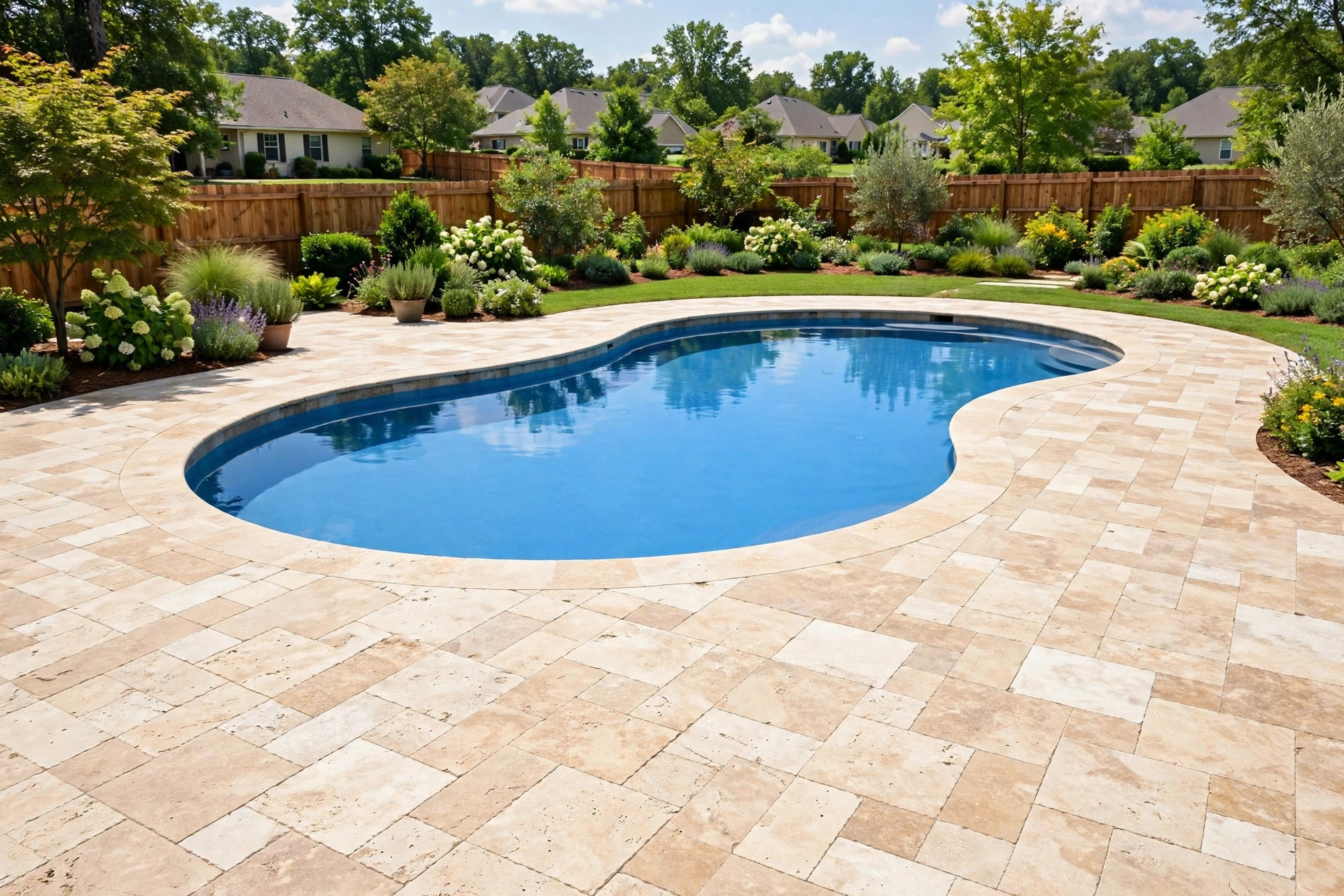

The travertine pavers for pool deck cost usa families see in quotes can feel hard to pin down. One store lists a low price per square foot. A contractor names a much higher one. The gap makes sense once you know what is behind each number. Travertine is a natural stone cut from large blocks. The grade of the stone, the size of each paver, and the price of local labor all move the total. This guide walks through each part in plain terms so you can plan a budget that fits.
Why It Matters for Pool Owners
A pool deck is not like a front walk. Bare feet cross it all summer. Water splashes on it every day. The sun bakes it from morning to night. Cheap material can turn slippery, hot, or cracked in a single season. Travertine stays cooler underfoot than poured concrete or brick. That matters on a July afternoon when the surface of concrete can burn skin.
The stone also grips well when it is wet. Its surface has tiny pits and ridges formed over thousands of years. Those small marks give shoes and feet something to hold. Few man made surfaces copy that feel at the same price.
Looks count too. Travertine comes in warm tones of beige, tan, ivory, and soft gray. The color blends with water, plants, and wood. A deck built with it looks finished without extra decoration. Many home buyers like the look, and real estate agents note that a well kept pool deck can help a home sell.
Cost control starts before you buy. Knowing the full travertine pavers for pool deck cost usa figures helps you compare bids fairly. A low bid may leave out the base work. A high bid may include extras you do not need. When you know each line item, you can ask better questions and get better answers.
What to Look for When You Choose: Travertine Pavers for Pool Deck Cost Usa
Travertine pavers are sold in grades. First grade stone has even color and few holes. Second grade has more color change and more pits. Third grade, sometimes called commercial grade, has the most variation and the most surface pits. Lower grades cost less per square foot. For a pool deck, first or second grade is the safer pick because the surface is smoother under bare feet.
Thickness matters. Pavers for pool decks are usually one and one quarter inches to one and one half inches thick. Thinner tiles exist, but they are meant for thin set indoor jobs, not for a deck that takes foot traffic and weather. Ask the seller for the actual thickness, not the name on the box.
Finish is the next choice. Tumbled travertine has soft, rounded edges and a worn look. Honed travertine is smooth with a dull shine. Brushed or chiseled edges give a rustic feel. Around a pool, tumbled finish is popular because it is not slick and the edges feel kind to feet.
Size affects both price and labor. Common sizes are six by twelve inches, twelve by twelve, sixteen by sixteen, and larger squares. Big pieces cost more per unit but cover ground faster. Small pieces cost less per unit but take longer to lay, which can raise labor cost. A mixed pattern, often called a French pattern, uses several sizes at once and hides cuts well.
Check the stone before it ships. Ask for a sample board or photos of the actual pallet. Travertine is a natural product, so shade will shift from batch to batch. What you see in the showroom may not match what arrives. A photo of your pallet avoids a sad surprise on delivery day. Resources such as Daltile and Shaw Floors show the range of natural stone looks you can expect.
Types and Options
Travertine pavers come in several forms. The most common is the dry laid paver set on a compacted base of crushed stone and sand. This method lets water drain through the joints. It also lets you lift and reset a single paver if the ground shifts. For a pool deck, dry laid is the usual and best method.
Some jobs use travertine tile, which is thinner and set in mortar like indoor tile. This works over an existing concrete slab that is sound. It costs less in stone but needs more surface prep. If the old slab is cracked, the thin tile can crack with it.
Coping is the cap piece that tops the pool wall edge. It is wider than a paver and has one rounded or beveled edge. Coping is sold by the linear foot, not the square foot, and it costs more per foot than field pavers. Plan for coping in your budget from the start. Many homeowners forget it and are startled by the added line on the bill.
Drainage grates and deck drains sit between pavers in some layouts. They carry wash water away from the house. Your contractor may suggest them if the yard slopes toward the home. They add cost but prevent bigger water problems later.
Colors run from pale ivory to walnut brown. Light colors stay coolest in the sun. Dark colors show less dirt but soak up more heat. Around a pool in a hot state, light beige or ivory is the wise choice for comfort. Pattern books at The Spruce give a good sense of how each tone looks in a real yard.
Cost and Price Breakdown
Here is the heart of the matter. The travertine pavers for pool deck cost usa homeowners pay has two parts: material and labor. Both vary by region.
Material cost for the pavers alone runs about four to nine dollars per square foot for standard grades and common sizes. First grade stone in large sizes can reach ten to twelve dollars per square foot. Coping adds about twelve to twenty five dollars per linear foot. These are store prices before delivery. Delivery fees run from one hundred to three hundred dollars depending on distance and weight.
Base material adds more. A dry laid deck needs four to six inches of compacted crushed stone and one inch of bedding sand, plus plastic edging to hold the border. Figure about one to two dollars per square foot for base material. Polymeric sand for the joints costs about fifty to eighty dollars per bag, and a typical deck takes several bags.
Labor is the largest single line. Professional installation of travertine pavers around a pool runs about eight to fifteen dollars per square foot in most parts of the country. Rates run higher on the coasts and in cities. A simple square deck with easy access costs less. A deck with curves, steps, or tight corners costs more because cutting takes time.
A full installed price, material plus labor, usually lands between fourteen and twenty eight dollars per square foot. For a six hundred square foot pool deck, that means a total of about eight thousand four hundred to sixteen thousand eight hundred dollars. Compare that with a concrete paver installation cost near me search, where installed concrete pavers often run ten to eighteen dollars per square foot, and you can see the premium natural stone carries.
Other costs to plan for include old deck removal, which runs one to three dollars per square foot, and sealing, which we cover below. Permit fees are small in most towns but ask anyway. If your yard needs grading or a retaining wall, those are separate jobs with separate bills.
You can lower the bill in honest ways. Choose a simple shape with straight edges to cut less stone. Pick second grade stone if the color range pleases you. Buy during the off season, when some yards discount stock. Get three written bids and make sure each lists the same work so you can compare them line by line. Guides at This Old House and Bob Vila explain how to read contractor bids with a clear eye.
Care and Upkeep
Travertine asks little, but it asks for it on time. Sweep the deck weekly. Leaves and dirt hold moisture and can stain the stone over weeks. Rinse with a garden hose when you sweep. A pressure washer is fine at a low setting, but keep the tip moving and stay back at least a foot. Too much force can carve the soft stone.
Sealing is the main upkeep task. A good penetrating sealer sinks into the stone and blocks stains from sunscreen, food, and pool chemicals. Seal a new deck after the pavers have cured for a few weeks. Reseal every two to three years in most climates, or each year in harsh sun. A gallon of quality sealer covers about one hundred to two hundred square feet and costs forty to seventy dollars. You can apply it with a pump sprayer in an afternoon.
Salt water pools need a bit more care. Salt can leave a white film on any stone. Rinse the deck after heavy pool use and seal on schedule. The stone itself handles salt water fine, but the joints and the sealer take the wear.
Weeds in the joints are a common complaint. Polymeric sand hardens and blocks most weeds. Pull any that appear before they root deep. Never use strong acid cleaners on travertine. The stone is lime based and acid eats it. Use a cleaner made for natural stone, sold at Home Depot and Lowe’s. If a paver stains badly, you can flip some pavers over, since the back is often clean, or replace one piece without touching the rest.
Winter care is simple in mild states. In cold states, avoid rock salt for ice. Use sand for grip instead. Make sure water drains off the deck and does not pool and freeze on the stone. Reviews of tile care products, like a cracked tile repair kit reviews usa search can show, remind us that the right product matters more than the strongest one.
Safety Around the Pool
Safety is where travertine earns its keep. The stone stays cooler than concrete, brick, or dark pavers. On a hot day the difference can be twenty degrees or more on the surface. That protects children’s feet and keeps the deck pleasant at noon.
Wet grip is good but not magic. Tumbled finish grips best. Honed finish is smoother and can be slick when soaked. Ask for the slip rating if the seller lists one. A higher rating means better grip. Keep algae off the shaded corners, since any wet stone grows slick with algae.
Edges need care. Coping with a rounded nose is kinder than a sharp square edge if someone slips. Make sure the deck slopes gently away from the pool, about one quarter inch per foot, so water runs off and does not stand. Standing water breeds both algae and mosquitoes.
Keep the work zone safe during install. Heavy pallets of stone can tip. Children and pets should stay clear of the cutting area. A wet saw throws water and grit. Once laid, check that no paver rocks or sticks up. A raised edge is a trip hazard. Reset any paver that moves. Advice on safe home projects from Consumer Reports and LL Flooring is worth a read before any big deck job.
Frequently Asked Questions
How much does travertine cost per square foot installed?
For most of the country, expect fourteen to twenty eight dollars per square foot installed, with material and labor both included. Simple decks in low cost areas land near the low end. Complex decks with curves and steps in high cost cities land near the high end.
Is travertine too slippery for a pool deck?
No, when you pick the right finish. Tumbled travertine has a textured surface that grips well even when wet. Honed stone is smoother and less ideal around water. Keep the deck clean and sealed, and rinse away algae in shaded spots.
How long does a travertine pool deck last?
With proper base work and sealing, a travertine deck lasts twenty five to forty years. Individual pavers can be lifted and reset if the ground moves, which is a big advantage over a single slab that cracks. The stone itself does not wear out under foot traffic.
Should I seal travertine pavers around a pool?
Yes. A penetrating sealer blocks stains from sunscreen, drinks, and pool chemicals, and it slows water uptake. Seal after install and reseal every two to three years. The job takes an afternoon and the sealer costs less than one hundred dollars for most decks.
Can travertine go over my old concrete deck?
Thin travertine tile can be set over a sound concrete slab with mortar. Thick pavers need a proper base and are not laid over old concrete. If the old slab is cracked or heaves, fix or remove it first. A bad base will ruin a good stone job no matter what stone you pick.
What grout or joint sand works between pavers?
Polymeric sand is the standard for dry laid pavers. It sweeps into the joints, then hardens with water to lock the pavers and block weeds. For mortar set tile, use a sanded grout rated for outdoor use. In wet shower corners indoors, a best caulk for shower corners reviews usa search shows similar thinking: the joint material must match the wet setting.
A Final Word
Travertine pavers give a pool deck a timeless look, cool comfort, and a long life. The travertine pavers for pool deck cost usa homeowners face is real money, but it buys a surface that can outlast two rounds of cheaper material. Plan the budget line by line, pick the right grade and finish, hire a crew that knows natural stone, and seal on schedule. Do that, and your deck will look as good in year twenty as it did in year one.
References
Bob Vila. (n.d.). Home improvement advice. https://www.bobvila.com Consumer Reports. (n.d.). Product reviews and ratings. https://www.consumerreports.org Daltile. (n.d.). Ceramic and porcelain tile. https://www.daltile.com LL Flooring. (n.d.). Hardwood, vinyl, and tile flooring. https://www.llflooring.com Lowe’s. (n.d.). Home improvement products. https://www.lowes.com Shaw Floors. (n.d.). Flooring products. https://www.shawfloors.com The Home Depot. (n.d.). Home improvement products. https://www.homedepot.com The Spruce. (n.d.). Home and garden advice. https://www.thespruce.com This Old House. (n.d.). Home renovation guidance. https://www.thisoldhouse.com
Was this guide helpful?

About Robert Taylor
The My Garden US editorial team writes practical, in-depth home and garden guides for American homeowners — tested advice, no fluff.
You May Also Like
Shaw vs Mohawk Vinyl Plank Comparison: Which Brand Wins in American Homes
February 27, 2026 0 views
Concrete Paver Installation Cost Near Me: A Homeowner’s Guide
May 24, 2026 0 views
The Best Backsplash for Dark Cabinets USA: A Plain Guide for American Kitchens
March 10, 2026 0 views