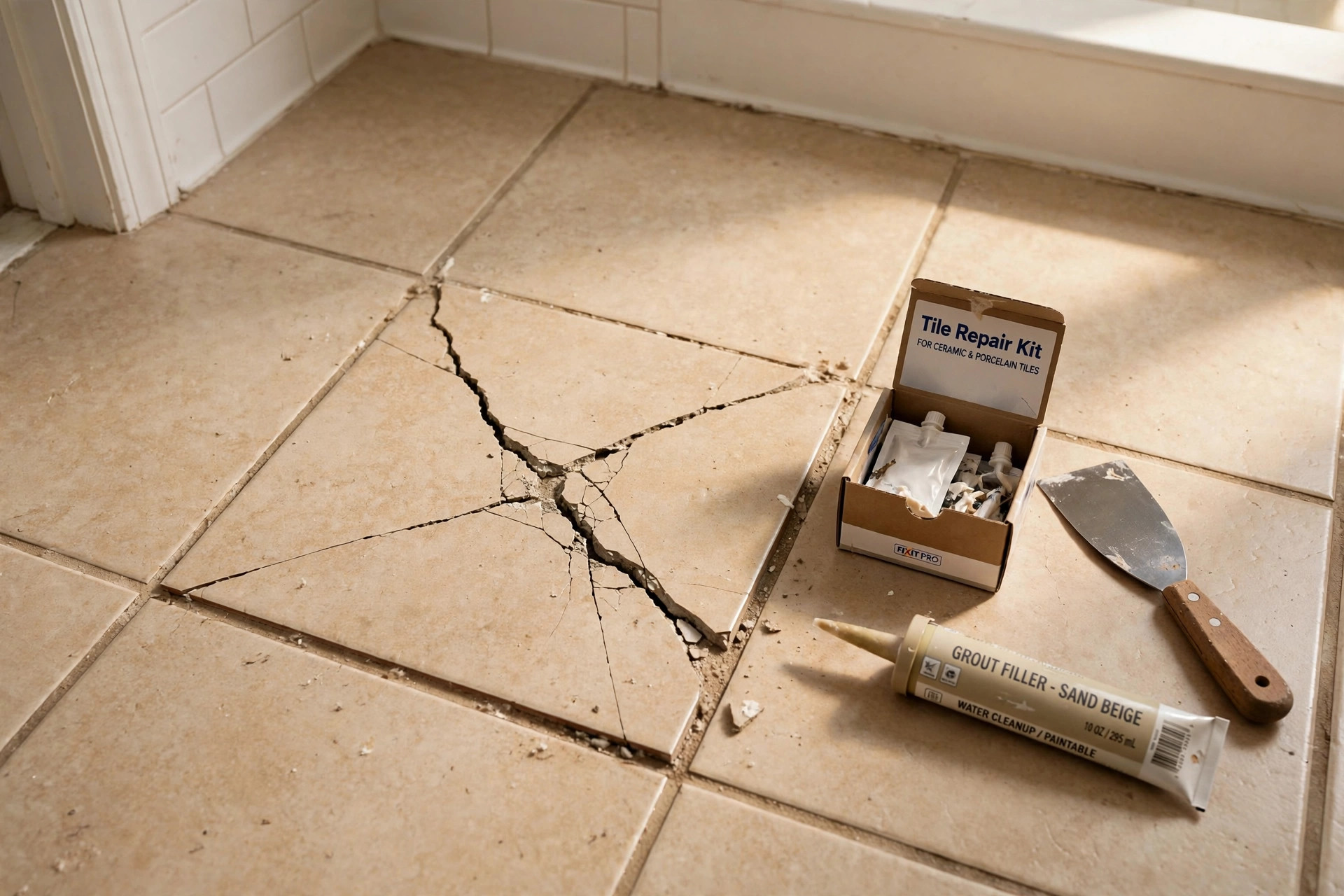

A cracked tile in a kitchen or bath is a small problem that grows fast. Water finds the crack. The crack spreads. The tile loosens. If you read cracked tile repair kit reviews USA shoppers have posted, you see one theme again and again: a ten dollar kit used on time can save a full tile replacement. This guide gathers what those reviews teach, plus plain facts about the kits on store shelves. It covers which types exist, how to pick one, what they cost, how to use them right, and when a kit is not enough.
Why It Matters
A crack in a tile is not just ugly. It lets water reach the mortar and the floor under it. In a bathroom or a laundry room, that water can rot the subfloor or feed mold. A chip on a floor tile edge can cut bare feet. A cracked wall tile behind a sink can stain and crumble.
Tile repair kits fix the damage on the surface. They fill the crack, match the color, and seal the spot against water. They do not fix a loose tile or a broken underlayment. They are a patch, not a rebuild. But for hairline cracks, chips, and small missing glaze, a good kit does the job and the repair can last for years.
Reviews from American buyers show that the biggest value is speed. A plumber or tile setter may take a week to schedule. A kit from a store or a website arrives in days, and the repair takes an hour. That speed stops small cracks from growing into broken tiles.
How to Choose: What to Look For: Cracked Tile Repair Kit Reviews Usa
Not all kits are the same. Read reviews with a sharp eye and look for these points.
Color match matters most
The best reviewed kits give you several small color pots or powder shades that you mix to match your tile. A single tube of “white” will look wrong on cream or gray tile. Buyers in cracked tile repair kit reviews USA forums say color mixing is the step that decides the result. Look for a kit with at least five or six shades and a mixing guide.
Filler type fits the damage
Kits come with different fillers. A paste filler works for hairline cracks and small chips. An epoxy filler is harder and better for floor tiles that take foot traffic. A glaze pen only touches up surface color and does little for deep cracks. Match the filler to the damage. Floor repairs need the hardest filler you can find.
Seal and finish
A repair must stand up to water. Kits that include a clear sealer or a topcoat get better long term reviews. Without a seal, the filler can stain or soften when mopped. Check the box for words like “waterproof” and “mildew resistant.”
Working time and cure time
Some fillers set in minutes. That is good for speed but bad for beginners, because there is no time to fix mistakes. Two part epoxies often give you fifteen to thirty minutes of working time, then need a full day to cure. Read the label before you buy.
What reviewers complain about
Common complaints tell you what to avoid. Buyers report that cheap kits dry too dark, shrink into the crack as they cure, or crumble under a chair leg. Reviews also warn that strong smelling epoxies need a fan running and a window open. Take these notes as honest signals.
Types of Cracked Tile Repair Kits
Store shelves in the United States carry four main types.
1. Color chip and crack filler kits
These are the most common. The box holds a putty filler, color powders or liquids, a mixing tray, and small tools. You fill the crack, blend the color, and smooth it level. They cost the least and handle most bathroom and kitchen chips. This type is the one most cracked tile repair kit reviews USA buyers describe, and it suits cracks up to about an eighth of an inch wide.
2. Two part epoxy repair kits
Epoxy kits come with a resin and a hardener that you mix before use. The result is very hard and stands up to foot traffic, which makes it the right pick for floor tiles in busy rooms. The color range is usually smaller, so matching patterned tile is harder. Work time is short, so plan your steps before you mix.
3. Glaze touch up pens and markers
These are pens filled with colored glaze or paint for the top coat of tile. They cover scratches, small color loss, and grout line touch ups. They do not fill deep cracks. Reviewers use them as a finish step over a filler, not as the repair itself.
4. Stone and marble repair compounds
Natural stone tiles need a different product. Stone fillers are thicker, polish to a shine, and often come in earth tones. If your “tile” is really travertine or marble, buy a stone kit instead of a ceramic kit. A ceramic filler will look flat next to polished stone.
If you are not sure which type you need, start with a basic filler kit for ceramic and porcelain tile. It covers the most common jobs in American homes.
Cost and Price
Prices run low, which is why these kits are popular.
A basic filler kit costs between ten and twenty five dollars. Mid range kits with more colors and better tools run twenty five to forty dollars. Professional style two part epoxy kits can reach forty to sixty dollars. A glaze pen alone sells for under ten dollars.
Compare that to hiring a tile setter. Replacing a single floor tile often costs one hundred fifty to three hundred dollars once labor, trip charges, and grout work are counted. A full guide to replacing a single cracked floor tile shows the steps if you want to do the whole job yourself.
One warning from buyers: the cheapest kits cost more in the end. If the filler shrinks or fails in six months, you buy the kit twice. Spend a little more for a kit with solid reviews and a real sealer included.
How to Use a Tile Repair Kit
Follow these steps for the best result.
Clean the area first
Sweep and wash the cracked tile. Remove soap scum, wax, and loose bits from the crack. Let it dry fully. Filler will not stick to a wet or greasy surface.
Test the color
Mix a small dab of filler with color powder and test it on a hidden spot, such as the tile edge under a baseboard. Let it dry. Dry color often looks different from wet color. Adjust until the match is close.
Fill the crack
Press the filler deep into the crack with the tool from the kit. Work in thin layers for deep cracks, and let each layer set before adding the next. Slightly overfill, because most fillers shrink a little as they cure.
Level and smooth
Before the filler fully hardens, smooth it flush with the tile face. Use the straight edge tool from the kit. Wipe away extra with a damp cloth while it is still workable. Do not sand unless the kit tells you to; sanding can scratch the glaze around the repair.
Seal it
Apply the clear topcoat if the kit includes one. This step keeps the repair waterproof. Let the repair cure for the full time on the label before you mop or shower near it.
For full room projects, like refreshing old grout lines around your repaired tile, many homeowners also look at tile regrouting service reviews near me to compare DIY work with a pro.
Care and Upkeep
A good repair needs little care. Clean it with mild soap and water. Avoid bleach and harsh acid cleaners on the repaired spot, since strong chemicals can dull the topcoat. Do not drag heavy furniture across a floor repair.
Check the repair twice a year. If the filler has shrunk or a hairline gap has opened, add a thin new layer. Quick touch ups keep the repair invisible.
Keep the kit after the job. Leftover filler and color powders last for years in a cool, dry spot. The next chip will take ten minutes to fix instead of a new purchase.
One more note: repairs on tiles that move or rock will fail again. If the tile under the crack is loose, the kit cannot hold it. That is a replacement job.
Safety
Work safe even on a small job.
– Open a window or run a fan. Epoxy fillers and sealers have fumes. – Wear the gloves in the kit. Epoxy can irritate skin. – Keep fillers and hardeners away from children and pets. – Read the label for cure times before you walk on a floor repair. – Wash tools right away. Cured epoxy does not wash out.
If the tile is in a shower used by older family members, a slippery repair spot matters. Keep the repair level with the tile, and do not build up a thick glossy patch that feet can slide on.
FAQ
Do tile repair kits really work?
Yes, for the right damage. Hairline cracks, small chips, and glaze nicks respond well. Reviews show the best results on porcelain and ceramic tile with a well matched color. They do not fix loose tiles, large broken pieces, or cracks that run across several tiles.
How long does a repair last?
A well done filler repair with a sealer can last two to five years on a wall and one to three years on a floor that gets daily foot traffic. Epoxy repairs last longer than soft putty repairs. Repairs in showers last less than repairs in dry rooms because of constant water and heat.
Can I repair grout with a tile repair kit?
Tile repair kits are made for the tile face, not for grout lines. If your grout is cracked or missing, use a grout repair product or regrout the joint. Some readers doing a full refresh pair the tile fix with a look at peel and stick backsplash tile reviews usa for an easy wall upgrade.
Will the repair be invisible?
It will be close but rarely perfect. From standing height, a good color match fades into the floor. Up close, you may see a faint line. Patterned and textured tiles are harder to match than plain solid colors.
Should I repair or replace the tile?
Repair if the crack is thin, the tile is firm, and the color match is good. Replace if the tile rocks, the crack is wide, or the tile is broken into pieces. Also replace if water has reached the floor under the tile, since that points to bigger damage.
Where can I buy a kit in the USA?
Kits sell at major home improvement retailers, tile specialty shops, and online marketplaces. Look at The Home Depot and Lowe’s for in store stock, and at LL Flooring for flooring specific supplies. Flooring makers such as Shaw and Mohawk publish care guides that list which repair products suit their tile lines, and Dal-Tile offers guidance for its ceramic and porcelain collections. For step by step how to articles, This Old House and The Spruce both cover tile repair methods in plain terms.
A Short Final Word
A cracked tile asks for a quick answer. Read cracked tile repair kit reviews USA buyers have written, pick a kit with real color options and a sealer, and set aside an hour on a weekend. The repair will not be factory perfect, but it will stop the crack, seal out water, and buy you years before a full replacement is needed. Keep the leftover kit in the utility closet. The next chip always comes.
References
Daltile. (n.d.). Ceramic and porcelain tile. https://www.daltile.com LL Flooring. (n.d.). Hardwood, vinyl, and tile flooring. https://www.llflooring.com Lowe’s. (n.d.). Home improvement products. https://www.lowes.com Mohawk Flooring. (n.d.). Flooring products. https://www.mohawkflooring.com Shaw Floors. (n.d.). Flooring products. https://www.shawfloors.com The Home Depot. (n.d.). Home improvement products. https://www.homedepot.com The Spruce. (n.d.). Home and garden advice. https://www.thespruce.com This Old House. (n.d.). Home renovation guidance. https://www.thisoldhouse.com
Was this guide helpful?

About Emily Rodriguez
The My Garden US editorial team writes practical, in-depth home and garden guides for American homeowners — tested advice, no fluff.
You May Also Like

Frameless Shower Door Cost Installed USA: What Homeowners Pay
August 17, 2026 0 views
Engineered Hardwood Flooring Cost per Square Foot: A Plain Guide for American Homeowners
August 23, 2026 0 views
Peel and Stick Backsplash Tile Reviews USA: What Homeowners Report in 2026
April 18, 2026 0 views