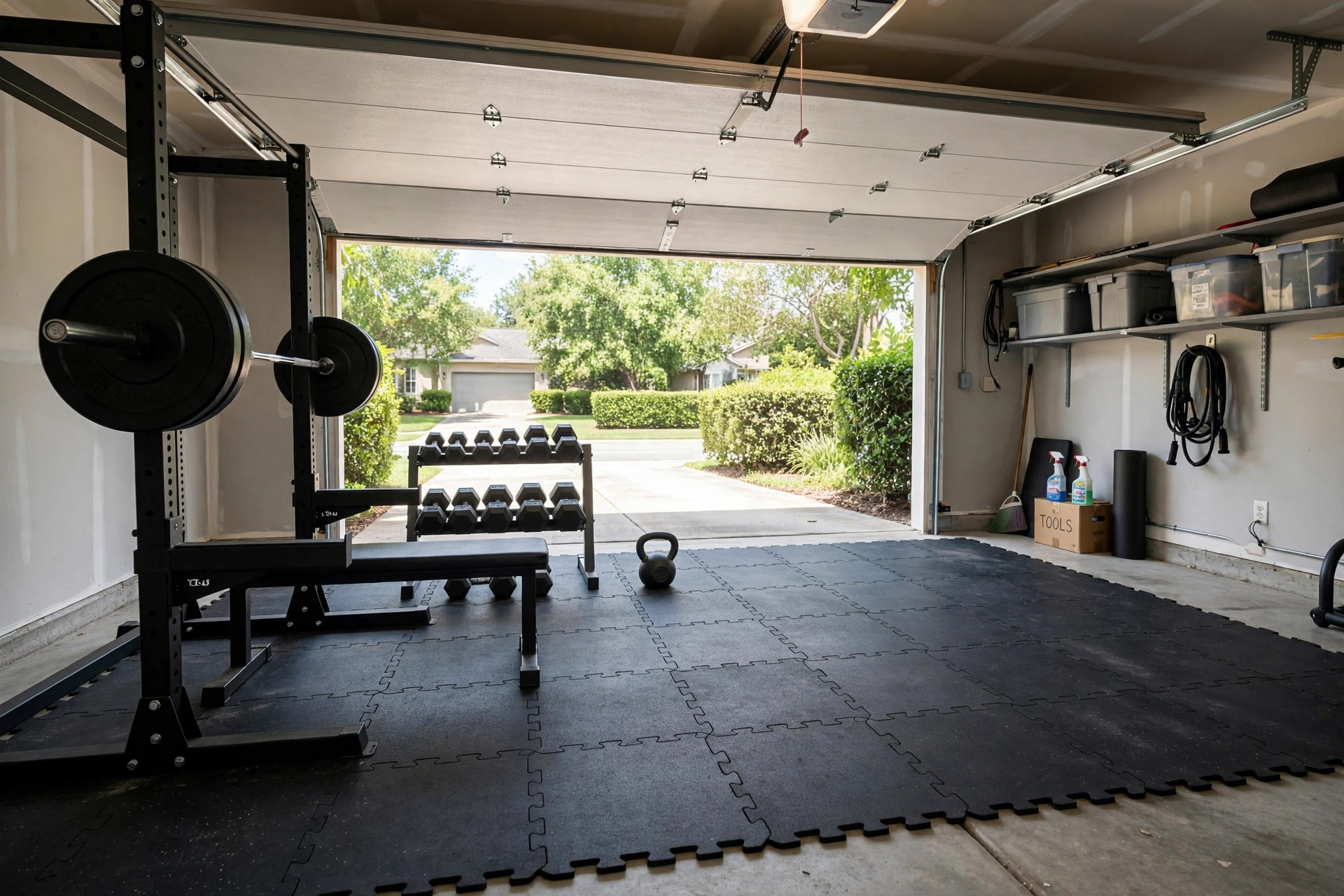

A bare concrete floor is the most common ground for a home gym in the USA. Garages and basements give the space, and the concrete slab gives the strength. But bare concrete is cold, hard, and rough on both your body and your gear. The search for home gym flooring over concrete reviews usa brings up one plain fact again and again: the right floor changes how the whole gym feels. This guide walks through what works, what to look for, what it costs, and how to keep it in good shape.
Why Flooring Matters for a Concrete Home Gym
Concrete is one of the hardest surfaces in a home. A dropped dumbbell can chip it. A barbell plate can crack it. Your knees and elbows feel every rep done on it. Reviewers across the country report the same set of problems: noise that travels through the house, gear that wears out fast, and workouts that leave joints sore.
A good gym floor fixes three things at once. First, it absorbs shock. The impact of weights spreads out instead of striking the slab. Second, it protects the concrete itself. Chips and cracks in a slab are costly to repair, and most homeowners would rather replace a worn mat than patch a floor. Third, it adds grip and comfort. A floor with some give makes push-ups, stretches, and floor work far kinder to the body.
Concrete also brings moisture. Many garage and basement slabs sit below grade or near outside air, and a thin film of damp can form under any covering. The best home gym flooring over concrete reviews in the USA warn about this. Trapped moisture can cause smells, and in warm states it can feed mold. Any floor choice must let the slab breathe or at least seal the surface first. In warm states, trapped damp under a floor can feed mold, so moisture control is not optional.
What to Look For When Choosing Gym Floor Over Concrete: Home Gym Flooring Over Concrete Reviews Usa
Shoppers compare products on five points: thickness, density, grip, odor, and ease of install.
Thickness is the first number to read. Thin mats of 4 to 6 millimeters suit light cardio and bodyweight work. Plates and bars call for 8 millimeters or more. Heavy lifters in their reviews favor 3/4-inch rubber tiles, which is about 19 millimeters. Thicker is not always better, but for concrete, 1/2 inch is a fair minimum for a serious lifting corner.
Density decides how the floor handles weight. Cheap foam puzzle mats compress and stay dented under a loaded barbell. High-density rubber springs back. Reviews warn that foam is fine for yoga corners but poor under racks and dumbbell rows. Dense recycled rubber flooring is the safer pick for heavy loads.
Grip matters most when the floor gets sweaty. Textured rubber holds shoes well. Smooth vinyl can turn slick. Some buyers in the reviews note that floors with a coin or diamond pattern keep their footing steady during quick moves like burpees and mountain climbers.
Odor is a common complaint with new rubber. Many products carry a strong rubber smell for the first days or weeks. Reviews advise airing tiles or mats outside before install, and keeping the garage door open during the first week. Low-odor recycled rubber options exist and cost a little more.
Ease of install counts for do-it-yourself owners. Interlocking rubber gym tiles snap together with no glue. Rolls are cheaper per square foot but need cutting and often glue at the seams. Peel and stick options skip glue entirely, though they suit lighter use.
Types of Home Gym Flooring for Concrete Slabs
Rubber Floor Tiles
Interlocking rubber tiles are the favorite in most USA reviews. They come in squares of 2 by 2 feet, usually 1/2 or 3/4 inch thick. The tiles lock with a tight seam and stay flat. They handle dropped weights well and can be lifted and replaced one at a time. The main drawback is price: quality tiles run more per square foot than mats or rolls. Still, for a lifting zone over concrete, they are the top pick in review after review.
Rubber Stall Mats
Horse stall mats from farm and ranch suppliers are a popular budget pick. These are 4 by 6 foot slabs, 3/4 inch thick, made of dense recycled rubber. They cost far less per square foot than branded gym tiles. Reviews praise their toughness and long life. The downsides are weight, at nearly 100 pounds each, and a strong new-rubber smell that takes time to fade. They also leave small gaps at the edges unless cut and taped tight.
Foam Puzzle Mats
Foam EVA tiles are light, cheap, and simple to lay. They suit stretching, yoga, and kids play areas. They do not suit heavy weights. Reviews from lifters report deep dents and torn seams within months when bars or dumbbells hit the foam. Over concrete, foam also traps moisture under the surface. Use foam only for light zones, never under a rack.
Rubber Rolls
Rubber flooring rolls cover big areas with few seams. They are common in commercial gyms and suit large garage gyms at home. Rolls of 1/4 inch work for cardio and machines; 3/8 inch or more works for moderate weights. The catch is install. A full roll is heavy, seams may need tape or glue, and cutting around posts takes care. Buyers in reviews who planned large spaces often call rolls the best value per square foot.
Vinyl and Laminate Sport Flooring
Some owners look at vinyl plank or sheet made for sport use. It looks clean and cleans fast. But vinyl over concrete in a gym can sweat underneath and lift at the edges. It also gives less shock than rubber. It works for light cardio rooms and dance space, not for lifting. Related searches like terrazzo look tile for kitchen reviews usa show how far vinyl and tile trends have come, but gym floors need more give than kitchen floors.
Cork and Specialty Options
Cork tiles give a warm, quiet surface and suit stretching rooms. They dent under heavy loads and cost more. A few reviewers use cork in a yoga corner next to a rubber lifting zone. For pure lifting over concrete, rubber still wins.
Cost and Price: What Homeowners Pay in the USA
Prices swing wide by type, thickness, and brand. The ranges below come from common USA retail listings and buyer reviews. They cover materials only, not labor, since most owners install the floor themselves.
– Foam puzzle mats: 1 to 2 dollars per square foot. – Rubber stall mats: 2 to 3 dollars per square foot. – Interlocking rubber tiles (1/2 inch): 3 to 5 dollars per square foot. – Interlocking rubber tiles (3/4 inch): 4 to 7 dollars per square foot. – Rubber rolls: 2 to 4 dollars per square foot. – Sport vinyl sheet: 3 to 6 dollars per square foot.
A two-car garage of about 400 square feet covered in 3/4-inch tiles can run 1,600 to 2,800 dollars in materials. The same space in stall mats may run 800 to 1,200 dollars. Budget builders often mix types: thick tiles under the rack, stall mats in the open floor, and foam in the stretch corner. This hybrid plan shows up often in the best-rated reviews because it puts money where the impact is.
Watch for shipping costs. Rubber is heavy, and freight can add a lot to online orders. Local farm stores and big box retailers often beat shipped prices on stall mats. Many reviewers suggest buying one tile or mat first to test odor and feel before ordering the whole floor.
Care and Upkeep of Gym Flooring on Concrete
Rubber gym floors are easy to keep. Sweep or vacuum the surface weekly to pull dust from the texture. Mop once a month with warm water and a mild dish soap. Skip harsh cleaners, bleach, and oil-based soaps. They can dry out the rubber or leave a slick film.
Check the seams each season. Interlocking tiles can creep apart with heat and heavy use. Push them back together by hand, or tap them with a rubber mallet. Rolls may need fresh seam tape after a year or two. If a tile tears, lift it out and drop in a spare. Buyers in reviews advise ordering 5 to 10 percent extra tiles at the start so spares match in color.
Moisture control is the one job many owners skip. Lift a corner mat once in the first months and look for damp spots or a musty smell. If the slab sweats, lay a vapor barrier of 6-mil plastic sheeting under the floor, or paint the concrete with a concrete sealer first. In humid states, a small dehumidifier in the garage or basement keeps both the floor and the gear in better shape.
Sunlight can fade and harden rubber over time. If the gym door faces the sun, keep the door closed during peak hours or lay mats away from direct light. Rotating tiles from high-wear zones to low-wear zones once a year evens out wear and keeps the floor looking neat.
Safety Notes for Gym Floors Over Concrete
A floor that shifts underfoot is a hazard. Tape or lock the edges so tiles do not slide on smooth concrete. Leave a small gap at the walls for expansion in hot garages, then cover the edge with a ramp strip so nobody trips.
Bolting a rack to the floor is a common question in reviews. Many owners bolt the rack through the rubber into the concrete with concrete anchors. Others leave heavy racks free-standing on 3/4-inch rubber. If you bolt, use proper anchors and check them yearly. If you skip bolts, keep the rack on thick, dense rubber and never on foam.
Dropped bars from overhead need extra care. Even thick tiles cannot save a slab from repeated Olympic drops. Lifters who drop bars use crash pads or a dedicated lifting platform built from plywood and horse stall mats. The platform spreads the force and protects both the slab and the neighbors below.
Ventilation matters with new rubber. The smell of fresh rubber is strongest in closed garages. Open doors and windows during the first week, and give the room a day of airing before heavy workouts. People with strong chemical sensitivity should pick low-VOC rubber and air it well before install.
FAQ
Can I lay gym flooring right on bare concrete?
Yes. Most USA reviewers lay rubber tiles, mats, or rolls straight onto clean, dry concrete with no glue. Sweep and mop the slab first. In damp garages or basements, lay a plastic vapor barrier or seal the concrete before the floor goes down.
How thick should home gym flooring be over concrete?
For lifting, 1/2 to 3/4 inch of dense rubber is the common pick in reviews. For cardio and machines, 1/4 to 3/8 inch works. For light bodyweight and yoga zones, foam of 3/4 inch is fine. Match the thickness to the heaviest work the zone will see.
Do rubber mats smell, and how long does it last?
New rubber often smells for a few days to a few weeks. Airing the pieces outside for a day or two cuts the odor a lot. Recycled rubber from tires smells more than virgin rubber. Low-odor lines cost more but please buyers who train in closed rooms.
Will rubber flooring protect my concrete slab?
Yes, dense rubber takes the hit that would chip or crack bare concrete. For heavy deadlifts and overhead drops, add a plywood lifting platform under the rubber for full protection. No floor can guard against a truly hard slam from height, but thick rubber handles normal training drops well.
Foam or rubber: which is better over concrete?
Rubber, for almost every home gym. Foam is light and cheap but dents, tears, and slides under heavy gear. Reviews agree: foam suits stretching corners only. Rubber costs more up front and lasts years longer.
How do I stop the floor from sliding on concrete?
Use interlocking tiles with tight seams, or tape mat edges with heavy-duty floor tape. Clean dust from the concrete before laying the floor, since dust acts like ball bearings. For rolls, double-sided carpet tape at the seams and edges holds well in most garages.
Final Word
The best home gym flooring over concrete is the one that fits your training. Heavy lifters do well with 3/4-inch rubber tiles or stall mats. Cardio and machine owners can save with thinner rolls. Stretch and yoga corners take cheap foam. Buy a sample first, mind the moisture under the slab, and order a few spare tiles. For related floor projects, readers also check schluter trim for tile edges reviews usa and peel and stick backsplash tile reviews usa when they plan tile work elsewhere in the home. Done right, a concrete floor under rubber lasts as long as the gym itself, and every workout starts on a kinder surface.
References
Bob Vila. (n.d.). Home improvement advice. https://www.bobvila.com Consumer Reports. (n.d.). Product reviews and ratings. https://www.consumerreports.org Daltile. (n.d.). Ceramic and porcelain tile. https://www.daltile.com Family Handyman. (n.d.). DIY home repair and maintenance. https://www.familyhandyman.com LL Flooring. (n.d.). Hardwood, vinyl, and tile flooring. https://www.llflooring.com Lowe’s. (n.d.). Home improvement products. https://www.lowes.com Mohawk Flooring. (n.d.). Flooring products. https://www.mohawkflooring.com Shaw Floors. (n.d.). Flooring products. https://www.shawfloors.com The Home Depot. (n.d.). Home improvement products. https://www.homedepot.com The Spruce. (n.d.). Home and garden advice. https://www.thespruce.com This Old House. (n.d.). Home renovation guidance. https://www.thisoldhouse.com U.S. Environmental Protection Agency. (n.d.). Protecting human health and the environment. https://www.epa.gov
Was this guide helpful?

About Jennifer Lee
The My Garden US editorial team writes practical, in-depth home and garden guides for American homeowners — tested advice, no fluff.
You May Also Like
Foam Tiles for Home Gym for Sale USA: A Plain Buying Guide
April 23, 2026 0 views
Epoxy Grout vs Cement Grout: A Practical Comparison for USA Homes
June 9, 2026 0 views
Waterproof Laminate Flooring for Bathrooms USA: A Simple Guide
August 24, 2026 0 views