
The edge of a tile wall or floor needs a finish. Left raw, the edge shows the rough side of the tile. It chips. It looks poor. Schluter trim for tile edges is a line of metal or plastic profiles that covers these raw edges. Builders in the United States use these profiles on showers, backsplashes, floors, and stairs. This guide reviews what the trim does, which types fit common jobs, what American homeowners say about it, and what it costs. It is written for people planning a tile project in a USA home.
Why Edge Trim Matters in a Tile Job
Tile is thin. The face of the tile is hard and glazed, but the side is soft and dull. When a tiled wall ends, that dull side shows. The same happens at the edge of a shower curb, a niche, or a window return. A trim profile sits on that edge. It hides the raw side. It also guards the edge against chips. Foot traffic, mops, and vacuum wheels hit the edge of floor tile. A metal edge takes the blow instead of the tile.
In wet areas, trim does more. Water finds its way into small gaps. A well set profile keeps the edge line tight. It does not make the shower waterproof on its own. The waterproof layer sits behind the tile. But the trim keeps the visible line neat and guards the joint from wear.
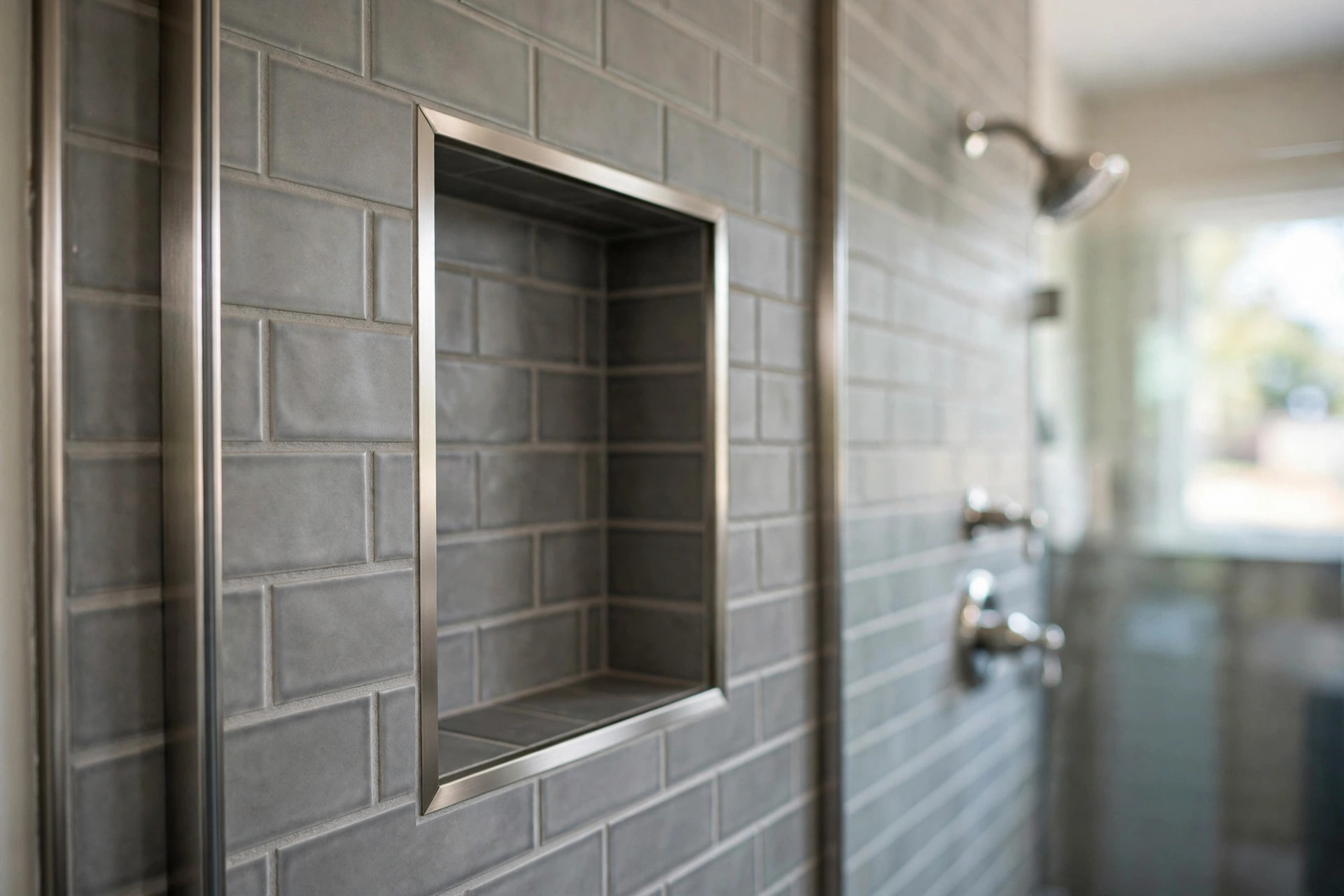
American reviewers often point to the look. A trim line reads as a border. It frames a backsplash. It gives a shower niche a crisp frame. It turns a plain field of tile into a finished design. Reviews of schluter trim for tile edges in the USA return to this point again and again. The trim makes the job look done by a skilled hand.
What Schluter Trim Is and How It Works: Schluter Trim for Tile Edges Reviews Usa
Schluter is a German company. It sells tile setting systems. Its edge profiles are metal or PVC strips with a shaped face and a leg that sits in the thinset mortar. The tile bed presses against the leg. The shaped face covers the tile edge. Profiles come in many shapes. Some are simple L shapes. Some are rounded. Some have a lip that caps thick stone. Some join two tiles at an inside corner.
The most known line is the Rondec. It is a rounded profile. It suits tile of many widths. The Quaddec is square in shape. It fits modern rooms with straight lines. The Schiene is a simple L profile. It suits tile that meets carpet or wood. The Jolly is another L profile with a slightly different face. There are also profiles for stairs, for walls that meet floors, and for changes from tile to tile at different heights.
Installers like the range. A home may need three or four different shapes in one bath. One brand can cover them all in the same finish. That keeps the room looking as one. Reviewers in the USA note this as a strength. The profiles match across lines.
Types and Finishes to Know
Metal profiles come in aluminum, stainless steel, and brass. Aluminum is the most common in homes. It is light and takes a finish well. Stainless steel is harder and suits floors and stairs. Brass is warm in tone and suits classic rooms. Some profiles come in color coated finishes. White, black, bronze, and nickel tones are common. The finish is bonded to the metal.
PVC profiles cost less. They come in colors that match grout. They suit walls and low wear spots. They are not the best pick for a floor edge that takes traffic. They can show marks over time.
Size matters. Profiles are sized to the tile width. A 10 millimeter profile suits 10 millimeter tile. Some profiles suit a range. Too small a profile leaves tile edge bare. Too big a profile stands proud of the tile face. Measure the tile before you buy. Bring a sample tile to the store if you can.
Homeowners in the USA often pick brushed nickel, chrome, or matte black for baths. These tones match common faucets and lights. Reviews say the color coated line holds up well in showers when cleaned with mild soap. Harsh cleaners can dull a finish. Mild care keeps it bright.
How to Choose the Right Profile
Start with the spot. A wall edge wants a rounded or square profile. A floor edge wants a hard profile in stainless steel. A stair nose needs a stair profile with a grip face. A shower curb wants a profile that caps both faces of the curb.
Next, take the tile width. Check the box or ask the tile seller. Tile widths in USA homes often run from 8 to 12 millimeters. Stone can be thicker. Pick a profile made for that width.
Then pick the finish. Look at the faucets, lights, and handles in the room. A profile in the same tone reads as planned. Chrome suits many baths. Brushed nickel suits warm rooms. Matte black suits bold rooms. If the trim meets a different tile at a corner, a neutral tone works best.
Check the length. Profiles often come in 8 foot and 10 foot lengths. Measure each run of edge. Plan one piece per run where you can. Joints in a profile line show. A careful cut with a miter saw and a fine blade gives a clean corner.
Reviews in the USA say the same thing about shopping. Buy from a seller that lists the profile width and finish name clearly. Many buyers compare prices at large home stores like Home Depot and Lowe’s before they order. Reading expert guides to tile edging helps too, and many shoppers check design ideas for trim and tile for finish choices. Plan well and the trim order fits the job.
What USA Reviewers Say
Across many USA reviews, schluter trim earns high marks for fit and finish. Reviewers praise the straight lines. The metal face stays true. It does not bow. Cuts stay clean with the right blade. Setters say the profiles set fast. The leg keys into thinset and holds firm. Once set, the line looks crisp for years.
Homeowners praise the look most of all. A framed niche. A clean backsplash end. A shower curb with a metal cap. These small lines change how a bath reads. Many reviews say the trim made a plain tile job look high end.
Criticism is mild. The main note is cost. Schluter profiles cost more than basic plastic edge strips. Some buyers find the range wide and feel unsure which profile fits their tile. The answer is to measure the tile and pick the matching width. A few reviewers note that color coated finishes need gentle cleaners. That is true of most coated metal.
Installers give practical notes. Cut slowly with a fine tooth blade. Tape the face before you cut to guard the finish. Set the profile in a full bed of mortar. Dry fit first. Keep grout off the face during grouting and wipe it at once. These small steps make the result look clean.
Cost and Price in the USA
Prices vary by metal, width, finish, and length. As a rough guide for the USA market, basic aluminum profiles in plain finish often run a few dollars per linear foot. Mid range finishes in brushed or color coated metal run more. Stainless steel and brass run the most. PVC profiles are the lowest in price.
A small backsplash may need one or two 8 foot lengths. A shower may need four to six lengths across the walls, curb, and niche. A full bath floor with a border may need more. Most home jobs land in a modest range for the trim itself. The labor to set it is part of the tile job.
For the full job, it helps to know the tile installation cost per square foot usa before you set a budget. Trim is a small share of that number. The tile and the labor are the large shares. Plan the trim early so the setter orders enough. Running short mid job causes delay.
If you are weighing a wider project, see the cheapest way to redo floors usa guide for ways to save on the whole floor. And for outdoor work, a paver patio cost calculator for usa homes helps with that side of the yard.
Buyers often compare a local tile shop with big online sellers. Prices move. Watch for the finish name. Some stores sell the same profile in several finishes at different prices. A plain aluminum profile costs less than a color coated one. Stainless costs more than both.
Care and Upkeep
Metal trim needs little care. Wipe it with a soft cloth and mild soap. Rinse and dry. Do not use harsh powders or acid cleaners. These can dull a coated finish and can pit stainless steel over time. In a shower, a quick wipe each week keeps soap film off the metal.
Grout haze is the main foe at install. Wipe the profile face as you grout. Do not let grout dry on the metal. A damp sponge and clean water take it off. If haze sets, use a mild grout haze remover made for the metal type. Test it first on a scrap piece.
PVC profiles need less care still. Mild soap and water keep them clean. They can show scuffs in high traffic spots. That is why metal is the better pick for floor edges.
Check the trim each year. Look for chips at the edge and loose spots. A well set profile lasts for the life of the tile. If a piece loosens, a tile setter can rebed it. Do not pull at it yourself. The leg sits in mortar and force can crack tile.
For design ideas and upkeep tips, many USA homeowners read flooring care guides and home improvement how to articles. Tile makers such as Daltile also show trim in room scenes. Flooring sellers like LL Flooring, Shaw Floors, and Mohawk Flooring list edge and trim options with their tile lines.
Safety Notes
Cut metal with care. Wear eye guards and gloves. A fine tooth blade gives a clean cut and throws fewer sharp bits. File the cut end smooth before you set it. Sharp edges can cut skin.
In wet areas, keep the trim flush with the tile face. A proud edge can catch a foot on a floor or a hand on a niche. Set it level. Test with a straight edge before the mortar sets.
Some profiles have bright polished faces. On a stair nose, a polished face can be slick when wet. Pick a stair profile with a tread face made for steps. In homes with older people or small children, this choice matters.
Thinset mortar holds the leg. Follow the mortar maker’s mix and set times. Do not rush. A rushed bed can leave voids under the profile. A full bed gives a firm set that lasts.
FAQ
Is Schluter trim worth the cost?
Most USA reviewers say yes. The profiles give a clean edge that cheap strips cannot match. The metal stays straight. The finish holds up with mild care. For a bath or kitchen you will see each day, the extra cost buys a better look for years.
Which profile fits my tile?
Match the profile width to the tile width. Measure the tile with calipers or ask the seller. A rounded profile suits most wall edges. A square profile suits modern rooms. A stair profile suits steps. When in doubt, take a tile sample to the store.
Can a do it yourself homeowner install it?
A careful DIYer can set wall profiles. The steps are simple. Dry fit the length. Cut with a fine blade. Tape the face. Set it in a full bed of thinset. Press tile against it. Wipe grout off at once. Floors and stairs are harder. Many homeowners hire a setter for those.
Does it work in a shower?
Yes. Schluter profiles are common in USA showers. They frame niches, cap curbs, and trim wall ends. The waterproof layer sits behind the tile. The trim covers the edge. Keep water out of the wall with a proper waterproof system first.
How do I clean the metal trim?
Use a soft cloth, mild soap, and water. Rinse and dry. Skip harsh powders and acid cleaners. Wipe shower trim each week to stop soap film. This keeps the finish bright.
Where can I buy it in the USA?
Tile shops, home centers, and online sellers carry it. Home Depot and Lowe’s stock common profiles and finishes. Tile showrooms carry the full range. Order early so the lengths arrive before the tile job starts.
Final Word
Schluter trim for tile edges is a small part of a tile job with a large effect on the look. USA reviews praise its straight lines, firm set, and clean finish. Pick the right shape for the spot. Match the width to the tile. Choose a finish that fits the room. Set it in a full bed of mortar and wipe it clean as you grout. Do these things and the edges of your tile will look sharp for years. For a bath or kitchen remodel, it is one of the best small buys you can make.
References
Daltile. (n.d.). Ceramic and porcelain tile. https://www.daltile.com LL Flooring. (n.d.). Hardwood, vinyl, and tile flooring. https://www.llflooring.com Lowe’s. (n.d.). Home improvement products. https://www.lowes.com Mohawk Flooring. (n.d.). Flooring products. https://www.mohawkflooring.com Shaw Floors. (n.d.). Flooring products. https://www.shawfloors.com The Home Depot. (n.d.). Home improvement products. https://www.homedepot.com The Spruce. (n.d.). Home and garden advice. https://www.thespruce.com This Old House. (n.d.). Home renovation guidance. https://www.thisoldhouse.com
Was this guide helpful?

About Lisa Anderson
The My Garden US editorial team writes practical, in-depth home and garden guides for American homeowners — tested advice, no fluff.
You May Also Like

Vintage Style Area Rugs for Sale USA: A Plain Guide to Buying Them
January 26, 2026 0 views
Garage Floor Tiles Interlocking Reviews USA: What Buyers Say
June 21, 2026 0 views
Arabesque Tile for Shower Wall Reviews USA: What Shoppers Say Before They Buy
January 15, 2026 0 views