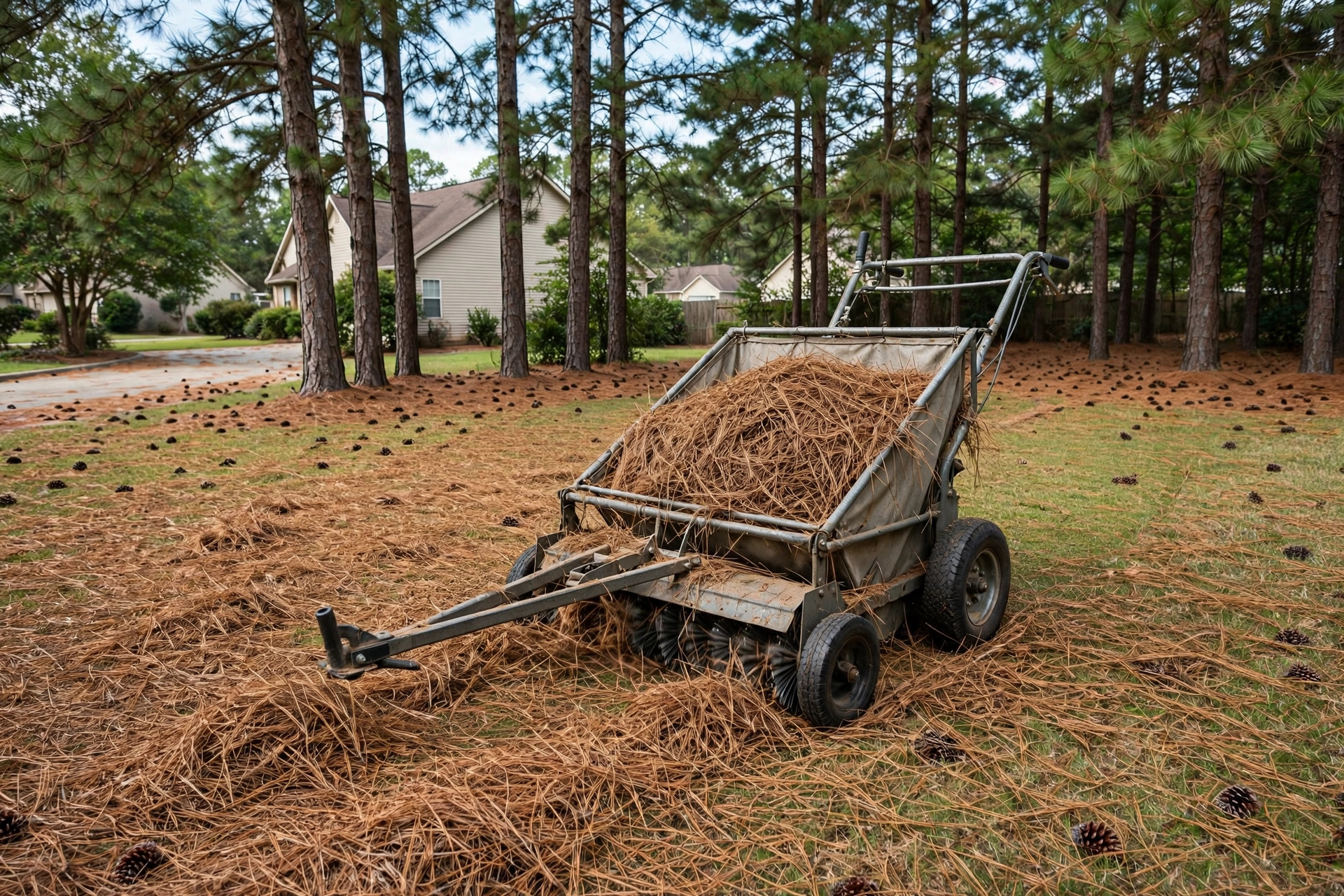

Pine needles fall in silence and pile up in a hurry. One week of wind, and a tidy lawn turns into a brown mat. Raking by hand is slow work, and the needles sting the hands and dull the rake. That is why so many homeowners turn to lawn sweeper for pine needles reviews. They want to know which machines really pick up needles, which ones jam, and which ones last more than a season.
This guide gathers what owners report in reviews, what dealers say, and what the machine makers state on their own pages. It covers the main types of sweepers, what to check before you buy, honest price ranges, upkeep, safety, and answers to the questions buyers ask most. It will not tell you that one model is the single best for every yard. It will give you the facts so you can choose with a clear head.
Why Pine Needles Need Their Own Cleanup Plan
Pine needles are not like fallen leaves. A leaf is broad and light. A needle is thin, sharp, and waxy. Leaves lift and tumble in the wind of a sweeper brush. Needles slide through gaps, wrap around moving parts, and drop back out of full bags.
Owners in lawn sweeper for pine needles reviews say the same thing again and again. A sweeper that works fine on autumn leaves may do a poor job on pine needles. The brush must reach down and grip. The bag must hold fine material without leaking. The machine must run over uneven ground without bouncing the needles loose.
There is another reason to plan the cleanup. A thick layer of needles blocks rain and sun from the grass below. The lawn thins out in patches. The needles also make the ground slippery when wet, and dry needles near the house can feed a fire. A good plan clears the needles several times each year and keeps the grass alive underneath.
Homeowners with pine trees often pair their cleanup plan with other yard gear. A robot lawn mower for half acre yards can keep the grass short between cleanups, and a good walk behind mower with grass catcher sale can serve as a second line of defense against fallen debris.
Types of Lawn Sweepers: Lawn Sweeper for Pine Needles Reviews
Three main types appear in the reviews. Each suits a different kind of yard.
Push Sweepers
A push sweeper is a walk-behind machine with a set of spinning brushes and a hopper behind them. You push it like a lawn mower. The wheels turn the brushes, and the brushes sweep needles into the hopper.
Push sweepers cost the least and suit small yards with a few trees. Owners say they work well on flat ground when the needle layer is thin. They struggle when needles pile deep, because the hopper fills fast and the wheels lose grip. Most hold between seven and nine cubic feet of material.
Tow-Behind Sweepers
A tow-behind sweeper hooks to a riding mower or a small tractor. It has larger brushes, a bigger hopper, and often a taller brush housing. You drive and the machine sweeps behind you.
Reviews give these the highest marks for pine needles. The larger brush moves faster and throws needles farther into the hopper. Hoppers hold twelve to twenty-six cubic feet, so you empty less often. These are the right choice for yards of half an acre or more, or for yards ringed with many pines.
The catch is price and storage. A tow-behind sweeper costs more and needs garage space. It also needs a mower that can pull it, though most riding mowers handle the job.
Combination Rake-and-Sweeper Attachments
A few products pair a rake-like head with a collection bag. They pick up needles well in flower beds and tight spots but move slower than true sweepers. Owners like them for small areas and for final touch-up passes. They are not the answer for a whole lawn under tall pines.
What to Look for Before You Buy
Reviews point to five things that separate a good needle sweeper from a poor one.
Brush height control. Needles sit low and pack tight. A brush that cannot drop close to the ground will skim over the mat and leave most of it. Look for a sweeper with an easy height setting, and check that the brush touches the ground at the lowest setting.
Brush quality. Brushes made of stiff bristles grip needles better than soft ones. Owners report that cheap brushes wear flat within one season. Replaceable brush bars are a plus.
Hopper design. Pine needles are light but bulky. A tall hopper with a mesh vent lets air pass while holding the needles in. Bags that leak fine material at the seams waste your work. Read the reviews for complaints about dust clouds and spilled needles.
Wheel size. Large wheels roll over roots and ruts without bouncing. Bouncing breaks the brush contact and leaves stripes of needles behind. Ten-inch wheels or bigger earn the best marks.
Emptying ease. A full hopper of needles can weigh fifty pounds or more. A sweeper with a dump-from-the-seat lever, or at least a simple latch you can work with gloves on, saves real effort on a big job.
Owners who read lawn dethatcher rental prices near me articles sometimes rent a dethatcher first and then sweep up the loose material. That two-step approach works well on lawns where needles have matted into the grass over a long season.
What Owners Report in Reviews
Across hundreds of lawn sweeper for pine needles reviews, a pattern emerges.
On flat, open lawns, tow-behind sweepers win. Owners say a single pass picks up eighty to ninety percent of dry needles. A second pass in the other direction gets nearly all of them.
Wet needles are hard for every sweeper. Rain turns needle mats into wet felt. No brush grips it well. Reviews are blunt on this point: sweep when the needles are dry, ideally after a few dry days.
Steep slopes challenge push sweepers. The machine tips, the brush lifts, and needles stay behind. Tow-behind units hold contact better because they follow the mower.
Twigs and cones cause jams. A sweeper built for needles still chokes on pine cones. Owners advise picking up the big cones by hand first, or at least running a mower with the bag attached over the worst spots. This is one reason buyers compare sweepers with mowers that have catchers, as seen in walk behind mower with grass catcher sale guides.
Brushes wear out. The most common complaint is not that a sweeper fails to pick up needles, but that it stops doing so after a year. The fix is a fresh brush, not a new machine. Owners who replace the brush on schedule report three to five good years from one sweeper.
Storage matters. Machines stored outside rust at the axle and the brush housing. Those kept in a dry shed last far longer. Reviews from wet states stress this most.
Some makers sell sweeper attachments and parts, as shown on Toro’s website, so a worn brush does not end the machine’s life. Makers like Deere and Briggs & Stratton publish manuals and parts lists for their yard equipment, which makes long-term ownership easier. A sweeper you can repair is worth more than a sealed unit you must replace.
Cost and Price Ranges
Prices vary by type and size. The ranges below reflect what owners report paying in the United States, not sale prices at any one store.
Push sweepers with a small hopper run about seventy-five to two hundred dollars. These are fine for light needle fall on small yards.
Mid-size push sweepers with bigger hoppers and adjustable brushes run about two hundred to four hundred dollars. Reviews suggest this is the sweet spot for a typical suburban yard with several pines.
Tow-behind sweepers start near three hundred dollars for narrow models and climb past six hundred for wide, high-capacity units. Owners of large lots call the cost worth it, since the job drops from a full weekend of raking to a few hours of driving.
Replacement brushes cost twenty to sixty dollars, depending on width and maker. Budget one replacement every one to two years under heavy needle load.
Some owners skip buying and rent a sweeper for a weekend each fall. Rental often costs forty to eighty dollars a day. If your pines shed hard only once a year, rental can make sense. If they shed through the fall and into the winter, owning the machine pays for itself quickly.
Care and Upkeep
A lawn sweeper is a simple machine, and simple care keeps it running.
Clean the brush after each use. Needles wrap around the brush core and the axle. A stiff hand brush and ten minutes of work prevent most jams. Do not wash the hopper with a strong jet of water unless the maker’s manual says it is safe. Trapped water rusts the frame.
Grease the wheel bearings once a year. Dry bearings make the machine hard to pull and wear uneven tracks in the lawn. Check the tire pressure on tow-behind models, since low tires let the brush ride too low and scrape.
Inspect the brush before each season. Bend each bristle row and look for flat spots and missing tufts. Replace the brush when half the bristles show wear. A worn brush forces you to make extra passes, which doubles the work.
Store the sweeper indoors over winter. Hang push sweepers by their handles if space is tight. Cover tow-behind units with a tarp at minimum. Owners who store machines outside report rusted dump levers and torn bags within two years.
Check bolts and hitch pins before the first use each fall. Vibration loosens hardware.
Safety
Lawn sweepers look harmless, but they carry real risk.
Keep hands and feet clear of the brush while the wheels turn. A tow-behind brush spins fast enough to bruise a hand. Always stop the mower and let the brush halt before you clear a jam.
Watch where you dump the hopper. Hot exhaust from a riding mower can ignite dry needles in a heap. Dump away from the mower, and keep the pile clear of the house until you haul it away.
Wear gloves. Pine needles cut skin and irritate eyes. A dust mask helps on dry days when the sweeper kicks up fine dust.
Keep children and pets off the lawn while you work. A tow-behind sweeper extends behind the mower, out of the driver’s view. Stop the machine before anyone steps near it.
Never tow a sweeper on a public road. It has no lights and no brakes. Load it into a truck or trailer for transport.
Frequently Asked Questions
Will a lawn sweeper pick up pine needles, or do I need a vacuum?
A sweeper handles dry needles on open lawn well. A yard vacuum, which sucks material through a hose into a bag, works better in beds, around shrubs, and in corners where a sweeper cannot reach. Many owners use both: the sweeper for the open lawn and a vacuum or hand tools for the tight spots.
How many passes does a sweeper need for heavy needle fall?
Two passes at right angles clear most heavy fall when the needles are dry. A third pass is rarely needed. If the layer is deeper than two inches, mow over it once with the mower bag on first, then sweep. This halves the load on the sweeper.
Do I need a riding mower for a tow-behind sweeper?
Yes, in most cases. A tow-behind sweeper needs a vehicle with a hitch. A riding mower, a garden tractor, or a small utility vehicle all work. Push sweepers are the answer if you do not own a rider.
Can a sweeper handle pine cones too?
Large cones jam most sweepers. Small, old cones that crumble will pass through. Owners pick up the big cones by hand or with a rake first. Some run a mower with the bag attached over cone-heavy areas before sweeping, which matches advice in lawn dethatcher rental prices near me style cleanup guides.
How long does a lawn sweeper last?
With dry storage and yearly brush checks, three to five years is normal for a push sweeper under pine load. Tow-behind units often last five to eight years, since their parts are heavier and replaceable. The brush is the wear item, not the frame.
Are expensive sweepers worth it for pine needles?
For a yard with one or two pines, a mid-price push sweeper does the job. For a yard ringed with pines, owners say the jump to a wide tow-behind model pays for itself in saved weekends. The honest answer in most lawn sweeper for pine needles reviews is to match the machine to the size of the problem.
A Short Final Word
Pine needles ask more of a sweeper than leaves do. They demand a brush that reaches the ground, a hopper that holds fine material, and an owner willing to sweep while the needles are dry. The reviews tell a steady story. Buy the size that fits your yard, keep the brush fresh, store the machine dry, and the needles stop being a weekend burden. A lawn sweeper will not do the thinking for you, but it will do the raking, and on a long fall afternoon that is no small thing.
References
Briggs & Stratton. (n.d.). Power equipment and small engines. https://www.briggsandstratton.com Deere. (n.d.). John Deere equipment and yard care. https://www.deere.com Toro. (n.d.). Lawn mowers and yard care equipment. https://www.toro.com
Was this guide helpful?

About Robert Taylor
The My Garden US editorial team writes practical, in-depth home and garden guides for American homeowners — tested advice, no fluff.
You May Also Like
Sprinkler Winterization Blowout Service Cost: A Fall Guide for Homeowners
March 24, 2026 0 views
Weed Barrier Fabric Reviews for Gardens: What Really Works
March 9, 2026 0 views
How to Kill Weeds in Rock Beds: A Complete Guide
April 15, 2026 0 views