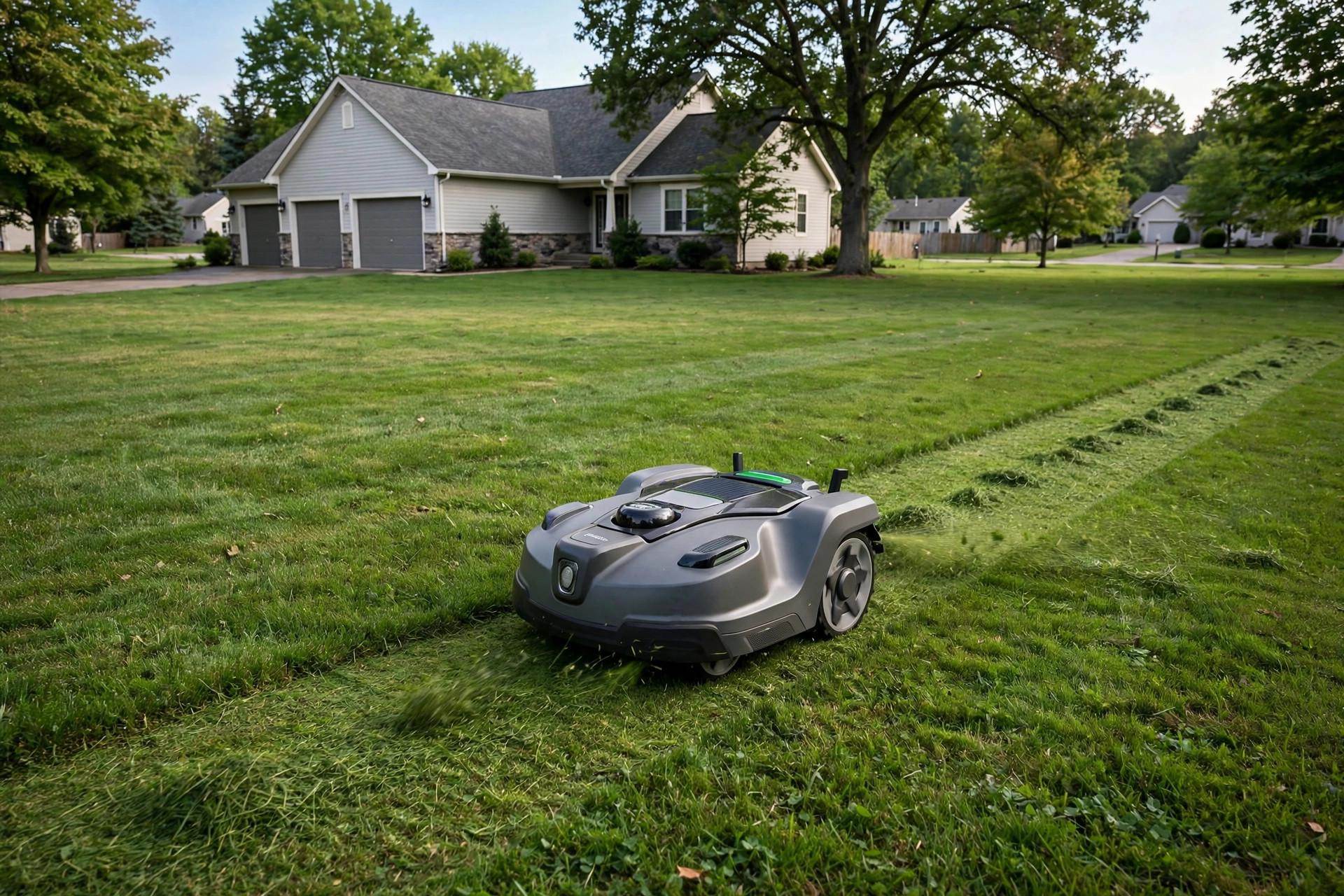

A robot lawn mower for half acre yards is built for lawns that are too big to cut by hand in an afternoon but too small to need a riding machine. Half an acre of grass is about 21,780 square feet. That is a lot of ground to push a mower across every week. A robotic mower works on its own, a little at a time, and keeps the grass at an even height without any help from you. This guide explains what these machines can do, how to pick one for a lawn of this size, what they cost, and how to care for them.
Why It Matters
A half acre lawn takes a person with a walk-behind mower two hours or more to cut. Over a full season, that adds up to dozens of hours of hard work in the heat. A robot mower takes that job off your hands. It runs several times a week, trimming a small amount of grass each time. This keeps the lawn looking fresh all season long.
Frequent light cutting is good for the grass. Short clippings fall back into the turf and feed the soil. This is called mulching. It means less need for bagging and less need for fertilizer. Grass cut in this way grows thicker and holds its color better through dry weeks.
A robot lawn mower for half acre yards also cuts noise. Most models hum at a level far below a gas mower. You can run one early in the morning or in the evening without bothering the neighbors. For a lawn this size, quiet operation makes a real difference, since the machine will run often.
There is also the matter of age and health. Many homeowners reach a point where pushing a heavy mower across half an acre is too much. A robotic mower lets them keep a nice lawn without the strain. Older buyers are some of the happiest owners of these machines.
What to Look for When You Choose: Robot Lawn Mower for Half Acre Yards
Not every robot mower can handle half an acre. Small models are made for city lots of a quarter acre or less. You need a machine rated for at least 0.5 acre, and more is better. A model rated for three quarters of an acre will finish the job with time to spare and will last longer doing it.
Cutting Width and Battery
Look at the cutting width. Wider decks cover more ground per pass. For a half acre yard, a deck of eight inches or more will keep mowing times fair. Battery life matters too. The mower returns to its dock to charge on its own, so a short battery is not a failure. Still, a bigger battery means fewer charging stops and faster completion of the whole lawn.
Boundary Method
Old designs use a buried wire to mark the lawn edge. You lay the wire around beds, trees, and the property line, and the mower stays inside it. Newer models use GPS or cameras to map the yard. Wire-free models cost more, but they save the work of laying wire, and they can be moved or remapped with a phone app. For a large lawn, a wire-free model is often worth the extra cost, since laying wire around half an acre is a big weekend job.
Terrain and Slopes
Check the slope rating. Half acre lots often have a hill or a ditch. Most robot mowers handle slopes up to 20 or 25 percent. If your yard is steeper, look for a model with all-wheel drive. Also check the wheels. Large wheels with deep tread grip better on wet grass and soft soil.
Smart Features
Most current models connect to a phone app. The app shows mowing history, battery level, and error messages. Some models let you draw no-go zones on a map of your yard. Rain sensors send the mower home when a storm starts. GPS tracking helps you find the machine if it is stolen. These features are not needed for basic cutting, but they make ownership much easier.
Independent testing groups such as Consumer Reports publish mower ratings that can help you compare models on a level field.
Types and Options
Robot mowers for this size of lawn fall into three groups.
Wire-guided models. These are the least costly. They use a perimeter wire and cut in a random pattern. They take longer to cover half an acre, but they get the job done. They are a good pick if your lawn is a simple shape with few obstacles. You can read basic setup guides for this style of mower at LawnStarter.
GPS and camera models. These map the yard and mow in straight lines. They finish faster and handle complex lawns with beds, trees, and paths. They cost more up front but save time every week. This is the best choice for most half acre yards.
Fleet or multi-zone models. A few makers sell docks that serve two machines. This suits very large or split-level lawns.
Cutting height ranges matter for grass health. Tall fescue and other cool-season grasses do best at three to four inches. Make sure the mower you choose can cut that high. If tall fescue seed for shade reviews are on your reading list, higher cutting is a must, so check the specs before you buy.
Cost and Price
A robot lawn mower for half acre yards costs between 1,000 and 3,500 dollars in most stores. Wire-guided models sit at the low end. GPS models with camera vision sit at the high end. The middle of the range, around 1,800 to 2,500 dollars, buys a solid machine for a lawn this size.
Compare that with a lawn service. Many services charge 50 to 80 dollars per cut for half an acre. Over a 30-week season, that is 1,500 to 2,400 dollars a year. A robot mower can pay for itself in two seasons. It also saves the cost of gas, oil, and blade sharpening for a push mower.
Installation adds to the first-year cost. Wire-guided models need the boundary wire kit, which may cost 100 to 200 dollars, plus your time to lay it. Some dealers offer installation for 300 to 500 dollars. GPS models skip this step, which makes their higher price easier to accept.
Running costs are small. Electricity for charging costs a few dollars a month. Blades need changing one or two times a season. A set of replacement blades costs 20 to 40 dollars. Batteries last three to five years, and a replacement battery can cost 200 to 500 dollars. Plan for that when you compare models.
Retailers such as The Home Depot list many models side by side, which makes price comparison simple.
Care and Upkeep
A robot mower needs little care, but it is not care-free. Clean the deck and wheels every week or two. Grass builds up under the deck and can slow the blades. A stiff brush and a garden hose are enough. Never use a pressure washer on the machine.
Change the blades when they look dull or nicked. Dull blades tear the grass instead of cutting it, and torn tips turn brown. Keep a spare set on hand so you can swap them in minutes. While you are under the deck, check that the blade disc spins freely.
In winter, store the mower indoors. Bring the charging dock inside too, or cover it well. Charge the battery to about half before storage, and top it up once during the off season. Cold storage with a dead battery can shorten battery life.
Check the boundary wire each spring if you have one. Winter frost and yard work can break or expose it. Most kits come with repair connectors. Walk the line once a year and fix any damage you find.
Keep the lawn itself in shape. Pick up sticks, toys, and pine cones before the mower runs. Large sticks can jam the blades. Mark sprinkler heads so the mower does not hit them. If affordable lawn sprinkler installation cost estimate work is on your to-do list, do it before you lay any boundary wire, since trenching can cut the wire.
Lawn care brands such as Scotts and Pennington offer feeding schedules that pair well with the mulching habit of a robot mower.
Safety
Robot mowers are built with safety in mind, but rules still apply. Most models stop the blades when lifted or tipped. Keep children and pets away from the mower while it runs. Teach children that the mower is not a toy and not a ride.
The blades sit close to the ground, so shoes are a must around a running mower. Never reach under the deck while the machine is on. Turn the mower off and remove the safety key before cleaning or changing blades.
Boundary placement matters. Keep the wire or the no-go zone a few inches back from paths, patios, and roads so the mower cannot wander where people walk. If the lawn borders a street, make sure the map or wire keeps the machine well inside your property.
Secure the mower against theft. These machines are costly and easy to carry. Use the PIN lock and GPS tracking features. A mower that stays in a fenced yard is less of a target.
Power tool safety guides from makers such as Echo and Ryobi cover the same basic rules that apply here: read the manual, wear closed shoes, and keep hands clear of moving parts.
Landscaping Around a Robot Mower
A robot mower works best in a yard that is planned for it. Smooth edges between lawn and beds help the mower turn without getting stuck. Stone or metal edging gives the mower a clear line to follow. Avoid sharp inside corners where the mower cannot reach, or plan to trim those spots with a string trimmer.
Trees are no problem as long as the roots do not stick up too far. A mower can bump into a trunk all day without harm. Flower beds need a border the mower can sense or a no-go zone in the app.
If you are adding new plantings, a Japanese maple tree for front yard guide can help you place the tree where the mower can pass around it with ease. Leave at least three feet of clear lawn around young trees.
General yard advice from The Spruce covers edging and bed design in more depth.
Common Problems and Fixes
The mower misses patches. This is normal with random-pattern models. Give it time. If patches persist, check that the cutting height is right and that the schedule gives the mower enough hours per week. Half an acre needs many hours of cutting.
The mower gets stuck. Look for ruts, soft spots, or steep banks. Fill low spots with soil and seed. Widen tight passages between beds. Large drive wheels help, and Greenworks and John Deere both sell outdoor machines known for strong traction, a trait worth seeking in a robot mower as well.
The app loses the mower. Wire-free models need a clear view of the sky for GPS. Tall fences, dense trees, and metal roofs can block the signal. Move the dock to an open spot if the mower keeps losing its fix.
The battery dies fast. Batteries wear out. If a mower that once ran two hours now runs one, the battery is near the end of its life. Replacement is simple on most models.
Frequently Asked Questions
How long does a robot mower take to cut half an acre?
It depends on the model. A fast GPS model may finish in eight to twelve hours of mowing time, spread over several days. A slower wire-guided model may need twenty or more hours per week. Since the mower runs on its own, the total time matters less than whether it keeps up with grass growth.
Can a robot mower handle thick or tall grass?
It handles thick grass well if it mows often. It does not handle tall grass well. If the lawn has grown six inches, cut it down with a regular mower first, then let the robot keep it short. Set the schedule so the mower runs three to five times a week in the fast-growing spring.
Will it work on a lawn with many trees and beds?
Yes, but setup takes longer. Each bed needs a boundary or a no-go zone. GPS models handle complex yards better than random-pattern models. Walk the yard with the app and mark every obstacle before the first mow.
Is a robot mower safe around pets?
Most owners run them with dogs and cats in the yard without trouble. The mower is slow and stops when lifted. Still, watch pets around it at first. Small animals such as young rabbits can be hurt, so check the lawn before a scheduled mow in spring.
Does it mow in the rain?
Most models have rain sensors and return to the dock when rain starts. Wet grass clumps and sticks to the deck, so mowing in rain gives a poor cut. Let the mower wait out the storm and resume when the grass dries.
How long do these mowers last?
A well-kept robot mower lasts eight to twelve years. The body and motors last the longest. Plan to replace blades often and the battery every three to five years. Keep the software updated through the app.
A Short Final Word
A robot lawn mower for half acre yards turns the biggest weekly chore of summer into background work. Pick a model rated above your lawn size, plan the boundaries with care, and keep up with simple upkeep. The lawn will stay neat, the grass will grow thicker, and your weekends will belong to you again.
References
Consumer Reports. (n.d.). Product ratings and buying guides. https://www.consumerreports.org LawnStarter. (n.d.). Lawn care guides and services. https://www.lawnstarter.com The Spruce. (n.d.). Home and garden how-to guides. https://www.thespruce.com Scotts. (n.d.). Lawn care products and advice. https://www.scotts.com Ryobi. (n.d.). Outdoor power equipment. https://www.ryobitools.com John Deere. (n.d.). Lawn and garden equipment. https://www.deere.com Greenworks. (n.d.). Battery-powered outdoor tools. https://www.greenworkstools.com The Home Depot. (n.d.). Home improvement products. https://www.homedepot.com Echo. (n.d.). Outdoor power equipment. https://www.echo-usa.com Pennington. (n.d.). Grass seed and lawn products. https://www.pennington.com
Was this guide helpful?

About Lisa Anderson
The My Garden US editorial team writes practical, in-depth home and garden guides for American homeowners — tested advice, no fluff.
You May Also Like
The Best Irrigation Controller with Rain Sensor for American Lawns
June 26, 2026 0 views
Lawn Weed Identification Chart With Pictures: A Homeowner’s Guide
July 7, 2026 0 views
Battery Powered Hedge Trimmer Reviews 2026
July 29, 2026 0 views