
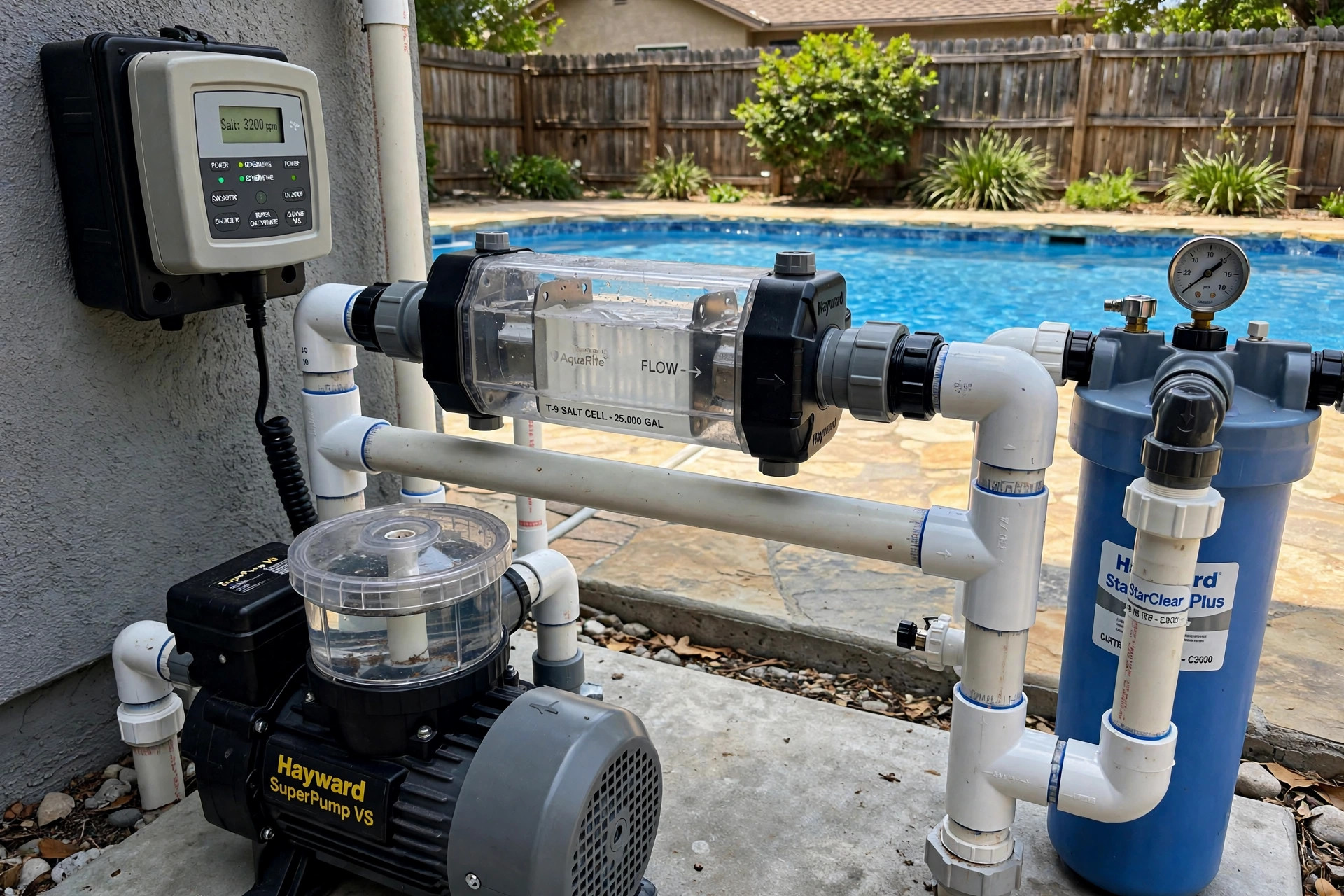

Every salt water pool owner faces this question sooner or later. What is the salt cell replacement cost for pools? The salt cell is the part of your salt water chlorine generator that turns salt into chlorine. It does not last forever. When it wears out, your pool water will stop holding chlorine, and you will need to replace the cell. This guide explains what a new cell costs, what drives the price up or down, and how to get the most life from your cell.
Why This Matters
The salt cell is the working heart of a salt water pool system. Water passes through the cell, and an electric charge splits the salt into chlorine. Without a working cell, your pool has no chlorine. That means cloudy water, green algae, and unsafe swimming conditions.
A failing cell often gives small warnings before it dies. Your chlorine levels drop even though the system shows normal salt levels. You add more salt but nothing changes. The control panel shows a warning light. You may find yourself adding bottled chlorine by hand just to keep the pool clear.
Knowing the salt cell replacement cost for pools ahead of time lets you plan. Cells last a set number of hours, so the expense is predictable. If you learn the price now, you can budget for it instead of facing a surprise bill at the start of summer.
How Much Does a Salt Cell Replacement Cost?: Salt Cell Replacement Cost for Pools
Most pool owners pay between 400 and 900 dollars for a new salt cell, with the cell itself making up most of that cost. Basic cells for small above ground pools start near 250 dollars. Large cells for big in ground pools can cost 800 to 1,000 dollars or more.
Professional installation adds 100 to 250 dollars to the bill. Many owners save this money by installing the cell themselves. Replacing a cell is a simple job in most cases. It takes about 30 minutes and basic hand tools.
Here is a rough price guide by pool size:
– Small pools up to 15,000 gallons: 250 to 450 dollars for the cell – Medium pools up to 25,000 gallons: 400 to 650 dollars for the cell – Large pools up to 40,000 gallons: 550 to 900 dollars for the cell – Very large pools over 40,000 gallons: 800 to 1,200 dollars for the cell
Labor prices vary by region. Pool service companies in some areas charge a flat visit fee. In others, they charge by the hour. If your cell requires new unions, fittings, or a cleaning of the control unit, expect the total to rise.
What to Look for When Buying a Replacement Cell
Buying a cell is not just about price. A wrong choice can waste money or damage your system. Keep these points in mind.
Match the Cell to Your System
Every salt chlorine generator uses a specific cell model or a small set of approved models. Check your control panel for the model number. Then buy the cell that the maker lists for that model. A cell that fits the pipe but does not match the control unit can fail fast or fail to work at all.
Check the Cell Capacity
Cells are rated by the number of gallons they can handle. A cell rated for 15,000 gallons will struggle in a 30,000 gallon pool. It will run at full power all day and wear out fast. Buy a cell rated for your pool size, or one size larger. An oversized cell runs at a lower setting, which extends its life.
Look at the Warranty
Most brand name cells carry a warranty of two to four years. Some pro-rated warranties cover full replacement in the first year and partial credit after that. Read the fine print. Warranties often require proof of proper salt levels and pH balance. Keep your water test records.
Self Cleaning or Standard
Many modern cells are self cleaning. They reverse polarity to shed calcium buildup. Standard cells need hand cleaning with a mild acid wash. Self cleaning cells cost more up front but need less care. They are a good choice for busy pool owners.
Retailers like Leslie’s Pool Supplies carry cells from the major makers and list the models each cell fits. Pool Warehouse also shows capacity ratings beside each cell, which helps you match a cell to your pool size. For general product research, the home improvement guides at Home Depot explain cell types in plain terms.
Types of Salt Cells and Their Costs
Salt cells come in several forms. The type you need depends on your system.
Replacement cells for major brands. Hayward, Pentair, and Jandy are the most common makers in the United States. A direct replacement cell for one of these systems costs 450 to 900 dollars. Buying the exact maker part keeps your warranty valid.
Generic and aftermarket cells. These cost 250 to 500 dollars. They fit the same systems as brand name cells. Quality varies. Some aftermarket cells perform as well as the original. Others fall short on life span. Check reviews from other pool owners before you buy.
Above ground pool cells. Systems made for above ground pools use smaller cells. These cost 200 to 400 dollars. They are easy to install and swap.
Commercial grade cells. Large pools, such as those at hotels or community centers, need heavy duty cells. These cost 1,000 dollars and up. They are built for long daily run times.
The pool care guides at Swim University explain the differences between these cell types in simple language. The Spruce also publishes plain reviews of pool equipment that can help you compare options.
How Long Do Salt Cells Last?
Most salt cells last three to seven years. The life of a cell is measured in hours of run time, not in years. A typical cell is rated for about 10,000 hours of operation. If your pool runs eight hours a day for six months each year, the math works out like this:
– 8 hours per day times 180 days = 1,440 hours per year – 10,000 hours divided by 1,440 hours per year = about 7 years
Pools in warm climates that run year round use up cell life faster. A pool that runs 12 hours a day all year will wear out a cell in about two to three years.
What shortens cell life most is bad water balance. High calcium levels cause scale to coat the plates inside the cell. High salt levels corrode the cell. Low pH eats away the metal coating. Keep your water balanced and your cell will live longer.
Signs that a cell is near the end:
– Chlorine levels fall even with the system set high – The salt reading on the panel does not match a test strip – White scale will not wash off the cell plates – The “check cell” warning light stays on after cleaning
When you see these signs, start shopping. A dead cell in the middle of swim season leaves your pool unprotected.
Cost of Installation
As noted above, professional installation costs 100 to 250 dollars. The job is simple for a handy owner. Here is what it involves:
1. Turn off the power to the pool equipment at the breaker. 2. Close the valves on either side of the cell, or lower the water level below the cell if there are no valves. 3. Unscrew the unions on both ends of the old cell. 4. Lift out the old cell and set the new cell in place. 5. Tighten the unions by hand. Do not overtighten. 6. Plug the cell cable into the control panel. 7. Turn the power back on and check the salt level reading.
That is the whole job. Some owners choose a professional anyway, because the visit is a good time to have the control panel checked and the salt level tested. Pool safety rules from the U.S. Consumer Product Safety Commission remind owners to cut power at the breaker before touching any pool electrical part.
How to Make Your Salt Cell Last Longer
You cannot make a cell last forever. But you can stretch its life by a year or more with simple care.
Keep salt at the right level. Test your salt every month. Most cells want 2,700 to 3,400 parts per million. Add salt slowly and let the pump run a full day before retesting.
Balance your pH. Salt pools tend to push pH upward. Test twice a week and keep pH between 7.2 and 7.6. Balanced pH protects the cell coating.
Watch calcium hardness. Keep calcium between 200 and 400 parts per million. High calcium causes scale on the cell plates. Low calcium can corrode pool surfaces.
Clean the cell when needed. Inspect the cell every three months. If you see white buildup, soak the cell in a mild acid bath. Use one part muriatic acid to ten parts water. Soak for 15 to 30 minutes, then rinse well. Never use a metal tool to scrape the plates.
Run the pump wisely. You do not need to run the cell at 100 percent all day. Most pools stay clear with the output set at 50 to 70 percent. A lower setting means less wear on the plates.
Use the winter. In cold areas, close the pool for winter and turn the system off. The cell does not age when it is not running. Store a removed cell indoors if your pool freezes hard. Spa owners can find salt cell care tips at Hot Spring Spas and Bullfrog Spas.
Comparing Salt Cells to Traditional Chlorine
Some owners ask whether it is worth replacing the cell at all. Why not go back to plain chlorine? Here is a fair look at both sides.
A salt system costs more up front. The full system costs 1,000 to 2,000 dollars installed. A traditional chlorine pool needs only a feeder that costs under 100 dollars. But salt cells make their own chlorine from cheap pool salt. A bag of salt costs a few dollars. Bottled chlorine costs far more over a season.
Over five years, the costs often balance out. The salt owner pays for one cell replacement. The chlorine owner pays for chemicals every year. Many owners also prefer the feel of salt water. It is gentler on eyes and skin.
If you are still deciding which way to go, read our guide to salt water pool conversion costs and the salt water vs chlorine pool pros and cons to weigh the full picture. A good pool filter for saltwater systems also matters, since salt systems need clean water flow to work their best.
Safety Notes
Salt cells use electricity and chemicals. Treat the system with care.
– Always shut off power at the breaker before you touch the cell or the control panel. – Wear gloves and eye protection when you clean a cell with acid. – Mix acid into water, never water into acid. Work outdoors or in open air. – Keep salt bags and chemicals away from children and pets. – Never swim right after a heavy shock treatment. Wait until chlorine drops to safe levels.
Pool drain and equipment safety is a serious matter. The U.S. Consumer Product Safety Commission publishes free guides on safe pool equipment practices for home owners.
FAQ
How much does it cost to replace a salt cell in a pool?
Most owners pay 400 to 900 dollars for the cell, plus 100 to 250 dollars for professional installation. Small above ground cells start near 250 dollars. Large in ground cells can reach 1,000 dollars. The total depends on pool size, brand, and whether you install it yourself.
How often do salt cells need to be replaced?
A salt cell lasts three to seven years, or about 10,000 hours of run time. Pools that run year round wear out cells faster. Good water balance and regular cleaning can add a year or more to cell life.
Can I replace a salt cell myself?
Yes. It is a simple job that takes about 30 minutes. You unscrew two unions, swap the cell, plug in the cable, and turn the power back on. Always shut off the breaker first. If your plumbing is old or corroded, a professional visit is the safer choice.
Are generic salt cells worth the savings?
Generic cells cost 150 to 300 dollars less than brand name cells. Some perform well. Others fail early. Check owner reviews and read the warranty. A generic cell with a solid two year warranty can be a smart buy. A no name cell with no warranty is a gamble.
What happens if I do not replace a dead salt cell?
Your pool will stop making chlorine. Within days, the water may turn cloudy. Within a week or two, algae can take hold. You will need to add bottled chlorine by hand until the cell is replaced. Running the pump without a working cell wastes electricity and risks a full algae bloom, which costs far more to fix than a new cell.
Does a salt cell work in cold water?
Salt cells make less chlorine in cold water. Below 60 degrees Fahrenheit, most systems slow down or shut off. This is normal. Close the pool for winter or switch to hand chlorination during cold months. Running a cell in very cold water does not damage it, but it produces little chlorine.
Final Word
The salt cell replacement cost for pools is one of the few big bills that salt water owners face. Plan for it the way you plan for any home repair. Budget 500 to 900 dollars every five years, keep your water balanced, and clean the cell on schedule. Do that, and your salt system will give you clear, gentle water for many summers to come.
References
Bullfrog Spas. (n.d.). Hot tubs and spas. https://www.bullfrogspas.com Hot Spring Spas. (n.d.). Hot tubs and spas. https://www.hotspring.com Leslie’s Pool Supplies. (n.d.). Pool supplies and equipment. https://www.lesliespool.com Pool Warehouse. (n.d.). Pool equipment and supplies. https://www.poolwarehouse.com Swim University. (n.d.). Pool and hot tub care guides. https://www.swimuniversity.com The Home Depot. (n.d.). Home improvement products. https://www.homedepot.com The Spruce. (n.d.). Home and garden advice. https://www.thespruce.com U.S. Consumer Product Safety Commission. (n.d.). Product safety information. https://www.cpsc.gov
Was this guide helpful?

About Emily Rodriguez
The My Garden US editorial team writes practical, in-depth home and garden guides for American homeowners — tested advice, no fluff.
You May Also Like
The Best Pool Deck Paint for Concrete: A Homeowner’s Guide
March 8, 2026 0 views
Best Pool for Family Gatherings Ideas: A Complete Guide
January 27, 2026 0 views
The Best Pool Chemical Feeder for Chlorine: How to Choose the Right One
June 4, 2026 0 views