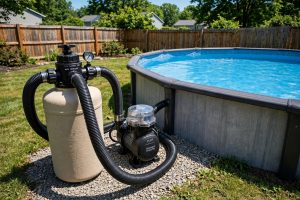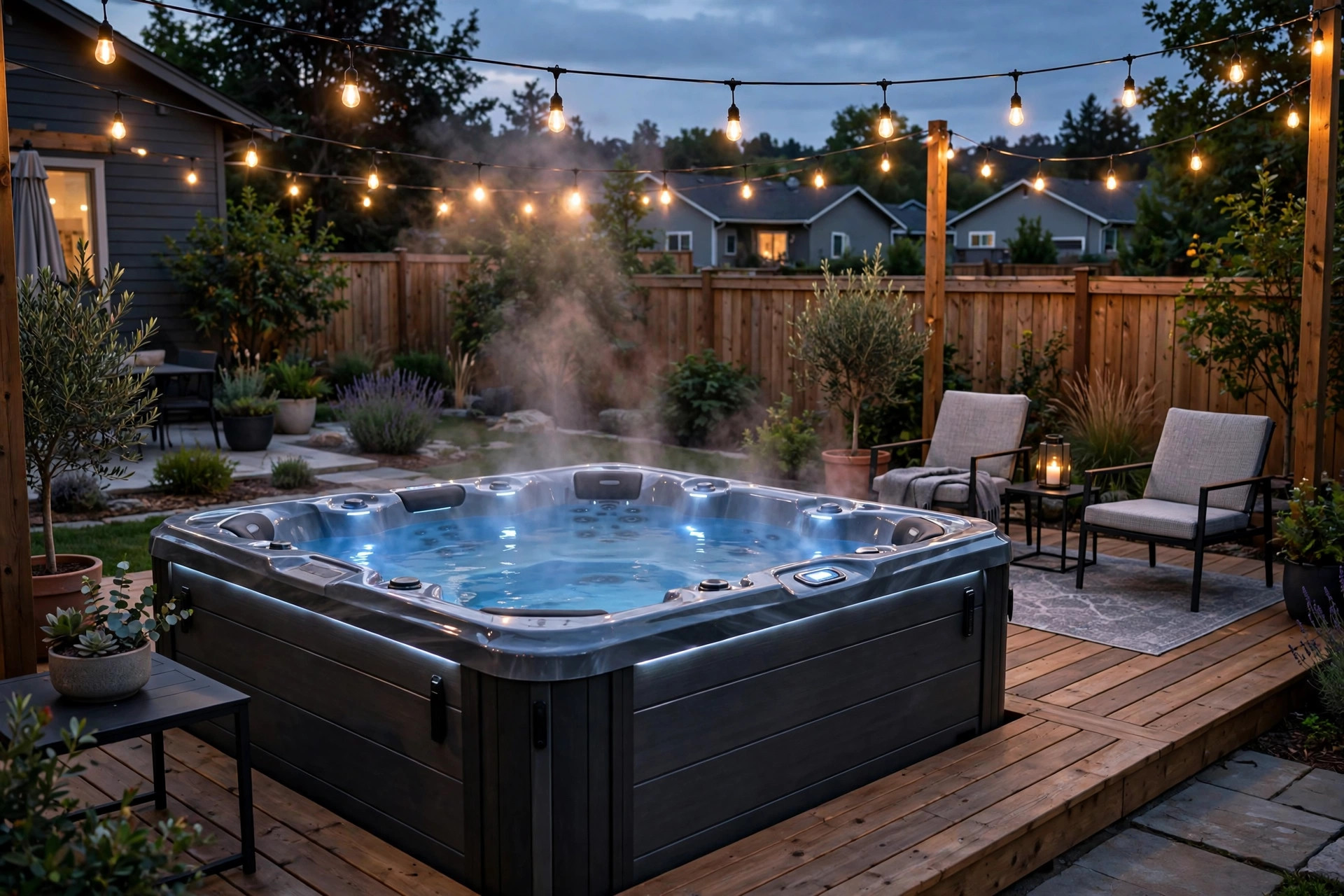

A hot tub water care routine weekly plan is the best way to keep spa water clean and safe. Hot tubs hold a small amount of water. The water gets warm. People bring in sweat, oils, and lotions. Without regular care, the water turns cloudy. It can grow bacteria. It can damage the heater and pump.
A steady weekly habit solves this. The routine takes about twenty to thirty minutes. It uses a few basic chemicals and a test strip. This guide explains each step in plain words: testing, sanitizer, shock, pH balance, filter cleaning, and cover care.
Why a Weekly Routine Matters
Hot tub water is different from pool water. A pool may hold twenty thousand gallons. A hot tub often holds three hundred to five hundred gallons. A few bathers can change the water chemistry fast. The warm water also speeds up the growth of germs. The Consumer Product Safety Commission warns that poorly kept spa water can cause skin rashes and eye irritation. These problems have simple names in the trade: hot tub folliculitis and red eye. Both come from dirty water.
The second reason is the equipment. Hard water leaves scale on the heater element. Scale makes the heater work harder. Low pH water turns acidic. Acidic water eats metal parts and seals. Both problems shorten the life of the pump and heater. A weekly hot tub water testing schedule catches these shifts early, before they cause damage.
The third reason is comfort. Clean water feels soft on the skin. It smells neutral, not strong. Cloudy water looks bad and feels slimy. A good routine keeps the water clear and inviting all year, even in winter when the tub gets heavy use.
Skipping the routine has real costs. A hot tub fill may need to be drained early. Bad water can also void parts of a warranty.
What to Look for Before You Start: Hot Tub Water Care Routine Weekly
Before you build your routine, gather a few basic supplies. You do not need much. A simple kit works for most home spas.
Start with test strips or a liquid test kit. Test strips are fast and cheap. You dip the strip and read the colors. A liquid kit is more exact but takes longer. Most owners use strips for the weekly check and a liquid kit once a month. Consumer Reports rates common test strip brands for accuracy. Keep both in a dry place. Old strips give bad readings.
Next, get a sanitizer. Chlorine and bromine are the two common choices for spas. Chlorine works fast and costs less. Bromine stays steady in hot water and smells less. Both work when the dose is right.
You will also need pH adjusters. These are sold as pH increaser and pH decreaser. The names vary by brand. You will need a shock product. Shock is a strong oxidizer that burns off used-up sanitizer and waste. Non-chlorine shock lets you use the tub the same day.
A good hot tub chemicals starter kit usually holds all of these items. Starter kits save money over buying each item alone. Check the labels when you buy. Make sure the products are made for spas, not pools. Pool products are made for cooler water and larger volumes.
The Weekly Routine, Step by Step
Set one day each week for the work. Sunday morning or Saturday evening works well. Pick a day you will keep. Write the results in a small notebook or on a card by the tub. A log helps you spot trends.
Step 1: Test the Water
Remove the cover. Let the jets run for two minutes. This mixes the water. Dip a test strip one foot deep. Hold it level. Read the colors after the time the label states, usually fifteen to sixty seconds. Do not wait longer. Colors change with time.
Read these levels in order. First, total alkalinity: 80 to 120 parts per million. Second, pH: 7.2 to 7.8. Third, sanitizer. Chlorine: 1 to 3 parts per million. Bromine: 3 to 5 parts per million. Write all three numbers in your log.
Step 2: Balance Alkalinity and pH
Fix alkalinity first. It acts as a buffer for pH. If alkalinity is low, add pH increaser. If it is high, add pH decreaser. Wait twenty minutes with the jets running. Test again.
Then fix pH. The range 7.2 to 7.8 is the target. Low pH stings the eyes and corrodes metal. High pH makes the water cloudy and weakens the sanitizer. Add small doses. Guides at Leslie’s explain dose charts for common spa sizes.
Step 3: Add Sanitizer
Add sanitizer to reach the target range. With chlorine, sprinkle the granules across the water with the jets running. With bromine, check the floater or the feeder cartridge. Refill it if it is empty. Never mix dry chlorine and dry bromine in the same container. The mix can react badly.
Wait twenty minutes. Test the sanitizer level again. Do not get in until the level sits in the safe range. High sanitizer burns the eyes and skin. If you over-add, leave the cover off for an hour. Sunlight and air break down the excess.
Step 4: Shock the Water
Add shock once a week, even if the water looks clear. Shock burns off chloramines, the used-up form of sanitizer that causes the strong chlorine smell. Use non-chlorine shock for a normal weekly dose. Run the jets for twenty minutes after adding shock. Leave the cover off so gases can escape.
Step 5: Clean the Filter
Pull the filter cartridge out. Rinse it with a garden hose. Spray between the pleats from top to bottom. This takes five minutes. It removes the biggest load of dirt and oil. Do a deep soak once a month in filter cleaner. A dirty filter strains the pump. It also makes the water cloudy no matter how much chemical you add. Many owners keep a spare filter. They swap a clean one in and wash the dirty one at leisure. Stores like The Home Depot and Pool Warehouse stock common cartridge sizes.
Step 6: Wipe the Waterline and Check the Cover
Oils and lotions leave a line at the water edge. Wipe it with a damp cloth and a spa surface cleaner. Do not use household soap. Soap causes foam. Check the cover too. Wipe the underside with a mild cleaner. Look for cracks in the vinyl skin. A cracked cover soaks up water and gets heavy. A heavy cover loses its insulation. In cold months, a sound cover keeps heat in and cuts the power bill. This matters for a hot tub for cold climates, where heat loss is the biggest running cost.
Step 7: Check the Water Level
Water evaporates, and bathers splash some out. The level should sit at the middle of the skimmer or above the highest jet. Low water lets air into the pump. Air in the pump causes noise and damage. Top up with a garden hose. Add water slowly. After a big top-up, test the chemistry again. Fresh water dilutes the chemicals.
Types of Sanitizers and Care Styles
The weekly steps stay the same, but owners choose different care styles. Chlorine granules are the classic choice. They are cheap and act fast. Use dichlor, the spa form of chlorine. It dissolves fast and is pH neutral. Do not use pool trichlor tablets. They are too acidic for hot tubs.
Bromine is the second choice. It comes as tablets in a floater or as granules. Bromine holds its strength in hot water better than chlorine. It has less smell. It costs more. It also takes longer to kill germs, so some owners add a small chlorine dose after heavy use.
Mineral systems use silver and copper cartridges. They cut the amount of chlorine or bromine needed. They do not replace sanitizer fully. Mineral cartridges last about four months.
Salt systems are a newer option for spas. A salt cell turns mild salt water into chlorine. The water feels soft. The daily dosing is automatic. The cell needs cleaning and replacement every few years. The upfront cost is higher.
Cost and Price of the Weekly Routine
The weekly routine is cheap compared to the cost of the tub itself. A box of test strips costs about fifteen to twenty dollars and lasts three to four months. A bottle of chlorine granules or bromine tablets costs twenty to forty dollars and lasts one to three months for a normal home tub. pH increaser and decreaser cost about ten dollars each and last many months. A bag of non-chlorine shock costs twenty to thirty dollars and lasts two to three months.
Add it up and the chemical cost runs about ten to twenty dollars per month. That is one hundred twenty to two hundred forty dollars per year. A filter cartridge costs thirty to eighty dollars and lasts one to two years.
What does skipping cost? A new heater element can cost two hundred to five hundred dollars plus labor. A new pump can cost three hundred to eight hundred dollars. Refilling a four hundred gallon tub and heating it costs twenty to forty dollars in water and power. Skipping a twenty minute weekly task to save ten dollars a month is a bad trade.
Where to buy matters for price. Big stores run sales on spa chemicals. Buy the size you will use in six months. Old chemicals lose strength. Store them in a cool, dry place away from children and pets.
Care and Upkeep Between Weekly Sessions
The weekly routine is the core, but small daily habits help. Rinse off in the shower before you get in. This sounds fussy. It makes a real difference. A quick rinse removes sweat, deodorant, and lotion. These are the main source of cloudy water and foam.
Keep the cover on when the tub is not in use. The cover keeps out leaves, dust, and rain. Rain changes the pH and dilutes the sanitizer. A cover also saves heat. Check the sanitizer level with a quick strip test before each soak if the tub sat unused for several days.
Drain and refill every three to four months. No chemical routine lasts forever. Dissolved solids build up. The water gets harder to balance. When you drain, clean the shell with a spa cleaner. Refill, balance, and start the weekly routine again on fresh water. Advice from Swim University and The Spruce both place the drain interval at three to four months for average use.
Watch for these warning signs between sessions. Foam on the surface means soap or lotion load. A strong chlorine smell means chloramines, not too much chlorine. Shock the water. Slimy walls mean biofilm. Wipe the shell and shock.
Safety
Water care is also safety care. Never mix chemicals together in dry form. Add them to the water one at a time. Store chemicals in their original containers. Keep them locked away from children. Read every label before use.
Keep sanitizer in the safe range before anyone gets in. High chlorine or bromine burns skin and eyes. If the level is high, wait. Test again before entry. The Environmental Protection Agency notes that proper disinfection is what keeps recreational water safe from germs.
Supervise children in and around the tub. Keep the cover locked when the tub is not in use. Set the water temperature at or below one hundred four degrees Fahrenheit. Pregnant women, small children, and people with heart conditions should ask a doctor before using a hot tub. Limit soaks to fifteen to twenty minutes.
Handle shock with care. Add it with the jets running and the cover off. Do not lean over the water right after adding chemicals. If chemicals splash on skin or in eyes, rinse with clean water at once and read the label for first aid steps.
FAQ
How long does the weekly routine take?
About twenty to thirty minutes. Testing takes five minutes. Adding chemicals takes ten minutes. Rinsing the filter and wiping the waterline take ten more.
Can I skip a week if nobody used the tub?
Do not skip the test. Sanitizer fades over time and pH drifts. A quick test and a small adjustment take five minutes.
Why is my water cloudy even though I follow the routine?
A dirty filter is the first suspect. Rinse it well. Low sanitizer is the second. Test and adjust. High pH is the third. Bring it into range. If the water stays cloudy after these fixes, dissolved solids may be too high. Then it is time to drain and refill.
Is bromine or chlorine better for a weekly routine?
Both work. Bromine suits owners who dislike the chlorine smell. It holds steady in hot water. Chlorine suits owners who want the lowest cost and fastest action. Many owners start with chlorine and switch to bromine later. Either way, the weekly steps are the same. Good hot tub water chemistry maintenance matters more than the brand of sanitizer.
How often should I change the water?
Every three to four months with normal use. Heavy use shortens the interval to two to three months. Light use can stretch it to five or six months. If the water resists balancing, change it. Fresh water is easier to keep clean than tired water.
What is the white crust on my heater and jets?
That is scale from hard water. It forms when calcium levels are high and pH runs high. Use a stain and scale product weekly if your fill water is hard. Keep pH in range. Test strips that read calcium hardness help you track it.
A Short Final Word
A hot tub water care routine weekly plan is simple. Test, balance, sanitize, shock, rinse the filter, wipe the line, check the level. Do it on the same day each week. Write down the numbers. The payoff is large: clear water, a longer equipment life, and a safe soak every time.
References
Consumer Reports. (n.d.). Product reviews and ratings. https://www.consumerreports.org Leslie’s Pool Supplies. (n.d.). Pool supplies and equipment. https://www.lesliespool.com Pool Warehouse. (n.d.). Pool equipment and supplies. https://www.poolwarehouse.com Swim University. (n.d.). Pool and hot tub care guides. https://www.swimuniversity.com The Home Depot. (n.d.). Home improvement products. https://www.homedepot.com The Spruce. (n.d.). Home and garden advice. https://www.thespruce.com U.S. Consumer Product Safety Commission. (n.d.). Product safety information. https://www.cpsc.gov U.S. Environmental Protection Agency. (n.d.). Protecting human health and the environment. https://www.epa.gov
Was this guide helpful?

About Sarah Mitchell
The My Garden US editorial team writes practical, in-depth home and garden guides for American homeowners — tested advice, no fluff.
You May Also Like

Best Pool Vacuum for Pebble Finish: How to Choose the Right One
January 13, 2026 0 views
The Best Pool for Dogs to Swim: A Simple Guide
March 7, 2026 0 views
How to Fix Pool Pump Losing Prime: A Step-by-Step Guide
May 3, 2026 0 views