
A Warm Bedroom Without the Noise
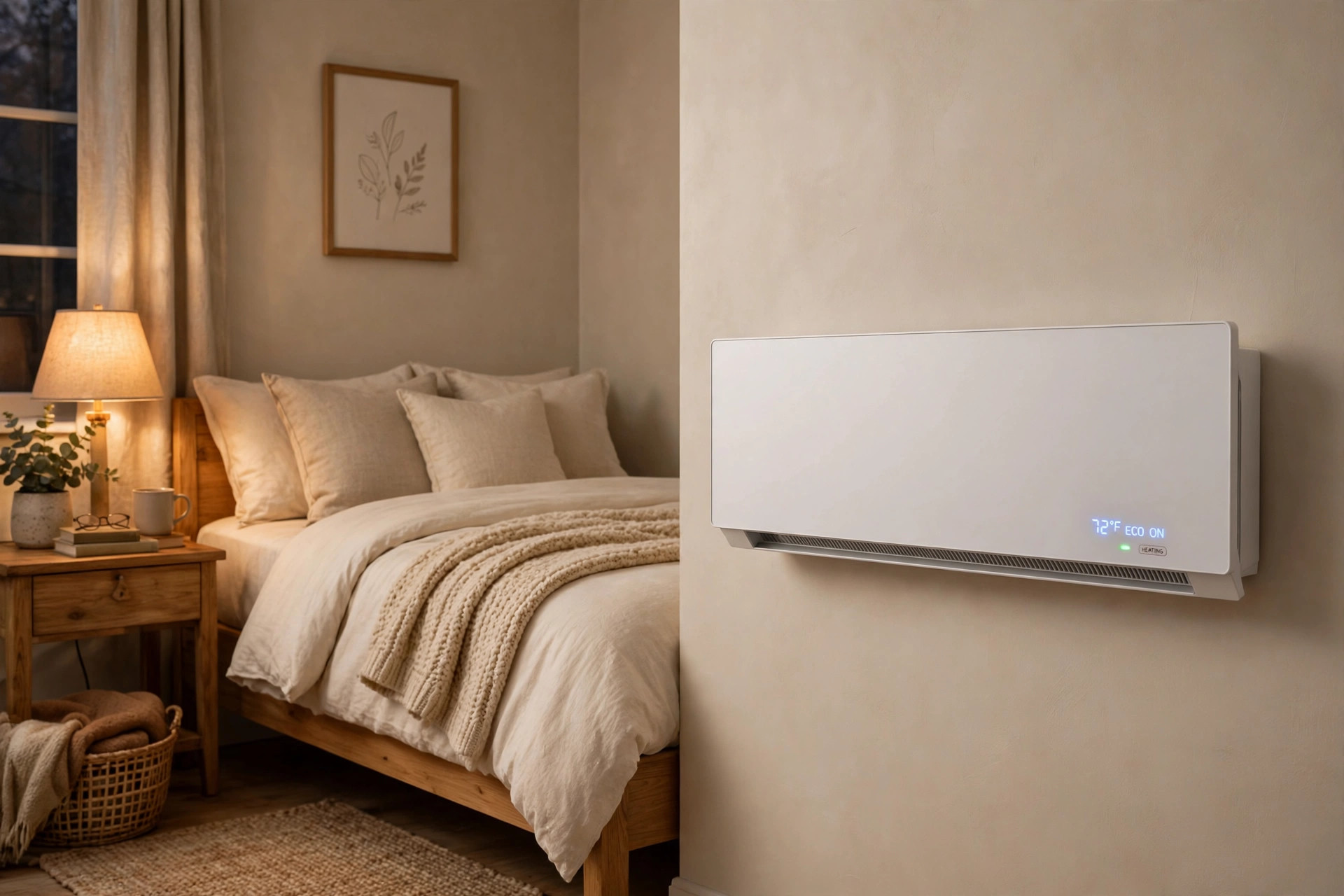
Cold bedrooms make mornings hard. You reach for the switch and wait. Most small heaters blow hot air, but they dry the air and hum all night. That hum can keep light sleepers awake. An infrared wall heater works in a different way. It warms the walls, the bed, and the floor directly, the way sunlight warms your skin through a window. Our infrared wall heater reviews for bedrooms look at how these panels perform in real bedrooms, what features matter, and what you should know before you buy. The goal is simple: steady warmth, quiet nights, and fair cost.
Why It Matters: Infrared Wall Heater Reviews for Bedrooms
A bedroom has its own needs. It is smaller than a living room. You spend eight hours there, and half of that time you are asleep. The heater must be quiet. It must hold a steady temperature. It must be safe to run while you sleep. A portable heater with a fan can do the job, but the fan noise and the dry air bother many people. A radiator takes floor space and takes a long time to warm up. An infrared wall heater mounts on the wall like a picture. It gives off gentle radiant heat with no fan and no moving parts. That makes it a strong choice for bedrooms, home offices, and other small rooms where quiet matters. Many buyers also like that it keeps the wall free of clutter. They also free up floor space for dressers, toys, or a reading chair, which matters in smaller bedrooms where every square foot counts. Reviews from independent test reports can help you compare real noise and heat levels before you decide.
What to Look For When You Choose One
Heat Output and Room Size
Heat output is measured in watts. A common bedroom of 120 to 200 square feet usually needs 600 to 1,000 watts. A very small guest room may do well with 400 watts. A large master bedroom may need 1,500 watts or two panels. Read the maker’s room-size rating and treat it as a guide, not a promise. Drafty rooms with old windows lose heat faster. They need more power than a tight, well sealed room. The U.S. Department of Energy gives plain advice on how heat loss affects home heating, and that advice applies here too.
Thermostat and Controls
A built-in thermostat is one of the most useful features. It lets you set a target temperature, and the heater turns itself on and off to hold it. That saves power and keeps the room from getting too hot. Look for a digital display with a clear temperature readout. A remote control helps, because you can change the setting from bed. Timers and sleep modes are worth having. They let the heater warm the room before bedtime and then lower the heat while you sleep. Models with simple controls are best for guest rooms, where visitors must figure out the heater fast.
Noise and Light Levels
A bedroom heater should fade into the night. Pure infrared panels make no sound at all, since they have no fan and no moving parts. Some panels show a soft glow on the display. Look for a display dimmer or a night mode that turns the lights off while you sleep. If the panel has a small indicator light, it should face away from the bed or be easy to cover. Read buyer reviews for words like silent, quiet, and bright display. A loud click from a cheap thermostat can wake a light sleeper, so a smooth electronic thermostat is worth the extra cost.
Mounting and Design
Wall mounting is the main point of these heaters, so check the hardware. A good panel ships with a sturdy bracket and clear directions. The panel should sit flat against the wall with a small gap behind it for air flow. Slim panels look like framed pictures. Some come with picture frames or printed designs so they blend into the room. Check the cord length as well. You want the plug to reach the outlet without an extension cord. Never use an extension cord with a high-watt heater if you can avoid it. A heavy cord with a grounded plug is a sign of a well made unit.
Types of Infrared Wall Heaters for Bedrooms
Flat Panel Radiant Heaters
Flat panels are the most common type for bedrooms. They are thin, quiet, and made to mount on the wall. The panel surface warms up and sends infrared heat into the room. Most have a thermostat and a timer. They do not glow bright, so they will not light up a dark bedroom. This is the type most buyers mean when they read infrared wall heater reviews for bedrooms.
Framed Art Heaters
These are flat panels that look like framed art or mirrors. The heating element hides behind a printed picture or a mirror surface. They cost more than plain panels, but they please buyers who care about room style. Performance is the same as a flat panel of the same wattage. If you like the look, they are worth the extra cost. If you do not care, save the money.
Hardwired Versus Plug-In Models
Plug-in models plug into a standard outlet and are easy to install yourself. Hardwired models connect straight to the house wiring and often need an electrician. Hardwired units free up the outlet and look cleaner. They are also easy to wire to a wall thermostat. For most bedrooms, a plug-in panel is enough. Choose a hardwired unit if you want a neat look or if you plan to control several panels from one thermostat.
Heaters With and Without Fans
Pure infrared panels have no fan. They are silent. Some wall heaters mix infrared panels with a small fan to spread heat faster. The fan adds a soft sound. In a bedroom, silent panels are usually the better pick. If your room is very large or poorly laid out, a fan model may warm the space faster. Read our guide to space heaters for larger rooms if you need to heat more than a bedroom.
Cost and Price
What You Pay Up Front
Small plug-in infrared panels cost about 80 to 200 dollars. Mid-size panels with thermostats and remotes run 200 to 400 dollars. Large art-style or mirror panels can cost 400 to 800 dollars or more. Wall-mount kits are usually included in the price. Hardwired models may add 100 to 300 dollars for an electrician. Prices move up in cold months, so shop early in the fall if you can.
What It Costs to Run
A 1,000-watt heater uses one kilowatt-hour for each hour it runs at full power. At 15 cents per kilowatt-hour, that is about 15 cents an hour. With a thermostat, the heater cycles on and off, so real cost is lower. Many buyers report 20 to 50 dollars a month of extra electric cost in winter for one bedroom panel. Check your local electric rate and look for ENERGY STAR guidance on home heating costs. The U.S. Department of Energy and ENERGY STAR both publish plain tips on trimming heating bills.
How It Compares to Other Electric Heat
Infrared panels cost about the same to run as other electric resistance heat, since all resistance heat turns electricity into heat at the same rate. The comfort can feel different. Radiant heat warms objects, so people often feel warm at a lower air temperature. That can let you set the thermostat a degree or two lower. If you already read electric wall heater reviews, you will see that panel heaters and convection heaters suit different tastes. Panels are silent and even. Convection units stir the air and warm a room faster at first.
Care and Upkeep
Infrared panels need very little care. There is no filter to change and no fuel to buy. Dust the panel once a month with a soft dry cloth. Dust on the surface can cut heat output a little. Check the wall bracket once a year to make sure the screws are tight. Look at the cord for cracks or worn spots. If the cord feels hot during use, stop using the heater and have it checked. Keep the wall around the panel clear of heavy drapes that touch the hot surface. Follow the maker’s cleaning steps in the manual. The Family Handyman and This Old House sites both share simple home upkeep advice that fits this kind of task.
Safety
Safety comes first in a bedroom, because the heater runs while you sleep. Buy a model with a tip-over shutoff and an overheat cut-off, even though a wall panel cannot tip over. The overheat cut-off is the part that matters. Look for a testing lab mark on the box, such as UL or ETL. These marks show the unit passed third-party safety tests. Keep bedding, pillows, and curtains at least three feet from the panel. Mount the panel where children cannot reach it. The Consumer Product Safety Commission lists home heating safety steps that every buyer should read before the first cold night. Never run a damaged heater. Never leave a space heater running in a room with small pets closed in alone. For more room-by-room advice, see our space heater safety tips for American homes.
Frequently Asked Questions
Are infrared wall heaters safe to run all night in a bedroom?
A well made panel with a thermostat and overheat shutoff is made for long runs. Mount it on the wall, keep flammable items away, and let the thermostat hold the room temperature. Check that the unit carries a UL or ETL mark. If the heater is damaged or very old, replace it instead of running it overnight.
How long does it take an infrared panel to warm a bedroom?
Most panels take 20 to 45 minutes to make a cold bedroom feel warm. They heat the walls, bed, and floor first, then the air follows. The room feels even and steady rather than hot in one corner. A thermostat shortens the wait because the heater runs at full power until the set temperature is reached.
Do infrared heaters dry the air like fan heaters?
They dry the air far less. Fan heaters move hot air around and can make skin and throats feel dry. Infrared panels warm objects with little air movement, so the room keeps more of its natural moisture. Some buyers still run a small humidifier in very dry winters.
Will an infrared panel raise my electric bill a lot?
It adds to the bill, but a bedroom panel with a thermostat usually costs less than heating a whole house with a furnace. Most buyers see 20 to 50 dollars a month in winter. Lower the thermostat one or two degrees at night and use a timer to cut cost further.
Can I install a plug-in infrared panel myself?
Yes. Plug-in panels hang on a wall bracket with a few screws, much like hanging a heavy mirror. You need a stud finder, a level, and a drill. Keep the cord away from the hot panel surface. Call an electrician for hardwired models or if you are not sure about the wiring.
Do infrared wall heaters work in old, drafty bedrooms?
They work, but drafts steal heat. Seal the worst gaps around windows and doors first. The U.S. Department of Energy has guides on air sealing that help any heater work better. In a very drafty room, pick a higher-watt panel or plan to run it longer.
A Final Word
Infrared wall heaters suit bedrooms because they are quiet, steady, and out of the way. Pick the right wattage for your room, choose a model with a good thermostat, and follow the safety steps. Then enjoy a bedroom that feels warm the way a sunlit room feels warm. Major heating brands like Carrier, Trane, Lennox, Goodman, and Rheem all note that matching the heater to the room is the key step in any heating choice.
Related guides on this site include energy efficient mini split for 1500 sq ft, ductless mini split installation cost per zone, and best mini split for cold climates reviews usa.
References
Carrier. (n.d.). Heating and cooling systems. https://www.carrier.com ENERGY STAR. (n.d.). Energy efficient products. https://www.energystar.gov Goodman. (n.d.). Heating and cooling equipment. https://www.goodmanmfg.com Lennox. (n.d.). Heating and cooling systems. https://www.lennox.com Rheem. (n.d.). Heating, cooling, and water heating. https://www.rheem.com This Old House. (n.d.). Home renovation guidance. https://www.thisoldhouse.com Trane. (n.d.). Heating and air conditioning. https://www.trane.com U.S. Department of Energy. (n.d.). Energy efficiency and renewable energy. https://www.energy.gov
Was this guide helpful?

About Emily Rodriguez
The My Garden US editorial team writes practical, in-depth home and garden guides for American homeowners — tested advice, no fluff.
You May Also Like
Whole House Dehumidifier Installation Cost USA: A Full Guide
September 26, 2026 0 views
Best Air Filter for Allergies Reviews USA: A Plain Guide to Cleaner Air
June 22, 2026 0 views
UV Light for HVAC System Pros Cons USA: A Plain Guide
June 3, 2026 0 views