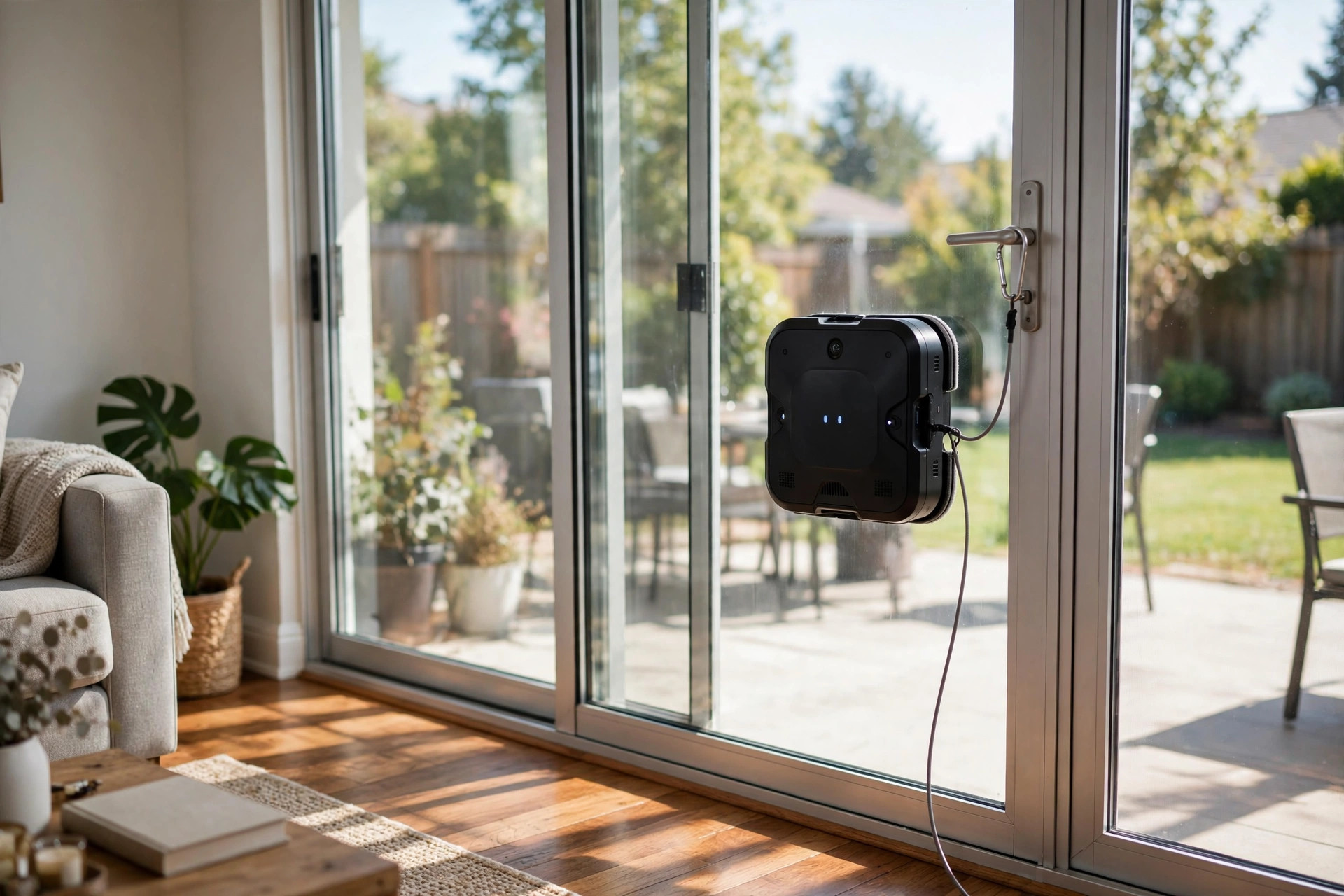

Windows bring light into a home. They also collect dust, rain marks, and finger prints. This window cleaning robots reviews and buying guide explains how these small machines work and how to pick the right one. A window cleaning robot is a device that sticks to glass and moves across it, wiping and polishing as it goes. It does the dull work of window washing on its own. Homeowners who dislike ladders and long scrubbing sessions may find it a useful helper. This guide covers what these robots do, what to check before buying, common types, fair prices, care, and safety.
Why Clean Windows Matter
Clear windows change a room. Sunlight comes in stronger and colors look richer. A view of the yard feels closer when the glass is clean. Dirty glass can block up to one fifth of the light that would otherwise enter a home. That loss shows up in rooms that face north or sit under tall trees. Clean glass also protects the home. Grime holds moisture against the frame and the seal. Over time, trapped dirt can stain the surface and weaken the seals around double-pane units. A simple washing routine keeps glass bright and frames sound.
High windows create a problem of their own. The outside of second-floor glass is hard to reach. Many people put off the job for years. Ladders cause thousands of falls in American homes each year, and most of those accidents happen during ordinary chores. A window cleaning robot removes the need to climb. It cleans the tall panes while the owner stays on the ground. For older homeowners and people who live alone, that point matters more than any other feature. Family Handyman notes that many common home injuries come from overreaching on ladders, a risk a robot simply avoids.
What to Look for in a Window Cleaning Robot: Window Cleaning Robots Reviews and Buying Guide
A buyer who reads window cleaning robots reviews before shopping will notice the same points coming up again and again. The details below decide whether a machine works well or disappoints.
Cleaning Power and Suction
The robot must hold itself to vertical glass. Most models use a suction motor that pulls the body against the pane. Stronger suction means safer work on rough or dusty glass. Look for models that keep their grip even when the cleaning pad is damp. Some machines add a backup safety cord that ties to a fixed point inside the room. Treat that cord as required equipment, not an extra.
Navigation and Sensors
A good robot covers the whole pane without help. Most units clean in a zigzag or N-shaped path. Better models sense the edge of the glass and turn before they reach the frame. Some can clean frameless glass and mirrors. Simple models bounce off window frames and change direction. The pattern matters less than the result: check whether owners report missed corners. Edge detection reviews on CNET and PCMag often point out which models struggle near frames.
Cleaning Pads and Water
Most window robots use flat pads made of microfiber cloth. The pad sprays water or cleaning solution, or the owner wets it by hand. Machines with built-in water tanks do more of the work on their own. Pads should be easy to remove and wash. A robot that needs rare or costly pads will add to the cost over time. Some owners keep two sets of pads so one set can dry while the other is in use.
Power Source and Cord Length
Nearly all window cleaning robots plug into wall power while they work. Battery-only models exist, but they cost more and run for a shorter time. Cord length sets how far the robot can reach from the nearest outlet. Measure the distance from your outlets to your tallest windows before you buy. Some machines keep a small backup battery that holds suction for about twenty minutes if the power fails. That backup prevents the unit from falling during a blackout.
Size, Weight, and Noise
A window robot must fit on the glass you own. Round models may not reach into square corners as well as square models do. Check the minimum glass size in the manual. Weight matters when you lift the machine to the top of a tall pane. Most units weigh between two and four pounds. Noise is another factor. Suction motors sound like a small vacuum cleaner. Units with lower noise ratings work better in homes with infants or home offices.
App Control and Remote
Many modern units include a handheld remote. Higher priced models connect to a phone app. The app may show the cleaning path, let the owner steer the robot, and send a notice when the job ends. These features are useful but not required. A machine with a simple remote cleans just as well as one with a full app.
Types of Window Cleaning Robots
Round Robots
Round models were the first on the market. They move in circles across the glass and cover the area in overlapping loops. Their shape lets them turn in tight spaces. The weakness of round robots is square corners. A circle cannot reach into the sharp corner of a rectangular pane. Owners often wipe the corners by hand after the cycle ends.
Square Robots
Square models came later and now lead the market. Their straight edges fit into corners, so the whole pane gets cleaned. They tend to weigh a little more than round units. Most square models include water tanks and stronger edge sensors. Test reports from Good Housekeeping and The Spruce give square designs the edge for large sliding doors.
Magnetic Models
Magnetic window cleaners are a different design. One half of the device sits inside the glass and the other half sits outside. Magnets pull the two halves together through the pane. The owner moves the inside half by hand, and the outside half follows. These are not true robots, since a person must guide them. They cost less and work on single panes, but they struggle with thick double-pane glass. This guide focuses on true robots that move on their own.
Units for Large Glass and Skylights
Some robots are built for big surfaces such as storefront glass, office partitions, and skylights. They have larger pads and stronger suction motors. Homeowners with a sunroom or a wall of glass may prefer these. They clean faster but cost more. For a standard home with normal windows, a regular square robot is enough.
Cost and Price Guide
Window cleaning robots fall into three price bands. Prices here reflect the American market in recent years and may shift with new models.
Budget models, about $100 to $200. These are usually round machines with basic navigation. They clean well on small and medium windows. They may need more passes to finish a large pane. Owners should expect to guide or restart them now and then.
Mid-range models, about $200 to $350. This is the sweet spot for most homes. Square designs with water tanks and edge sensors live in this band. They cover large panes with less help. Many include a remote and backup power. Most owner reviews in this band report good results.
Premium models, about $350 to $600. These add app control, stronger suction, and quieter motors. Some work on frameless glass and mirrors with special settings. Buyers with many tall windows or a glass-heavy home may find the extra cost fair. For most households, a mid-range machine does the same core job.
Running costs stay low. Microfiber pads wash in a machine and last for many cycles. A bottle of cleaning solution lasts for months. Replacement pads cost only a few dollars a set. Electric use is tiny, since each job takes twenty to forty minutes. When buyers compare total cost against hiring a window service twice a year, the robot usually pays for itself within two seasons. Homeowners comparing prices across stores can check testing and price notes on Consumer Reports and RTINGS before they decide.
Care and Upkeep
A window robot lasts longer with simple care. Wash the pads after every two or three uses. Dirty pads drag grime across the glass and leave streaks. Rinse them in warm water with a mild soap and let them dry fully before the next run. Check the suction vent for dust. A clogged vent weakens the grip and forces the motor to work harder.
Store the machine in a cool, dry place. Heat can warp plastic parts and dry out rubber seals. Wind the cord loosely instead of pulling it tight. A sharp bend in the cord may break the wire inside over time. Test the safety cord before each use by giving it a firm pull. Replace the safety cord if you see fraying.
Keep the glass free of stickers and loose paint before a run. The robot can catch on rough spots and stall. On the first run with a new machine, stay in the room and watch the full cycle. This shows how the unit handles your frames and corners. Most owners trust the machine on its own after two or three supervised runs. A related habit applies elsewhere in the home: floor buffers for American homes and basement dehumidifiers also last longer when filters and pads are cleaned on a regular schedule. See our guides on /best-hardwood-floor-buffers-for-american-homes/ and /dehumidifiers-for-basements-price-comparison-usa/ for more on that routine.
Safety
Safety comes first with any device that works on high glass. Always attach the safety cord to a solid anchor inside the room before you start. A doorknob or a heavy piece of furniture works. Never run the robot on cracked or loose glass. A crack can spread under the suction, and the pane may fail. Keep children and pets out of the room while the machine works overhead.
Unplug the machine before you change pads or clean the vents. Water and power do not mix. Use only the cleaning solution named in the manual. Strong chemicals can harm the pads and may leave a film on the glass. The Environmental Protection Agency offers guidance on choosing safer cleaning products for home use. If a window has loose glazing or a weak seal, clean that pane by hand instead of using the robot. When a machine makes a strange sound or loses suction often, stop using it and check the manual or call the maker. For repairs beyond simple parts, our look at /top-rated-same-day-appliance-repair-services-reviews/ may help.
Outdoor use needs care too. Do not run the robot in rain or high wind. Wet frames make the safety cord harder to secure. On very hot days, the suction cup rubber softens and may grip less well. Morning or evening runs work best in summer. Guides on Bob Vila and This Old House stress the same rule for all high window work: never trust your weight or your tools to a weak anchor.
Frequently Asked Questions
Do window cleaning robots really work? Yes, for ordinary dirt and dust. They do not replace a deep hand scrub on glass that has years of buildup. Most owners run the robot once a month and keep their windows clearer than they ever did by hand.
Can a window cleaning robot fall off the glass? It can if the power fails or the suction vent is blocked. That is why every unit ships with a safety cord. Attach the cord every time. Models with a backup battery hold on for a short time during a blackout, which adds a second layer of safety.
Do they work on double-pane and tinted glass? Most true robots work fine on double-pane glass. Tinted glass is also fine if the tint is factory built into the pane. Aftermarket window film needs care. Check the film maker before running a robot over it, since strong suction can lift the edges of cheap film.
How long does a cleaning cycle take? A standard window of about three feet by four feet takes ten to twenty minutes. A full sliding glass door may take thirty to forty minutes. Large glass walls need more than one run or a larger machine.
Are they loud? They sound like a small vacuum cleaner. Most models run between 60 and 72 decibels. That is too loud for a sleeping baby in the same room, but fine for normal daytime use. Premium models tend to run quieter.
Can I leave the house while it works? Most owners stay home for the first few runs. After the machine proves itself on your windows, many let it work in the next room. Leaving the house fully is not advised, since a stalled machine wastes power and a loose cord is a small risk.
Final Word
A window cleaning robot will not make windows sparkle by magic. It is a steady, patient helper that keeps glass cleaner than most of us manage by hand. Pick a square model with a water tank, strong suction, and a safety cord. Read owner window cleaning robots reviews before you buy, and match the machine to your tallest windows. With a little care, the robot will earn its place in your home cleaning routine.
References
Bob Vila. (n.d.). Home improvement advice. https://www.bobvila.com CNET. (n.d.). Technology news and reviews. https://www.cnet.com Consumer Reports. (n.d.). Product reviews and ratings. https://www.consumerreports.org Family Handyman. (n.d.). DIY home repair and maintenance. https://www.familyhandyman.com Good Housekeeping. (n.d.). Product reviews and home advice. https://www.goodhousekeeping.com PCMag. (n.d.). Technology product reviews. https://www.pcmag.com RTINGS. (n.d.). Product reviews and test data. https://www.rtings.com The Spruce. (n.d.). Home and garden advice. https://www.thespruce.com This Old House. (n.d.). Home renovation guidance. https://www.thisoldhouse.com U.S. Environmental Protection Agency. (n.d.). Protecting human health and the environment. https://www.epa.gov
Was this guide helpful?

About Jennifer Lee
The My Garden US editorial team writes practical, in-depth home and garden guides for American homeowners — tested advice, no fluff.
You May Also Like
Cordless Robot Vacuum Cleaners for Cold Climates
September 9, 2026 0 views
Robot Vacuum Cleaners Price Comparison USA: A Practical Buyer’s Guide
August 5, 2026 0 views
Commercial Grade Move Out Cleaning Services for Homeowners: A Complete Guide
February 26, 2026 0 views