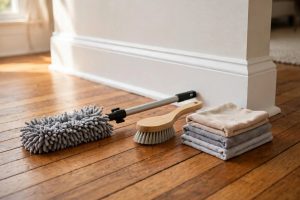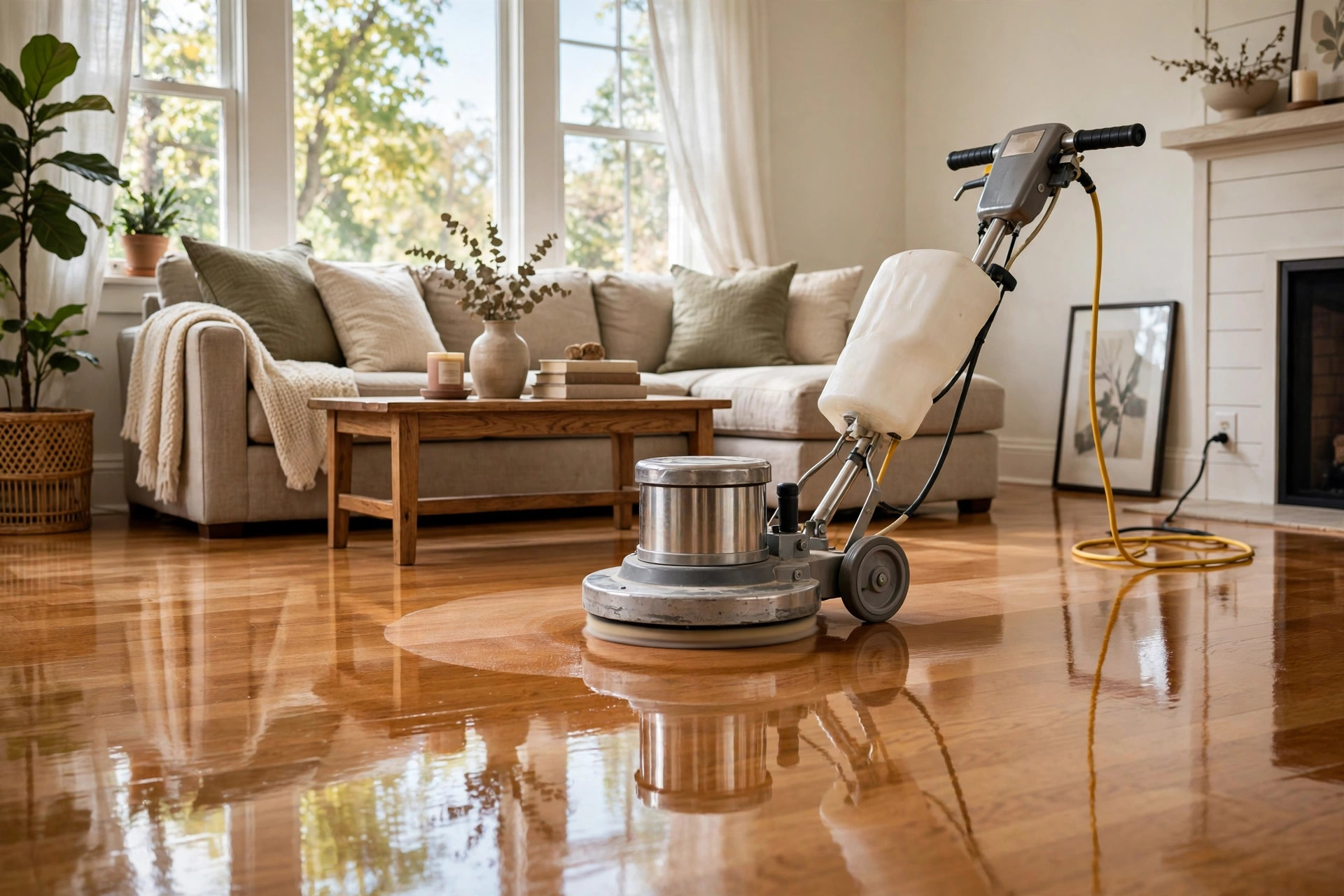

The best hardwood floor buffers for American homes save hours of hard work. They turn dull wood into warm, bright floors. A good buffer is not a luxury. For homes with real wood floors, it is a practical tool that keeps floors healthy for years. This guide explains what buffers do, the types you can buy, how to choose one, what they cost, and how to use one safely.
Why a Floor Buffer Matters
Hardwood floors take a beating. Shoes, pets, and chairs leave marks. Dust grinds into the finish. Mopping helps, but mopping alone cannot restore shine. A floor buffer works differently. It spins a pad at high speed. The pad polishes the finish and lifts fine scratches. The result is a smooth, even glow that mopping cannot give.
Many American homes have older wood floors. Oak and maple were common in houses built before 1970. These floors often have thick coats of old finish. A buffer can revive them without sanding. It can also keep newer floors looking new. Regular buffing extends the life of the finish. It delays the need for costly sanding and refinishing.
A buffer also pairs well with other cleaning tools. Homeowners who read an affordable HEPA vacuum cleaners buying guide know that fine dust harms wood. A vacuum picks up grit. A buffer then restores the surface. The two tools work as a team.
What to Look for When You Choose: Best Hardwood Floor Buffers for American Homes
Not all buffers fit every home. Consider these points before you buy.
Weight and size. Home buffers weigh between 15 and 40 pounds. A lighter machine is easy to carry upstairs. A heavier machine presses harder and polishes faster. For most homes, a mid-weight machine near 25 pounds is a good balance.
Pad speed. Buffer speed is measured in revolutions per minute, or RPM. Most home buffers run between 175 and 600 RPM. Slow machines near 175 RPM are gentle. They suit soft woods like pine. Faster machines give more shine but need a careful hand. If you are new to buffing, start slow.
Pad type. Buffers use pads that attach under the machine. White and beige pads are soft and made for polishing. Red pads are medium and used for light cleaning. Black pads are harsh and meant for stripping old finish. For routine shine, soft white pads are the right choice.
Power cord length. A long cord means fewer outlet changes. Look for at least 25 feet. Short cords slow the work and cause tangles.
Handle height. Many buffers have adjustable handles. A handle that fits your height prevents back strain. Check that the handle locks in place.
Noise. Buffers hum loudly. Some are quieter than others. If you live in an apartment or work early in the day, look for models sold as low noise.
Types of Hardwood Floor Buffers
Shoppers will meet three main types. Each has strengths and limits.
Orbital Floor Machines
Orbital machines move the pad in small circles. They are the most forgiving type. They rarely burn or mark the floor. They suit beginners and small rooms. Many modern home buffers are orbital. They handle polishing and light scrubbing well. They are less powerful than rotary machines, so deep scratches may remain.
Rotary Floor Buffers
Rotary machines spin the pad in one fast circle. They are the classic type used by professionals. They give the deepest shine. They also demand skill. If the machine sits still too long, it can burn a spot in the finish. Owners with some practice get fine results. New users should practice in a closet or a hidden corner first.
Multi-Surface Floor Machines
These machines scrub, polish, and sometimes spray solution at once. They often look like large upright vacuums. They are easy to store and easy to push. They cost more than simple buffers. They suit busy homes that want one machine for several hard floors, including wood, tile, and laminate.
Floor Burnishers
Burnishers run at very high speed, often over 1,000 RPM. They are mostly for large spaces and commercial use. A few are sold for home use. They produce a glassy shine. They are harder to control and can damage soft wood. Most homeowners do not need one.
Cost and Price
Prices vary widely. Basic orbital home buffers sell for about 150 to 300 dollars. Mid-range machines with better build quality run 300 to 500 dollars. Professional-grade rotary buffers can cost 600 to 1,200 dollars. Replacement pads are cheap. A set of soft polishing pads often costs 15 to 30 dollars and lasts many sessions.
Renting is an option. Many hardware stores rent buffers for 40 to 70 dollars a day. Renting suits a one-time spring cleaning. Buying suits homes that buff two or more times a year. Over five years, a home machine often costs less than two rentals per year.
Keep pads and polish in the budget. A bottle of wood floor polish costs 15 to 25 dollars. One bottle covers several rooms. Buy pads in sets to save money. Also check what the maker includes in the box. Some kits come with pads and polish. These bundles often cost less than buying each item alone. Compare the kit price to buying parts one by one before you decide.
Care and Upkeep of Your Buffer
A buffer needs simple care. After each use, remove the pad. Rinse or wash it as the maker directs. Dirty pads scratch floors. Check the drive plate for hair and dust. Wipe the machine body with a damp cloth. Store the machine in a dry place, away from cold garages if possible. Cold can crack plastic parts.
Check the cord for cuts before each use. A damaged cord is a shock hazard. Replace worn pads on time. A thin pad wears unevenly and leaves marks. With this care, a home buffer lasts many years. Good maintenance habits matter for every home tool, as noted by home care experts at This Old House.
Safety
Buffers are safe when used with care. Follow these rules.
First, clear the room. Move furniture and rugs. Small objects can catch under the pad and fly out. Pets and children should stay out of the room while you work.
Second, keep the machine moving. A spinning pad left in one spot can burn the finish. Walk slowly and steer with smooth turns. Let the machine do the work. Do not press down hard.
Third, use the right products. Only use polishes and cleaners made for hardwood floors. Wax-based products can build up and turn floors slippery. Oily products can damage the finish. Read labels carefully.
Fourth, protect your body. Wear shoes with grip, not socks. Lift with your legs when you move the machine. If your back or hands hurt, stop and rest. Ear plugs help if the noise bothers you.
Fifth, manage the cord. Keep it behind you and out of the pad’s path. A cord under the pad can snap and whip. Unplug the machine before you change pads. For broader home safety guidance, the U.S. Environmental Protection Agency offers useful resources on safe product use indoors.
How to Buff a Hardwood Floor Step by Step
A clean, careful method gives the best shine.
1. Vacuum the floor. Pick up all dust and grit. A vacuum with good filtration works well, as noted in guides for top rated cordless electric scrubbers for Texas homes, because fine dust also harms hard surfaces. 2. Clean the floor. Mop with a hardwood floor cleaner. Let the floor dry fully. Buffing a damp floor causes streaks. 3. Fit a soft pad. Attach a clean white polishing pad. Make sure it is centered. 4. Test in a corner. Run the machine in a hidden spot. Check for marks. If the floor looks fine, continue. 5. Work in rows. Start at the far corner and move toward the door. Overlap each pass by a few inches. Keep a steady pace. 6. Polish the whole room. Do not rush. Two slow passes give better shine than one fast pass. 7. Remove the dust. After buffing, wipe the floor with a dry microfiber pad. Fine dust from polishing should be picked up.
Care of the Floors Between Buffing Sessions
Buffing is not needed every week. For most homes, buffing two to four times a year is enough. High traffic homes may buff more often. Between sessions, keep floors clean. Sweep or vacuum weekly. Mop monthly with a hardwood-safe cleaner. Put felt pads under chair legs. Place mats at doorways. Wipe spills at once. Water is the enemy of wood. These small habits protect the finish and stretch the time between buffing sessions. Many homeowners keep supplies ready in a kit like the ones in guides to best all purpose cleaning caddies for USA homes.
When to Call a Professional
Some floors are beyond a buffer. Deep scratches, gray worn spots, and peeling finish need sanding and recoating. A professional floor refinisher strips the old finish and applies new coats. This costs several dollars per square foot but gives floors new life. If your buffer test leaves the floor worse, stop and call a pro. A buffer cannot fix damage that goes through the finish into the wood.
Frequently Asked Questions
How often should I buff my hardwood floors?
Most homes need buffing two to four times a year. Homes with pets or many guests may need it more. Watch the floor. When it looks dull in traffic paths, it is time to buff.
Can a buffer damage hardwood floors?
Yes, if used wrong. A fast machine left in one spot can burn the finish. Harsh pads can scratch. Use soft pads, keep the machine moving, and test in a hidden corner. With care, buffers are safe for wood floors.
Do I need to sand before buffing?
No. Buffing is for floors with sound finish. It polishes the surface. Sanding removes the finish and is only needed for deep damage. If the finish is peeling or worn to bare wood, buffing will not help.
Can I use a buffer on laminate or vinyl floors?
Some multi-surface machines work on laminate and vinyl. Check the maker’s guide. Never use harsh pads or wax on laminate. For vinyl, use soft pads only. When in doubt, test a small hidden area first.
What polish should I use with a buffer?
Use a polish made for hardwood floors. Look for water-based products from trusted floor care brands. Avoid wax on floors with polyurethane finish. Avoid oil soaps, which leave residue. Experts at Bob Vila and Family Handyman often review floor care products for home use.
Are cordless floor buffers worth buying?
Cordless models exist and are handy for small jobs. They lack the power of corded machines. Battery run time is often under an hour. For a whole house, a corded machine is more practical. For a quick touch-up in one room, cordless is fine.
A Short Final Word
The best hardwood floor buffers for American homes are simple machines that do one job well. They bring back shine without the cost of refinishing. Choose a machine that fits your strength, your floors, and your budget. Use soft pads, keep it moving, and keep the floors clean between sessions. Your wood floors will thank you with years of warm, steady glow. Trusted reviewers at Consumer Reports, The Spruce, and Good Housekeeping all stress the same basics: right tool, right pad, steady hand. Large retailers such as Home Depot and Lowe’s carry home buffers for every budget.
References
Bob Vila. (n.d.). Home improvement advice. https://www.bobvila.com Consumer Reports. (n.d.). Product reviews and ratings. https://www.consumerreports.org Family Handyman. (n.d.). DIY home repair and maintenance. https://www.familyhandyman.com Good Housekeeping. (n.d.). Product reviews and home advice. https://www.goodhousekeeping.com Lowe’s. (n.d.). Home improvement products. https://www.lowes.com The Home Depot. (n.d.). Home improvement products. https://www.homedepot.com The Spruce. (n.d.). Home and garden advice. https://www.thespruce.com This Old House. (n.d.). Home renovation guidance. https://www.thisoldhouse.com U.S. Environmental Protection Agency. (n.d.). Protecting human health and the environment. https://www.epa.gov
Was this guide helpful?

About Michael Thompson
The My Garden US editorial team writes practical, in-depth home and garden guides for American homeowners — tested advice, no fluff.
You May Also Like
Reliable Handyman Services for Homeowners in Colorado
May 28, 2026 0 views
Stainless Steel Appliance Cleaners: Reviews and Buying Guide
January 16, 2026 0 views
Eco Friendly HEPA Vacuum Cleaners with Free Shipping
September 30, 2026 0 views