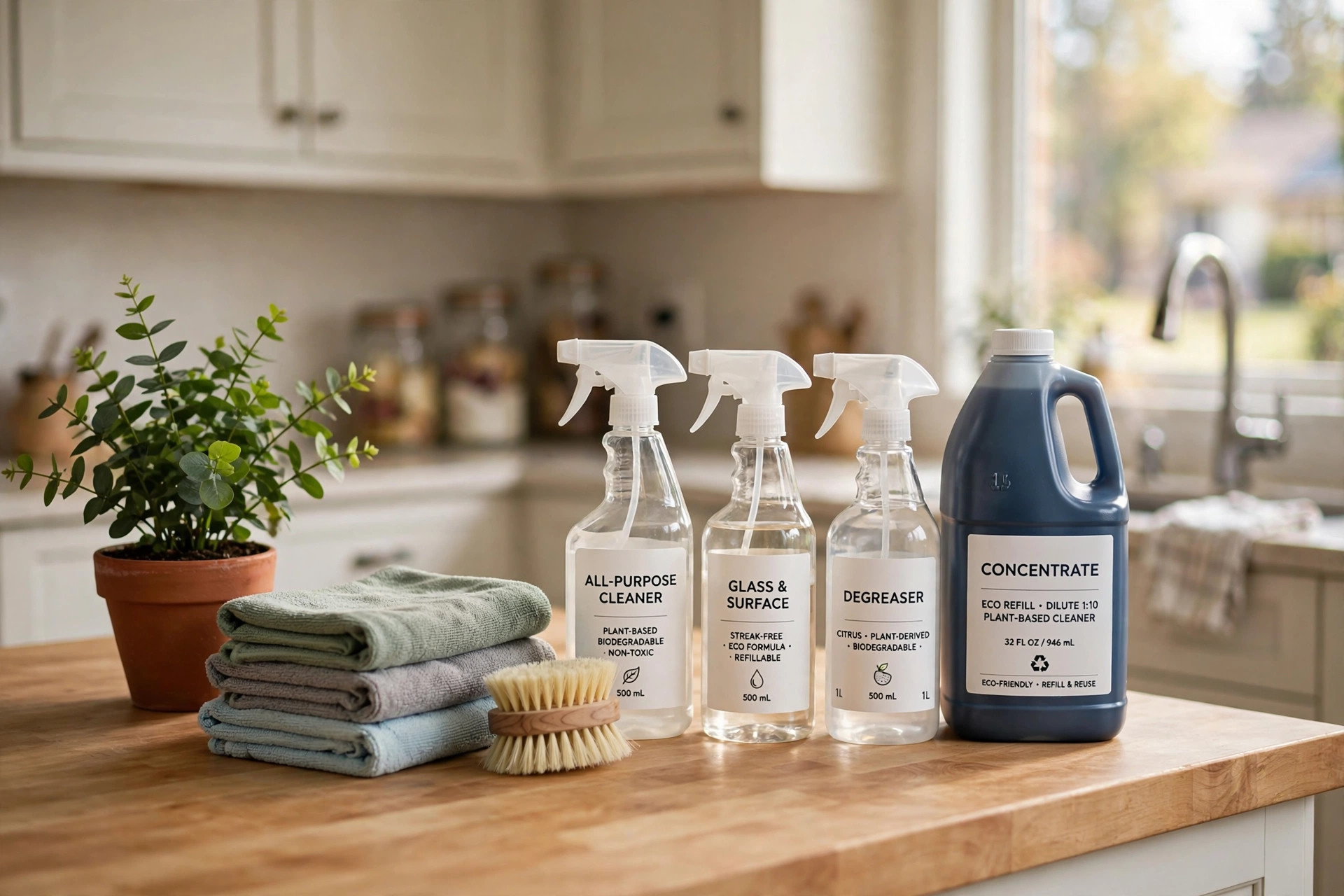

This professional grade eco friendly cleaning supplies buying guide is written for the ordinary homeowner. It explains what professional grade means. It explains what eco friendly means. It shows how to pick products that clean well and do less harm to people and the land. Green claims on store shelves can confuse. Some are honest. Some are empty words. This guide will help you tell the difference.
A cleaning product earns the name professional grade when it meets the demands of daily hard use. Offices, schools, and hotels buy such products. They clean large areas every day. They must work fast. They must not harm floors or fixtures. Homeowners can buy many of the same products now. They come in smaller bottles. They are sold online and in stores. Eco friendly means the product is made to be gentler. It avoids harsh chemicals. It breaks down in nature. It is safer for the person who uses it. When the two ideas join, you get a cleaner that works hard and stays mild.
Why It Matters
The average American home holds dozens of cleaning products. Sprays sit under the sink. Powders fill the laundry room. Many contain strong solvents. Some give off fumes. Children and pets touch floors and counters. They pick up what is left behind. A milder cleaner leaves less behind. That matters in a home with small children or old parents.
Waste matters too. Bottles pile up in the trash. Chemicals wash down the drain. They enter rivers and lakes. Products made from plant based ingredients break down faster. Concentrated formulas use less plastic. Refill pouches cut waste even more. One household cannot fix the whole problem. But many households together make a large change.
Health is the third reason. Strong cleaners can sting the eyes. They can hurt the skin. They can trouble the lungs. People with asthma feel this most. Eco friendly formulas often skip fragrances and harsh acids. They clean with gentler agents. The result is air that feels easier to breathe.
What Professional Grade Means: Professional Grade Eco Friendly Cleaning Supplies Buying Guide
Strength You Can Count On
Professional grade does not mean dangerous. It means tested. Makers of such products test them in real workplaces. They must cut grease in a busy kitchen. They must lift soil from a school floor. The formula is balanced. It has enough cleaning power. It does not go further than needed. A good guide will explain dilution. Many professional products are concentrates. You mix them with water. One bottle can last for months.
Proof, Not Promises
Look for proof of testing. A trusted label from a third party helps. The Environmental Protection Agency runs a program for safer products. It checks the full formula. Products that pass earn a special mark. You can read about the program on the EPA website. Independent test groups also review cleaners. Consumer Reports publishes test results and buying advice. Wirecutter reviews household products after hands on testing. These sources give facts. They do not sell the products they review.
How to Choose
Read the Label First
Turn the bottle around. Read the list of ingredients. Short lists are often better. Look for plant based surfactants. These lift dirt from surfaces. Look for simple builders such as washing soda or citric acid. They help water do its work. Avoid products that hide their formula. Honest makers list what is inside. If the label says nothing, put the bottle back.
Words on the front can mislead. Natural has no fixed legal meaning. Green is not a promise. Non toxic has a loose use in trade. Trust seals more than slogans. Seals come from outside groups. They set rules. They test products. They check factories. A seal on the label means someone outside the company looked closely.
Match the Cleaner to the Job
One cleaner cannot do every task. An all purpose spray suits counters and tables. A bathroom cleaner must fight soap scum. A floor cleaner must not leave film. A laundry product must work in cold water. Buy for the job at hand. Using the wrong product wastes time. It can also harm the surface. Marble and stone hate acids. Wood floors hate too much water. Read the use guide on the label before you start.
If you want ready made green options for daily tasks, see our roundup of the best eco friendly cleaning supplies with free shipping. It lists simple choices for kitchens, baths, and floors.
Think About the Whole Cost
Price per bottle is only part of the story. A concentrate may cost more at the till. It may clean ten times the area of a ready to use spray. Do the simple math. Divide the price by the number of gallons it makes. Compare that number. Also count the bottles you will throw away. Fewer bottles mean less waste and fewer trips to the store.
Types of Eco Friendly Cleaning Supplies
All Purpose Cleaners
These are the workhorses. They clean counters, sinks, and appliances. Good ones use plant based surfactants. They cut light grease. They rinse clean. Some come as tablets that dissolve in water. You keep the spray bottle and buy refills. This cuts plastic waste by a large share. For stuck on grime, let the spray sit for two minutes. Then wipe. Patience does more than extra product.
Bathroom Cleaners
Bathrooms breed soap scum and mold. Eco friendly bathroom cleaners use citric acid or lactic acid. These dissolve mineral film. They are gentler than bleach. For mold spots, a dedicated spray works best. See our notes on eco friendly mold removal sprays with free shipping for products made for that job. Always vent the room. Open a window or run the fan. Fresh air helps every cleaner work better.
Floor Cleaners
Floors take the most wear. Wood, tile, and vinyl each need a different formula. A pH neutral cleaner suits most hard floors. It lifts soil without dulling the finish. Avoid vinegar on stone floors. Acid can etch marble and limestone. For deep cleaning of rugs and carpets, machines made with green formulas help. Our eco friendly carpet deep cleaning machines buying guide explains what to look for in such machines.
Laundry Products
Laundry detergents have improved a great deal. Many now work well in cold water. Cold water saves energy. It also keeps colors bright. Look for concentrated liquids or powder in cardboard boxes. Sheets that dissolve in the wash are new and handy. Skip added fragrance if skin is sensitive. A half cup of washing soda boosts cleaning in hard water.
Specialty Cleaners
Glass cleaners, oven cleaners, and degreasers form the last group. Glass cleaners based on vinegar and water work well. They leave no streaks if you buff with a dry cloth. Heavy degreasers are for grills and stove hoods. Use them with care. Wear gloves. Rinse well after use.
Cost and Price
Professional grade eco friendly products cost a little more than basic store brands. A ready to use spray may cost between four and nine dollars. Concentrates may cost between twelve and thirty dollars. The concentrate makes many gallons. The true cost per use is often lower.
Refill systems save the most money over time. You buy one good spray bottle. Then you buy tablets or pouches. Each refill may cost two to four dollars. Compare that with a new plastic bottle each time. The savings grow month by month.
Buying in larger sizes also helps. A gallon jug costs less per ounce than a small bottle. Share with a neighbor if a gallon is too much. Bulk buying cuts packaging too. Watch for sales at warehouse stores. They often carry green lines now.
Care and Upkeep of Your Supplies
Cleaning supplies need care too. Store them in a cool dry place. Heat breaks down formulas. Sunlight fades labels and weakens contents. Keep bottles upright. Tighten caps after each use. A loose cap lets the product dry out.
Check dates on the label. Most cleaners last one to three years. Old products may lose strength. They rarely turn harmful. But they clean less well. Write the purchase date on the bottle with a marker. This simple habit keeps your shelf fresh.
Keep spray nozzles clean. Rinse them if they clog. A clogged nozzle wastes product. It also strains your hand. Replace worn spray heads instead of buying a whole new bottle. Many brands sell spare parts.
Clean your tools as well. Mop heads hold dirt. Wash them after each use. Let them dry fully. A damp mop head grows sour smells. Microfiber cloths can be washed hundreds of times. Wash them apart from linty towels. Skip fabric softener. It coats the fibers and cuts their power.
Good upkeep advice appears in many places. The Spruce offers step by step cleaning guides for every room. Bob Vila covers home maintenance with clear plain words. Family Handyman gives hands on tips from working pros.
Safety
Keep Products Away from Children and Pets
Even mild cleaners must be stored with care. Keep them in a locked cabinet or on a high shelf. Children taste what they find. Pets chew bottles. A child proof latch costs little. It buys real peace of mind. Never move a cleaner into a food jar or drink bottle. That mistake sends people to the hospital every year.
Do Not Mix Cleaners
Mixing is the most common cause of harm. Bleach and ammonia make a toxic gas. Acids and bleach release chlorine. Even two green products may clash. Use one product at a time. Rinse the surface before you switch. Read the warning panel on every label. It is printed for a reason.
Ventilate and Protect Your Skin
Open windows when you clean. Run exhaust fans. Fresh air clears fumes fast. Wear gloves for long jobs. Rubber gloves cost little and last long. If a product stings your eyes, step away. Rinse with clean water. Keep the poison control number on the fridge. In the United States the number is 1-800-222-1222.
Public health sources give sound rules for safe cleaning. The CDC publishes guidance on cleaning and disinfection in homes. The Environmental Working Group rates product ingredients and flags harsh chemicals. Healthline explains how common cleaners affect skin, eyes, and lungs. Good Housekeeping tests products and shares safe use tips from its labs.
Frequently Asked Questions
Are eco friendly cleaners as strong as regular cleaners?
Yes, in most daily tasks. Modern green formulas match old style products on grease, soap scum, and dirt. They may need more dwell time on heavy soil. Spray, wait two minutes, then wipe. For extreme jobs such as oven carbon, a stronger product may still be needed. Use it only for that job. Then return to the milder daily cleaner.
What does professional grade mean on a label?
It means the product is made for heavy daily use in workplaces. It has been tested for strength and surface safety. It often comes as a concentrate. It is not a legal grade with fixed rules. So check for third party seals and clear dilution guides. Those prove the claim better than words alone.
Are green cleaners safe for septic systems?
Most are, but check the label. Septic systems rely on living bacteria. Harsh antibacterials can harm them. Plant based cleaners usually break down well. Avoid pouring large amounts of any cleaner down the drain at once. Spread heavy cleaning over several days. When in doubt, ask the maker. Good companies answer such questions.
Can I make my own eco friendly cleaners?
Yes, for light jobs. Vinegar and water clean glass. Baking soda scrubs sinks. But home mixes have limits. They do not disinfect. They can harm stone and wood. They lack the balanced surfactants of made products. For a whole home plan, bought green products do a better job. Use home mixes for quick touch ups.
How do I know a product is truly eco friendly?
Look past the front label. Read the full ingredient list. Look for third party seals from groups such as the EPA program or other eco certifiers. Check the company website for full disclosure. Honest brands publish every ingredient. They explain their packaging. They take back refills. Vague words with no proof are a warning sign.
Where should I start if my budget is tight?
Start with three items. Buy one all purpose concentrate. Buy one bathroom cleaner. Buy a set of good microfiber cloths. These three handle most of the home. Add other products only when a job truly needs them. Refills and concentrates stretch every dollar.
A Final Word
Choosing professional grade eco friendly cleaning supplies is a quiet act of care. It cares for your home. It cares for the people in it. It cares for the land beyond your door. Start small. Read labels. Buy concentrates. Refill bottles. Store products with care. In a few weeks the new habit will feel normal. Your home will be clean. Your air will be fresher. And your trash can will be lighter. That is a good trade by any measure.
References
Bob Vila. (n.d.). Home improvement advice. https://www.bobvila.com Centers for Disease Control and Prevention. (n.d.). Cleaning and disinfecting your home. https://www.cdc.gov Consumer Reports. (n.d.). Product reviews and ratings. https://www.consumerreports.org Environmental Working Group. (n.d.). Chemical safety and product ratings. https://www.ewg.org Family Handyman. (n.d.). DIY home repair and maintenance. https://www.familyhandyman.com Good Housekeeping. (n.d.). Product reviews and home advice. https://www.goodhousekeeping.com Healthline. (n.d.). Health and wellness information. https://www.healthline.com The Spruce. (n.d.). Home and garden advice. https://www.thespruce.com U.S. Environmental Protection Agency. (n.d.). Protecting human health and the environment. https://www.epa.gov Wirecutter. (n.d.). Product reviews from The New York Times. https://www.nytimes.com/wirecutter
Was this guide helpful?

About Jennifer Lee
The My Garden US editorial team writes practical, in-depth home and garden guides for American homeowners — tested advice, no fluff.
You May Also Like
Cordless Carpet Deep Cleaning Machines With Free Shipping: A Complete Buyer’s Guide
May 8, 2026 0 views
Professional Grade Professional House Cleaning Services Near Me: A Complete Guide
January 31, 2026 0 views
Reliable Spin Mop Bucket Systems With Free Shipping: A Buyer’s Guide
August 8, 2026 0 views