
Introduction
Dust gathers on ceiling fan blades faster than most people expect. A week or two of fan use can lay a gray film over the tops of the blades. When the fan runs, that dust flies back into the room. It settles on furniture. It gets into the air you breathe. This reliable ceiling fan dusters buying guide will help you pick a duster that reaches the blades, holds the dust, and lasts through many cleanings.
A good ceiling fan duster has a simple job. It must wrap around each blade. It must trap dust instead of pushing it around. It must be long enough to reach the fan from the floor or from a short step stool. Many cheap dusters fail at one of these tasks. They drop dust on your face. They snap at the pole joint. Their fibers mat down after three uses. A reliable one does the job for years.
You do not need a ladder or a hired service for this chore. The right tool makes it a five minute job. Read on to learn what to look for, how much to spend, and how to keep your duster working well.
Why Clean Ceiling Fan Blades Matter: Reliable Ceiling Fan Dusters Buying Guide
Ceiling fans move a lot of air. Every cubic foot of air that passes over the blades leaves a little dust behind. The blades are flat and wide, which makes them perfect dust collectors. In a home with pets or near a busy road, the buildup is even faster.
Dirty blades do more than look bad. The dust reduces the fan’s efficiency. The motor must work harder to push air past a rough, coated surface. Over time, uneven dust can even make the fan wobble and hum. Cleaning the blades restores smooth, quiet airflow.
There is also a health angle. Dust holds pollen, mold spores, and tiny skin flakes. When the fan spins, it throws these particles into the breathing zone. People with allergies often feel worse in rooms with dirty fans. The U.S. Environmental Protection Agency notes that indoor air can carry more pollutants than outdoor air, and cutting down on household dust is one simple way to help.
A quick dusting every few weeks keeps all of these problems away. A reliable ceiling fan duster makes that routine painless.
Types of Ceiling Fan Dusters
Flexible Slit Dusters
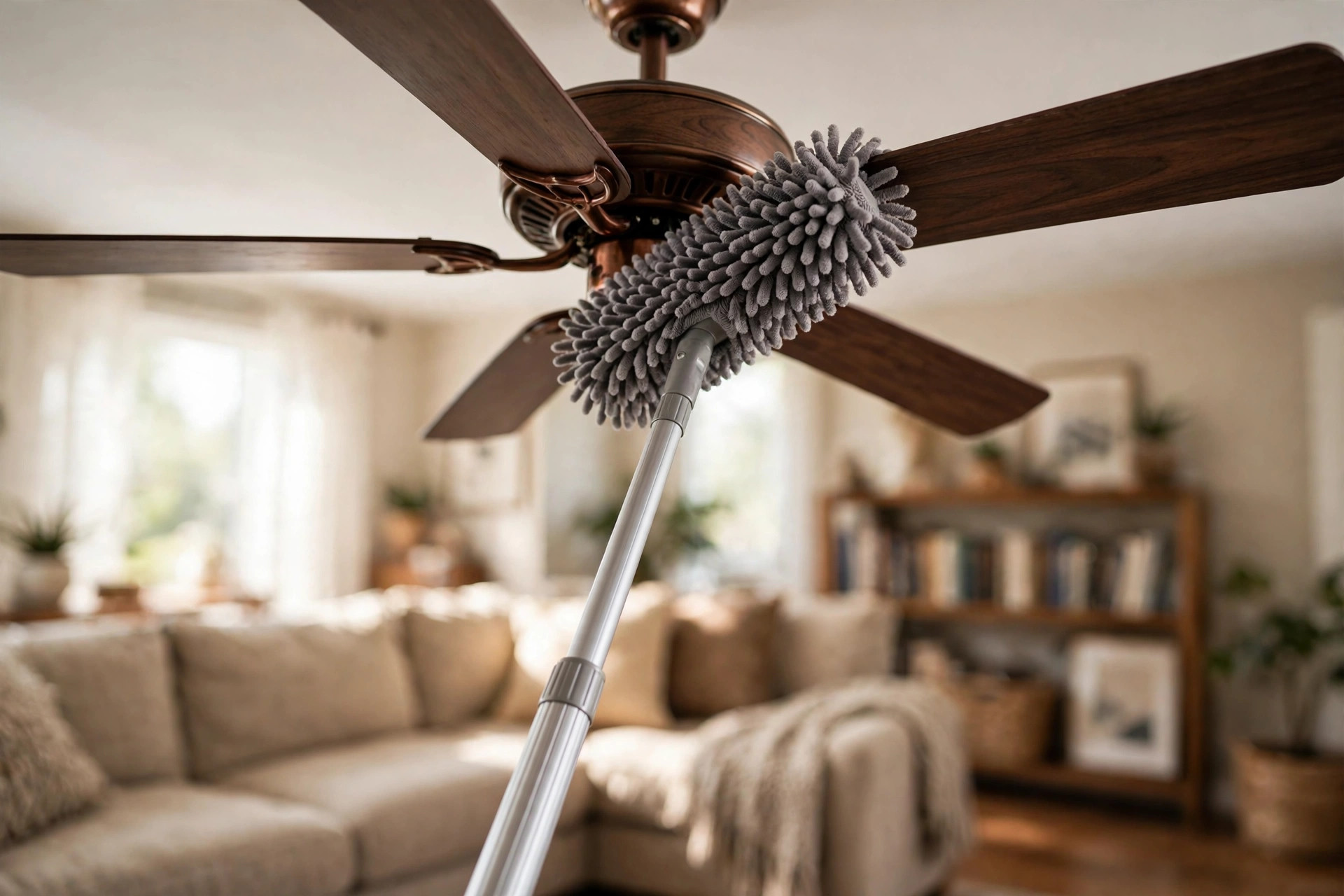
The most common type is the flexible slit duster. It has a long sleeve of soft fibers with a slit cut through the middle. You slide the fan blade into the slit, and the fibers clean the top and bottom at once. These are cheap, light, and easy to store.
Lambswool and Ostrich Feather Dusters
Natural fiber dusters use lambswool or ostrich feathers on a flat head. They create a light static charge that pulls dust to the fibers. They cost more, but they hold fine dust very well. They need gentle hand washing and full air drying.
Microfiber Pad Dusters
Microfiber pads use thousands of tiny loops to grab dust. The pads are flat and wide, and many are washable in a machine. They are a good pick for people who want to avoid buying replacements. Reviews at Consumer Reports often note that microfiber traps fine particles better than plain cotton.
Telescoping Pole Dusters
Almost all good ceiling fan dusters come on an extendable pole. The pole can stretch from about three feet to eight or ten feet. This lets you reach fans on high ceilings while standing on the floor. Look for poles that lock firmly at each length.
Wet and Dry Mop Heads
Some systems use a damp mop-style head for heavy buildup. These work well on blades that have not been cleaned in months. Dry dusting is enough for regular upkeep, but a damp head cuts through sticky grime from kitchens and smoking rooms.
What to Look for When You Buy
Reach and Pole Quality
Measure the distance from your floor to the fan blades. Add two feet. Your duster pole should reach at least that far. Cheap poles bend and wobble. Good ones are made of aluminum or sturdy fiberglass. Test the locking joints in the store if you can. A pole that slips while you work is worse than useless.
Head Shape and Coverage
The head should match the width of your blades. Most blades are four to six inches wide. A head that is too narrow takes twice as many passes. A head that is too wide is hard to control between blades. Slit-style heads should open wide enough to slide over the blade without forcing it.
Fiber Quality
Good fibers are dense and soft. They stand up after use and spring back to shape. Thin, sparse fibers just smear dust around. Washable microfiber is the best value for most homes. Lambswool is the premium choice for delicate finishes. Avoid dusters that shed fibers on the first use. A duster that leaves lint on the blade has failed its main job.
Dust Trapping
The whole point of the tool is to hold dust, not move it. Electrostatic microfiber and natural feathers both do this well. Some heads add a light dust-attracting treatment. These work fine, but they wear off with washing. For heavy dust, a slightly damp head traps more than a dry one.
Weight and Balance
You will hold the pole overhead for several minutes. A heavy head on a long pole tires your arms fast. Look for a total weight under two pounds. A foam grip on the handle helps. If your ceilings are over ten feet, consider a lighter model even if it costs a bit more.
Washability and Replacement Heads
A reliable duster should survive many cleanings. Check whether the head removes from the pole for washing. Check the price of replacement heads. A duster with cheap, easy-to-find refills is cheaper over five years than a sealed one you must throw away.
Storage
Long poles need a place to live. Many come with a hanging hole or clip. Collapsible poles shrink to half their length for a closet. If your closets are tight, this matters more than you think.
Popular Options and Features Compared
You will find three price tiers on store shelves and online. Budget dusters cost under ten dollars. They use basic synthetic fibers on a thin pole. They work for light dusting but often break within a year.
Mid-range dusters cost ten to twenty-five dollars. This is the sweet spot. You get a locking aluminum pole, a decent microfiber or slit head, and often a spare head in the box. Guides at The Spruce often point new buyers toward this range for the best value.
Premium dusters cost twenty-five to fifty dollars. They use lambswool, ostrich feather, or high-grade microfiber. The poles are stronger and the joints lock with a twist. They last five years or more with basic care.
When you shop, compare listings at major retailers such as Home Depot, Lowe’s, and Target. Online shops like Wayfair carry models with long customer review histories, which help you spot poles that fail early. Trade sites such as Bob Vila, Family Handyman, and This Old House publish hands-on tool tests that are worth reading before you buy.
Cost and Price Guide
Most reliable ceiling fan dusters sell for ten to thirty dollars. That price includes the pole and at least one head. Replacement heads cost three to ten dollars each. A washable microfiber head can be reused fifty times or more, which brings the cost per cleaning down to pennies.
Set your budget by your ceiling height and your cleaning schedule. High ceilings need longer, stronger poles, which cost more. If you clean monthly, buy the best head you can afford. It will pay for itself in saved time.
Watch for bundle deals. Many brands sell the pole with two or three heads for a few dollars more than the single-head version. That is the best deal if you plan to use the tool often. Also check the return policy. A pole that will not lock should go back to the store.
How to Use a Ceiling Fan Duster
Turn the fan off first. Let the blades stop fully. Dust falls down when you clean, so move small items off the table below, or cover them with a sheet.
Extend the pole to the right length. Stand to the side of the fan, not directly under it. Slide the head over the first blade from the outer tip toward the motor. Use slow, steady strokes. Rushing throws dust into the air.
Clean the top of each blade first, then the bottom if your head type reaches both sides. Wipe the motor housing and the light fixture with a soft cloth while you are up there. When all blades are done, take the head outside and shake it out, or rinse it if it is washable.
Work your way around the room from the fan outward. Dust the tops of door frames and shelves while the pole is extended. Many buyers of extendable duster sets use the same pole for baseboards and vents. That is a fine way to get more value from the tool.
Care and Upkeep
Washable heads need cleaning after every few uses. Shake loose dust outside first. Then wash microfiber heads in warm water with mild soap. Do not use fabric softener. It coats the fibers and ruins their dust-grabbing power. Air dry the head fully before you store it.
Lambswool and feather heads need gentler care. Swish them in cool water with a drop of mild soap. Rinse well. Let them dry in open air away from direct sun. Never put natural fibers in a dryer.
Wipe the pole with a damp cloth now and then. Check the locking joints for grit. A drop of light oil on a stiff twist lock keeps it smooth. Store the pole collapsed and hanging, not leaning in a corner where it can bend.
Replace the head when fibers stay matted after washing or when the head stops picking up dust. A worn head spreads dust instead of trapping it. Most households need a new head every one to two years with regular use.
Safety Tips
Turn the fan off before you clean. This sounds obvious, but injuries happen when people dust moving blades. The blade edge can cut, and a spinning blade can knock the pole from your hands.
Use a sturdy step stool if the pole does not reach. Do not stand on chairs, tables, or stacked boxes. Falls from even a few feet can cause real harm. The U.S. Consumer Product Safety Commission tracks thousands of ladder and step-stool injuries each year, most of them at home.
Keep the duster away from the fan’s light bulbs while they are hot. Let bulbs cool before you dust near them. Do not press hard on the blades. Excess force can bend blade arms or throw the fan out of balance.
If you have high ceilings over a staircase or a two-story room, hire a pro for that fan. No duster is worth a dangerous reach over open stairs.
Related Cleaning Tools Worth Knowing
A ceiling fan duster works best as part of a small kit. Baseboard cleaning tools handle the dust that falls during fan cleaning. A good set of microfiber cleaning cloths finishes the shelves and tables afterward. Keeping these three tools together turns a monthly dusting session into a short, tidy routine.
Frequently Asked Questions
How often should I dust my ceiling fan?
Every two to four weeks is enough for most homes. Homes with pets, smokers, or nearby construction may need weekly dusting. A quick pass takes only a few minutes once you have the tool.
Can I use a regular feather duster on a fan?
You can, but it is slow and messy. Short dusters force you onto a ladder, and plain feathers scatter dust. A fan-specific head with a slit or wide pad cleans both sides of the blade in one pass.
Do I need to turn the fan off?
Yes. Always stop the fan fully before cleaning. Dusting moving blades is unsafe and spreads dust everywhere.
What is the best material for a ceiling fan duster?
Microfiber is the best all-around choice. It traps fine dust, washes well, and costs little. Lambswool and ostrich feather are excellent for delicate blades but need gentler care.
How do I clean a very dirty fan?
For heavy buildup, wipe each blade with a damp microfiber cloth first. Then follow with the dry duster head. If the grime is sticky, add a drop of dish soap to the damp cloth and rinse it well before wiping.
Can ceiling fan dusters scratch the blades?
Good dusters will not scratch. Soft microfiber, lambswool, and feathers are safe on wood, painted, and coated blades. Avoid stiff brushes or scouring pads on any fan finish.
A Short Final Word
A reliable ceiling fan duster is one of the simplest tools you can own. It costs little, stores in a closet, and turns a dreaded chore into a five-minute task. Pick a sturdy locking pole, a dense washable head, and the right reach for your ceilings. Wash the head, store the pole with care, and your fan will run cleaner, quieter, and longer.
References
Bob Vila. (n.d.). Home improvement advice. https://www.bobvila.com Consumer Reports. (n.d.). Product reviews and ratings. https://www.consumerreports.org Family Handyman. (n.d.). DIY home repair and maintenance. https://www.familyhandyman.com Lowe’s. (n.d.). Home improvement products. https://www.lowes.com Target. (n.d.). Retail store. https://www.target.com The Home Depot. (n.d.). Home improvement products. https://www.homedepot.com The Spruce. (n.d.). Home and garden advice. https://www.thespruce.com This Old House. (n.d.). Home renovation guidance. https://www.thisoldhouse.com U.S. Consumer Product Safety Commission. (n.d.). Product safety information. https://www.cpsc.gov U.S. Environmental Protection Agency. (n.d.). Protecting human health and the environment. https://www.epa.gov Wayfair. (n.d.). Furniture and home goods. https://www.wayfair.com
Was this guide helpful?

About Sarah Mitchell
The My Garden US editorial team writes practical, in-depth home and garden guides for American homeowners — tested advice, no fluff.
You May Also Like

Oven Cleaning Kits Price Comparison USA: A Practical Buyer’s Guide
July 31, 2026 0 views
Carpet Cleaning Service Companies Cost Guide USA
July 5, 2026 0 views
Professional Grade Carpet Deep Cleaning Machines for Sale
October 3, 2026 0 views