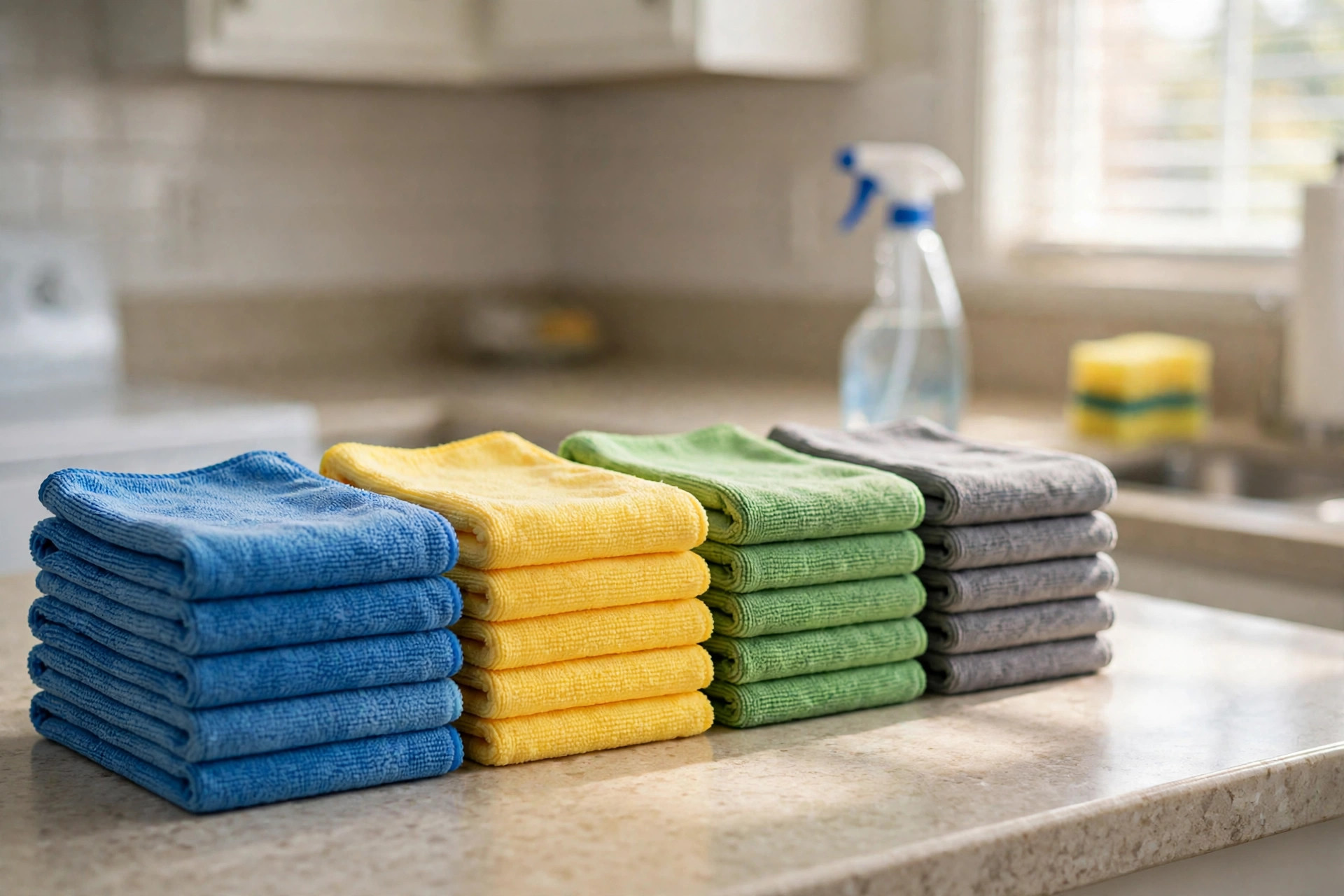

A microfiber cleaning cloth sets price comparison usa shoppers can trust starts with the facts. These small cloths are sold in packs of six, twelve, twenty-four, or more. Prices swing from a few dollars to more than thirty dollars for one set. The cloths look alike on the shelf. They do not work alike. This guide compares real prices in the United States, explains what drives the cost, and shows how to buy a good set without waste.
Why a Price Comparison Matters
Microfiber cloths have become the standard cleaning tool in American homes. They lift dust, hold water, and shine glass without streaks. One cloth can replace a roll of paper towels. Families now buy them by the dozen. With so many brands on the shelf, the prices are hard to read.
A fair microfiber cleaning cloth sets price comparison usa buyers can use must look past the sticker. A cheap set that wears out in three months costs more than a good set that lasts three years. The price per cloth matters more than the price per pack. Size matters too. A pack of twenty-four small cloths can be a worse deal than a pack of twelve large ones. This guide walks through every factor so you can compare sets with a clear head.
What Microfiber Is and Why It Works: Microfiber Cleaning Cloth Sets Price Comparison Usa
Microfiber is a man-made fiber split into very fine strands. Each strand is thinner than a human hair. The split shape traps dirt and dust instead of pushing it around. Water clings to the fibers. Oil clings too. That is why a damp microfiber cloth cleans glass and mirrors without soap.
The fiber count is measured in grams per square meter, written as GSM. Higher GSM cloths are thicker and hold more water. Lower GSM cloths are thin and better for light dusting. Most household sets fall between 250 and 400 GSM. When you read a microfiber cleaning cloth sets price comparison usa wide, GSM is the first quality number worth checking.
Cleaning experts at Good Housekeeping often note that microfiber removes dirt with water alone. That cuts down on chemical cleaners. Families with children and pets like that feature. The Family Handyman also points out that microfiber cloths last longer than paper towels and reduce waste in the home.
Types of Microfiber Cleaning Cloth Sets
Not all microfiber cloths are the same. Sets differ in weave, size, and color coding. Each type suits a different job.
Terry Weave Cloths
Terry weave has a looped pile that feels like a towel. It is the most common weave in household sets. Terry cloths are good for counters, sinks, and general wiping. They hold a lot of water. Most budget sets are terry weave.
Waffle Weave Cloths
Waffle weave has a square pattern pressed into the cloth. The pattern adds surface area. These cloths dry dishes and windows well. They cost a bit more than terry weave. Many buyers use them for glass doors and shower glass.
Flat Weave Cloths
Flat weave is thin and tight. It shines glass and mirrors without leaving lint. Electronics screens also respond well to flat weave. These cloths are gentle. They are often sold in smaller packs at a higher price per cloth.
Color-Coded Sets
Many sets come in four or more colors. The colors are not for show. They keep one cloth for the kitchen and another for the bathroom. That habit stops germs from moving between rooms. Health guides from the EPA support simple habits that cut the spread of germs in the home. A color-coded set makes the habit easy to keep.
Specialty Sets
Some sets target one job only. Car detailing sets use extra soft fibers. Glass polishing sets use flat weave. Kitchen sets often mix terry and waffle cloths. These specialty packs cost more per cloth. They suit buyers who know the job well. For general home use, a plain mixed set is enough.
What to Look for When You Compare
A price comparison means little without a quality check. These five points help you read any set the same way.
Fiber Blend
Look for 80 percent polyester and 20 percent polyamide. That ratio is the standard for good cleaning cloths. Some cheap sets use 100 percent polyester. Those cloths feel slick and pick up less dirt. The blend is often printed on the tag. If the tag hides it, treat that as a warning.
GSM Weight
Ask for 300 GSM or higher for all-purpose use. Glass cloths can run lower. Very high GSM cloths feel plush but dry slowly. The mid range of 300 to 400 GSM suits most homes.
Edges
Cheap cloths have rough cut edges. Those edges scratch delicate surfaces and fray in the wash. Better sets have sewn or silk edges. The edge looks like a thin ribbon. It costs more to make. It is worth it.
Size
Common sizes run from 12 by 12 inches to 16 by 16 inches. Larger cloths cover more ground. Check the size on the label before you compare prices. A pack of twenty-four small cloths may hold less fiber than a pack of twelve large ones.
Pack Count and Colors
Count the cloths and note the colors. Twelve cloths in four colors give you three per room. Twenty-four in one color force you to track them by memory. Pick the pack that fits your routine.
Testing sites such as Consumer Reports and the buying guides at Wirecutter use hands-on tests to rank household goods. Their methods remind shoppers to weigh facts, not ads, before buying.
Microfiber Cleaning Cloth Sets: Price Comparison USA
This is the heart of the matter. Prices in the United States fall into clear bands. The numbers below reflect typical retail prices seen across major stores in recent years.
Budget Sets
Budget sets cost from 5 to 12 dollars for twelve cloths. The price per cloth lands near 40 to 80 cents. These sets use lower GSM and rough edges. They work for garage jobs, car wheels, and shop dust. They wear out faster. Big-box stores such as Walmart and Home Depot carry wide ranges of these sets.
Mid-Range Sets
Mid-range sets cost from 12 to 22 dollars for twelve to twenty-four cloths. The price per cloth lands near 70 cents to 1 dollar. The fiber blend is usually 80/20. Edges are sewn. These sets suit daily housework. Most American households buy in this band. A price comparison across online listings shows this band holds the best value per cloth.
Premium Sets
Premium sets cost from 22 to 35 dollars for twelve cloths. The price per cloth lands near 2 to 3 dollars. The GSM runs high. The edges are soft. Some sets target cars or glass only. These cloths last for hundreds of washes. Buyers who clean for a living often choose this band.
Where to Buy
Online marketplaces carry the widest choice. Amazon lists hundreds of sets with buyer reviews. Warehouse clubs sell large packs at a low price per cloth. Home stores let you feel the cloth before you buy. Bob Vila and This Old House publish cleaning guides that help readers shop with care.
Bulk and Club Packs
Warehouse clubs sell packs of thirty-six or fifty cloths. The sticker price runs from 15 to 25 dollars. The price per cloth drops under 50 cents. That sounds like a win. Check the GSM first. Some club packs use thin cloths. A thick mid-range set at 80 cents a cloth can clean better and last longer. Do the math with fiber weight in mind, not just the count.
Getting the Best Value
Watch the price per cloth, not the price per pack. Read the fiber blend and GSM on the label. Check reviews for reports of fraying edges. Buy one mid-range set first. Test it for a month. Then buy more of what works. That simple rule saves more money than any sale.
Shoppers who want to pair cloths with other tools can read our steam mops for tile floors price comparison or our baseboard cleaning tools price comparison before they buy.
Care and Upkeep
Good care doubles the life of a microfiber set. The rules are simple.
Wash new cloths before the first use. The first wash removes loose fibers. Wash them apart from cotton towels. Cotton lint sticks to microfiber and spoils it.
Use warm water and a small amount of detergent. Skip fabric softener. Softener coats the fibers and kills their grip. Skip dryer sheets too. Do not use bleach. Heat harms the fibers, so choose a low dryer setting or hang them to dry.
Store clean cloths in a dry place. Fold them by color so the kitchen cloths stay apart from the bathroom cloths. Replace a cloth when it stops picking up dust or feels flat. A good set lasts for years with this care.
Cleaning guides at The Spruce explain these washing rules in plain terms. Follow them and each cloth earns its price many times over.
Safety
Microfiber cloths are safe for people and pets. A few notes keep their use wise.
Keep cloths used with strong cleaners apart from food cloths. Color coding helps. Do not use a dry cloth on a hot stove. The fibers melt at high heat. Keep used cloths away from open flame until they are washed.
Some very cheap cloths shed tiny fibers into wash water. Washing in a laundry bag cuts the shedding. This small step keeps drains cleaner and the cloths in better shape.
Wash very dirty cloths on their own. A load mixed with clean clothes can pass grease and grime onto the rest. Run a hot rinse for cloths used on ovens or grills. Let the washer fill fully so the cloths move freely and release their dirt.
Frequently Asked Questions
How many microfiber cloths should a home keep?
Most homes do well with twelve to twenty-four cloths. That count covers the kitchen, the baths, dusting, and glass. Larger homes may want two sets.
Do expensive microfiber cloths work better?
Often yes, up to a point. Mid-range sets with a true 80/20 blend beat the cheapest sets by a wide margin. Beyond that, gains are small. The jump from cheap to mid-range is the one that matters.
Can microfiber cloths replace paper towels?
For most jobs, yes. A damp cloth wipes counters, glass, and appliances clean. Paper towels still suit greasy spills and raw meat cleanup, where a throwaway wipe is the safer choice.
How long do microfiber cloths last?
A good set lasts 100 to 300 washes. Cheap sets may last 30 to 50. Proper washing decides the number more than the brand.
Are color-coded sets worth the extra cost?
Yes, for most families. The price gap is small. The gain is real. One color per room keeps bathroom germs off kitchen counters.
Where is the cheapest place to buy in bulk?
Warehouse clubs and bulk online packs give the lowest price per cloth. Check the GSM and blend first. A low price per cloth means little if the cloth is thin.
Readers dealing with tough stains may also like our carpet stain remover kits buying guide.
A Short Final Word
A fair microfiber cleaning cloth sets price comparison usa shoppers can rely on comes down to three numbers: the fiber blend, the GSM, and the price per cloth. The mid-range sets win for most homes. Buy one set, test it, and then stock up. Simple tools, bought with care, clean well for years.
References
Amazon. (n.d.). Online shopping. https://www.amazon.com Bob Vila. (n.d.). Home improvement advice. https://www.bobvila.com Consumer Reports. (n.d.). Product reviews and ratings. https://www.consumerreports.org Family Handyman. (n.d.). DIY home repair and maintenance. https://www.familyhandyman.com Good Housekeeping. (n.d.). Product reviews and home advice. https://www.goodhousekeeping.com The Home Depot. (n.d.). Home improvement products. https://www.homedepot.com The Spruce. (n.d.). Home and garden advice. https://www.thespruce.com This Old House. (n.d.). Home renovation guidance. https://www.thisoldhouse.com U.S. Environmental Protection Agency. (n.d.). Protecting human health and the environment. https://www.epa.gov Walmart. (n.d.). Everyday low prices. https://www.walmart.com Wirecutter. (n.d.). Product reviews from The New York Times. https://www.nytimes.com/wirecutter
Was this guide helpful?

About Jennifer Lee
The My Garden US editorial team writes practical, in-depth home and garden guides for American homeowners — tested advice, no fluff.
You May Also Like
Professional Grade Tile Grout Cleaning Machines for Sale: A Practical Buyer’s Guide
May 19, 2026 0 views
Buy Microfiber Cleaning Cloth Sets Online in Colorado
September 23, 2026 0 views
Buy Cordless Electric Scrubbers Online in Arizona
February 21, 2026 0 views