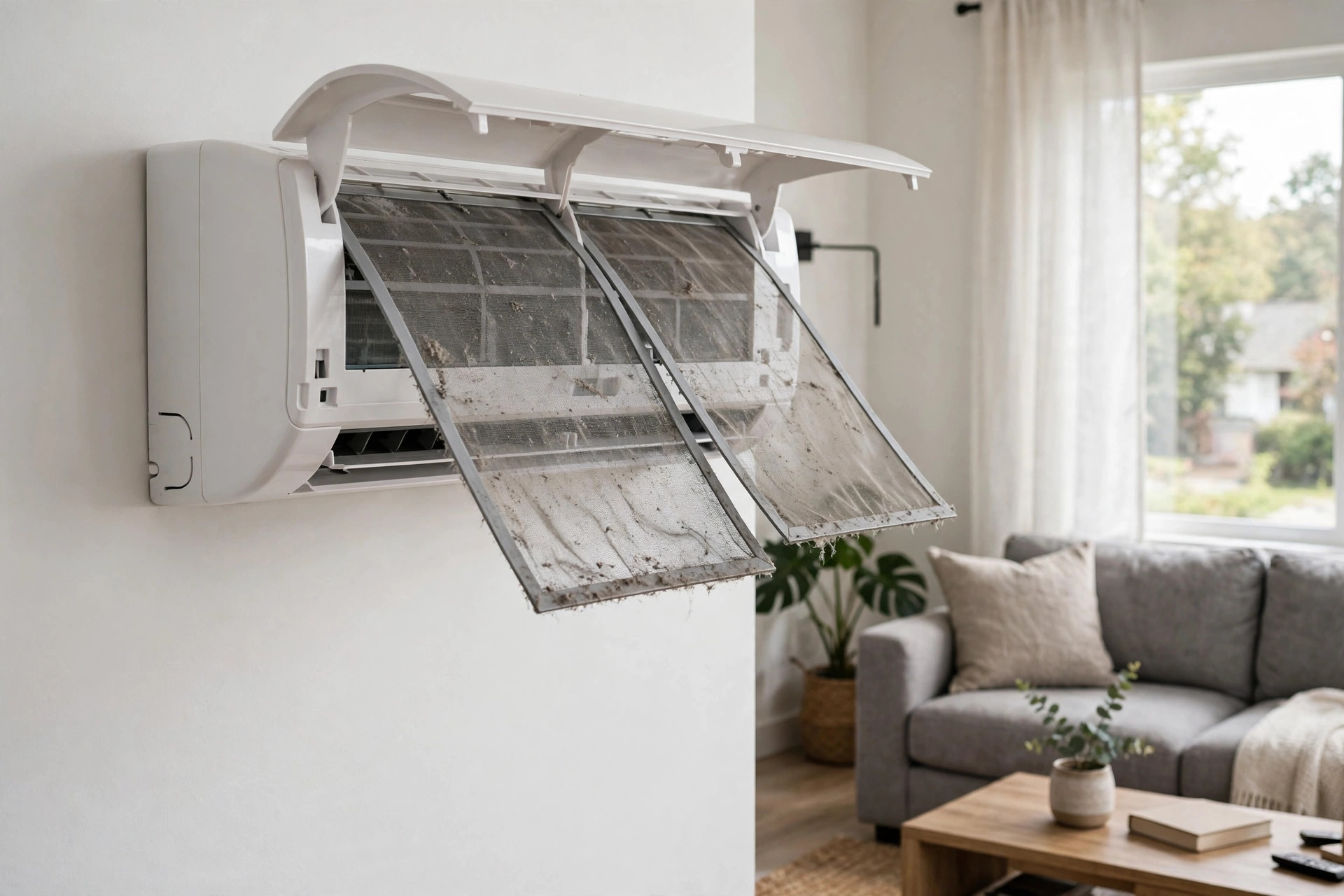

Mini split systems now heat and cool millions of American homes. They are small. They are quiet. They use little power. But they all share one weak point: dirty filters. This how to clean mini split filters usa guide walks you through the whole job in plain terms. You do not need special training. You do not need special tools. You only need a little time and a gentle hand.
Dust collects on the filter mesh every day the unit runs. In a busy home, with pets or children, the buildup comes fast. When the mesh clogs, air flow drops. The room takes longer to cool. The unit works harder and uses more power. Some owners call a service firm for this. They do not have to. Cleaning a mini split filter is one of the easiest home tasks you can do yourself.
Why Clean Filters Matter
A clean filter keeps the air path open. Warm air moves across the coil freely. Cold air leaves the unit without strain. When the path is clear, the compressor cycles less. That means lower bills and less wear on parts.
Health is a second reason. The filter traps dust, hair, and fibers. When it is full, some of that load passes through. It settles on the coil and the blower wheel. A damp coil grows mold. Then the unit blows musty air into the room. Regular washing breaks this chain early.
Many American homes run mini splits as the main system. Bedrooms, sunrooms, and finished basements often rely on one unit alone. One clogged filter can make a whole room feel stuffy. Cleaning takes ten minutes. It restores comfort the same day.
What to Look for Before You Start: How to Clean Mini Split Filters Usa Guide
Every brand uses a slightly different panel. The idea is the same. Look at the indoor wall unit. Find the seam along the top edge. Most panels lift up and hold in place. Some have small clips at the sides. Do not force anything. If it does not lift, check the manual for your model.
Inside, you will see two thin mesh screens sitting in front of the coil fins. They slide up and out. Some units also hold a small deodorizing or ion filter behind the mesh. That small filter is not washable in most cases. Note where it sat so you can put it back the same way.
Check the condition of the mesh. Light gray dust is normal. Thick mats, pet hair balls, or sticky grease tell you the filter is long overdue. A filter with tears or a broken frame should be replaced rather than washed. A bent frame leaves gaps where air slips around the mesh.
Types of Mini Split Filters
Standard Mesh Filters
Nearly every ductless indoor unit ships with these. They are simple nylon or plastic screens. Their job is to catch large particles before they reach the coil. They wash well with plain water. They last for years when handled with care. This how to clean mini split filters usa guide covers these filters first, since every unit has them.
Deodorizing and Ion Filters
Many units add a second stage. It may be a charcoal pad, a silver ion strip, or a small pleated card. These fight odors and germs. Most makers say to replace them every six to twelve months. Washing can ruin the coating. Check your manual. If the manual says replace, do not wash it.
Allergy and HEPA-Style Add-Ons
Some owners add third-party filter cards for dust mites and pollen. These are paper or fiber cards that fit behind the mesh. They are not washable. When they look dark or the airflow seems low, swap in a new one. They cost little and help homes with allergy needs.
Step-by-Step Cleaning
Gather your items first. You need a soft cloth, a mild dish soap, a sink or large basin, and a dry towel. You may also want a vacuum with a brush head. No harsh chemicals. No bleach. Strong cleaners can damage the mesh and leave fumes that blow into the room.
1. Turn the unit off at the remote. Then switch off the breaker that feeds the indoor unit. This keeps the fan still and the power safe while you work. 2. Lift the front panel slowly. Most panels hinge at the top and stay open on their own. Wipe the inside of the panel with a damp cloth. 3. Slide the mesh filters up and out of their slots. Handle them by the edges. Note which side faced out. 4. Vacuum both sides with a soft brush head. Move gently. This lifts loose dust without pushing it deeper into the mesh. 5. Fill a basin with lukewarm water. Add one drop of mild dish soap. Never use hot water. Heat can warp the frame. 6. Soak each filter for five minutes. Swish lightly. Rub stuck spots with your fingers or a soft brush. Do not scrub hard enough to stretch the mesh. 7. Rinse under gentle running water. Rinse from the clean side so dirt washes out the way it came in. Keep rinsing until the water runs clear. 8. Shake off extra water. Lay the filters flat on a dry towel in the shade. Let them dry fully. This may take two to four hours. Never put a damp filter back in the unit. 9. While the filters dry, look at the coil fins behind them. If they look dusty, brush them lightly with a soft brush in the direction of the fins. Do not bend them. 10. Slide the dry filters back into their slots. Close the panel until it clicks. Restore power and test the unit.
The whole task takes about fifteen minutes of work plus drying time. Do it in the morning so the filters are dry by afternoon.
How Often Should You Clean Them
Most makers suggest every two to four weeks during heavy use. A home with pets, smokers, or a dusty lot may need weekly checks. A lightly used guest room may go six weeks. Mark a day on your calendar. The habit matters more than the exact date.
Watch for signs between cleanings. Weak airflow from the vents is the first sign. A musty smell when the unit starts is the second. A thin layer of dust on the panel is the third. If any of these appear, clean the filters that week.
Cost and Price
Cleaning costs almost nothing. You use soap, water, and a towel you already own. A replacement mesh filter runs about fifteen to forty dollars if you tear one. Small deodorizing pads cost about ten to twenty dollars per set.
A service visit to clean filters costs far more. Many firms charge a hundred dollars or more just to come to the door. Learning this job saves real money over the years. One clean per month means twelve service visits you never need to pay for.
New systems make filter care simple. If you are still shopping, guides to the best mini split for sunroom reviews usa can help you pick a unit with easy-access panels. If you are weighing whole-home options, reading about heat pump installation cost near me 2026 shows how ductless compares to other systems.
Care and Upkeep Through the Year
Spring is a good time for a deep check. Pollen season fills filters fast. Clean them at the start of the season and again midway. Summer brings heavy cooling loads. Check monthly. A clean filter helps the unit handle long hot runs without strain.
Fall dust gathers as windows open less and furnaces stir old dust. Give the filters a wash before the heating season. Winter use is lighter in many homes, but a check every six weeks keeps the air fresh.
Keep the area near the unit clear. Do not hang clothes or curtains in front of the wall unit. Leave at least a foot of open space below it. Good air flow into the unit means the filters load more slowly.
Pets make the job more frequent. Hair from dogs and cats reaches the filter fast. A quick weekly look with a flashlight tells you when the mesh is loading up. A soft vacuum pass between full washes can stretch the time between deep cleanings.
Homes with basements face extra moisture. A damp basement grows mold faster, and that mold can drift through the whole house. For help with damp rooms, see these basement humidity control tips for usa homes.
Safety
Always cut power before you open the unit. The remote alone is not enough. The fan can still start. Use the breaker. Keep water away from the electrical parts of the unit. Wash filters at the sink, never inside the unit.
Use only mild soap. Harsh cleaners can harm the mesh. They can also leave fumes. The unit will blow those fumes into your room on the next run. If a filter will not come clean with gentle soap, replace it instead of reaching for stronger chemicals.
Do not run the unit with filters removed. The coil will collect dust directly. That leads to a costly deep cleaning later. If a filter is torn, keep the unit off until the new one arrives.
Watch the coil fins. They are thin and sharp. A light touch with a soft brush is fine. Do not press hard. Bent fins block airflow just like a dirty filter does.
FAQ
How long does it take to clean mini split filters?
About ten to fifteen minutes of hands-on work. Drying adds two to four hours. Plan the task for a morning so the filters are ready by the afternoon.
Can I use a dishwasher to clean the filters?
No. Dishwasher heat and strong soap can warp the frames and break the mesh. Wash by hand in lukewarm water with one drop of mild dish soap.
Do I need to clean the outdoor unit too?
The outdoor unit has no user filter. You can clear leaves and debris from around it and rinse the coil with a garden hose on low pressure. For full service of the outdoor unit, call a licensed firm once a year.
What if my filter will not come clean?
Replace it. A filter that stays gray or sticky after washing has reached its limit. New mesh filters cost fifteen to forty dollars. Running a worn filter lets dust reach the coil.
Will cleaning the filters lower my power bill?
Yes, in most cases. A clogged filter forces the fan and compressor to work harder. Clean filters restore normal airflow. Many owners notice shorter cooling cycles right after a cleaning.
Is it safe to clean filters myself?
Yes. It is one of the safest home tasks. Turn off the breaker, handle the filters gently, and keep water off the electrical parts. If you are unsure about any step, ask a licensed technician.
A Short Final Word
Filter cleaning is small work with a large return. Cleaner air. Lower bills. A longer life for your system. Ten minutes a month is all it asks. Keep this how to clean mini split filters usa guide handy, set a repeat reminder, and your mini split will serve you well for many years.
For more background, see Goodman, Rheem, and ENERGY STAR. For more background, see This Old House, Family Handyman, and Carrier. Buying guides are also published by Trane and U.S. Department of Energy.
References
Carrier. (n.d.). Heating and cooling systems. https://www.carrier.com ENERGY STAR. (n.d.). Energy efficient products. https://www.energystar.gov Family Handyman. (n.d.). DIY home repair and maintenance. https://www.familyhandyman.com Goodman. (n.d.). Heating and cooling equipment. https://www.goodmanmfg.com Rheem. (n.d.). Heating, cooling, and water heating. https://www.rheem.com This Old House. (n.d.). Home renovation guidance. https://www.thisoldhouse.com Trane. (n.d.). Heating and air conditioning. https://www.trane.com U.S. Department of Energy. (n.d.). Energy efficiency and renewable energy. https://www.energy.gov
Was this guide helpful?

About Michael Thompson
The My Garden US editorial team writes practical, in-depth home and garden guides for American homeowners — tested advice, no fluff.
You May Also Like
Best Central Air Conditioner Brands 2026 USA
August 9, 2026 0 views
Ceiling Cassette Mini Split Pros and Cons: A Plain Guide for American Homes
May 25, 2026 0 views
Swamp Cooler vs AC for Dry Climates USA: Which Cools Your Home Best?
March 16, 2026 0 views