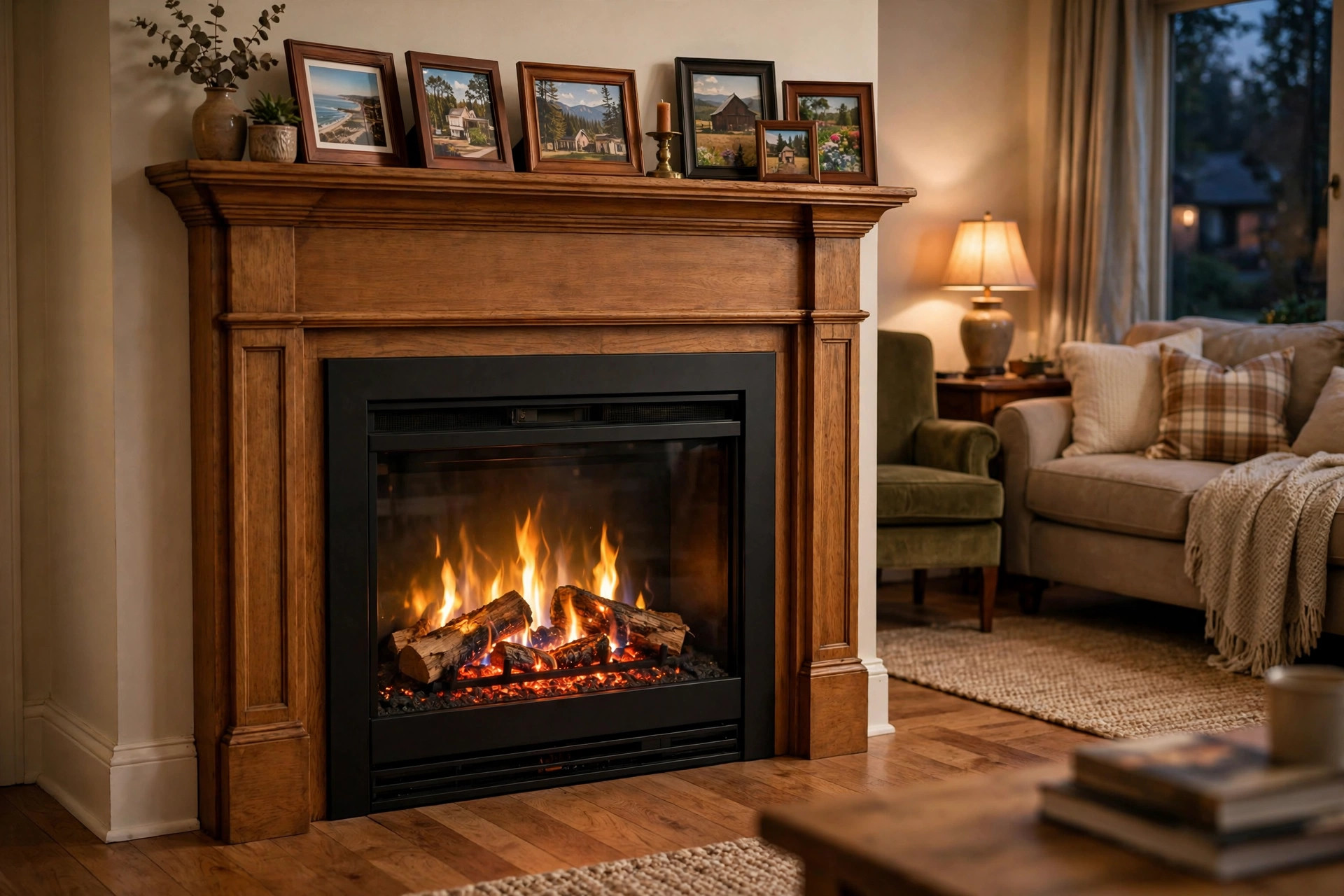

When winter comes, many American homes turn to an old fireplace that has sat cold for years. If you have searched for electric fireplace insert reviews 2026 usa, you are likely weighing whether to revive that old opening. An electric insert slides into an existing fireplace box. It gives heat and the look of fire. It needs no chimney, no wood, and no gas line. This guide walks through what matters in 2026 models, how to pick one, what they cost, and how to keep them safe.
Why It Matters
A cold fireplace is wasted space in a home. Many houses built in the last fifty years have a masonry or factory-built fireplace that owners no longer use. Wood is messy. Gas needs a line and a vent. An electric fireplace insert offers a middle path. It plugs in or wires to a standard outlet. It heats a room with a fan-forced heater. The flame is a light effect, so there is no real combustion and no smoke.
For the 2026 season, makers have improved flame realism with better LED effects and deeper ember beds. Many units now come with a remote control, a timer, and several heat settings. Some run the flame with no heat at all, which is pleasant on a cool summer evening when you want the look but not the warmth. Reading current reviews helps because small details matter: how loud the fan is, how the flame looks in daylight, and whether the unit fits your firebox.
What to Look For When You Choose: Electric Fireplace Insert Reviews 2026 Usa
Start with the size of your firebox. Measure the width, height, and depth of the opening. Also note any taper at the back. An insert should slide in with a small margin around it. Most makers list the unit size and the opening size it fits. A poor fit will look wrong and may block airflow.
Next, check the heat output. Electric inserts are rated in watts and in the square footage they can warm. A common 1,500-watt unit puts out about 5,100 BTU. That suits a room of 300 to 400 square feet. Larger rooms need more power or a second heat source. Pay attention to independent product tests when comparing claimed room sizes, since makers tend to state the best case.
Flame quality is where 2026 reviews spend most of their words. Look for multi-color flames, adjustable brightness, and a deep ember bed. LED lights last for years and use little power. Some inserts add crackling sound effects, which some owners love and others switch off. If noise matters to you, check reviews for fan noise at each heat setting.
Pay attention to how the unit looks in daylight as well as at night. Cheap flame effects can look flat when the room is bright. Better models use layered light and mirrored panels to give depth. Reviewers often post photos of the flame in a lit room, and these photos are more honest than the maker’s studio shots. If the store has a display model, ask to see it with the room lights on.
Warranty terms deserve a close read. Most makers give one year of coverage. A few extend to two years if you register the product. Read what the warranty covers: it usually covers parts and the heater, but the LED flame module may have its own terms. Keep your receipt. If you buy from a large retailer, check their return window too, since an insert that looks wrong in your firebox is easy to return within the first month.
Controls should be simple. A remote is standard now. Many units also have touch controls on the front and a child lock. A timer that shuts the unit off is useful if you fall asleep by the fire. Some newer models pair with a phone app, though reviewers note that apps vary in quality.
Types of Electric Fireplace Inserts
Log set inserts are the simplest type. They are a bed of artificial logs with LED flames. They sit inside your existing fireplace and need no vent kit. They give the least heat of all the types, so they suit owners who want the look more than the warmth.
Firebox inserts are full boxes that slide into the opening. They have their own firebox with a glass front, an ember bed, and a heater. Most reviews in 2026 cover this type. They give the most heat and the most finished look. Some come with a surround or trim kit to cover gaps in the opening.
Ventless and plug-in models differ in wiring. A plug-in insert runs on a standard 120-volt outlet. That is fine for units up to 1,500 watts. Larger units may need a 240-volt line, which means an electrician. Check your panel capacity before you buy a high-output model. The U.S. Department of Energy offers plain guidance on home heating loads and wiring.
Wall-mount and recessed inserts are a separate style. They do not need an old fireplace at all. They hang on a wall or sit in a cutout. They are popular in apartments and in rooms that never had a chimney. This guide focuses on inserts for existing openings, but the same flame and heat points apply.
Cost and Price
Prices in 2026 span a wide range. Basic log sets start near 100 dollars. Mid-range firebox inserts cost 200 to 500 dollars. Premium models with the best flame effects and larger heat output can run 600 to 1,200 dollars or more. Installation is usually a do-it-yourself job for plug-in units, which keeps costs down.
Running cost is simple to estimate. A 1,500-watt heater uses 1.5 kilowatt-hours per hour at full power. At the national average electric rate, that is about 20 to 25 cents per hour. The flame effect alone uses almost no power, often less than 10 watts. Using the flame without heat through the year costs pennies. For shoppers who want to cut heating bills, ENERGY STAR guidance on efficient home heating is a useful reference.
Compare these costs with other room heaters. A basic space heater costs less up front but offers no fireplace look. Gas inserts cost far more to buy and install. For many owners, the electric insert is the cheapest way to make an old fireplace useful again. If you are also weighing room heaters, our roundup of the most energy efficient space heater models for 2026 may help.
Care and Upkeep
Upkeep is light, which is one reason these units review well. Dust the glass front with a soft cloth. Vacuum the ember bed and logs once or twice a year. Keep the air intake and outlet clear of dust and pet hair. A blocked vent can trip the overheat shutoff.
LED bulbs in modern inserts last tens of thousands of hours. You should not need to replace them for many years. If the flame dims or flickers oddly, check the manual for a reset step before calling for service. Most makers offer a one-year warranty, and some extend it to two years with registration.
Seasonal care is simple. Before the heating season, plug the unit in and test every setting. Listen for new rattles from the fan. Check that the remote still works and that the timer shuts the unit off. When winter ends, unplug the unit or switch it off at the outlet. Cover the firebox opening if your old chimney draws cold air down. Practical DIY upkeep advice is easy to find from trusted home sources like Family Handyman and This Old House.
Safety
Electric inserts are among the safest fireplace options, but care is still needed. Keep fabric, paper, and furniture at least three feet from the front. Do not drape blankets or clothes over the unit. Make sure the cord does not run under a rug where it can overheat.
Use a dedicated outlet when you can. A 1,500-watt heater draws 12.5 amps, which is most of a 15-amp circuit. Running it on the same circuit as other heavy loads can trip the breaker. Do not use a light extension cord. If you need more reach, use a heavy-duty cord rated for the load, and only for a short time.
Look for units with an overheat shutoff and a cool-touch glass front. These are now common in 2026 models. Homes with small children or pets should use the child lock on the controls. If your unit smells of burning dust when first used in the fall, that is normal and should pass in minutes. A smell that persists means you should unplug it and check the manual. For broader heating safety standards, major makers such as Carrier, Rheem, and Lennox publish clear safety guidance for home heating equipment.
Frequently Asked Questions
Do electric fireplace inserts really heat a room? Yes. A standard 1,500-watt insert adds real warmth to a room of 300 to 400 square feet. It will not heat a whole house. Think of it as zone heating: warm the room you sit in and turn the main thermostat down a few degrees.
Can I install one myself? Most plug-in inserts are a do-it-yourself job. You slide the unit into the opening, plug it in, and fit the trim. No venting is needed. Units that need 240-volt wiring should be wired by a licensed electrician.
What does an electric insert cost to run each month? At full heat, about 20 to 25 cents per hour. Two hours a day for a month is roughly 12 to 15 dollars. The flame-only mode costs almost nothing to run.
Will it fit my old fireplace? Measure your opening first. Most inserts fit standard 24, 28, and 30-inch openings. Trim kits cover small gaps. Very shallow or odd-shaped fireboxes may need a custom fit, so check the maker’s sizing chart before ordering.
Are they safe around children and pets? They are safer than wood or gas because there is no real flame and no hot vent. The glass front stays much cooler. Still, the heater outlet gets hot, so keep children and pets back and use the child lock.
Can I use the flame without the heat? Yes. Nearly every 2026 insert lets you run the flame effect alone. The heater and the lights are separate. This is useful in spring and fall when you want the mood but not the warmth. It also lets you enjoy the fireplace look all year.
Do electric inserts add value to a home? A working fireplace often helps a home show better to buyers. An insert is a small investment compared with a gas conversion. Whether it raises the sale price is hard to say, but a clean, working fireplace is better than a dark hole in the wall.
Do I need to clean the chimney? No. The insert needs no chimney. If you seal the old flue, cold drafts stop. Many owners close the damper and add insulation above the insert. Have an old unused chimney checked for leaks or animals, but no sweeping is needed. No. The insert needs no chimney. If you seal the old flue, cold drafts stop. Many owners close the damper and add insulation above the insert. Have an old unused chimney checked for leaks or animals, but no sweeping is needed.
A Short Final Word
Electric fireplace insert reviews for 2026 usa point to the same conclusion: this is a simple, low-cost way to bring a dead fireplace back to life. Measure your opening, pick a heat size that matches your room, and read reviews with an eye on flame quality and fan noise. A mid-range firebox insert will serve most living rooms well for years. If you are still deciding between insert styles, specialty makers such as Napoleon and Heatilator offer deep product lines worth comparing, and our guides to the best electric wall heaters of 2026 and best outdoor fireplace kits cover nearby options for other parts of the home.
References
Carrier. (n.d.). Heating and cooling systems. https://www.carrier.com Consumer Reports. (n.d.). Product reviews and ratings. https://www.consumerreports.org ENERGY STAR. (n.d.). Energy efficient products. https://www.energystar.gov Family Handyman. (n.d.). DIY home repair and maintenance. https://www.familyhandyman.com Heatilator. (n.d.). Fireplaces and fireplace products. https://www.heatilator.com Lennox. (n.d.). Heating and cooling systems. https://www.lennox.com Napoleon. (n.d.). Fireplaces, grills, and heating products. https://www.napoleon.com Rheem. (n.d.). Heating, cooling, and water heating. https://www.rheem.com This Old House. (n.d.). Home renovation guidance. https://www.thisoldhouse.com U.S. Department of Energy. (n.d.). Energy efficiency and renewable energy. https://www.energy.gov
Was this guide helpful?

About David Wilson
The My Garden US editorial team writes practical, in-depth home and garden guides for American homeowners — tested advice, no fluff.
You May Also Like

Linear Electric Fireplace Reviews for Living Room: What Buyers Should Know
March 2, 2026 0 views
Two Stage vs Single Stage AC Comparison USA
May 19, 2026 0 views
Ceiling Fan with Light and Remote Reviews USA: A Plain Guide to Choosing the Right One
September 6, 2026 0 views