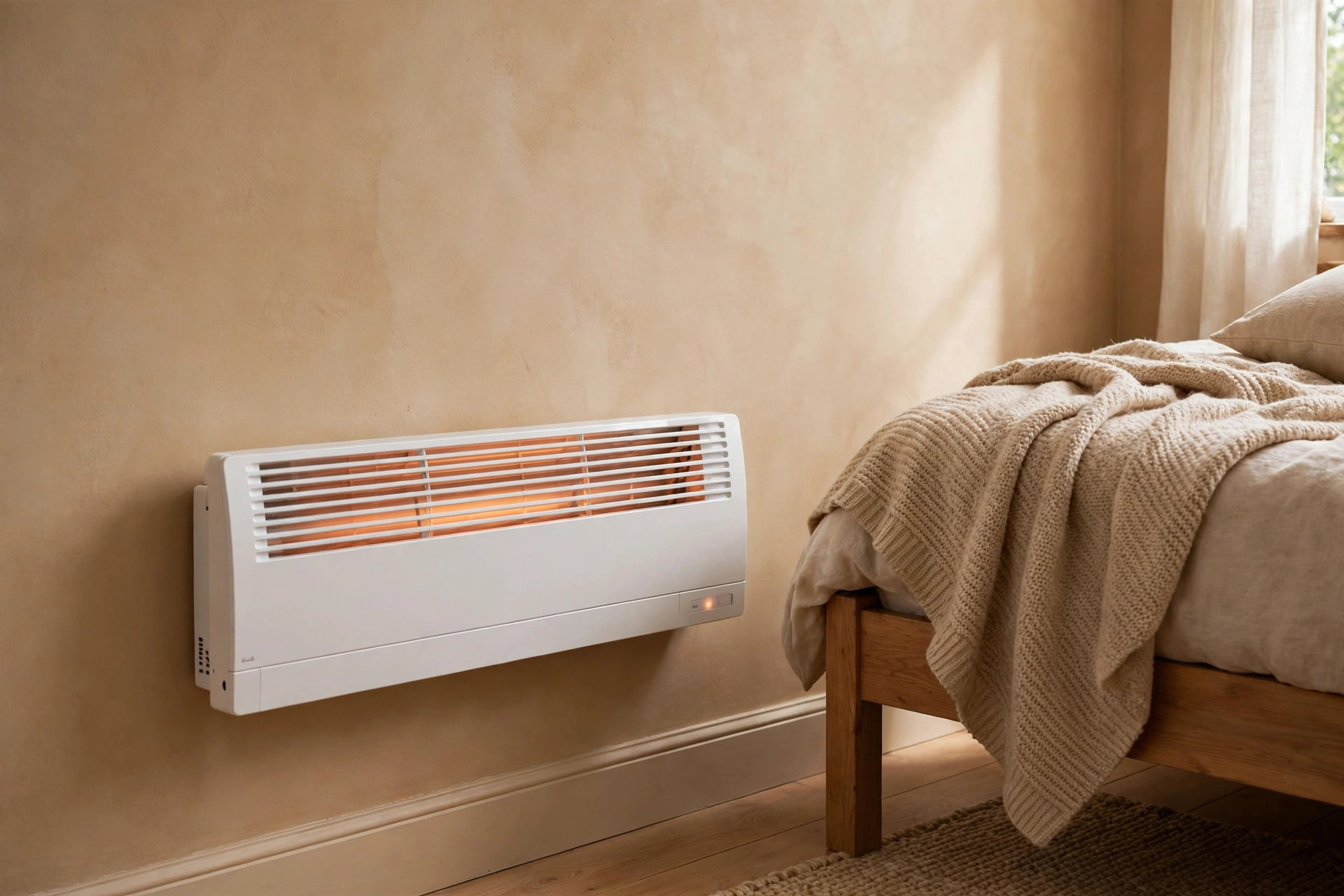

A cold room can make a whole house feel wrong. The furnace runs, the bills climb, and one corner still stays cold. For many homes in the United States, the answer is a wall heater. The best electric wall heater reviews 2026 usa cover many models, but they all point to one idea. A good wall heater warms the room you are in, and it lets the rest of the house rest.
This guide walks you through the whole picture. You will learn how wall heaters work, what kinds are sold, and what to look for when you read reviews. You will also see cost ranges, safety rules, and simple care steps. By the end, you will be able to read the best electric wall heater reviews 2026 usa with a clear eye, and pick a unit that fits your room.
Why an Electric Wall Heater Matters
Wall heaters give heat where it is needed. They mount on the wall, so they take no floor space. That is a real plus in small rooms, halls, and baths. Many are hardwired into the wall, so there are no cords to trip on.
They also save money in a smart way. Most homes are heated by one big system. That system heats every room to the same level, even rooms no one uses. A wall heater lets you turn down the main heat and warm only the rooms you sit in. This is called zone heating. Families often cut winter bills this way.
Wall heaters also warm fast. A forced air unit can make a cold bath feel warm in minutes. That speed matters on winter mornings. It matters in a home office that is cold at 7 a.m. but warm by noon.
Finally, wall heaters are simple. There is no fuel to buy, no flue to clean, and no pilot to light. Plug or wire it in, set the dial, and it works.
How Electric Wall Heaters Work: Best Electric Wall Heater Reviews 2026 Usa
Every electric wall heater does one thing. It turns electric power into heat. It does this through a metal coil that glows hot when power flows through it. Air moves past the coil, picks up heat, and flows out into the room.
There are three main ways the warm air moves. Convection units let cool air rise through the bottom, pass the coil, and flow out the top. Forced air units add a fan to push the warm air out. That spreads heat faster and farther. Radiant and infrared units send heat straight to people and walls. You feel warm at once, even if the air is still cool.
Most units have a built-in thermostat. It turns the heat on and off to hold the room near the set point. Better units have a digital thermostat, which holds the room closer to the target. Cheap units use a simple dial. They work, but the room temperature swings more.
Hardwired models run on 120 volts or 240 volts. A 240-volt unit gives more heat for the same wire size, so it is common for larger rooms. Most hardwired units need a dedicated circuit. That means one breaker serves the heater alone. A licensed electrician should do this work.
What to Look for in Reviews
The best electric wall heater reviews 2026 usa share a pattern. They look past the ads and test the same things. Keep these points in mind when you read them.
First, check the size match. Reviews should say how large a room the unit warms. A unit made for a small bath will fail in a big living room. Good reviews state the room size in square feet and note the ceiling height.
Second, look at noise. Fan-forced units make sound. Some hum low, and some buzz loud. Reviews that test noise with a meter are worth more. This matters in bedrooms and offices.
Third, note the thermostat quality. Does the unit hold the set temperature, or does the room swing five degrees? Good reviews test this over hours, not minutes.
Fourth, read the safety section. Does the unit have overheat shutoff? Does the front stay cool enough to touch? For homes with kids or pets, this is key.
Fifth, check the warranty. One year is common. Some brands give more. A longer warranty often shows that the maker trusts the unit.
You can find solid test data from independent labs such as the team at Consumer Reports, which buys its own units and tests them in set ways.
Types of Electric Wall Heaters
Fan-Forced Wall Heaters
These are the most common type. A fan blows air over a hot coil. They heat fast and cost less than most other kinds. They are a good pick for baths, entries, and small offices. The weak point is noise. The fan can be heard in quiet rooms.
Convection Wall Heaters
These have no fan. Air flows through them by itself as it warms. They run silent, which makes them good for bedrooms. They heat more slowly than fan models. They are also less good at spreading heat to the far corners of a big room.
Infrared and Radiant Wall Heaters
These send heat straight to you. You feel warm at once, like standing in sun. They are good for garages, patios that are closed in, and rooms with high ceilings. They do not warm the air as well as convection or fan types. If you move away, the warm feeling fades fast. Some shoppers read infrared wall heater reviews for bedrooms to compare this type with fan models.
Recessed Versus Surface Mount
Recessed units sit inside the wall. The front is nearly flush with the wall face. They look neat and keep the room clear. They need an open wall bay and some care to install. Surface mount units hang on the wall face. They are easy to install, but they stick out a few inches.
Smart and Programmable Models
Some newer units link to a phone app or a smart home system. You can set heat times and check the room from work. This is handy for a cabin or a rental. Read the app reviews with care. A fine heater with a poor app is still a poor buy.
Sizing: Picking the Right Wattage
The right size is the heart of a good buy. The old rule still holds. Allow about 10 watts of heat for each square foot of room. A 100-square-foot room needs about 1,000 watts. A 200-square-foot room needs about 2,000 watts.
This rule has limits. Rooms with high ceilings, big windows, or poor insulation need more. A cold corner over a garage needs more. A small bath with tile floors needs more. If the room has two outside walls, add extra.
Also, know your voltage. A 240-volt unit of 2,000 watts needs less than 9 amps. The same watts at 120 volts need over 16 amps. That changes the wire and breaker size. Plan this before you buy. If you need help with the math, the guides at This Old House walk through basic home wiring sizes in plain terms.
An undersized unit will run all day and never feel warm. An oversized unit will click on and off too much. Both waste power. Measure the room, count the windows, and then pick.
Cost and Price
Wall heaters are cheap to buy. A basic fan-forced unit for a small bath can cost $60 to $120. A good midrange unit for a bedroom often costs $150 to $300. A large 240-volt unit with a smart thermostat can cost $300 to $600 or more.
Install costs add more. A plug-in unit costs nothing to install. A hardwired unit may need an electrician. Adding a new 240-volt circuit can cost $200 to $500, based on the distance from the panel and local rates. Recessed units add some carpentry cost.
Running costs are set by your power price. Most homes in the United States pay 12 to 25 cents per kilowatt hour. A 1,500-watt unit running full out for one hour uses 1.5 kilowatt hours. At 18 cents, that is 27 cents an hour. Real cost is lower, since the thermostat cycles the unit off.
Check the energy label before you buy. The rating lists at Energy Star can help you compare units on an even basis. Also, note that no electric heater is more than 100 percent efficient. Every watt becomes heat. The real savings come from heating less space, not from a magic coil.
Installation and Placement
Place the heater on an inside wall when you can. Heat lost through an outside wall is lost money. Keep the heater away from doors that open often. Cold air blasts make the unit work hard.
Mounting height matters. Most wall heaters go low, near the floor. Heat rises, so a low unit warms the room well. Follow the maker rules for clear space. Keep curtains, beds, and chairs at least three feet from the front. Keep the sides clear as well.
Never plug a hardwired unit into an extension cord. If the unit has a plug, use the wall outlet alone. Do not share the outlet with other big loads.
If you are not sure about the wiring, call a licensed electrician. A 240-volt circuit is not a first-time do-it-yourself job. Local codes may also call for a permit. The cost of a pro is small next to the cost of a fire.
Care and Upkeep
Wall heaters need little care, but they do need some. Dust builds up on the coil and the fan. Once a year, turn off the power at the breaker. Remove the front cover. Vacuum the inside with a soft brush. Wipe the cover and put it back.
Check the thermostat each fall. Set it high and make sure the unit comes on. Set it low and make sure it shuts off. A stuck thermostat wastes power and can be unsafe.
Listen for new sounds. A fan that rattles or grinds may have a loose part or a bad bearing. Clean it first. If the sound stays, call the maker or a tech.
Keep paint and cleaners away from the unit. Do not paint the coil or the inside. Paint on hot metal can give off fumes and can trap heat.
If you use a baseboard heater thermostat with your setup, check that its settings still match the room. A drift of a few degrees can raise bills for a whole winter.
Safety Rules for Every Home
Electric heat is safe when it is used right. Most trouble comes from a few common mistakes.
Keep three feet of clear space. This is the golden rule. Nothing that can burn should sit near the front of the unit. That means no chairs, no clothes piles, no boxes, no curtains.
Do not use a wall heater as a dryer. Draping clothes over the front can trap heat and start a fire. This is true even for a short time.
Make sure the unit has safety shutoffs. Look for overheat protection and, on portable units, a tip-over switch. Wall units do not tip over, but overheat shutoff is a must.
Watch for recalls. The team at Family Handyman and federal lists track product recalls. If your model is recalled, stop using it and follow the recall steps. You can also check the federal safety commission for notices, though for heating-specific advice the Energy Department publishes useful space heating safety guides.
Use a smoke alarm in the room. Test it each month. Change the battery each year, or use a sealed ten-year unit.
Teach kids the rule. Hot means do not touch. Pick a unit with a cool-touch front for family rooms.
How Reviews Test and Rank Heaters
It helps to know how test labs work. A good lab tests every unit the same way. They put the unit in a cold room of known size. They time how long it takes to raise the room by ten degrees. They measure noise at three feet. They track how close the room stays to the set point over hours.
They also test safety. They block the airflow and watch for shutoff. They measure the front temperature after an hour of run time. Units that fail these tests are dropped from the list, no matter how cheap they are.
Owner reviews add another layer. They tell you how the unit holds up after a year. Watch for the same complaints. If many owners say the fan died in six months, believe them. If many say the thermostat is off by five degrees, believe that too.
Be careful with paid review sites. Some pages rank units by the fee they earn, not by the test results. Cross-check with an independent lab and with owner reviews before you buy.
Picking the Best Unit for Each Room
Bathrooms
Baths need fast heat and a small size. A fan-forced unit works well. Pick a model made for damp rooms. Keep it away from the tub and shower. A timer is a plus. Set it to warm the bath before you wake.
Bedrooms
Bedrooms need quiet. A convection unit runs silent. If you pick a fan model, check the noise rating with care. A digital thermostat holds the room steady through the night. For bigger rooms, compare with space heater reviews for large rooms to see if a wall unit or a floor unit fits best.
Home Offices
Offices need quick warmth in the morning. A fan-forced unit warms fast. If you take calls, pick a quiet model. A smart unit can warm the office before you sit down.
Garages and Workshops
These rooms lose heat fast. An infrared unit warms you at the workbench even when the air is cold. Make sure the unit is rated for the space. Keep it clear of paint, fuel, and sawdust.
Hallways and Entries
Halls get cold air from doors. A small convection unit keeps the chill off. It also keeps pipes in the walls a bit warmer on hard nights.
Common Mistakes to Avoid
Many buyers make the same errors. First, they buy too small. A tiny unit in a big room runs all day and fails. Measure first.
Second, they ignore the circuit. A 240-volt unit needs the right wire and breaker. Plan the power before the purchase, not after.
Third, they chase the lowest price. A cheap unit with a poor thermostat can cost more in power over one winter than a good unit costs to buy.
Fourth, they block the airflow. They put a chair or a box in front of the unit. Then they wonder why the room stays cold. Keep the front clear.
Fifth, they skip the yearly cleaning. Dust on the coil cuts heat flow and can make a burnt smell. A ten-minute vacuum each fall fixes this.
Sixth, they forget the room. A wall heater cannot fix bad insulation. If the windows leak cold air, seal them first. A $20 draft seal can beat a $200 heater in some rooms.
What the Top Brands Offer
Several makers serve the United States market. Big names in home heating such as Lennox and Carrier set the bar for full home systems, and their sizing guides are useful even when you buy a wall unit from another maker. Trane and Rheem also publish clear guidance on matching heat to room size. Goodman is known for value lines that keep prices down.
For wall heater units themselves, look for clear spec sheets. The best makers state the wattage, voltage, room size range, noise level, and safety listings. Look for a UL or ETL mark. This shows the unit passed set safety tests.
Read the warranty with care. A five-year warranty on the element is a good sign. A one-year warranty on the whole unit is the norm. Keep the receipt and the model number in a safe place.
Frequently Asked Questions
Are electric wall heaters expensive to run?
They cost about the same as any electric heat per watt. The real question is how much you run them. A 1,500-watt unit costs roughly 20 to 40 cents per hour at full power, based on local rates. The thermostat cycles it off, so real cost is less. Zone heating can cut the total bill.
Can I install an electric wall heater myself?
A plug-in unit, yes. A hardwired unit needs care. If you are adding a new 240-volt circuit, use a licensed electrician. Mistakes with 240 volts can start fires. Always turn off the breaker before you work.
Do wall heaters need venting?
No. Electric heaters make no fumes and need no vent. This is one of their big plus points over gas units. You do not need a chimney or a flue.
Are they safe in a bathroom?
Yes, if the unit is rated for bath use and is placed by the rules. Keep it away from water sources. Do not touch the controls with wet hands. A ground fault circuit is a smart add in a bath.
How long do electric wall heaters last?
Most last 10 to 15 years with basic care. The heating coil is the part that wears out. Fans wear out too. A yearly cleaning adds years to the unit.
Can a wall heater heat a whole house?
Not well. Wall heaters are made for single rooms or zones. A whole house needs a furnace, a heat pump, or many wall units. For open plans, a large room space heater guide can show what single units can and cannot do.
A Short Final Word
The best electric wall heater reviews 2026 usa do not point to one magic model. They point to a method. Measure the room. Pick the right size and voltage. Choose the type that fits the room. Keep three feet clear. Clean it each fall. Do these things, and even a mid-price unit will serve you well for years. Heat the rooms you use, and let the rest of the house rest.
References
Carrier. (n.d.). Heating and cooling systems. https://www.carrier.com Consumer Reports. (n.d.). Product reviews and ratings. https://www.consumerreports.org ENERGY STAR. (n.d.). Energy efficient products. https://www.energystar.gov Family Handyman. (n.d.). DIY home repair and maintenance. https://www.familyhandyman.com Goodman. (n.d.). Heating and cooling equipment. https://www.goodmanmfg.com Lennox. (n.d.). Heating and cooling systems. https://www.lennox.com Rheem. (n.d.). Heating, cooling, and water heating. https://www.rheem.com This Old House. (n.d.). Home renovation guidance. https://www.thisoldhouse.com Trane. (n.d.). Heating and air conditioning. https://www.trane.com U.S. Consumer Product Safety Commission. (n.d.). Product safety information. https://www.cpsc.gov U.S. Department of Energy. (n.d.). Energy efficiency and renewable energy. https://www.energy.gov
Was this guide helpful?

About Sarah Mitchell
The My Garden US editorial team writes practical, in-depth home and garden guides for American homeowners — tested advice, no fluff.
You May Also Like
Ridge Vent vs Turbine Vent Comparison USA: Which Roof Vent Fits Your Home
August 21, 2026 0 views
Most Energy Efficient Space Heater 2026 USA: A Practical Buyer’s Guide
September 12, 2026 0 views
How Much Does an Outdoor Wood Boiler Cost Installed in the USA?
October 5, 2026 1 views