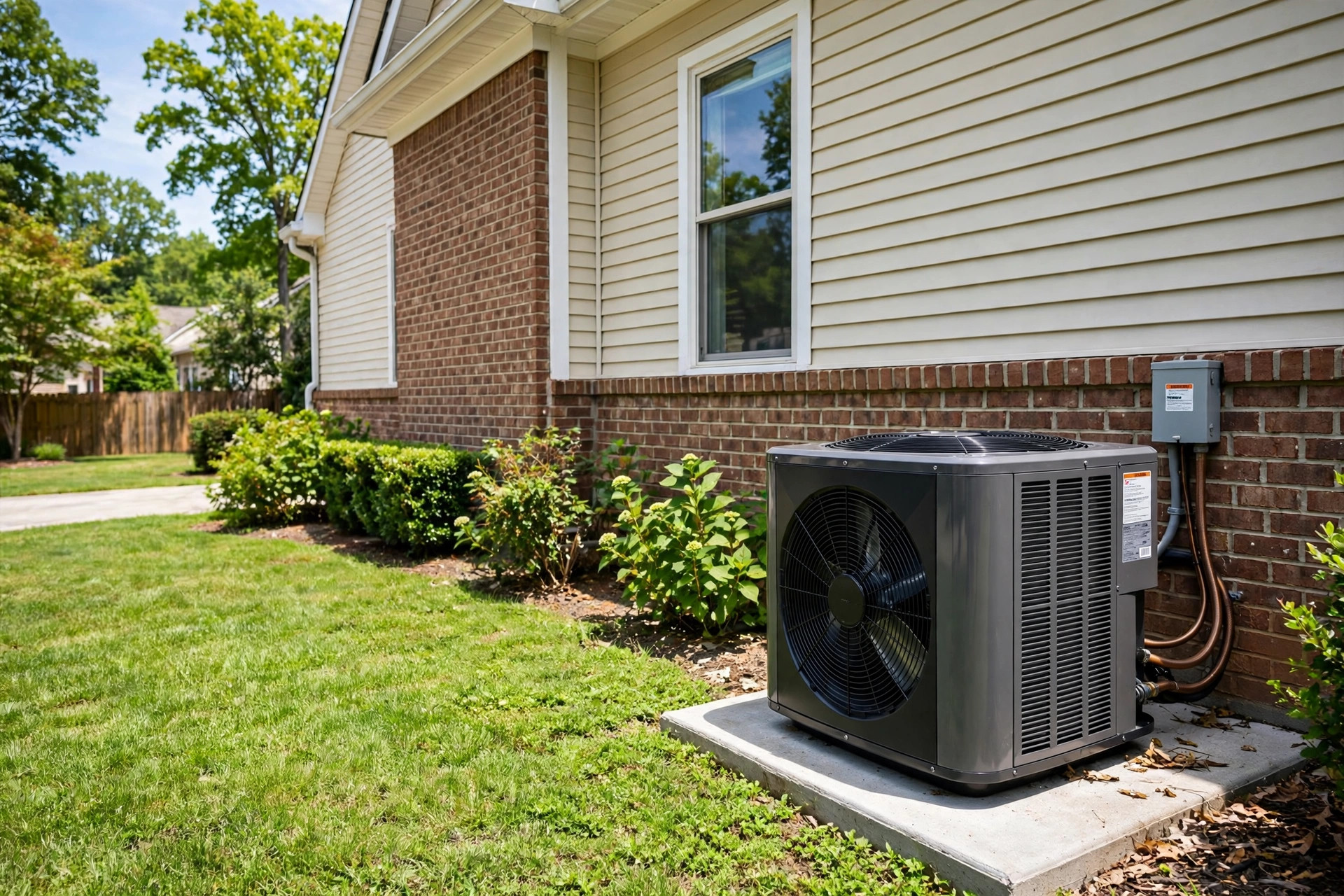

Every summer the same question returns to millions of American homes. The old cooling unit is weak. The power bill is high. The repair man says it is time for a new one. Then comes the hard part: which maker can be trusted? This guide to the best central air conditioner brands 2026 usa walks through the answer step by step. It covers the top names in the market, how to compare them, what they cost, and how to keep them running for years. The facts are plain. The tone is honest. There is no sales talk here, only the steady advice a good neighbor would give.
Why the Brand Name Matters
A central air conditioner is not a small purchase. It is one of the largest machines in a home, and it runs for a decade or more. The brand behind it decides three things. First, how well the unit is built. Second, how easy it is to find parts and service. Third, how strong the warranty will be when something breaks.
Some brands build units with thicker coils and better motors. Those units last longer and run quieter. Other brands sell at a lower price but use thinner parts. They cost less on day one and more by year eight. A reader at This Old House can find many homeowner stories that prove this point. The brand also shapes the dealer network. Big names train thousands of local contractors. That means a broken part can be replaced in days, not weeks. Smaller or off-brand units may need parts shipped from far away, and few local shops will service them.
What to Look for When You Compare Brands: Best Central Air Conditioner Brands 2026 Usa
Efficiency ratings
In the United States, every central air conditioner carries a SEER2 rating. SEER2 stands for Seasonal Energy Efficiency Ratio 2, the modern test that replaced the old SEER test. A higher number means lower power bills. Most good units today rate between 14.3 and 22 SEER2. The best brands publish clear ratings for every model, and ENERGY STAR lists the units that meet federal standards for high efficiency.
Noise level
Noise is measured in decibels. A loud condenser can reach 76 decibels, about the sound of a busy street. A quiet one can drop to 58 decibels, about the sound of a normal talk. The top brands now build sound blankets around the compressor and use slow-turning fan blades. If the unit will sit near a bedroom window or a patio, quiet matters a great deal.
Warranty terms
Most brands give a 10-year limited parts warranty when the unit is registered. That is the standard. A few go further on the compressor, the heart of the system. Registration is key. Without it, the warranty often drops to 5 years. Always ask the dealer to register the unit on the day of the job.
Dealer network and service
A great machine with no local service is a poor choice. Before buying, ask how many certified dealers the brand has in your county. The brand pages at Carrier and Trane both include dealer locators for this reason. A strong network also means the dealer can get factory parts fast.
Smart controls
Nearly every brand now works with a modern thermostat. Good controls let the unit run in small stages instead of full blast. That saves power and keeps rooms at an even temperature. Many homeowners pair a new system with a smart thermostat for heat pump reviews usa guide to learn how staging and setbacks work.
The Leading Brands for 2026
No single brand wins for every home. The best choice depends on the house, the climate, and the budget. Still, a short list of makers stands above the rest year after year. The U.S. Department of Energy sets the efficiency rules all of these brands must follow, so differences come down to build quality, quietness, price, and service.
Carrier
Carrier is one of the oldest names in American cooling. The company is known for quiet units and strong build quality. Its top lines use two-stage and variable-speed compressors that hold room temperature very steady. Prices sit in the upper middle range. The dealer network is large, and parts are easy to find.
Trane
Trane has a long name for tough equipment. Its condensers are built with heavy-gauge steel cabinets that stand up to hail and salt air. Many contractors rank Trane at the top for long life. Prices run high, but owners often report fewer repairs over fifteen years. The brand is a strong pick in hot states like Texas and Florida.
Lennox
Lennox makes some of the quietest units sold in America. Its flagship models run below 60 decibels. The brand also leads in very high efficiency, with units above 22 SEER2. The catch is price and parts. Lennox parts can cost more than average, and not every local shop services them. Homeowners near a certified dealer get the most value here. The official site at Lennox shows the full model range.
Rheem
Rheem gives a good mix of price and quality. It is not the cheapest brand and not the priciest. Owners praise its value and its solid 10-year warranties. The brand also offers a wide line of heat pumps, which matters for homes that want one system for both heating and cooling. More detail sits on the Rheem home page.
Goodman
Goodman is the value leader. It is built by the same parent company as Amana, and its parts are common and cheap. A Goodman unit can cost 20 to 30 percent less than a premium brand to install. The trade-off is noise and finish. Cabinets are thinner, and the units run louder. For a tight budget or a rental home, Goodman is a fair and honest pick. The Goodman site lists current model ratings.
York and others
York, Amana, and Ruud fill the middle ground. York offers strong warranties. Amana shares Goodman parts but adds longer compressor coverage. Ruud, the sister brand of Rheem, is much like it in build and price. Family Handyman often compares these mid-tier brands in its cooling guides.
Cost and Price: What a New System Runs
Price is the hardest part of this topic, because every job is different. Still, honest ranges help. In 2026, a full central air system installed in the United States usually runs between $5,000 and $12,000. The number moves with the size of the home, the brand, the efficiency rating, and local labor rates.
A small 2-ton unit for a modest home sits at the low end. A large 5-ton unit with variable-speed parts sits at the high end. Premium brands like Trane and Lennox add $1,000 to $2,000 over value brands like Goodman for the same size. High-efficiency models cost more up front but can cut summer power bills by 20 to 40 percent. Ductwork repair adds cost too. Many homes need new ducts or sealing, and that work can add $1,500 to $4,000.
Do not judge a quote by price alone. Get three written quotes from licensed dealers. Ask each one to show the SEER2 rating, the warranty terms in writing, and a load calculation. A load calculation, often called a Manual J, measures the true cooling need of the house. A dealer who skips it may be guessing at the size. An oversized unit costs more, runs in short bursts, and leaves the air damp. An undersized unit runs all day and never catches up.
Care and Upkeep
A central air conditioner is a machine, and machines last longer with care. The good news is that the care is simple. Change or clean the indoor filter every one to three months in the cooling season. A clogged filter chokes the system and raises the power bill. Keep the outdoor condenser clear of leaves, grass clippings, and bushes. Leave two feet of open space on all sides so air can move freely.
Once a year, have a technician check the system. The visit usually takes under an hour. The tech checks the refrigerant level, cleans the coils, tightens electrical parts, and tests the drain line. A clogged drain can spill water into the attic or basement, so this small check saves real money. Many homeowners pair cooling care with whole-house airflow projects, such as the ideas in a ridge vent vs turbine vent comparison usa guide, which helps hot air leave the attic and lightens the load on the air conditioner.
Do not skip the warranty registration. Most brands require it within 60 to 90 days of the install. A dealer who handles the paperwork for you is doing you a real favor. Keep the receipt and the model number in a safe place. When a part fails in year seven, that paper is worth its weight.
Safety
Central air systems are safe when they are installed and kept well. Three points matter. First, only a licensed contractor should open the sealed refrigerant lines. The law requires it, and a wrong move can burn skin or harm the air. Second, keep the electrical disconnect box near the outdoor unit clear and dry. Water and loose wires do not mix. Third, carbon monoxide is not a risk from cooling, but many homes share ducts with a gas furnace. If the home has any gas appliance, keep a working carbon monoxide alarm on each floor and test it monthly.
Also think about the air inside the home. A well-kept filter catches dust and pollen. A neglected filter spreads them. Homes with asthma or allergy sufferers should use a pleated filter rated MERV 11 to 13, changed on time. The condenser fan can throw small stones, so keep children and pets a few feet back from the running unit.
Frequently Asked Questions
How long does a central air conditioner last? Most units last 12 to 17 years with yearly care. Premium brands in mild climates can reach 20 years. Units in hot coastal states with salt air wear out sooner, often near 10 to 12 years.
What size unit does my home need? Size depends on square footage, insulation, windows, and climate, not on square footage alone. Only a Manual J load calculation gives the true answer. A rough rule is one ton per 400 to 600 square feet, but treat that as a starting guess, never as a final answer.
Is a higher SEER2 always worth the price? It depends on use. In hot states with long summers, a high-SEER2 unit can pay for itself in five to eight years through lower bills. In cool states with short summers, the payback is slower, and a mid-efficiency unit may be the smarter buy.
Can I mix brands between the indoor and outdoor unit? It is not wise. Indoor and outdoor parts are tuned to work as a set. A mismatched pair often voids the warranty and can cut efficiency by a wide margin. Replace both halves as a matched system when the time comes.
Should I repair or replace my old unit? A common rule says this: if the repair costs more than half the price of a new system and the unit is past 10 years old, replace it. A unit that uses the old R-22 refrigerant is also a strong case for replacement, since that gas is costly and hard to find.
Do smart thermostats work with all brands? Nearly all modern brands work with common smart thermostats. Variable-speed systems work best with the brand’s own communicating thermostat, which unlocks the full range of staging and humidity control. Ask the dealer which thermostat unlocks the most features on your model.
A Short Final Word
The best central air conditioner brands 2026 usa has to offer are all built by companies with long records and wide dealer networks. Carrier, Trane, Lennox, Rheem, and Goodman each earn their place for different reasons: quiet comfort, hard life, top efficiency, fair value, or low price. The brand is only half the story. The other half is the dealer who sizes the unit right, installs it with care, and returns each year to keep it clean. Pair a trusted brand with a trusted contractor, and the cool air will run quiet for many summers. Homeowners who also manage heat from above may want to read a best ceiling fan for high ceilings reviews guide next, since moving air lets the thermostat sit a few degrees higher without losing comfort.
References
Carrier. (n.d.). Heating and cooling systems. https://www.carrier.com ENERGY STAR. (n.d.). Energy efficient products. https://www.energystar.gov Family Handyman. (n.d.). DIY home repair and maintenance. https://www.familyhandyman.com Goodman. (n.d.). Heating and cooling equipment. https://www.goodmanmfg.com Lennox. (n.d.). Heating and cooling systems. https://www.lennox.com Rheem. (n.d.). Heating, cooling, and water heating. https://www.rheem.com This Old House. (n.d.). Home renovation guidance. https://www.thisoldhouse.com Trane. (n.d.). Heating and air conditioning. https://www.trane.com U.S. Department of Energy. (n.d.). Energy efficiency and renewable energy. https://www.energy.gov
Was this guide helpful?

About David Wilson
The My Garden US editorial team writes practical, in-depth home and garden guides for American homeowners — tested advice, no fluff.
You May Also Like

Best Portable Humidifier for Bedroom USA: A Simple Buying Guide
August 19, 2026 0 views
Best Garage Heater for Winter Reviews USA: A Practical Guide to Warmth
September 16, 2026 0 views
Wood Burning vs Gas Fire Pit Comparison
January 26, 2026 0 views