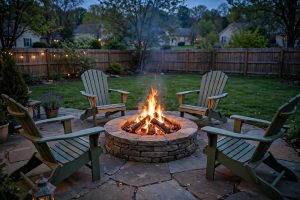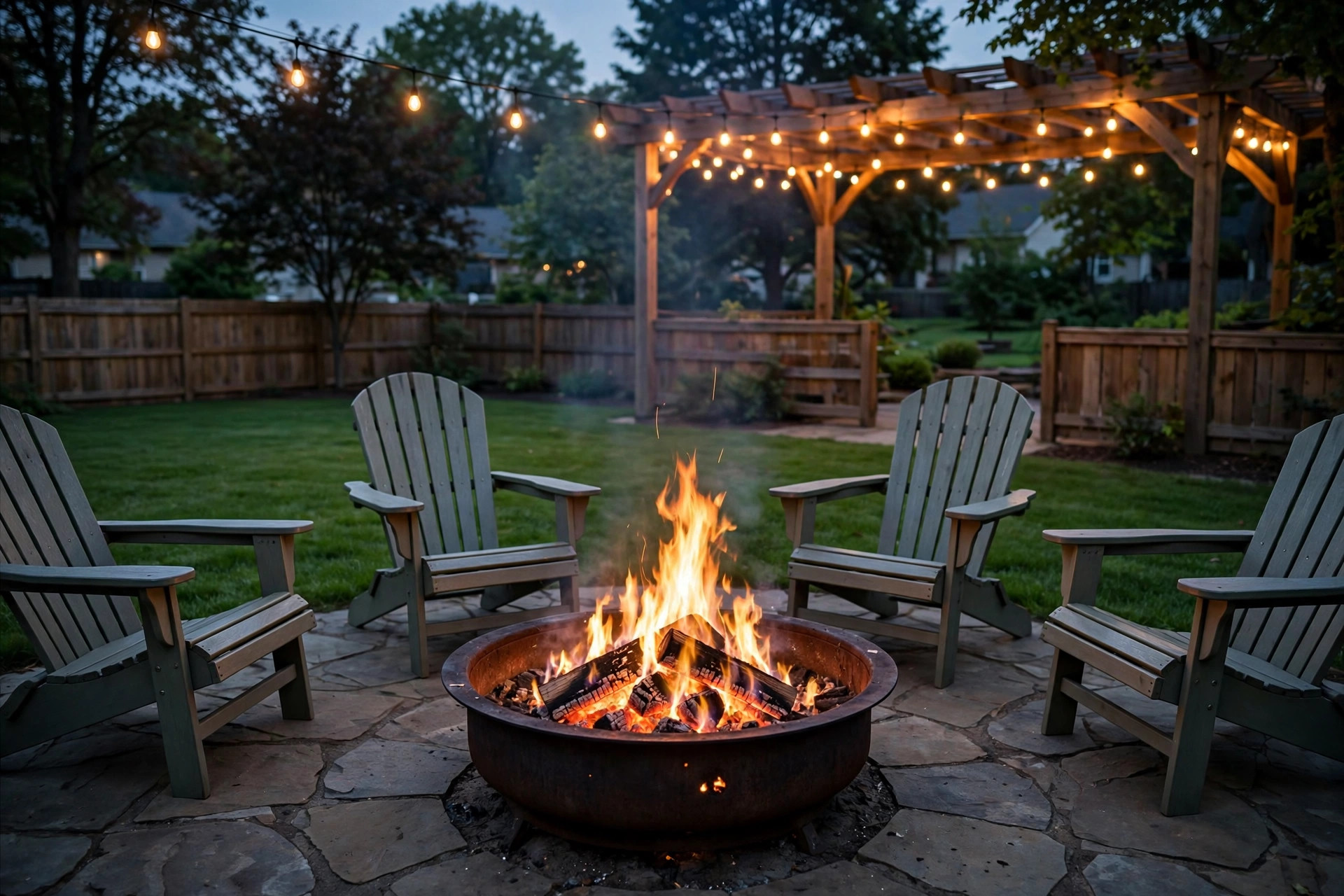

A backyard fire pit turns a plain yard into a gathering place. Families pull chairs around it on cool nights. Neighbors stay longer when there is a warm fire in the middle of the circle. This guide to the best fire pit for backyard reviews USA will help you read reviews with a clear eye and pick a pit that fits your yard, your budget, and your local rules.
Why the Right Fire Pit Matters
A fire pit is not just decoration. It is a heat source, a cooking spot, and a small building project all in one. A good one lasts ten years or more. A poor one rusts in a single season and becomes a hazard.
The best fire pit for backyard reviews USA always mention three things. First, build quality. Thick steel or solid stone lasts. Thin sheet metal does not. Second, heat output. A pit that is too small for your seating area will leave half your guests cold. Third, ease of care. If a pit is hard to clean, you will use it less.
Reviews also point out a hidden cost: fuel. Wood is cheap if you have a source. Gas is clean but the line install can cost real money. Knowing these facts before you buy saves regret later. Project guides from This Old House walk through these trade-offs in plain terms.
How to Read Reviews the Smart Way: Best Fire Pit for Backyard Reviews Usa
Not all reviews are equal. Five-star reviews from a buyer who owned the pit for two days mean little. Look for reviews written after a full season of use. Those buyers know how the pit handles rain, snow, and weekly fires.
Watch for patterns. If ten different buyers say the paint peeled, the paint will peel. If many buyers say the smokeless fire pit reviews 2026 usa praise low smoke but weak heat, believe them. One angry review can be bad luck. Ten similar ones are a fact.
Check the date of the review too. Makers change models every year or two. A review from 2019 may describe a pit that no longer exists. Give more weight to recent reviews, especially those from the current year.
Also note where the buyer lives. A fire pit that works well in dry Arizona may struggle in damp Florida. Rust, airflow, and local wood types all change by region. Reviews from buyers in your climate are worth more.
What to Look for When You Choose
Size and Seating
Measure your seating area first. A pit around 30 to 36 inches wide suits four to six chairs. Larger pits, 40 inches and up, suit bigger groups. A pit that is too big for a small patio crowds everyone and can throw heat where you do not want it.
Keep clearance in mind. Most safety guides call for 10 to 20 feet between the fire and any building, fence, or tree. Small urban yards may not have that room. In that case, a small gas pit is often the safer pick.
Fuel Type
Wood, gas, and propane are the three main fuels. Wood gives the classic crackle and smell. It also gives smoke and ash. Natural gas gives a clean flame at the flip of a switch, but it needs a gas line run to the spot. Propane uses a tank you can swap out. It is simple but the tank needs refills.
The wood burning vs gas fire pit comparison shows no single winner. Wood wins on mood and price. Gas wins on ease and clean air. Your pick depends on what you value most.
Material and Build
Steel is the most common body. Powder-coated steel resists rust for a while. Stainless steel resists it much longer and costs more. Cast iron is heavy and holds heat well, but it needs regular oiling or it rusts. Stone and concrete pits look permanent and natural. They weigh a lot and are hard to move.
Check the thickness if the specs list it. Thicker metal means longer life. Also check the legs and the spark screen. A wobbly pit or a flimsy screen is a bad sign, and many honest reviews call these flaws out by name.
Airflow Design
Fire needs air. Pits with vents near the base burn hotter and cleaner. Smokeless designs use a double wall that feeds hot air back into the fire. This burns off smoke before it rises. Reviews show these designs work, though they cost more and the fire can be harder to start.
Types of Backyard Fire Pits
Wood-Burning Fire Pits
The classic choice. A steel bowl or an open pit burns logs, branches, and firewood. These pits cost the least to buy. Wood can be free if you have trees. The downsides are smoke, sparks, and ash cleanup.
Many buyers love the ritual. Splitting wood, stacking it, and lighting the fire is part of the evening. If you enjoy that work, a wood pit fits. If you want instant fire, look at gas.
Smokeless Fire Pits
These use a double-wall design to reburn smoke. The result is far less smoke in your face and on your clothes. They burn wood, so you still get real flames and crackle. They are pricier than basic bowls, and they run best with dry hardwood.
Reviews from 2026 give smokeless pits high marks for comfort. Guests can sit downwind without coughing. That alone is worth the extra cost for many families.
Gas Fire Pits
Gas pits connect to natural gas or a propane tank. You light them with a match or a push-button spark. The flame is clean and steady. There is no ash and almost no smoke. They are popular in cities where wood smoke is banned or frowned on.
The gas fire pit installation cost near me question comes up a lot. A simple propane table pit needs no install at all. A built-in natural gas pit needs a licensed plumber to run the line. That job often runs several hundred dollars, and in some areas over a thousand. Heating makers such as Carrier and Trane publish homeowner guides on gas appliances and safe venting that are worth a read first.
Fire Pit Tables
These look like patio tables with a fire in the center. They work well for small patios. The table edge gives you a place for drinks. Most run on propane, with the tank hidden in the base. They give less heat than an open wood pit, but they fit tight spaces nicely. The Home Depot buying guides lay the bowl, table, and built-in styles out side by side.
Cost and Price Ranges
Fire pit prices spread wide. A simple steel bowl can cost under 100 dollars. A mid-range smokeless pit often runs 200 to 500 dollars. A built-in gas pit with stone surround can run 1,500 to 5,000 dollars or more once labor is counted.
Fuel costs add up. A cord of hardwood runs roughly 200 to 400 dollars in many areas, depending on the region. A 20-pound propane tank refill costs around 15 to 25 dollars and gives about 8 to 10 hours of burn time on a medium setting. Natural gas is the cheapest per hour but has the highest upfront install cost.
Do not forget extras. A spark screen costs 30 to 80 dollars and is worth every cent. A weather cover costs 20 to 50 dollars and adds years of life. A fire poker, gloves, and a log rack add another 50 dollars or so. Reviews often say the cover is the most ignored and most valuable extra. The U.S. Department of Energy publishes plain facts on home heating costs that can help you compare fuel prices year to year.
Care and Upkeep
Ash is the main chore for wood pits. Let the pit cool fully, then scoop the ash into a metal can. Do this after every few fires. Wet ash left in a steel pit speeds rust. A thin coat of high-heat paint each spring also fights rust.
Gas pits need less work. Check the burner holes for dirt or spider webs each spring. Spiders love to nest in gas tubes, and a blocked tube makes a weak or uneven flame. Wipe the glass or lava rocks clean. Check hoses for cracks before the first fire of the season. For big-picture fuel efficiency, the guidance at ENERGY STAR applies to any heating choice.
Covers matter more than most buyers think. A pit left uncovered fills with rain. Water plus ash makes a paste that eats steel. A simple fitted cover, put on after each cool-down, can double the life of a budget pit. Many long-term reviews say the same thing: cover it or lose it. The repair guides at Family Handyman echo this point and add seasonal checklists.
Store propane tanks upright, outdoors, away from the house. Never store a tank in a garage or shed. Check the tank valve and hose for leaks with soapy water. Bubbles mean a leak. Fix it before you light anything.
Safety: The Part You Must Not Skip
Fire is fire, even in a pretty bowl. The U.S. Consumer Product Safety Commission tracks injuries from outdoor fire products, and burns are the most common. Most happen from carelessness, not from product failure. A calm routine prevents nearly all of them.
Place the pit on a non-burnable surface. Stone pavers, gravel, or bare dirt work. Never put a fire pit on a wood deck unless the maker says it is safe and you use a heat shield. Keep the pit at least 10 feet from the house, fences, sheds, and low branches. Twenty feet is better.
Always use a spark screen with a wood fire. Sparks can travel far on a windy night. Keep a hose or a bucket of water close by. Never leave a fire alone, even for a minute. Children and pets must stay at least three feet back, and an adult should always watch.
Check local rules before you buy. Many cities and counties ban open wood burning on certain days or all year. Some homeowner groups ban fire pits outright. A quick call to your fire department tells you what is allowed. Fines for illegal burning are real, and insurance may not cover damage from a banned fire.
Let the fire die on its own or douse it fully. Stir the ashes and pour water until there is no heat left. Ashes can hold heat for a full day. Every year, people start fires by dumping “cold” ash into a trash can or a yard waste pile.
For gas pits, learn the smell of a gas leak. If you smell gas, turn the tank off, step away, and call the fire department from a safe distance. Never try to find a leak with a lit match.
Frequently Asked Questions
What size fire pit is best for a small backyard?
A pit 24 to 30 inches wide fits most small yards. It seats three to five people and stays within safe clearance. If your yard is tight, a propane fire table may fit better than a round open pit, since it doubles as furniture.
Are smokeless fire pits really smokeless?
Nearly. A good smokeless design cuts smoke by a large amount when it burns dry hardwood. It still makes some smoke at startup and if the wood is damp. Reviews agree they are far better than open bowls, but “low smoke” is a truer name.
Can I put a fire pit on a wood deck?
Most makers say no. Heat and sparks can catch a deck on fire. If you must use a deck, buy a pit rated for deck use, add a heat shield mat, and keep the fire small. A stone paver pad under the pit is a cheap safety upgrade.
How far should a fire pit be from the house?
At least 10 feet, and 20 feet is safer. Heat can crack siding and windows over time. Sparks can land on roofs. Measure from the edge of the fire, not the edge of the pit, and count the wind direction too.
Is a gas or wood fire pit cheaper to run?
Wood is cheaper if you have a free or cheap wood source. Gas is cheaper if you must buy firewood at store prices. Natural gas usually beats both on hourly cost, but the install cost takes years to pay back.
Do I need a permit for a backyard fire pit?
It depends on your town. Some places need no permit. Others need one, or ban open fires but allow gas. Call your local fire department before you buy. It takes five minutes and can save you a fine.
Final Word
The best fire pit for backyard reviews USA agree on one point: match the pit to your yard, not to a trend. A small gas pit you use every week beats a big wood pit you never light. Read recent reviews, check your local rules, buy the cover, and keep the water hose near. Do those simple things and your fire pit will give you years of good evenings.
References
Carrier. (n.d.). Heating and cooling systems. https://www.carrier.com ENERGY STAR. (n.d.). Energy efficient products. https://www.energystar.gov Family Handyman. (n.d.). DIY home repair and maintenance. https://www.familyhandyman.com The Home Depot. (n.d.). Home improvement products. https://www.homedepot.com This Old House. (n.d.). Home renovation guidance. https://www.thisoldhouse.com Trane. (n.d.). Heating and air conditioning. https://www.trane.com U.S. Consumer Product Safety Commission. (n.d.). Product safety information. https://www.cpsc.gov U.S. Department of Energy. (n.d.). Energy efficiency and renewable energy. https://www.energy.gov
Was this guide helpful?

About James Carter
The My Garden US editorial team writes practical, in-depth home and garden guides for American homeowners — tested advice, no fluff.
You May Also Like

Makeup Air Unit for Range Hood Cost USA: A Plain Guide
August 24, 2026 0 views
Modulating Furnace Reviews for Cold Climates: What to Know Before You Buy
January 14, 2026 0 views
Lennox vs Rheem AC Reviews for Homeowners
September 14, 2026 0 views