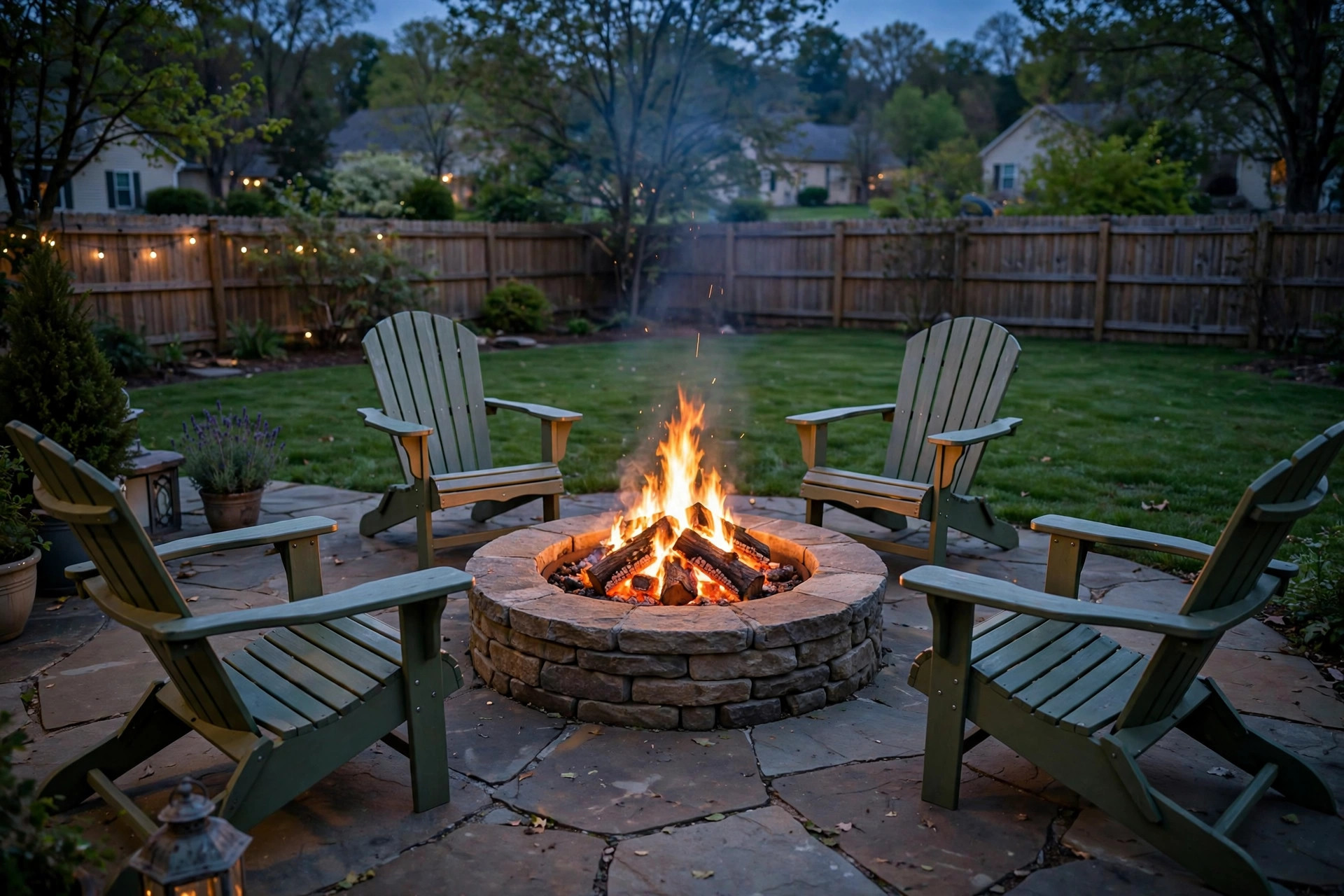

A Fair Wood Burning vs Gas Fire Pit Comparison
A fire pit can change the way a family uses its yard. It brings people outside in spring, summer, and fall. It gives warmth on cool nights and light after dark. But the first choice is not simple. This wood burning vs gas fire pit comparison walks through both options in plain terms.
A wood fire pit burns logs or sticks. It gives a tall flame, a crackle, and the smell of wood smoke. A gas fire pit burns natural gas or propane. It gives a clean flame that starts with the turn of a knob. Both have real strengths. Both have real limits. The right pick depends on budget, local rules, and how much work a homeowner wants to do.
Why This Choice Matters: Wood Burning vs Gas Fire Pit Comparison
A fire pit is not a small buy. A good unit can cost hundreds of dollars, and installation can cost more. The fuel choice shapes the cost for years. It also shapes safety, smoke, and how often the pit gets used.
Some towns ban open wood fires. Others limit burn days in dry months. A wood pit that sits idle all summer is a poor buy. A gas pit that runs for hours each week can raise a fuel bill. Thinking through this wood burning vs gas fire pit comparison before shopping saves money and regret.
Heat output matters too. A wood fire can put out a large wall of heat. A gas unit gives steadier, lower heat that is easy to control. For a family that wants long talks around the fire, control may matter more than peak heat. For a family that wants a roaring blaze on a cold night, wood may win.
What to Look for When You Choose
Heat and Flame
Wood pits burn hot and bright. The flame dances and throws sparks. The heat spreads wide, but it is hard to control. Adding logs raises the heat. Letting the fire die down lowers it.
Gas pits burn with an even blue or yellow flame, depending on the burner. The flame stays at one level until the knob is turned. Most gas units put out between 30,000 and 60,000 BTUs. That is enough to warm a small seating area. It will not match a big wood fire for raw heat.
Homeowners who compare heating products often read brand guides first. Carrier publishes home comfort resources that explain how BTU ratings work across heating equipment, which helps set expectations for any burner (https://www.carrier.com). Lennox offers similar plain guides on heat output and efficiency for home heating systems (https://www.lennox.com).
Ease of Use
A gas pit wins on ease. Turn the key or push the ignition button, and the flame lights in seconds. Turn it off the same way. No wood to split, stack, or carry. No ash to clean after every use.
A wood pit takes more work. The fire must be built, tended, and watched until it burns down. Ash must be scooped out. Logs must be bought or cut and kept dry. For some owners, this work is part of the charm. For others, it is a chore that keeps the pit unused.
Smoke and Smell
Wood smoke is the biggest drawback of wood pits. Smoke can sting eyes and drift into a neighbor’s yard. In many suburbs, one smoky fire can draw complaints. People with asthma or allergies may need to stay inside.
Gas burns clean. There is almost no smoke and little smell. A gas pit can run under a covered patio in many cases, though local codes still apply. For close neighborhoods, clean burn is a strong point in any wood burning vs gas fire pit comparison.
Look and Feel
Wood gives the classic campfire look. Tall flames, popping logs, and a warm orange glow are hard to beat. Many owners say nothing feels like a real wood fire.
Gas pits look neat and modern. The flame rises from lava rock, glass beads, or ceramic logs. The look is tidy and calm. Some gas models mimic a wood fire well, but the flame shape is less wild.
Types and Options
Wood Fire Pit Types
The open bowl is the most common wood pit. It is a steel or cast iron bowl on legs. It is cheap and easy to move. It burns hot but gives little wind protection.
The chiminea is a clay or metal unit with a tall stack. The stack draws smoke up and away from faces. Chimineas suit small patios.
A smokeless fire pit uses double walls to reburn gases before they leave the pit. These units cut smoke a great deal. They cost more than open bowls but far less than a gas hookup. Readers who want less smoke may enjoy our guide to the smokeless fire pit.
Gas Fire Pit Types
Propane pits use a tank that sits under or beside the unit. A standard 20-pound tank runs a typical pit for four to eight hours. Tanks are easy to swap but must be refilled.
Natural gas pits connect to a home gas line. The fuel never runs out. Installation needs a licensed plumber or gas fitter, and the line work adds cost. Our guide to gas fire pit installation explains what that project involves.
Fire pit tables are a popular gas option. The burner sits in the center of a table, so guests can set drinks nearby. They suit patios where seating is tight.
Hybrid and Convertible Units
Some pits burn both fuels with a conversion kit. An owner can start with wood and switch to gas later, or the reverse. Kits cost extra and need careful setup. Check the maker before buying.
Cost and Price
Upfront Cost
A basic wood bowl costs 50 to 200 dollars. A good smokeless unit costs 200 to 600 dollars. A stone or masonry wood pit built by a mason can run 1,000 to 3,000 dollars.
A basic propane gas pit costs 150 to 500 dollars. A quality fire pit table costs 500 to 1,500 dollars. A built-in natural gas unit with a gas line can cost 1,500 to 5,000 dollars installed.
Fuel Cost Over Time
Wood is cheap if it is free. Cut and split wood from your own land costs only labor. Bought firewood costs 150 to 300 dollars per cord in most states. A busy pit can burn a cord in one season.
Propane costs about 3 to 5 dollars per gallon. A 20-pound tank holds about 4.6 gallons and costs 15 to 25 dollars to refill. At full flame, a tank lasts four to eight hours. Heavy use can mean a new tank every week.
Natural gas is the cheapest fuel per hour. It costs about 1 to 2 dollars per therm in most areas. A typical gas pit burns about half a therm per hour at full flame. That is well under one dollar per hour.
Rheem publishes cost and efficiency notes for gas heating products that show why natural gas often costs less per hour of heat than other fuels (https://www.rheem.com). The U.S. Department of Energy also keeps public guides on fuel costs and home energy use (https://www.energy.gov).
Repair and Replacement
Wood pits rust. Steel bowls last three to seven years without a cover. Cast iron lasts longer but is heavy and can crack in a hard freeze.
Gas pits have burners, valves, and ignition parts. These parts wear out and cost 50 to 200 dollars to replace. A good gas unit can last ten years or more with care.
Care and Upkeep
Wood Pit Upkeep
Clean ash after every two or three fires. Ash holds moisture and speeds rust. Use a cover when the pit is not in use. Store wood off the ground under a tarp or in a rack. Check the bowl for thin spots each spring.
Gas Pit Upkeep
Wipe the burner and check the gas line each spring. Look for cracked hoses, loose fittings, and spider webs in the burner ports. Spiders love to nest in gas tubes, and a blocked tube can cause a flare-up.
Keep the tank valve closed when the pit is idle. Cover the unit to keep rain out of the burner pan. Have a gas fitter check the line every few years. Goodman shares homeowner maintenance checklists that apply to gas lines and burners as well as furnaces (https://www.goodmanmfg.com).
Trane notes that yearly service checks catch small gas problems before they grow, a habit that fits fire pits as well as full heating systems (https://www.trane.com).
Safety
Wood Fire Safety
Keep the pit at least 10 feet from the house, deck, and trees. Never use gasoline or lighter fluid to start the fire. Use dry kindling and a match or starter log. Keep a hose or bucket of water close. Watch the fire until it is fully out. Flying sparks can land far in wind, so skip burning on windy days.
Gas Fire Safety
Keep the pit clear of leaves and paper. Never light a gas pit if you smell gas. Turn off the gas at the tank or valve first, then call for help. Do not store spare propane tanks near the pit or in the house. Keep children and pets from touching hot glass or metal.
The U.S. Consumer Product Safety Commission tracks fire pit injuries and posts safety alerts for outdoor products (https://www.cpsc.gov). Its pages are worth a read before the first fire of the season.
Local rules matter as much as general tips. Many cities require a permit for a gas line or ban wood fires in dry months. Call the fire department or city office before you buy. Napoleon, a maker of outdoor fireplaces, reminds buyers to check clearances and local codes in its product guides (https://www.napoleon.com). Heatilator gives similar clearance advice for built-in fire features (https://www.heatilator.com).
Old-house experts also weigh in on safe hearth practices. This Old House covers chimney, hearth, and fire feature safety in plain language for homeowners (https://www.thisoldhouse.com).
Frequently Asked Questions
Which gives more heat, wood or gas?
Wood gives more peak heat. A strong wood fire can warm a wide circle of chairs. Gas gives less peak heat but steadier heat. A gas pit holds one level for hours without tending.
Which costs less to run?
It depends on the fuel source. Free or cheap firewood is the lowest cost. Natural gas comes next, at well under one dollar per hour. Propane is the most costly per hour for most owners.
Can I use a fire pit on a wood deck?
Wood pits should never sit on a wood deck. Sparks and heat can start a fire. Some gas pits are rated for decks with a heat shield, but the maker and local code must allow it. Stone or concrete patios are safest.
Do I need a permit for a gas fire pit?
Often yes for a natural gas line. A licensed fitter usually pulls the permit. Propane pits often need no permit, but some towns still require one. Check with the city before work starts.
How long does a propane tank last in a fire pit?
A 20-pound tank lasts four to eight hours at full flame. Lower flame settings stretch it to ten hours or more. Keep a spare tank so the evening does not end early.
Which is better for a small yard with close neighbors?
Gas is usually the better pick. It makes no smoke, starts fast, and shuts off fast. If you love wood, a smokeless unit plus dry hardwood cuts smoke a great deal. Our roundup of the best fire pit for backyard covers both fuel types for tight lots.
Final Word
There is no single winner in this wood burning vs gas fire pit comparison. Wood gives a bold flame, strong heat, and the true campfire feel at a low upfront price. Gas gives push-button ease, clean air, and low long-term cost on a natural gas line. Match the fuel to your yard, your neighbors, your local rules, and how much work you want. Pick well, and the pit will earn its place for years.
See ENERGY STAR for more detail.
References
Carrier. (n.d.). Heating and cooling systems. https://www.carrier.com ENERGY STAR. (n.d.). Energy efficient products. https://www.energystar.gov Goodman. (n.d.). Heating and cooling equipment. https://www.goodmanmfg.com Lennox. (n.d.). Heating and cooling systems. https://www.lennox.com Rheem. (n.d.). Heating, cooling, and water heating. https://www.rheem.com This Old House. (n.d.). Home renovation guidance. https://www.thisoldhouse.com Trane. (n.d.). Heating and air conditioning. https://www.trane.com U.S. Department of Energy. (n.d.). Energy efficiency and renewable energy. https://www.energy.gov
Was this guide helpful?

About Jennifer Lee
The My Garden US editorial team writes practical, in-depth home and garden guides for American homeowners — tested advice, no fluff.
You May Also Like
Best SEER Rating for Texas Homes 2026: What It Means and What to Pick
August 15, 2026 0 views
Best Patio Heater for Winter Reviews USA: A Plain Guide to Warm Outdoor Nights
June 4, 2026 1 views
MrCool vs Pioneer Mini Split Comparison: An Honest Guide for American Homeowners
February 28, 2026 0 views