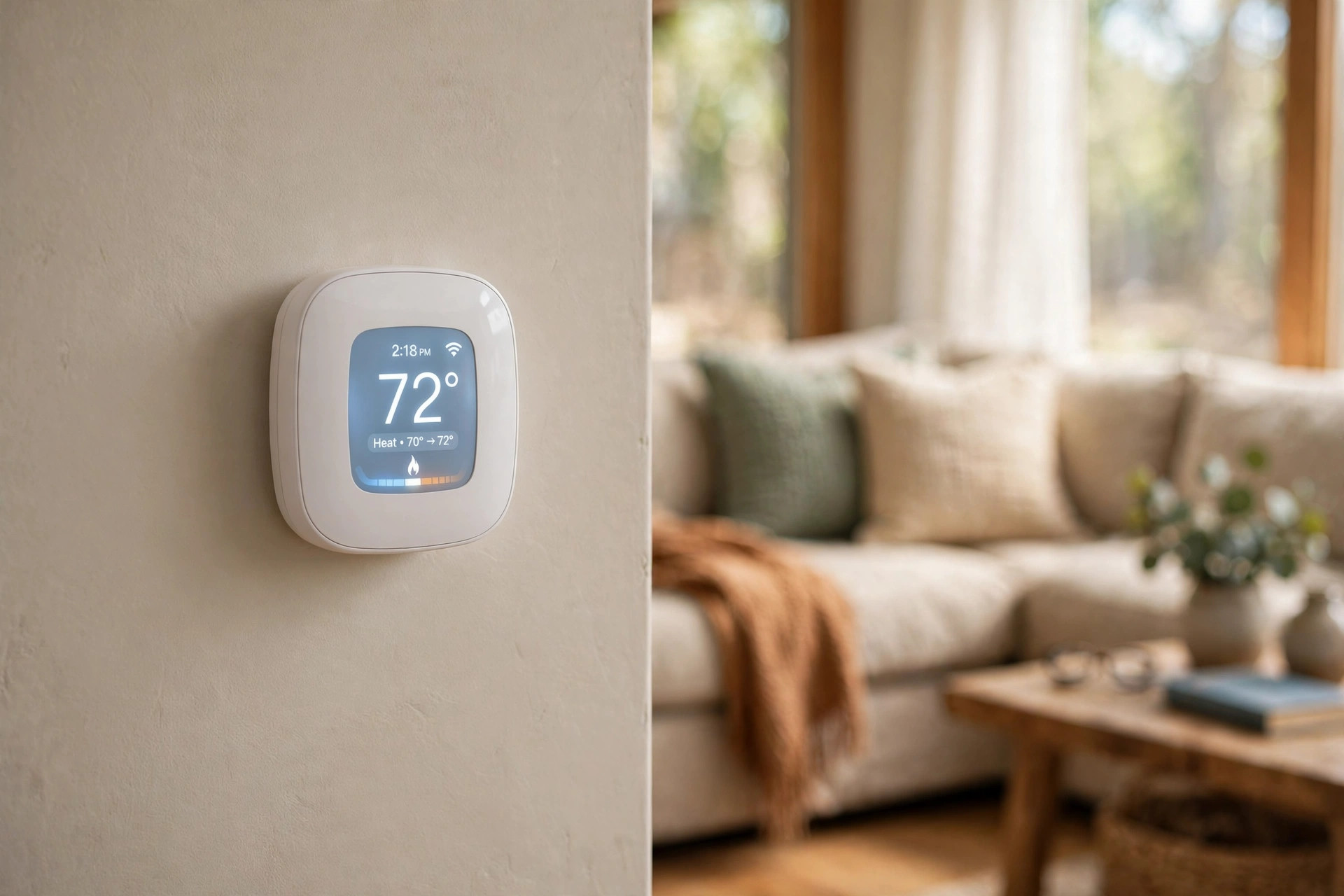

Many Americans own a second home, a cabin, or a beach condo that sits empty for weeks at a time. This is where the wifi thermostat for vacation home reviews usa topic becomes important. A WiFi thermostat is a small wall device that connects to the home internet. It lets the owner change the heat or the air conditioning from a phone, no matter where the owner is. In this article we look at what these thermostats do, why they matter for vacation homes, what to look for before you buy, and how much they cost. We keep the language plain and the facts clear.
A vacation home has a special problem. The owner is not there to feel if the house is too cold or too warm. In winter, pipes can freeze when the heat fails. In summer, heat and damp air can feed mold inside walls. A WiFi thermostat gives the owner eyes on the house. The app shows the indoor temperature in real time. If the heat stops on a cold night, the owner gets an alert on the phone. This early warning can save thousands of dollars in repairs. The Carrier company notes that smart controls help systems run at steady levels, which protects both the home and the equipment.
Why It Matters
Frozen pipes in winter
The biggest danger for an empty home in a cold state is frozen pipes. When the furnace quits, indoor air cools fast. Water in the pipes turns to ice and the ice pushes outward. The pipe can burst. One broken pipe can flood a room in hours. The U.S. Department of Energy explains that even a small gap in heat control can lead to big energy waste and damage. A WiFi thermostat watches the temperature around the clock. The owner can set a low limit, such as 50 degrees. If the air drops below that line, the phone gets a message. The owner can then call a neighbor or a service man to check the house.
Mold and damp air in summer
Warm states bring the opposite trouble. A closed-up house in July grows hot. Wet air sits still in rooms and closets. Mold likes these conditions. It can stain walls and ruin stored goods. A WiFi thermostat with a humidity reading helps the owner watch this too. Many models show both temperature and humidity in the app. The owner can run the air conditioner for short bursts to pull damp air out. The Rheem company points out that steady control of air and moisture keeps indoor spaces safe during long absences.
Lower bills while away
Heating or cooling an empty house at full strength is a waste of money. The ENERGY STAR program says that turning the temperature back by 7 to 10 degrees for eight hours a day can cut heating and cooling costs by about ten percent. A vacation owner can set the home to a mild hold temperature, then warm or cool the rooms before the family arrives. The app makes this easy. There is no need to ask a neighbor to stop by and twist a dial.
What to Look For: Wifi Thermostat for Vacation Home Reviews Usa
Remote access and alerts
The main job of the device is remote control. Look for a thermostat that sends clear alerts. Good models send a push message when the room gets too hot, too cold, or too damp. Some also warn when the WiFi link to the house drops. This last alert matters. If the internet goes down, the owner cannot see the home. The best units keep a written log of temperature, so the owner can review the whole week at a glance. Reviews from This Old House stress that a clean, simple app is as important as the wall unit itself.
Compatibility with your system
Not every thermostat fits every system. Most homes have forced air with a furnace or a heat pump. Some homes have boilers, baseboard heat, or a two-stage system. Check the maker list for your wire type before you buy. Most boxes use a common C wire for power. Older homes may lack it. There are adapters, but they add work. The Trane company advises owners to check the label on the old unit and match the new one to it.
Freeze protection settings
A vacation home needs a true freeze guard. This means the thermostat can hold a safe low temperature even when no schedule is set. Some models also have a vacation mode. In this mode the heat stays at a low but safe level for weeks. The owner can turn normal comfort back on from the phone a day before arrival. The Goodman company notes that holding a steady low setting is easier on the furnace than letting the house swing hot and cold.
Battery backup and power loss
Storms can knock out power to a vacation home. A good thermostat keeps its memory when the power drops. It should restart on its own and reconnect to the WiFi. Some units have a small battery that keeps the screen alive. The Family Handyman site reminds owners that no thermostat can heat a home with no power, so a backup alert that reports a power loss is worth having.
Types and Options
Learning thermostats
Learning models study how the house heats and cools. After a week or two they build their own schedule. They turn the heat down at night and raise it in the morning without being told. For a vacation home this can be a mixed gift. The house has no steady routine when empty. Many owners turn the learning off and use a simple manual hold instead. This keeps control in the owner hand, not in the machine.
Simple programmable models with WiFi
These are the workhorses. They hold a set temperature until told otherwise. The app lets the owner change it at any time. They cost less than learning models and they fail less often. For a small cabin or a condo, this type is often enough. The Lennox company lists several plain models that suit second homes with basic systems.
Sensor-based systems
Some brands sell small remote sensors. The owner puts one in a bedroom and one in the living room. The thermostat reads the average. In a vacation home this helps on two floors. The owner can see the upstairs and downstairs temperature side by side. If one floor drifts, the app shows it. This is useful in tall lake houses where heat rises and the lower floor stays cold.
Cost and Price
A basic WiFi thermostat costs about 100 to 150 dollars. A full learning model with sensors costs 200 to 250 dollars. Some power companies give rebates that cut the price in half. It pays to check with the local utility before you buy. The ENERGY STAR site has a rebate finder for many states.
Professional setup adds 100 to 200 dollars if the wiring is old or the owner is not handy. Many owners do it themselves in under an hour. The box comes with wire labels and a step by step card. If the home has a complex two-stage heat pump, a pro visit is the safer choice.
Running cost is small. The unit uses very little power. The savings come from the setback. The U.S. Department of Energy says a household can save around 180 dollars a year with smart setback habits. For a vacation home that sits empty half the year, the payback can be faster.
Care and Upkeep
Keep the WiFi strong
The thermostat is only as good as the internet link. A vacation home with weak WiFi will drop the device often. Put the router in a central spot. If the house is large, add a simple range extender. Some owners set the router to restart once a week on a timer. This keeps the link fresh. The app will show the signal strength of the thermostat so the owner can watch it.
Clean and check twice a year
Twice a year, wipe the dust from the wall unit with a dry cloth. Dust on the sensor makes the reading drift. Check the app for firmware updates. Makers push updates that fix bugs and add features. The update takes a few minutes and runs on its own. While there, look at the temperature history for odd spikes. A sudden jump may mean the furnace ran too long or a sensor is failing.
Test before the season
Before winter, set the thermostat low and watch it hold for a day. Before summer, test the cooling the same way. Check that alerts reach the phone. Ask a friend to stand in the house while you change the setting from your own home. This simple test proves the remote link works when it counts. The Carrier company suggests a full system check each fall, and the thermostat test fits well into that visit.
Safety
Do not set the heat too low
A safe hold for winter is 50 to 55 degrees. Some owners try 40 degrees to save money. That is risky. Pipes in outer walls can freeze even when the room air reads 45. Keep the setting at 50 or above. Open the doors of sink cabinets so warm air reaches the pipes. The Rheem company warns that wind and cold spots can fool a single wall sensor.
Guard the account
The thermostat app holds the keys to the house climate. Use a strong password and turn on two-step sign in. Do not share the login with renters. Most apps let the owner add a guest with limited rights. When a guest leaves, remove the access. If the phone is lost, change the password at once.
Watch for short cycling
If the furnace clicks on and off every few minutes, something is wrong. This is called short cycling. It wears out the motor and wastes fuel. The thermostat app may show this pattern in its history graph. Call a service tech if you see it. Do not just raise the setting and hope. The Trane company notes that a dirty filter is a common cause, and a clean filter is cheap insurance.
Related reading on home systems: heat pump water heater vs gas cost usa, bathroom fan with humidity sensor reviews usa, and best merv 13 filter for hvac reviews usa.
FAQ
Can I control the thermostat from another country?
Yes. The app works over the internet. If the vacation home has working WiFi and the phone has data, the owner can change the setting from anywhere in the world. There may be a small delay of a minute or two before the change takes effect.
Will the thermostat work if the power goes out?
No heating or cooling runs without power. The thermostat itself may keep its memory and restart when power returns. Some models send a power loss alert if they have a small battery. A separate cellular sensor is a good backup for storm areas.
Do I need a C wire?
Most WiFi thermostats need steady power from a C wire. Many newer homes have one. Older homes may not. Adapters exist, and some models can steal a little power from other wires. Check the maker guide for your exact system before you buy.
Is a learning thermostat good for a home that sits empty?
It can be, but many owners turn the learning off. An empty house has no routine to learn. A simple hold temperature with remote changes gives more control. The Family Handyman site notes that manual mode is often the calm choice for second homes.
How cold is safe for an empty house in winter?
Fifty to fifty-five degrees is the common safe range. This keeps pipes warm in most homes. In very cold states, some owners hold at 55. Never drop below 50 unless a local pro says the pipes are safe at that level.
Can renters use the thermostat too?
Yes. Most apps allow a second user with limited control. The owner keeps the master rights. Set a sensible range so guests cannot push the heat to 85 or the cooling to 60. Remove guest access when the stay ends.
A Short Final Word
A WiFi thermostat is a small buy that guards a large asset. For the owner of a vacation home, it brings three gifts: warning, control, and savings. Warning when the heat fails on a cold night. Control from a phone a thousand miles away. Savings from a smart setback while the house waits empty. Pick a model that fits your system, set a safe hold, test the alerts, and rest easy. The house will be ready when you return.
References
Carrier. (n.d.). Heating and cooling systems. https://www.carrier.com ENERGY STAR. (n.d.). Energy efficient products. https://www.energystar.gov Family Handyman. (n.d.). DIY home repair and maintenance. https://www.familyhandyman.com Goodman. (n.d.). Heating and cooling equipment. https://www.goodmanmfg.com Lennox. (n.d.). Heating and cooling systems. https://www.lennox.com Rheem. (n.d.). Heating, cooling, and water heating. https://www.rheem.com This Old House. (n.d.). Home renovation guidance. https://www.thisoldhouse.com Trane. (n.d.). Heating and air conditioning. https://www.trane.com U.S. Department of Energy. (n.d.). Energy efficiency and renewable energy. https://www.energy.gov
Was this guide helpful?

About David Wilson
The My Garden US editorial team writes practical, in-depth home and garden guides for American homeowners — tested advice, no fluff.
You May Also Like
MrCool vs Pioneer Mini Split Comparison: An Honest Guide for American Homeowners
February 28, 2026 0 views
Best Smart Ceiling Fan Reviews 2026 USA
July 27, 2026 0 views
Daikin vs Mitsubishi Mini Split Reviews USA: Which Ductless System Should You Buy
August 22, 2026 0 views