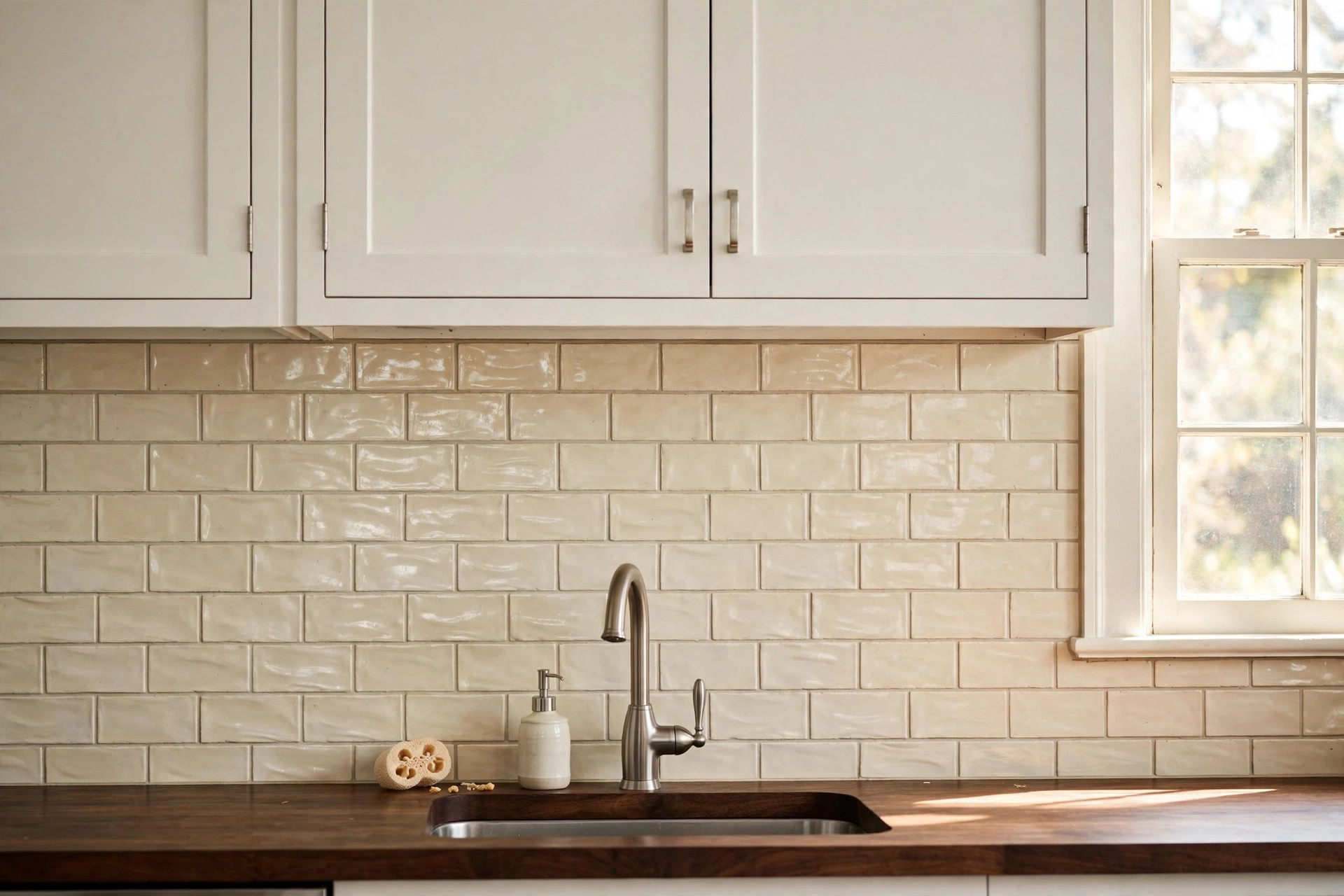

White cabinets have become a fixed point in American kitchens. They look clean. They reflect light. They suit almost any style of home. Yet a plain white wall above the counter can leave the room feeling cold and unfinished. The right kitchen backsplash tile for white cabinets changes that in a single weekend. It adds texture and color. It protects the wall from steam and splatter. And it ties the counters, the floor, and the fixtures into one clear design.
This guide walks through the full choice. You will learn why the backsplash matters so much with white cabinets, what to look for as you shop, which tile types work best, what they cost, how to keep them clean, and which safety steps matter most. Every suggestion below is written for a real kitchen that gets used every day.
Why It Matters
A backsplash is more than a decoration. It stands between the wall and daily cooking. Water boils over. Sauces bubble. Pans spill. Without tile, paint and plaster absorb grease, steam, and stains over time. Tile wipes clean in seconds. That simple fact is the whole practical reason to install one.
With white cabinets, the backsplash also carries much of the design. White reflects everything around it. A soft gray tile cools the room down. A warm cream tile warms it up. A dark slate tile makes a bold frame around the bright cabinetry. Even a plain white tile can work if the shape or texture adds interest. The choice sets the mood for the whole kitchen, often more than the counters or the floor do.
A good backsplash also helps the value of the home. Real estate writers often list kitchens among the rooms that buyers judge first. A clean, modern backsplash signals a home that has been cared for. A dated or damaged one sends the opposite message. Because tile is one of the least expensive kitchen upgrades, it earns its place in the budget.
What to Look for When You Choose: Kitchen Backsplash Tile for White Cabinets
Color and Contrast
Start with the counters. The backsplash sits between the counter and the upper cabinets, so it must sit well with both. If the counter is white or pale, the tile can bring the contrast. If the counter is dark granite or black stone, a light tile keeps the wall from feeling heavy.
Hold tile samples against the cabinets in daylight. White cabinets change tone under different bulbs. A tile that looks gray in the store may look blue under cool LED light. Bring two or three samples home before you buy. That small step prevents most regrets.
Size and Scale
Large tiles with thin grout lines look calm and modern. Small tiles, such as mosaics, look busy and hand-made. Both can suit white cabinets. The size of the kitchen matters. A small kitchen often feels larger with a large, quiet tile. A large kitchen can carry a bold pattern without strain.
Measure the wall. A standard backsplash runs about 18 inches from counter to upper cabinet. Odd heights are common behind the stove. Plan the layout on paper so cuts land in corners, not in the middle of the wall.
Glaze and Finish
Glossy tile reflects light and wipes clean with ease. It suits white cabinets well because it doubles the brightness. Matte tile looks softer and more modern, but it can hold grease if the glaze is rough. Hand-made tiles have small pits and waves in the glaze. Those marks are part of their charm, but they need a sealer and gentle care.
Grout Color
Grout is the quiet half of the design. Dark grout with light tile makes a grid pattern. Light grout makes the wall look like one sheet. With white cabinets, a light gray grout is a safe middle ground. It hides stains better than white and looks cleaner than dark. Epoxy grout resists stains best, but it costs more and sets fast, so it suits skilled installers.
Types of Kitchen Backsplash Tile That Work With White Cabinets
Classic Ceramic Subway Tile
The white or cream subway tile is the standard pick. It is cheap, easy to find, and suits every style from farmhouse to city flat. Set it in a running bond pattern for the classic look, or stack it straight for a modern feel. Bright white tile blends with the cabinets. Cream or ivory tile adds gentle warmth. A trusted tile maker’s catalog of backsplash styles lists dozens of subway shapes, from the standard three by six inch piece to long, slim bars.
Handmade-Look Subway Tile
If plain subway tile feels too flat, the hand-made style adds life. The surface has small waves and dips. Light plays across each tile. The look is warm and old-world, and it pairs well with simple white shaker cabinets. Read up on handmade subway tile for kitchen options before you buy, because quality and price differ widely between brands.
Zellige Tile
Zellige is a clay tile from Morocco with a thick, glassy glaze. Each piece has a slightly different tone. The wall shimmers. It is a bold choice that still works with white cabinets, because the white wood calms the busy surface. Before you commit, check zellige tile backsplash cost and reviews. It costs more than ceramic, and the uneven edges need a skilled installer.
Marble and Stone Tile
Marble tile brings natural veining to the wall. Carrara marble has soft gray veins that suit white cabinets in a quiet way. Honed marble looks matte and soft. Polished marble shines. Stone needs sealing every year or two. Oil and tomato sauce can stain it if left to sit. It is a luxury pick, and the price shows it.
Glass Tile
Glass tile is thin, bright, and easy to wipe. It comes in clear, frosted, and colored sheets. Light passes through the tile and bounces back, which can make a small kitchen feel wider. Glass scratches more easily than ceramic, and it shows every flaw in the wall behind it. The wall must be smooth and true.
Mosaic Sheets
Mosaic tile comes glued to mesh sheets in squares, hexagons, and penny rounds. The small scale adds pattern and texture. Penny rounds in soft gray look fresh against white cabinets. Mosaics mean more grout lines, and grout needs sealing and scrubbing. They suit cooks who do not mind the upkeep.
Porcelain Tile
Porcelain is fired harder than ceramic. It resists chips, stains, and water better. Many porcelain tiles copy marble or stone so well that few guests can tell the difference. Large porcelain panels give a near-seamless wall. Flooring and tile brands often carry matching porcelain for the floor and the wall, which ties the room together.
Metal and Stainless Accents
A strip of stainless tile behind the stove matches the range and adds a modern note. Copper tile warms the room. Metal tile scratches and shows fingerprints, so it works best as a small accent rather than a full wall.
Cost and Price
Tile prices vary more than most home buyers expect. Basic ceramic subway tile costs from about one to five dollars per square foot. Hand-made style tile runs five to fifteen dollars. Zellige and marble often run ten to thirty dollars or more per square foot. Mosaics fall in the middle.
The tile is only part of the bill. For budgeting, look up subway tile backsplash cost per square foot to compare material prices in your area. Then add labor. Professional installers in the United States often charge five to fifteen dollars per square foot for labor, on top of the tile. Complex patterns, small mosaics, and natural stone push labor higher. A full kitchen backsplash is usually thirty to forty square feet. For a mid-range tile, a full job often lands between six hundred and two thousand dollars.
If you want the exact installed price, also search tile installation cost per square foot usa on home improvement sites and retailer guides. Large home center retailers publish helpful cost guides that show how material and labor break down.
Installation Basics
Many handy owners install a backsplash themselves. Ceramic subway tile is the friendliest start. The steps are simple. Clean the wall and remove outlet covers. Mark a level line. Spread thin-set mortar with a notched trowel. Press the tile in place. Use spacers for even joints. Let the mortar set overnight. Press grout into the joints with a rubber float. Wipe the haze off with a damp sponge.
Leave the tile out behind the stove hood if the wall gets very hot. Most tile handles heat well, but check the maker’s limits. Keep a few spare tiles from the same batch. Dye lots change, and a future repair will not match a different lot.
Home renovation guides walk through each step with photos, and they are worth reading before you mix the first batch of mortar.
Care and Upkeep
Tile care is simple if you start early. Wipe the backsplash with warm water and a drop of dish soap once a week. Grease near the stove may need a soft scrub pad. Avoid steel wool on glass and glossy glaze. It leaves fine scratches that dull the shine.
Seal natural stone and hand-made tile on the maker’s schedule. Test the seal once a year. Flick water on the tile. If it beads, the seal holds. If it soaks in and darkens the tile, reseal. Clean grout with a soft brush and a baking soda paste. For stubborn stains, an oxygen bleach soak works well. Rinse and dry the grout after cleaning so dirt does not settle back in.
Check caulk lines where the tile meets the counter each year. Caulk shrinks and cracks. A fresh bead of silicone keeps water out of the seam.
Safety
Tile work involves dust, sharp edges, and power tools. Cut tile with a wet saw outdoors or in a garage when you can. Wear safety glasses and a dust mask. Glazed ceramic dust is fine and sharp. Keep children and pets out of the work area.
Check lead and asbestos rules if the home was built before 1978. Old walls may hide lead paint under the drywall. A test kit costs little and takes minutes. If you find lead, stop and call a licensed contractor.
Behind the stove, pick tile rated for heat. Keep outlets safe. Shut off the breaker before you work around outlet boxes, and use box extenders so the covers sit flush on the new tile.
Frequently Asked Questions
What color backsplash goes best with white cabinets? There is no single best color. White tile gives a clean, seamless look. Gray tile adds calm contrast. Blue or green tile adds a classic note. Dark tile makes a strong frame. Match the tile to the counter and the light in the room, not to a rule.
Is a white backsplash too plain with white cabinets? It can be plain, but it does not have to be. A white tile with an interesting shape, a beveled edge, or a hand-made surface adds texture without adding color. Dark or gray grout adds pattern. Many kitchens use all white and look bright and fresh for years.
How much tile do I need for a kitchen backsplash? Measure each wall in square feet. Add ten percent for cuts and waste. Add fifteen percent for patterned tile or mosaics. A standard kitchen needs thirty to forty square feet. Keep a few spare tiles for future repairs.
Can I tile over an existing backsplash? Sometimes. The old tile must be clean, flat, and firmly stuck. Rough it up with sandpaper so the new mortar bonds. Heavy stone over old tile can stress the wall, so check with an installer. In most cases, removing the old tile gives the better result.
Does a backsplash add value to a home? A clean, modern backsplash helps a kitchen show well. It rarely returns its full cost at resale, but it costs little compared to other kitchen work. It also protects the wall, which saves repair costs later.
How long does a tile backsplash last? A well-set tile backsplash can last thirty years or more. Grout and caulk need touch-ups along the way. Stone needs resealing. The tile itself rarely wears out in normal home use.
A Final Word
Kitchen backsplash tile for white cabinets is a small project with a large payoff. The tile protects the wall, sets the style, and costs far less than new cabinets or counters. Pick a tile that suits the light in your room and the way you cook. Order samples. Plan the layout. Seal what needs sealing. Then enjoy a kitchen that looks finished every time you walk in.
For more background, see Lowe’s, LL Flooring, and Shaw Floors. For more background, see Mohawk Flooring, Daltile, and This Old House. Buying guides are also published by The Spruce and The Home Depot.
References
Daltile. (n.d.). Ceramic and porcelain tile. https://www.daltile.com LL Flooring. (n.d.). Hardwood, vinyl, and tile flooring. https://www.llflooring.com Lowe’s. (n.d.). Home improvement products. https://www.lowes.com Mohawk Flooring. (n.d.). Flooring products. https://www.mohawkflooring.com Shaw Floors. (n.d.). Flooring products. https://www.shawfloors.com The Home Depot. (n.d.). Home improvement products. https://www.homedepot.com The Spruce. (n.d.). Home and garden advice. https://www.thespruce.com This Old House. (n.d.). Home renovation guidance. https://www.thisoldhouse.com
Was this guide helpful?

About James Carter
The My Garden US editorial team writes practical, in-depth home and garden guides for American homeowners — tested advice, no fluff.
You May Also Like
Schluter Trim for Tile Edges: Reviews and Buying Guide for USA Homes
April 17, 2026 0 views
A Complete DIY Hardwood Floor Installation Tools List
February 1, 2026 0 views
Heated Tile Floor for Sunroom Cost USA: A Plain Guide
July 14, 2026 0 views