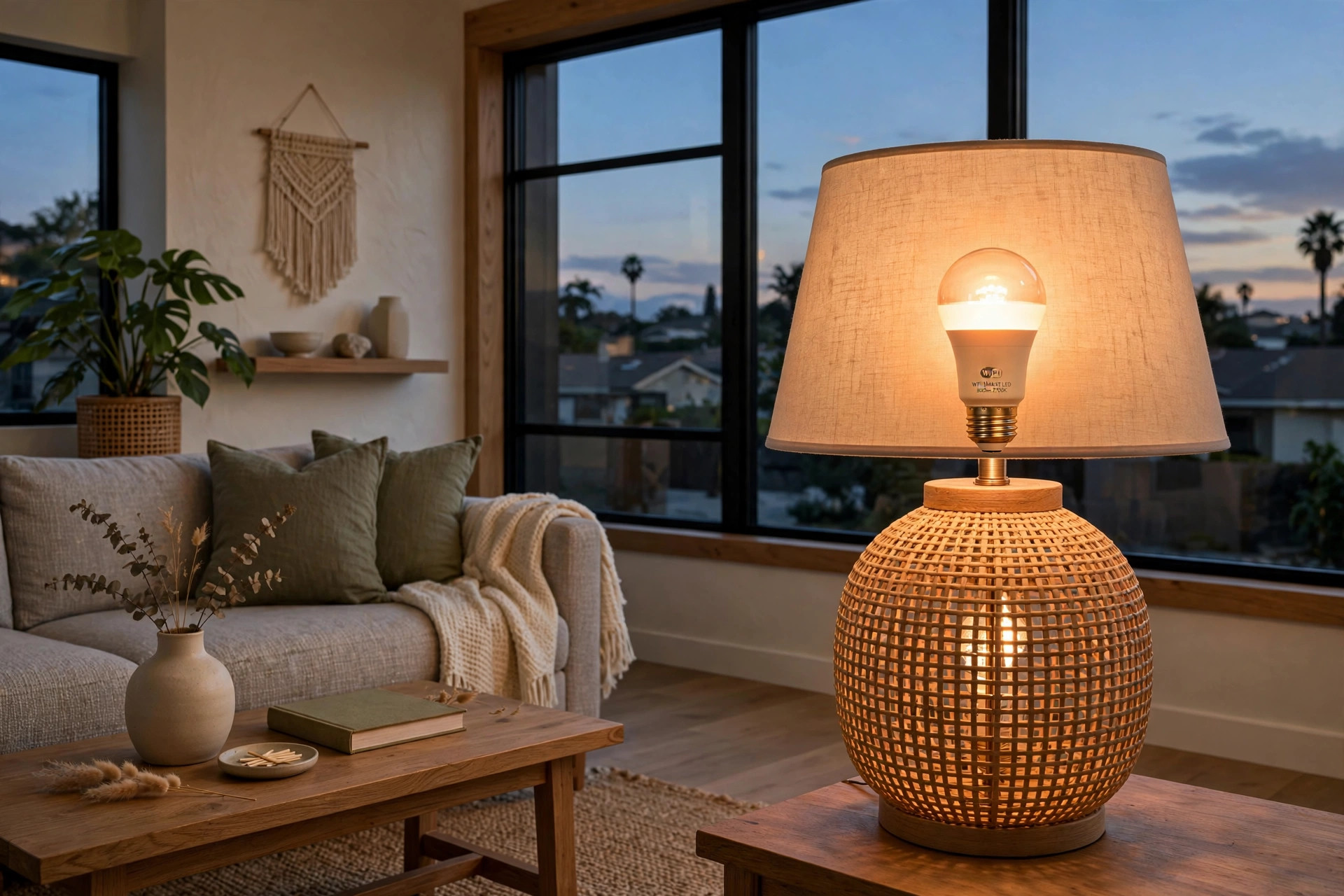

California homes run on light. The sun moves through the day. Evening falls. A switch feels old. A wifi smart bulb changes the routine. It screws into a normal socket. It joins the home network. Then the phone becomes the switch, the timer, and the dimmer. For many owners in the state, this small change brings large ease.
The market for wifi smart bulbs california homes usa shoppers see is wide. Dozens of brands sit on store shelves. Prices run from a few dollars to much more per bulb. This guide walks through the facts. It covers why the bulbs matter, what to look for, which types exist, what they cost, how to keep them safe, and answers to the questions people ask most.
Why WiFi Smart Bulbs Matter in California Homes
California is a warm state with long bright days. Homes here use light in special ways. Morning rooms face east. Afternoon heat fills west rooms. Evening outdoor living matters. A smart bulb adapts to each hour. It dims at night. It wakes the kitchen at dawn.
Energy cost is another reason. Power rates in California rank among the highest in the nation. Old bulbs waste heat. New bulbs use light only. A standard 60-watt bulb can be replaced by a 9-watt LED smart bulb. The light looks the same. The meter runs slower. Over a year, the savings add up.
Fire safety matters too. California sees dry summers. Porch lights and garden lights run for hours. Cool LED smart bulbs do not run hot like old glass bulbs. They cut the heat risk near wood, cloth, and dry plants. Many buyers link this to porch safety, and guides like those for sensor porch lights often stress the same point.
Remote control brings peace of mind. A family leaves for a weekend. The phone turns the lamps on at dusk. The house looks lived in. No timer box is needed. No neighbor must stop by.
What to Look for When You Choose: Wifi Smart Bulbs California Homes Usa
Not every bulb fits every home. A careful look at five points saves trouble later.
Brightness
Brightness is measured in lumens. A 800-lumen bulb equals an old 60-watt bulb. A 1,100-lumen bulb equals a 75-watt bulb. Bedrooms need less. Kitchens and garages need more. Check the box before you buy.
Color Range
Some bulbs give only warm white. Others shift from warm white to cool white. The best give full color, red to blue. Color bulbs cost more. They also please children and guests. For a calm living room, tunable white is often enough.
Wattage and Efficiency
Look for the watts on the label. Good smart bulbs draw 8 to 12 watts at full brightness. Some carry the ENERGY STAR mark. That mark means the bulb passed tests for life and quality. The ENERGY STAR program lists rated bulbs by brand.
WiFi Band
Many bulbs use the 2.4 GHz band only. Some homes run strong 5 GHz networks. Check the router. If the router mixes both bands, setup may stall. A bulb that supports both bands is easier to install.
App and Voice Support
The bulb needs a phone app. The app sets schedules. It groups rooms. It updates the bulb. Voice support adds ease. Most bulbs work with Alexa, Google, or Siri. Confirm before you buy. A bulb without voice support still works, but the charm fades fast.
Types of WiFi Smart Bulbs
Standard A19 Bulbs
The A19 is the classic shape. It fits most lamps and ceiling fixtures. It is the first bulb most people buy. Colors and white tones are common. Prices are lowest here.
BR30 Flood Bulbs
The BR30 is wide. It fits recessed cans in ceilings. California kitchens often hold six or eight cans. Smart BR30 bulbs bring the whole kitchen under phone control. They cost more than A19 bulbs.
Candelabra Bulbs
Small chandeliers and wall sconces need small bulbs. Candelabra smart bulbs fit the E12 base. They are harder to find in full color. White-tunable models are common.
Outdoor-Rated Bulbs
Outdoor bulbs carry a damp or wet rating. Porch fixtures, garden posts, and string lights need this mark. A bulb without the mark will fail in rain. California coastal fog is enough to ruin an indoor bulb.
Light Strips and Downlights
Some rooms suit strips and retrofit downlights. Under-cabinet strips light counters. Retrofit kits slide into old can holes. These cost more but finish the look.
How Installation Works
Installation is simple. The steps below cover most brands.
1. Screw the bulb into a powered socket. Turn the power on. 2. Open the brand app. Create an account if asked. 3. Tap add device. The app finds the bulb by Bluetooth or WiFi. 4. Enter the home WiFi name and password. Use the 2.4 GHz name if split. 5. Wait for the bulb to blink or glow steady. Name the room.
Trouble comes from two places. First, weak WiFi. A bulb far from the router drops off. A mesh router or extender fixes this. Second, metal fixtures. Metal shades block the signal. Move the router closer or pick a fixture with an open top.
Many shoppers plan lighting room by room. Vanity mirrors pair well with warm tunable bulbs, as noted in buyer notes on vanity light bars. Kitchen pendants gain a soft glow at night, much like the setups described for kitchen island pendants.
Room-by-Room Ideas for California Homes
Each room asks for a different light. Smart bulbs answer each one.
The living room suits tunable white. Bright light fits a family game. Soft light fits a late film. One app changes the mood in a second. A few color bulbs behind the television add a gentle glow.
The kitchen needs clear light. Under-cabinet strips pair well with bright ceiling cans. A smart bulb in the range hood area helps the cook see each pan. Schedules turn the kitchen bright at seven and soft at nine.
The bedroom needs calm. Warm dim light at night helps the body rest. A wake scene lifts the light slow at dawn. No harsh glare meets the eyes. Parents like this for children who fear the dark.
The bathroom needs true color. A bright white bulb near the mirror shows the real face. Makeup and shaving need honest light. A cool white setting works best here.
The porch and patio need steady safety light. A warm glow welcomes guests. Motion scenes can link with porch sensors for full coverage. The phone turns all of it off at bedtime.
The home office needs focus. Cool white light in the day keeps the mind sharp. A warmer tone in the evening tells the body that work has ended.
Cost and Price in 2026
Prices vary by brand and feature. A single white-tunable A19 bulb sells for 8 to 15 dollars. A full-color A19 bulb sells for 12 to 25 dollars. Flood and candelabra shapes run higher.
Four-packs cut the unit price. A four-pack of color bulbs often sells for 40 to 70 dollars. Sales at big stores drop this further. The Home Depot and Lowe’s both run lighting sales in spring and fall.
Energy savings pay back the cost. A bulb that costs 15 dollars and saves 6 dollars a year pays for itself in two and a half years. The bulb then runs free, in a sense, for the rest of its life. Most LED smart bulbs last 15,000 to 25,000 hours.
Watch for hidden costs. Some brands need a hub. A hub adds 30 to 60 dollars. Most modern bulbs skip the hub and join WiFi direct. Pick hub-free bulbs to keep the first bill low.
Care and Upkeep
Smart bulbs need little care. Dust the glass once a season. Keep firmware current. The app will flag updates. An update takes a minute. It fixes bugs and adds features.
Do not put a smart bulb on a dimmer switch. Old dimmer switches cut power fast. The bulb brain needs steady power. Use the app to dim. If the wall has a dimmer, set it full and leave it, or swap it for a plain switch.
Heat shortens bulb life. Enclosed fixtures trap heat. Outdoor sun bakes fixtures. Pick bulbs rated for enclosed use when the fixture is closed. The product box states the rating.
When a bulb stops answering, reset it. The reset is a pattern of on-off clicks. Three or five quick cycles is common. The bulb blinks. Then add it again in the app.
Bulb Lifespan and Warranties
A good smart bulb burns for years. Most boxes claim 15,000 hours. Used five hours a day, that is eight years. Some brands claim 25,000 hours. Real life is often less. Heat and power spikes cut life short.
The warranty tells the true story. Many brands give two years. A few give three. Keep the receipt. Register the bulb if the app asks. When a bulb dies early, the brand often sends a free one.
Write down the install date. A small note in the app helps. When a bulb fails at year three, you know if it beat the claim. Smart bulbs cost more than plain bulbs. They should last long enough to earn the price.
Safety Notes
WiFi bulbs are safe when used right. A few rules keep them that way.
Match the base and voltage. An E26 bulb fits an E26 socket. Do not force a wrong base.
Respect the wet rating. Indoor bulbs go in dry rooms only. Outdoor fixtures need damp or wet marks.
Secure the app account. Use a strong password. Turn on two-step login if the app offers it. A bulb cannot hurt, but an open account is still a risk.
Buy known brands. Cheap no-name bulbs sometimes skip safety tests. Look for UL or ETL marks on the box. The Consumer Product Safety Commission posts recalls for faulty bulbs.
Frequently Asked Questions
Do WiFi smart bulbs work without the internet?
Yes, for basic control. The bulb still answers the app on the home network. Voice control needs the internet. Schedules stored in the bulb still run. Schedules stored in the cloud do not.
How many bulbs can one router handle?
Most home routers handle 30 to 50 smart bulbs. Older routers strain past 20. If bulbs drop often, the router is the likely cause. A modern mesh system solves it.
Do smart bulbs use power when off?
Yes, a small amount. The radio stays awake to hear the phone. It draws about half a watt. This is tiny. It costs pennies a year.
Can I use smart bulbs in three-way lamps?
Yes. Set the lamp to its highest click. Then control brightness in the app. The lamp switch stays full on. The app does the dimming.
Are smart bulbs worth it for renters?
Yes. The bulb screws in and out. No wires change. The renter takes the bulbs to the next home. Nothing in the walls is touched.
Which color temperature suits a California living room?
Most owners pick 2700K to 3000K for evenings. This is warm white. It matches old bulb light. For work desks, 4000K to 5000K feels clear. Tunable bulbs give both.
A Short Final Word
A wifi smart bulb is a small buy with a long reach. It trims the power bill. It adds ease to each room. It keeps the home safe when the family is away. Start with one room. Learn the app. Then grow the system at your own pace. California homes, with their long days and bright evenings, reward the change well.
For deeper product tests, Consumer Reports rates smart bulbs by life and app quality. For technical guides, The Spruce covers room-by-room lighting plans. Lamps Plus and Lumens stock wide lines of smart fixtures. Philips publishes full specs for its Hue line. The U.S. Department of Energy posts LED buying facts. Tech reviews at CNET compare voice features across brands.
References
CNET. (n.d.). Technology news and reviews. https://www.cnet.com Consumer Reports. (n.d.). Product reviews and ratings. https://www.consumerreports.org ENERGY STAR. (n.d.). Energy efficient products. https://www.energystar.gov Lamps Plus. (n.d.). Lighting and home decor. https://www.lampsplus.com Lowe’s. (n.d.). Home improvement products. https://www.lowes.com Lumens. (n.d.). Lighting and ceiling fans. https://www.lumens.com Philips. (n.d.). Lighting products. https://www.philips.com The Home Depot. (n.d.). Home improvement products. https://www.homedepot.com The Spruce. (n.d.). Home and garden advice. https://www.thespruce.com U.S. Consumer Product Safety Commission. (n.d.). Product safety information. https://www.cpsc.gov U.S. Department of Energy. (n.d.). Energy efficiency and renewable energy. https://www.energy.gov
Was this guide helpful?

About Michael Thompson
The My Garden US editorial team writes practical, in-depth home and garden guides for American homeowners — tested advice, no fluff.
You May Also Like

Bedroom Table Lamps Florida Homes USA: A Complete Buying Guide
March 19, 2026 0 views
Deck Cap Lights Deals Near Me: A Plain Guide to Buying Right
March 2, 2026 0 views
Under Cabinet Strips for Sale USA: A Plain Buying Guide
August 21, 2026 0 views