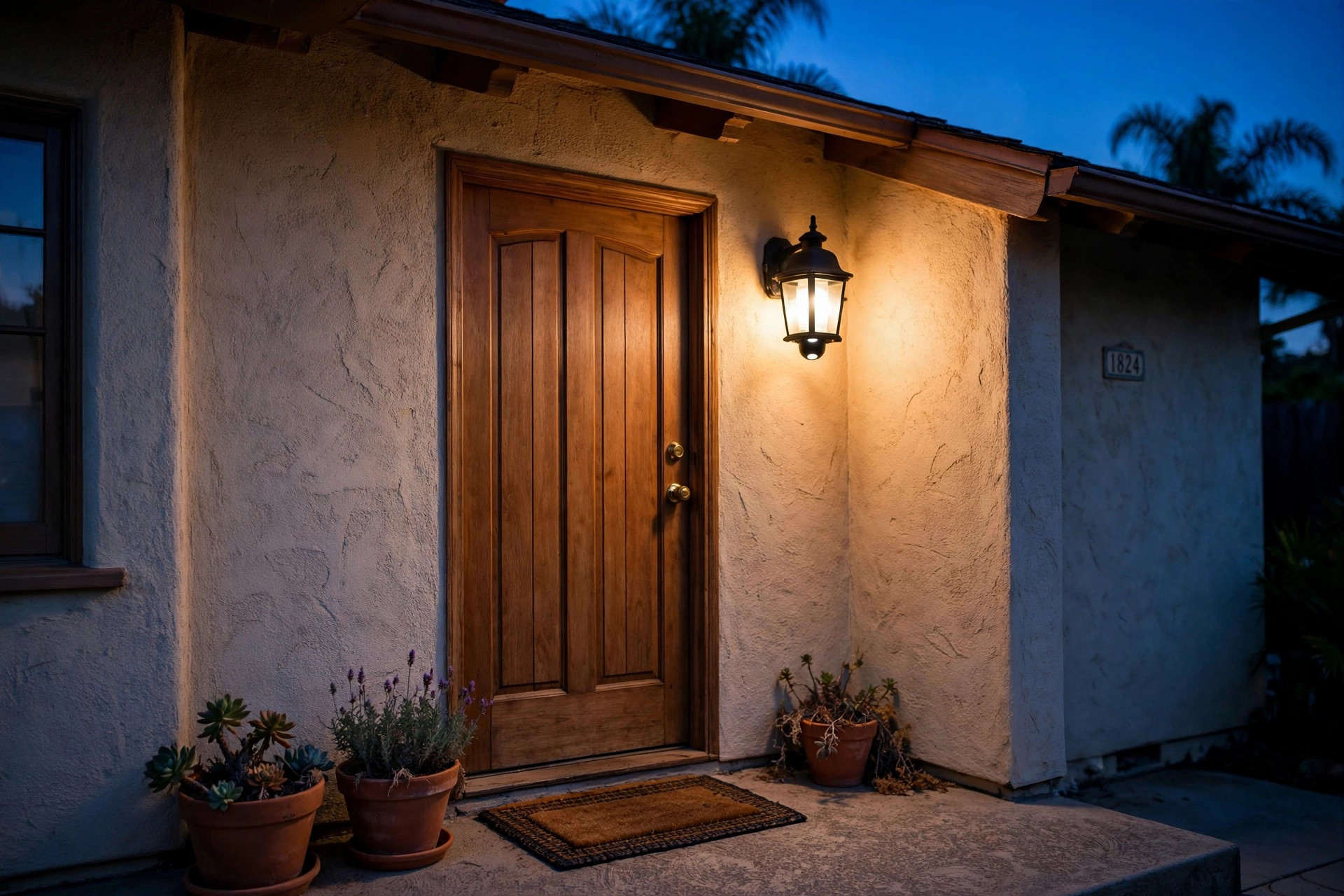

When night falls across California, the porch is the first thing a guest sees. A dark step is hard to find. A dark door is hard to open. Many home owners across the state have found a simple answer in sensor porch lights california homes usa owners now choose as their first line of defense. These are small outdoor lights with a built-in motion sensor. When someone walks close, the light turns on by itself. When the area is quiet again, the light turns off.
This guide explains how these lights work, what to look for, what they cost, and how to keep them running for years. The words are simple. The facts are plain. By the end, any home owner will know enough to pick the right light with full confidence.
Why It Matters
A porch light that reacts to motion does three things at once. First, it makes the home safer to enter. No one has to fumble for keys in the dark. Second, it saves power. The light is off most of the night and runs only when needed. Third, it warns of strangers. A light that snaps on when a person moves is a strong signal that the home is watched.
California adds its own reasons. Many parts of the state stay warm through the winter, so doors are used late into the evening. Power costs are high in much of the state, so a light that turns itself off saves real money. In dry months, a bright porch also helps home owners see walkways and driveways where brush and debris may gather.
The Rise Across the Country
Motion-sensor porch lights started as simple security lamps. Over the years they have grown into a full market of styles, colors, and smart features. Builders now put them on new homes as standard gear. Older homes gain them with a simple swap of one fixture. If you want a broad look at choices across the market, the sensor porch lights buying guide gives a wider view of models and features found in stores today.
How to Choose the Right Light: Sensor Porch Lights California Homes Usa
Motion Sensor Type
Most porch lights use a passive infrared sensor. It feels body heat and motion. When a warm object moves inside its view, the light clicks on. This type is cheap and sure. Some models add a dusk-to-dawn eye. The eye keeps the light off in day time even when something moves. At night, the motion sensor takes over.
Look for a sensor with a wide angle, near 180 to 240 degrees. A narrow sensor may miss a person who steps in from the side. Look for a reach of at least 20 to 30 feet. That is enough for most porches and short walkways.
Light Color and Brightness
Outdoor lights are often rated in lumens. A small porch needs about 400 to 800 lumens. A large porch or a driveway edge may need 1,000 or more. Color is rated in Kelvin. A warm white near 2700K to 3000K feels like an old lamp. A cool white near 4000K to 5000K looks bright and clear, like day light. Many California home owners pick warm white for the front door. It feels like a welcome, not a warning.
Power Source
There are two main kinds. Hard-wired lights draw power from the home circuit. They are bright and steady. Solar models run on a small panel and a battery. They are easy to place, but they are dimmer and they fade on cloudy weeks. For a main porch light, hard-wired is the surer choice. Solar works well for side paths and garden edges.
Durability and Weather Rating
Check the weather rating on the box. A light rated for wet locations can face rain from any side. A light rated only for damp spots can take mist but not direct rain. In coastal California, salt air can eat cheap metal. Choose sealed housings and rust-proof screws. A good model from a known maker will last five to ten years with basic care.
Independent testers such as Consumer Reports review outdoor lighting for build quality and real-world brightness. Their test notes help separate lasting fixtures from thin ones that fade fast.
Types and Options
Classic Wall-Mounted Fixtures
These are the most common. One fixture mounts on the wall beside the door. A sensor sits under or beside the lamp head. Styles range from plain boxes to old-style lanterns. If the home has a classic look, a lantern with a sensor fits well. See the outdoor wall lanterns buying guide for styles that pair old charm with new sensors.
Motion Flood Lights
Flood lights put out more power. They often carry two lamp heads that can be aimed at the driveway, the yard, or the walk. They are the right pick when the porch opens onto a wide area. They are brighter than most porch lamps and may need a wider sensor range. Read more in the motion flood lights buying guide before choosing one for a large frontage.
Smart and Connected Models
Some porch lights link to a phone or a home hub. They can send a ping when motion is felt. They can turn on at set times. They can pair with a doorbell camera. These features add cost and add one more thing to set up. They make sense when the home already has other smart gear. Home improvement writers at Bob Vila cover how these connected lights fit into full porch upgrades.
Solar Sensor Lights
A solar sensor light has no wires. A small panel charges a battery by day. Motion trips the light by night. They are cheap and quick to mount. They are best for sheds, fences, and side gates rather than the main door. In foggy coastal towns, a solar lamp may get too little sun to run all night.
Cost and Price
A basic hard-wired sensor porch light costs about twenty to fifty dollars. A well-made brand model with a strong sensor costs fifty to one hundred and fifty dollars. Designer lanterns and smart models run from one hundred to three hundred dollars or more.
Store price lists at The Home Depot and Lowe’s show how wide the range runs. A simple swap of an old porch light for a sensor model is often a do-it-yourself job. A new wiring run by an electrician can add one hundred to three hundred dollars to the project.
Running Costs
A modern LED sensor light draws very little power. A ten-watt LED that runs a few minutes each night costs only a dollar or two a year to run. Compare that with an old sixty-watt bulb left on all night. That old bulb can cost thirty to fifty dollars a year at California power rates. The sensor light pays for itself in saved power, often in the first year.
Energy guides from ENERGY STAR and the U.S. Department of Energy explain how LED fixtures and smart controls cut home energy use. Their advice is free and plain to read.
Installation Notes
Turn off the breaker before any wiring work. This rule has no exception. Test the wires with a voltage tester before touching them.
Mount the light about seven to nine feet above the porch floor. Too high, and the sensor may miss small movement. Too low, and the light may blind guests. Aim the sensor slightly down and outward. Most sensors let the owner set three things: the wait time before the light turns off, the range of the sensor, and the dark level at which it arms.
Wait time is often set to one to five minutes. A short time saves power. A longer time keeps the porch lit while guests talk at the door. Pick what fits the home.
Point the lamp head at the ground and the door, not at the street. A light that shines into the road will bother drivers and neighbors.
Care and Upkeep
Cleaning
Wipe the lens and the sensor eye twice a year with a soft cloth and mild soap. Dust and spider webs can block the sensor. A dirty lens makes the light dim.
Bulb and Battery Care
Most new fixtures use built-in LEDs that last for years. Older fixtures take screw-in bulbs. Swap in LED bulbs rated for outdoor use. For solar models, replace the rechargeable battery every one to two years. A tired battery is the most common cause of a dead solar light.
Winter and Storm Checks
In mountain towns, check the fixture after storms for loose mounts. In coastal towns, rinse salt spray off the housing now and then. Keep plants trimmed back from the sensor. A branch that waves in the wind can trip the light all night.
Detailed care steps for outdoor fixtures appear in the lighting how-to guides at The Spruce. Their seasonal checklists are easy to follow.
Safety
A sensor porch light improves safety, but a few careless steps can undo the good.
Do not wire the light on the same circuit as an alarm without reading the manual. Some alarms need a steady circuit. Do not place the light where it shines in the eyes of people on the sidewalk. Glare can make a fall more likely, not less.
Keep the ladder steady when mounting the fixture. Have a helper hold the base. Wear gloves when handling old wiring. If the wires look burned or brittle, stop and call an electrician.
For buyers who want to compare models by feature, specialty lighting shops like Lamps Plus and Lumens list sensor range, brightness, and finish in clear tables. Big-brand makers such as Philips also publish full spec sheets for their outdoor sensor lines.
Frequently Asked Questions
Do sensor porch lights work in the daytime?
Most do not, and that is by design. A dusk-to-dawn eye keeps the motion sensor off while the sun is up. This saves power and keeps the light from clicking on all day. If the light turns on in full sun, the eye may be dirty or the setting may be wrong.
Will small animals keep setting off the light?
A good sensor can be aimed and set to ignore ground-level movement. Aim the head down at the porch floor, not far out into the yard. Many models let the owner lower the range. This keeps cats and raccoons from tripping the light while still catching a person at the door.
Can I add a sensor to my old porch light?
Yes, in many cases. Some sensor kits screw into the existing socket between the fixture and the bulb. Others wire into the junction box. A socket-type sensor is the easy path. A wired unit needs the power off and basic wiring skill.
How long does the light stay on after motion?
That is up to the owner. Most fixtures let the time be set from about thirty seconds to ten minutes. A common choice is two to three minutes. That is enough time to unlock the door and step inside.
Are sensor porch lights allowed by local rules?
In almost all cases, yes. Some towns have dark-sky rules that ask home owners to aim lights downward and use warm colors. Check the city or county code before buying a very bright model. The rules are easy to find on most city websites.
What if the light stops sensing motion?
First, clean the sensor eye. Second, check that the range and dark settings were not bumped. Third, check the breaker and the bulb. For solar models, check the battery and make sure the panel gets full sun. If none of these help, the sensor unit may have failed and the fixture may need to be replaced.
A Final Word
A porch light that thinks for itself is one of the smallest upgrades a home can make. It costs less than a night out. It fits in an hour. It pays back in lower power bills and in quiet peace of mind. For sensor porch lights california homes usa buyers, the winning choice is simple: a sturdy wet-rated fixture, a wide sensor, warm light, and a clean mount by the door. Buy it once, aim it well, and let the light do the watching.
References
Bob Vila. (n.d.). Home improvement advice. https://www.bobvila.com Consumer Reports. (n.d.). Product reviews and ratings. https://www.consumerreports.org ENERGY STAR. (n.d.). Energy efficient products. https://www.energystar.gov Lamps Plus. (n.d.). Lighting and home decor. https://www.lampsplus.com Lowe’s. (n.d.). Home improvement products. https://www.lowes.com Lumens. (n.d.). Lighting and ceiling fans. https://www.lumens.com Philips. (n.d.). Lighting products. https://www.philips.com The Home Depot. (n.d.). Home improvement products. https://www.homedepot.com The Spruce. (n.d.). Home and garden advice. https://www.thespruce.com U.S. Department of Energy. (n.d.). Energy efficiency and renewable energy. https://www.energy.gov
Was this guide helpful?

About David Wilson
The My Garden US editorial team writes practical, in-depth home and garden guides for American homeowners — tested advice, no fluff.
You May Also Like
Deck Cap Lights Buying Guide USA: How to Choose the Best Lights for Your Deck Posts
May 18, 2026 0 views
Ceiling Fans Lights Texas Homes USA: The Complete Guide
January 31, 2026 0 views
Under Cabinet Strips for Sale USA: A Plain Buying Guide
August 21, 2026 0 views