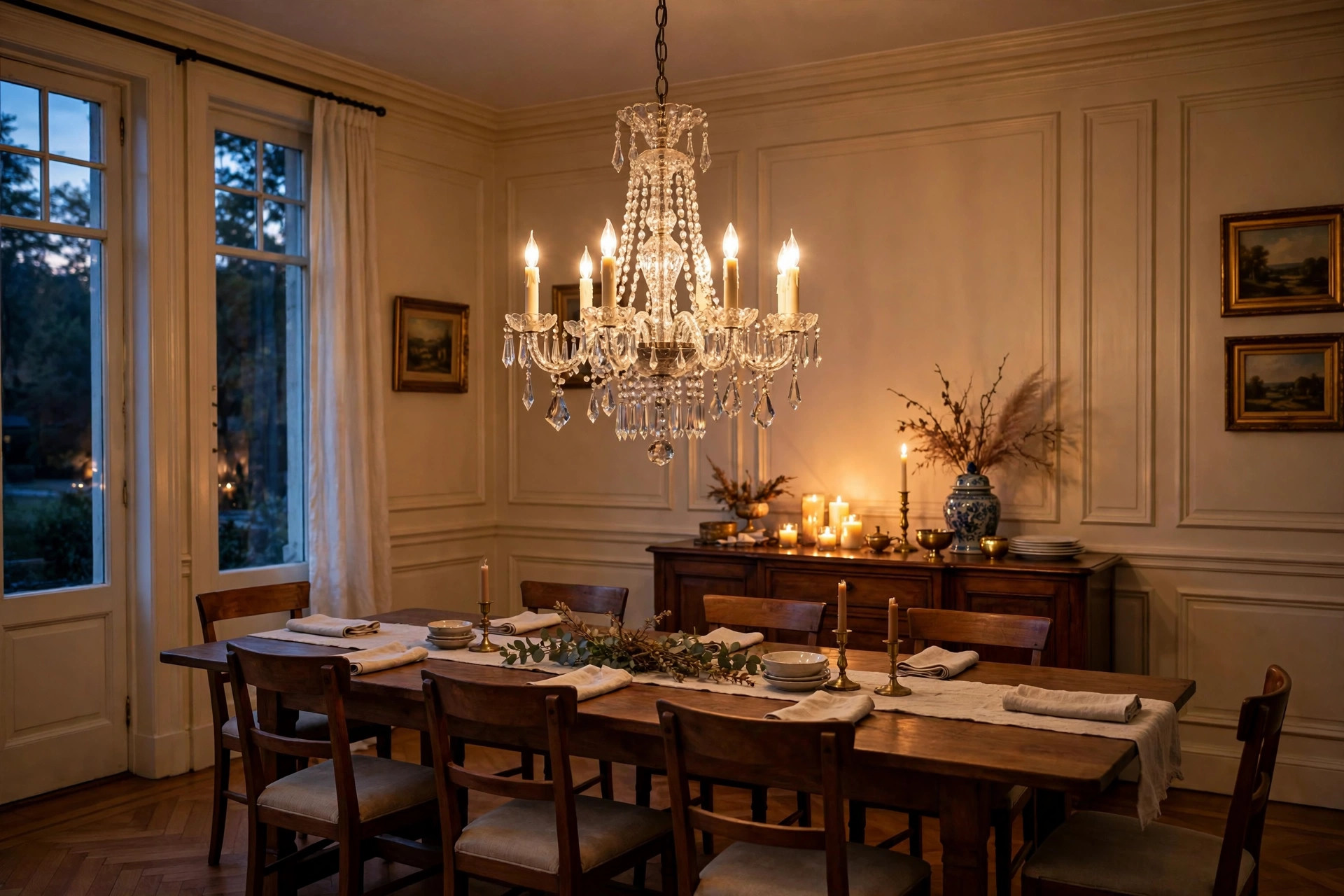

The dining room chandelier has a special place in the American home. It hangs over the table where families gather for holiday dinners, birthday parties, and quiet weeknight meals. For more than a century, builders and homeowners have placed a central fixture above the dining table. This dining room chandeliers American homes guide walks through every step of choosing, hanging, and caring for one, in plain language any homeowner can use.
A chandelier is not the same as an ordinary ceiling light. It draws the eye. It sets the mood of the room. And it must give enough light to see the food and the faces around the table. Pick the wrong size or hang it too high, and the whole room feels off. This guide will help you get it right the first time.
Why the Dining Room Chandelier Matters
The dining room is often the most formal room in an American house. Many homes built between the 1920s and the 1970s have a separate dining room, and even open plan homes usually set aside a clear dining area. In both cases, the chandelier marks the space. It tells everyone where the table belongs and gives the room a center.
Light also shapes how we feel at the table. A bright, harsh overhead light makes a meal feel rushed. A warm, soft glow makes people linger and talk. Studies of home lighting have long shown that warm light near 2700 kelvin suits dining areas best, because it flatters food and faces. A dimmable fixture lets the same room serve a weekday breakfast and a Thanksgiving dinner. For more ideas on matching fixtures to rooms, see the guide on vanity light bars for American homes and other room-by-room lighting plans.
A good chandelier also adds value. Real estate agents often point to updated dining room lighting as a low cost way to make a home look finished. The fixture is one of the first things a buyer sees when entering the dining room, and a dated or broken fixture gives a poor first impression.
How to Choose: Size, Height, and Brightness: Dining Room Chandeliers American Homes Guide
Getting the Size Right
The most common mistake is buying a chandelier that is too small. A tiny fixture over a long table looks lost. A simple rule has served American homeowners for decades: add the length and width of the dining room in feet, and the total is the diameter of the fixture in inches. A room that is 12 feet by 14 feet calls for a chandelier about 26 inches across.
The table matters too. The fixture should be about one half to two thirds the width of the table. A 48-inch table takes a chandelier roughly 24 to 30 inches wide. If the table has a leaf that extends it, size the light to the table as you use it most days.
Hanging Height
Height is the second common mistake. Hang the chandelier too high and it lights the ceiling instead of the table. Hang it too low and tall guests bump their heads. The standard rule is clear: hang the bottom of the fixture 30 to 36 inches above the tabletop when the ceiling is eight feet high. For each extra foot of ceiling height, add about three inches.
Many modern homes have vaulted or two-story ceilings in the dining area. In that case, the fixture may need a longer downrod or chain. Measure from the table, not from the floor. A 36-inch rule of thumb for chandelier height above the dining table keeps the light where the food is.
Brightness and Bulbs
Count the total light, not the number of bulbs. A dining room needs roughly 300 to 400 lumens per fixture for a warm, comfortable glow, with a dimmer to turn it down for evening meals. The ENERGY STAR program lists efficient bulbs that give warm light while using far less power than old incandescent bulbs. Most chandeliers made after 2000 accept standard medium-base bulbs, so you can fit warm LED bulbs without changing the fixture.
Pay attention to the color of the light. Bulb makers mark it in kelvin. For the dining room, choose 2700 to 3000 kelvin. Cool daylight bulbs at 5000 kelvin make the room feel like an office and make food look pale. The U.S. Department of Energy, through energy.gov, publishes plain guides on bulb color and efficiency that take only a few minutes to read.
Types and Styles of Dining Room Chandeliers
Candle-Style Chandeliers
The classic American chandelier copies the look of old candle holders. It has arms that curve upward, each holding a small bulb shaped like a flame. Brass and bronze finishes suit colonial and traditional homes. Crystal drops add sparkle and were very popular in the 1980s and 1990s. This style still fits formal dining rooms with wood furniture and crown molding.
Drum and Shade Chandeliers
A drum chandelier wraps the light in a fabric shade shaped like a drum. It gives a softer, more even light and hides bare bulbs from view. This style works well in transitional and modern homes where the dining room opens to the kitchen. Neutral linen or cotton shades are easy to live with and easy to clean.
Linear and Island Chandeliers
Long, narrow chandeliers hang over long tables and kitchen islands alike. They spread light evenly from end to end instead of pooling it in the middle. Many American families with open plan homes choose a linear fixture over a rectangular table. These fixtures often come with adjustable rods so you can set the length to match the table.
Rustic and Farmhouse Chandeliers
Wood beams, black iron, and rope details define the farmhouse style. These chandeliers suit country kitchens, mountain homes, and remodeled farmhouses. They pair well with wood tables and give a warm, casual feel. Because the materials are rough, the fixture hides dust better than polished crystal.
Modern and Minimal Chandeliers
Slim metal rings, glass globes, and clean lines define the modern style. These fixtures give strong light with little visual weight, which suits small dining areas. Many use built-in LED modules. Note that built-in LEDs cannot be replaced by the homeowner, so check the warranty before you buy.
Style choice is personal, but the room should come first. A crystal chandelier in a small apartment dining nook can feel heavy. A tiny modern pendant over a twelve-seat farm table looks lost. Stand in the doorway and look at the room as a guest would. The fixture should feel like it belongs. Retailers such as Home Depot and Lowe’s show each style in room settings, which helps you judge scale before you buy.
Cost and Price: What to Expect
Prices for dining room chandeliers span a wide range. A simple fabric drum fixture may cost 80 to 150 dollars. Mid-range fixtures from national brands run 200 to 600 dollars. Large crystal or designer pieces can cost 1,000 dollars or more. The finish, the number of lights, and the brand set the price.
Installation adds to the total. A straight replacement on an existing box may cost 150 to 300 dollars from a licensed electrician. A new installation that needs wiring run through the ceiling can cost 300 to 600 dollars or more. If the fixture is heavy, the ceiling box must be rated to hold its weight. A standard light box holds 50 pounds. Heavier chandeliers need a fan-rated box, which the electrician can install.
Do not forget the dimmer. A wall dimmer costs 25 to 60 dollars plus installation, and it makes the biggest difference in how the room feels. If you use LED bulbs, buy a dimmer marked as LED compatible, or the lights may flicker. Large lighting stores like Lamps Plus and Lumens list compatible dimmers with each fixture, which takes the guesswork out of pairing them.
Care and Upkeep
A chandelier collects dust on every arm, bulb, and crystal. Dust dulls the light and makes the fixture look tired. Plan to clean it twice a year. First, turn off the power at the switch. For most fixtures, a soft feather duster or a dry microfiber cloth is enough. Wipe each bulb when it is cool. Dusty bulbs give noticeably less light.
Crystal chandeliers need deeper cleaning every year or two. Mix a small amount of mild dish soap in warm water. Dip a soft cloth, wring it well, and wipe each crystal piece. Do not spray water into the sockets. Some owners prefer a spray-on crystal cleaner made for chandeliers, sold at lighting stores. Work with a sturdy ladder and have someone hold it.
Check the fixture once a year. Look for loose arms, cracked shades, and frayed wire where the chain meets the ceiling. Tighten mounting screws gently. Replace any bulb the day it burns out, because running a multi-bulb fixture with dead bulbs stresses the look of the room and gives uneven light.
Keep spare bulbs on hand. Write the bulb type on a small card and tape it inside a kitchen cabinet near the dining room. That way anyone in the house can buy the right replacement. Many homeowners also keep one spare shade or globe, since matched sets are hard to find years later.
Safety
Safety comes first with any ceiling fixture. Electricity and ladders are a risky pair. Turn off the breaker, not just the wall switch, before you touch any wiring. Test the wires with a non-contact voltage tester before you begin.
Check the weight rating. Every chandelier lists its weight on the box. The ceiling box must be rated to hold it. Older American homes often have simple plastic boxes that hold only a light fixture. A heavy chandelier needs a metal box screwed into a joist or a brace between joists. When in doubt, call a licensed electrician. The Consumer Product Safety Commission is not on this article’s source list, but national electrical codes and local permit offices set the rules your electrician follows.
Chains and downrods must hang straight and secure. The fixture should not sway when touched lightly. If the chandelier rocks in a draft, the mounting is loose and needs attention. Never hang anything from a chandelier, and keep it clear of curtains that could touch hot bulbs.
Bulb wattage limits matter. Each socket has a maximum wattage printed inside it. Do not exceed it. With LED bulbs this is rarely a problem, since LEDs draw far less power than old bulbs, but the rule still stands for the few sockets that take halogen or incandescent bulbs.
Frequently Asked Questions
What size chandelier do I need for my dining room?
Add the room’s length and width in feet. The total is the fixture diameter in inches. A 12 by 14 foot room needs about a 26-inch fixture. Also make the fixture one half to two thirds the width of the table. When the room and the table disagree, split the difference toward the table size, since the light hangs over the table.
How high should a chandelier hang above the dining table?
Hang the bottom of the fixture 30 to 36 inches above the tabletop for an eight-foot ceiling. Add about three inches for each extra foot of ceiling height. Measure from the table surface, not the floor. This range puts light on the food without blocking views across the table.
Can I install a dining room chandelier myself?
You can replace a fixture on an existing, properly rated box if you are comfortable with basic wiring and you turn off the breaker first. New wiring, heavy fixtures, or high ceilings call for a licensed electrician. Many homeowners pair the project with related updates, such as new ceiling fans with lights for California homes or bedroom table lamps bought at the same time.
Are LED bulbs good for chandeliers?
Yes. Warm white LED bulbs at 2700 to 3000 kelvin give the same cozy look as old incandescent bulbs while using about one sixth of the power. Choose dimmable LEDs and pair them with an LED-rated dimmer. Philips and other major bulb makers publish clear guides on matching dimmers to their bulbs.
How do I clean a crystal chandelier without taking it apart?
Turn off the power. Dust first with a soft brush. Then wipe each crystal with a cloth barely dampened with warm water and mild soap, or use a spray cleaner made for chandeliers. Work from top to bottom so drips fall on pieces you have not cleaned yet. Let everything dry before you turn the power back on.
What style chandelier suits a modern American home?
Drum shades, linear fixtures, and slim metal ring designs suit modern and open plan homes. They give strong, even light without the visual weight of crystal. If the home mixes styles, a simple transitional fixture with clean lines and a warm finish usually fits both the dining room and the rooms around it. The Spruce keeps photo galleries of current styles that help you picture each look in a real room.
A Final Word
A dining room chandelier is one of the few fixtures in the home that must work hard and look beautiful at the same time. Take the time to measure the room and the table. Choose warm, dimmable light. Hang it at the right height. Clean it twice a year and check its mounting. Follow this dining room chandeliers American homes guide, and the fixture over your table will serve family dinners, holiday feasts, and quiet mornings for many years to come.
References
ENERGY STAR. (n.d.). Energy efficient products. https://www.energystar.gov Lamps Plus. (n.d.). Lighting and home decor. https://www.lampsplus.com Lowe’s. (n.d.). Home improvement products. https://www.lowes.com Lumens. (n.d.). Lighting and ceiling fans. https://www.lumens.com Philips. (n.d.). Lighting products. https://www.philips.com The Home Depot. (n.d.). Home improvement products. https://www.homedepot.com The Spruce. (n.d.). Home and garden advice. https://www.thespruce.com U.S. Consumer Product Safety Commission. (n.d.). Product safety information. https://www.cpsc.gov U.S. Department of Energy. (n.d.). Energy efficiency and renewable energy. https://www.energy.gov
Was this guide helpful?

About Lisa Anderson
The My Garden US editorial team writes practical, in-depth home and garden guides for American homeowners — tested advice, no fluff.
You May Also Like

Reading Floor Lamps USA Online Deals: A Simple Guide to Bright Corners
April 18, 2026 0 views
Motion Flood Lights for Florida Homes USA: A Plain Guide
May 28, 2026 0 views
Kitchen Island Pendants for Florida Homes: A Plain Buyer’s Guide
July 3, 2026 0 views