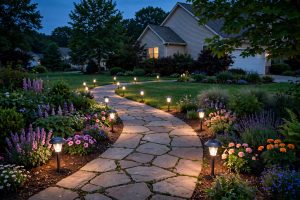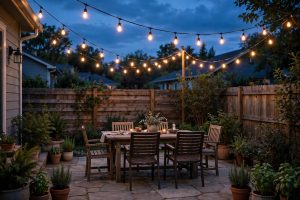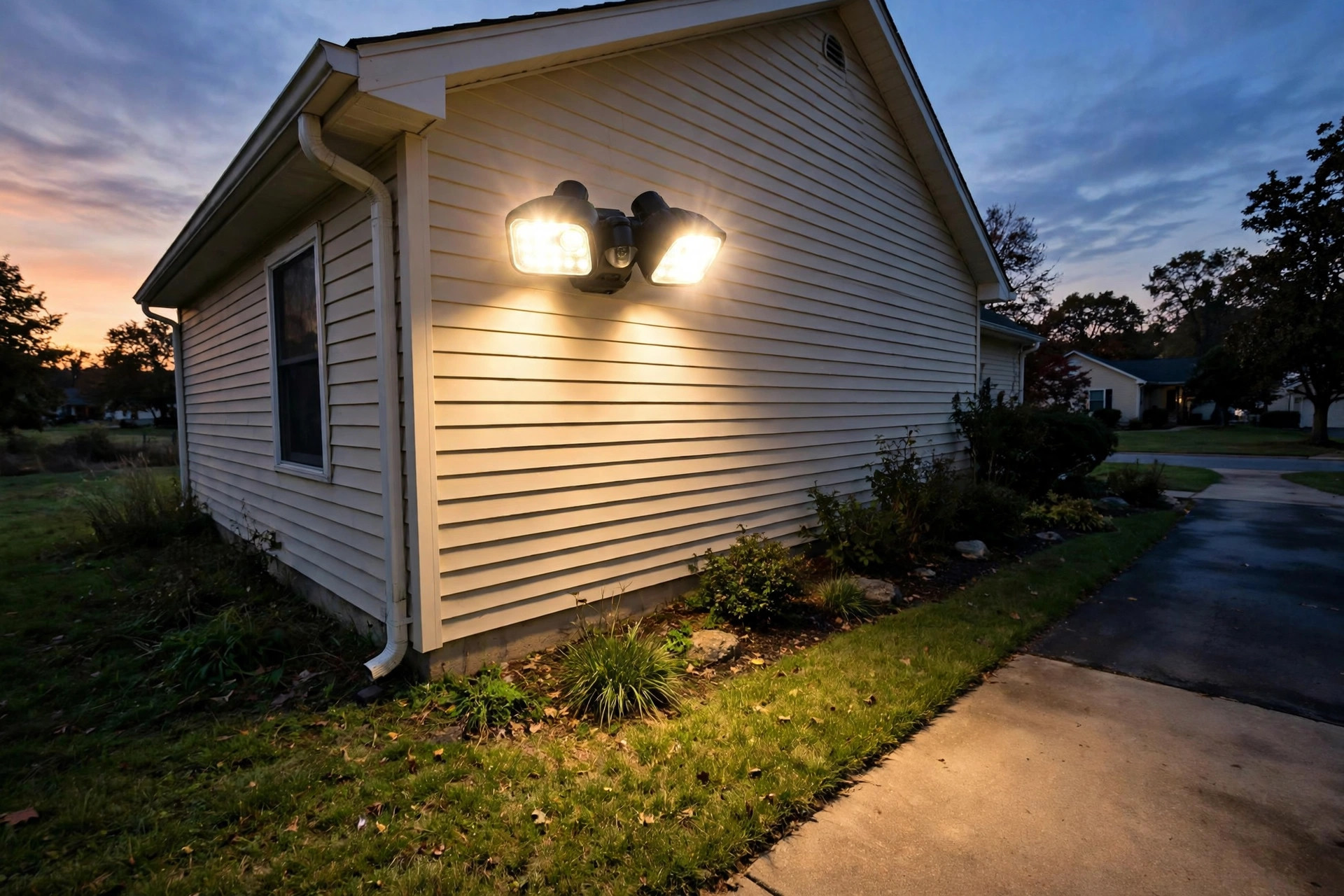
A dark yard can make a house feel unsafe. A dark porch can hide a step and cause a fall. This motion flood lights buying guide USA will help you pick the right light for your own home. Motion flood lights are bright outdoor lights that turn on by themselves when something moves in front of them. They light up the dark, warn off intruders, and save power because they only run when needed. You do not need any special skill to buy the right one. You only need to know a few facts. This guide gives you those facts in plain words.
Why Motion Flood Lights Matter
A good light at night does more than make things bright. It gives a family peace of mind. When a motion flood light clicks on as you walk up the drive, you can see the path, the lock, and the door. When it clicks on for a stranger at the side of the house, that stranger knows he has been seen. Police and home safety groups have said for years that a well lit home is a less tempting target. A motion sensor light that reacts to movement does the job better than a lamp left on all night, because the sudden light draws the eye.
These lights also save money. A plain flood light burns power every hour it stays on. A motion flood light stays off most of the night and only burns power for a few minutes at a time. Over a year, the saving is real. Homes in the United States use these lights by the front door, over the garage, along the back fence, and above the patio. They also suit small shops, barns, and church lots. Wherever darkness is a problem, a motion flood light is a fair answer.
New homes often keep those and add motion lights on top. The two work well together. The porch lamp gives a soft steady glow. The motion flood light gives a strong burst when it is needed.
How to Choose: What to Look For: Motion Flood Lights Buying Guide Usa
Buying the right light starts with five facts. Learn these and the store shelf will make sense.
Brightness in Lumens
Forget the old watt numbers. Brightness is now rated in lumens. For a small porch or walkway, 700 to 1,300 lumens is enough. For a driveway or back yard, 1,500 to 3,000 lumens does the job. For a large lot or a barn yard, 4,000 lumens and up may be needed. Too much light can annoy neighbors and waste power, so buy only what the space needs. The packaging of most brands, such as those sold at Home Depot, lists lumens on the front. Buying guides at The Spruce explain these numbers in plain words.
Motion Sensor Range and Angle
The sensor is the eye of the light. Its range tells you how far away it can see movement. Common ranges run from 30 feet to 100 feet. Its angle tells you how wide the field of view is. A 180 degree sensor sees a wide arc. A 270 degree sensor sees almost all the way around. For a corner mount, 270 degrees is handy. For a wall by a door, 180 degrees is fine. Check also the detection zone. Some cheap lights miss small animals. Some costly ones let you tune the zone so a tree branch does not set them off all night.
Power Source
Motion flood lights come in three kinds of power. Hardwired lights tie into the house wiring and need an electrician or a brave do it yourself owner. Battery lights run on D cells or rechargeable packs and are easy to hang anywhere. Solar lights carry a small panel and charge by day. Each kind has its place. A buying guide from ENERGY STAR notes that hardwired LED models are the most steady for daily use, while solar models suit spots far from the house where no wire can reach.
Light Color
Color is rated in kelvins. A 2700K lamp gives a warm yellow glow like an old porch bulb. A 5000K lamp gives a cool white light like noon sun. Most homeowners pick 3000K to 4000K for a natural look that does not feel harsh. For security, cooler white light shows faces and plates more clearly. Many lights sold today let you switch the color with a small button on the housing.
Timer and Sensitivity
The best lights let you set how long they stay on after motion stops. Common settings run from one minute to twenty minutes. They also let you set sensitivity. Low sensitivity will only react to a person. High sensitivity will react to a cat or a car down the street. A dusk to dawn control is also worth having. It keeps the light off in daylight so the sensor does not fire for no reason.
Types and Options
Hardwired LED Flood Lights
These are the workhorses. They mount on a junction box and tie into the house circuit. They shine the brightest and last the longest. Brands carried by Lowe’s sell two head and three head models, and big lamp makers such as Philips sell outdoor lines through most large stores. Two heads cover a door or a garage. Three heads cover a wide drive. The LED bulbs in these lights can last 50,000 hours, which means many years of normal use. The cost is higher up front and you may need to pay an electrician.
Solar Motion Flood Lights
Solar lights charge their batteries from a small panel. They mount anywhere the sun can reach the panel for a few hours a day. They are cheap and easy to fit. They shine less brightly than hardwired lights and they dim on cloudy winter days. For a garden shed, a fence corner, or a far gate, they are a good pick. Look for models with a separate panel you can place in the sun while the light sits in the shade.
Battery Motion Lights
Battery lights are the simplest of all. You hang them with two screws and they work. They use D batteries or a rechargeable pack. They suit renters who cannot change wiring. The trade off is upkeep. You will change batteries a few times a year. Pick models with an LED rated for long life so the batteries last as long as possible.
Smart Motion Flood Lights
Smart lights link to your phone through WiFi. They can send an alert when motion is seen. Some carry a small camera. Some let you set zones and schedules from an app. They cost more and they need a strong WiFi signal at the mount point. If you like to check the yard from work, a smart light is worth the price. If you only want light at night, a plain model will do.
Bulb Only Upgrades
Some homes already have old flood light housings. In that case you can buy motion sensor bulbs that screw into the old sockets. They cost less than a whole new light. They are not as strong as a full unit but they are a fast fix for a rental or a quick sale.
Cost and Price
Prices in the United States run in clear bands. A basic solar or battery motion light costs 20 to 40 dollars. A good mid range hardwired LED light with two heads costs 40 to 80 dollars. A strong three head model with long range and wide angle costs 80 to 150 dollars. A smart light with a camera costs 120 to 250 dollars and up.
Running costs are small. An LED flood light that runs for five minutes a night uses very little power. The U.S. Department of Energy notes that LED lamps use far less power than the old halogen lamps they replaced. Even a bright 2,000 lumen LED uses only about 20 watts. At average United States power rates, a year of normal motion light use may cost less than a few dollars.
Paying an electrician to add a new hardwired box will cost more than the light itself. Plan for 150 to 300 dollars for a simple job in most parts of the country. If a junction box is already in place, you can swap the light yourself with the power off at the breaker. Solar and battery lights need no electrician at all.
Look for deals in the fall when stores clear summer stock. Big home centers also run sales before the long nights of winter, and lighting shops such as Lamps Plus and Lumens run their own sales too. If you are buying several lights, a multi pack can cut the price per light by a third.
Care and Upkeep
A motion flood light asks for little care. Wipe the lens and the sensor window once or twice a year. Dust and spider webs can dim the light and fool the sensor. Trim any bush that grows into the detection zone. A branch that waves in the wind will set off the light all night and wear out the bulb and your patience.
Check the aim twice a year. Lights can slip on their mounts after storms. Point the heads down at the ground you want lit, not out at the street or into a neighbor’s window. Check the timer setting too. After a power cut, some lights reset to factory settings and may stay on too long.
For battery lights, mark your calendar to change batteries in spring and fall. For solar lights, keep the panel clean and free of snow. For hardwired lights, listen for a buzz or flicker, which can mean a loose wire. Turn off the breaker and check the connections, or call an electrician if you are not sure.
LED lamps last many years but they do not last forever. When the light dims or dies, replace the whole head or the bulb unit as the maker directs. Take old batteries to a store or town drop off for recycling.
Safety
These lights run on power and hang high on walls, so treat them with care. Always turn off the breaker before you touch a hardwired light. Test that the power is off with a non contact tester before your hands go near the wires. If the box has no ground wire, stop and call an electrician.
Mount the light at least eight feet above the ground so no one can reach it easily. Keep it away from gas meters, dryer vents, and places where water pools. Outdoor lights must be rated for wet locations. The box will say “suitable for wet locations” if it is made for the job. Do not mount an indoor rated light outside.
Do not aim a strong flood light at the road. It can blind drivers at night and it may break local rules. Many towns in the United States have rules about light spilling onto a neighbor’s land or into windows. Aim the light down and keep the spill on your own ground. If a neighbor complains, turn the heads down a touch. Good fences make good neighbors, and so do well aimed lights.
Keep the packaging and the receipt. Most brands give a warranty of two to five years. Write the date of purchase on the box with a marker so you know when the warranty runs out.
FAQ
How far can a motion flood light see?
Most home models see 30 to 70 feet. Long range models can see 100 feet or more. The range drops in very cold or very hot weather. Mount the light high and aim the sensor, not the lamp heads, at the area you want to watch.
Will a motion flood light turn on for small animals?
It may. High sensitivity settings can pick up cats, dogs, and raccoons. Set the sensitivity to low and aim the sensor above the height of small animals.
Can I leave the light on all night instead of using motion?
Many models have an override. Flip the wall switch off and on twice and the light stays on until dawn. Check your manual. Note that leaving it on all night wipes out the power saving that makes these lights worth buying.
Do solar motion lights work in winter?
They work but they shine less. Short days and low sun mean less charge. Snow on the panel stops charging. If you live where winters are dark and snowy, pick a hardwired light for the main doors and save solar lights for summer spots.
How many motion flood lights does a house need?
Most homes do well with two or three. Put one over the garage, one by the back door, and one at the darkest side of the house. Add more only after you live with the first set for a month. Too many lights can make the yard look like a parking lot and annoy the street.
Are LED motion flood lights safe for the eyes?
Do not stare straight into a bright LED at close range. Mount the light high and aim it down so no one looks straight into the heads. The lights are safe in normal use. Keep the boxes away from small children who might open the housing.
A Short Final Word
A motion flood light is a small buy that pays back every night. It lights your path, guards your doors, and keeps the power bill low. Start with one good hardwired LED over the garage or the back door. Aim it with care. Then add more where the dark still troubles you. If you want help with the lamps inside the house too, read our guide on indoor grow lights, our roundup of kitchen track lighting deals, and our bedroom table lamps buying guide. Buy once, aim well, and sleep easier.
References
ENERGY STAR. (n.d.). Energy efficient products. https://www.energystar.gov Lamps Plus. (n.d.). Lighting and home decor. https://www.lampsplus.com Lowe’s. (n.d.). Home improvement products. https://www.lowes.com Lumens. (n.d.). Lighting and ceiling fans. https://www.lumens.com Philips. (n.d.). Lighting products. https://www.philips.com The Home Depot. (n.d.). Home improvement products. https://www.homedepot.com The Spruce. (n.d.). Home and garden advice. https://www.thespruce.com U.S. Department of Energy. (n.d.). Energy efficiency and renewable energy. https://www.energy.gov
Was this guide helpful?

About Michael Thompson
The My Garden US editorial team writes practical, in-depth home and garden guides for American homeowners — tested advice, no fluff.