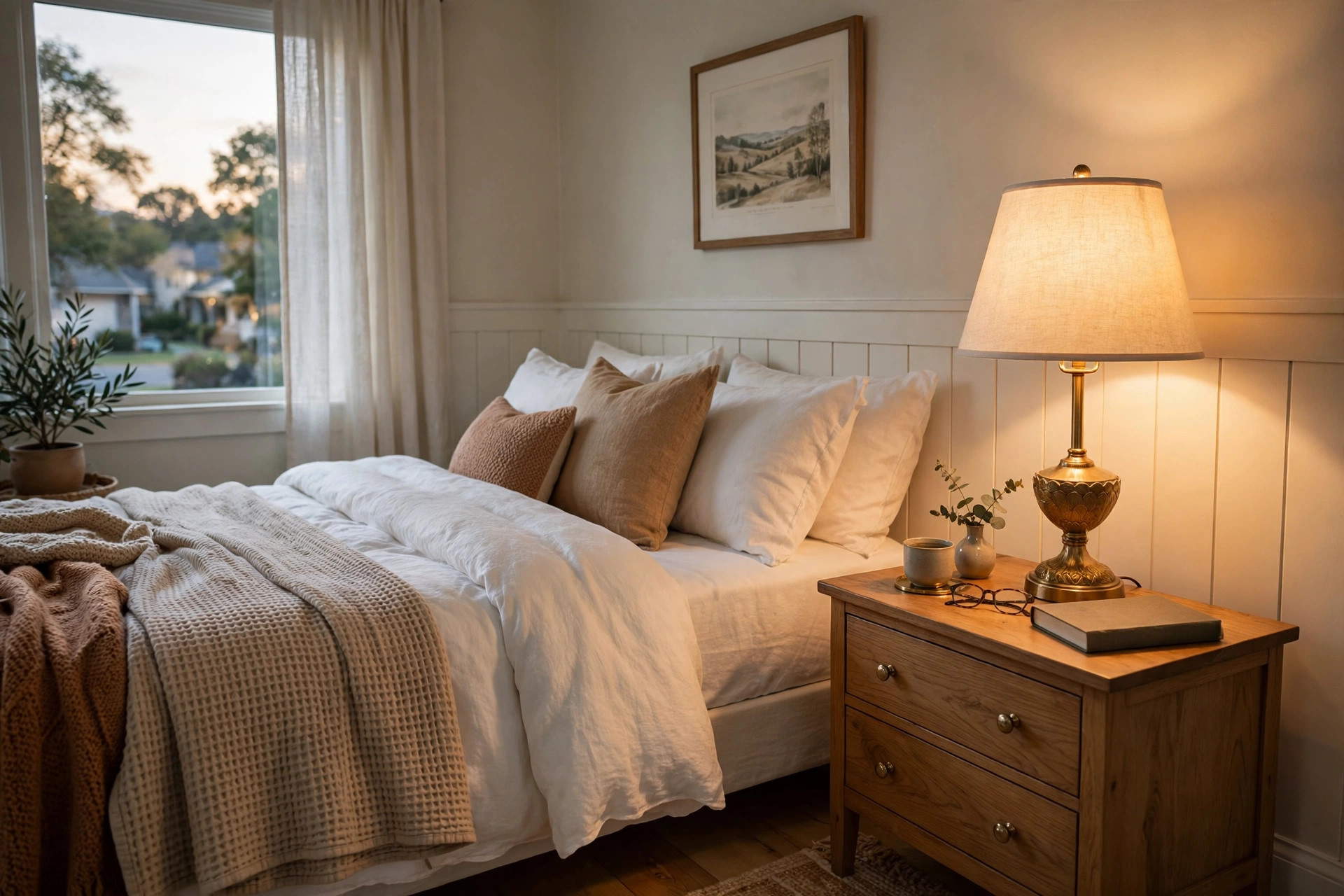

A good bedside lamp is more than a small decoration. It helps you read at night. It helps you wake up with calm light in the morning. It makes the bedroom feel warm and safe. This bedroom table lamps reviews buying guide usa walks you through the main choices. It explains styles, sizes, bulb types, and prices. It also points out safety rules that matter in a bedroom. By the end, you will know how to pick a lamp that fits your room, your budget, and your daily habits.
Why Bedside Lighting Matters
Light affects how we feel at night. A lamp that is too bright can make it hard to fall asleep. A lamp that is too dim can strain your eyes while you read. The right lamp gives you a soft pool of light exactly where you need it. It lets your partner sleep while you finish a chapter. It helps you find your glasses or your phone without turning on the harsh ceiling light.
A bedroom table lamp also shapes the look of the room. The base adds texture and color. The shade softens the glow and casts gentle shadows. Many homeowners choose lamps as part of a bedroom refresh because one small change can alter the mood of the whole space. For broader ideas on dressing up a room, advice sites such as The Spruce show how lighting and decor work together.
What to Look for Before You Buy: Bedroom Table Lamps Reviews Buying Guide Usa
Size and Scale
Start with your nightstand. A common rule is that the lamp base should take up about one third of the tabletop. Leave room for a book, a glass of water, or an alarm clock. Measure the table before you shop. The height matters too. The bottom edge of the shade should sit at about your eye level when you are in bed. This keeps the bulb from glaring in your eyes. Most bedside lamps stand between 24 and 32 inches tall. Tall headboards may call for a taller lamp. Low platform beds often look best with a shorter one.
Shade Shape and Material
The shade decides how light spreads. Drum shades push light up and down. They suit general bedside glow. Empire shades, which are wider at the bottom, push more light downward for reading. Square shades give a modern edge. Fabric shades create a warm, soft glow. Linen and cotton are common choices. Glass and metal shades give brighter, more direct light. White shades let the most light through. Dark shades keep the glow low and moody, which suits bedrooms where you want rest.
Bulb Type and Brightness
LED bulbs are now the standard choice for table lamps. They use far less power than old incandescent bulbs. They stay cool to the touch. They last for years. Brightness is measured in lumens. For a bedside lamp, 400 to 800 lumens is enough for most people. That is roughly the light of an old 40 to 60 watt bulb. Warm white light, around 2700K on the Kelvin scale, feels cozy and is kind to sleepy eyes. Bulb maker Philips offers warm dimmable LEDs made for bedside use. For facts on energy-saving bulb standards, check the listings at ENERGY STAR.
Dimmers and Controls
A lamp with a built-in dimmer costs a little more but gives you full control. You can turn it low for winding down and bright for morning tasks. Three-way lamps are another option. They let you switch between low, medium, and high with a simple tap of the socket. Touch-sensitive lamps need only a tap on the base. They are easy to use in the dark. Some new models work with phone apps or voice controls. If smart features interest you, our wifi smart bulbs buying guide explains how connected bulbs fit into home lighting.
Types of Bedroom Table Lamps
Classic gourd and urn lamps. These have rounded bases that suit traditional rooms. Ceramic, glass, and wood are common. They pair well with drum or empire shades.
Modern minimalist lamps. Slim bases in brass, black metal, or matte white fit modern bedrooms. Shades are often simple cylinders in white or cream fabric.
Rustic and farmhouse lamps. Wood bases, distressed finishes, and burlap or linen shades give a country feel. These lamps look at home in farmhouse and cottage style bedrooms.
Banker and piano lamps. These have green or brass shades on a slim arm. They give focused light for reading in bed. They suit vintage and study style rooms.
Crystal and glass lamps. Clear glass bases reflect light and suit glam or coastal rooms. They look light and airy on small nightstands.
Lamps with built-in features. Some lamps include USB ports for charging a phone. Others have small shelves or storage in the base. These are useful in small bedrooms where the nightstand must do double duty.
Specialty lighting stores such as Lumens carry many of these styles in one place, which makes it easy to compare shapes and finishes side by side.
Cost and Price in the USA
Prices vary widely. Budget lamps at big retailers start around 20 to 40 dollars. Mid-range lamps from known home brands run from 50 to 120 dollars. Designer and artisan lamps can cost 150 dollars or more. A pair of matching lamps often costs less per lamp than buying two singles.
What drives the price up? Solid materials like brass, ceramic, and hardwood cost more than plastic. Handmade shades cost more than mass-produced ones. Built-in dimmers, USB ports, and smart controls add to the price. Brand name adds some cost, but it often brings better wiring and a longer warranty.
Shop sales in January and late summer, when stores clear home goods. Retailers like The Home Depot and Lowe’s run regular lighting sales. Furniture retailers such as IKEA and Wayfair often price budget lamps well below specialty stores. Read recent buyer reviews before you pay a premium. Reviews tell you if the shade arrives warped, if the switch feels cheap, or if the lamp leans.
Care and Upkeep
Dust the base and shade once a week with a soft cloth or a lint roller. Fabric shades attract dust fast. A vacuum with a brush attachment keeps them fresh. Keep lamps away from direct sun. Strong sun fades fabric shades and can crack cheap plastic bases. Tighten the harp and finial once or twice a year. The harp is the metal frame that holds the shade. The finial is the small cap on top. Loose parts make shades tilt.
Change LED bulbs when they dim noticeably. LEDs fade slowly rather than burning out all at once. If your lamp flickers, try a different bulb before you blame the lamp. Cheap dimmers sometimes fight with LED bulbs. Match the bulb type to the dimmer type. The U.S. Department of Energy publishes simple guidance on pairing LEDs with dimmers, which can save you a service call.
Wipe the shade from the inside as well as the outside. The inner lining collects dust and dead insects over time. A dusty lining can dim the light and change its color. For paper shades, use a dry cloth only. Water can warp paper and stain it. For glass shades, a damp cloth with mild soap works well. Dry the glass fully to avoid water spots.
Store spare shades flat in a dry place. A spare shade kept in a damp garage will warp before you ever use it. If you move, pack shades in their own box with soft packing around them. Shade fabric tears easily when it rubs against hard edges.
Safety in the Bedroom
Bedrooms have bedding, curtains, and clothes close to lamps. These fabrics can catch fire if they touch a hot bulb. Use LED bulbs, which stay cool. Keep shades at least a few inches from walls and curtains. Never drape clothes over a lit lamp to dry them.
Check the cord before you plug in. Frayed cords are a shock risk. Do not run the cord under a rug or through a doorway. Extension cords should be a short-term fix, not a permanent setup. If the lamp wobbles, the socket or base may be loose. Unplug it and tighten the parts.
For general home repair and safety know-how, Bob Vila offers clear, practical guides that suit first-time homeowners.
How to Read Online Reviews
Reviews are the best tool you have when you cannot see a lamp in person. This bedroom table lamps reviews buying guide usa would not be complete without tips on reading them well. Start with the three-star reviews. These are often the most honest. Happy buyers write short praise. Angry buyers write about shipping damage. The middle reviews tend to describe real flaws in plain terms.
Look for patterns across many reviews. One complaint about a crooked shade may be a fluke. Ten complaints about the same issue point to a real design flaw. Pay attention to comments about the switch. A cheap switch fails early. Also note comments about shade color. Photos on screens lie. Reviewers often say whether the shade is true white or more cream.
Check the review dates. A lamp that earned praise three years ago may have changed makers since then. Newer reviews reflect the current version. Look for photos posted by buyers. Real photos show the true size, the true color, and the true glow. They beat studio shots every time.
Read answers to buyer questions too. Shoppers often ask about bulb type, dimmer support, and cord length. The answers there can settle doubts faster than the main review list. A long cord, for example, matters if your outlet sits far from the nightstand. A short cord may force you to buy an extension cord.
Beware of fake praise. Reviews that all appear on the same day may be planted. Reviews full of vague superlatives with no detail about the lamp itself are weak signals. Trust reviews that mention specific facts: the shade diameter, the weight of the base, or how the lamp looks when lit at night.
FAQ
What height should a bedroom table lamp be?
Most bedside lamps stand between 24 and 32 inches tall. Aim for the bottom edge of the shade to sit near your eye level when you lie in bed. This stops glare and spreads light well.
How bright should a bedside lamp be?
Between 400 and 800 lumens suits most bedrooms. That equals an old 40 to 60 watt bulb. Choose warm white light around 2700K for a cozy feel that does not disturb sleep.
Are LED bulbs safe for table lamps?
Yes. LEDs stay cool, use little power, and last for years. Make sure the bulb fits the socket size and the wattage rating on the lamp label.
Do I need two matching lamps?
Not always. Matching lamps suit large beds and formal rooms. Mixed lamps can look fresh in modern rooms. Keep heights and light levels similar so one side does not overpower the other.
Can I use a floor lamp instead of a table lamp?
Yes, if the nightstand is small or you want taller light. See our reading floor lamps buying guide for options that suit reading in bed.
Where should I shop for bedroom table lamps in the USA?
Start with big home retailers for budget picks and fast shipping. Try specialty lighting stores for designer styles. Our bedroom table lamps buying guide section on fixtures also covers how to judge quality before you buy.
Final Word
The best bedside lamp is the one that fits your room and your routine. Measure first. Pick a shade that spreads light the way you like. Choose a warm LED bulb. Check reviews for real-world flaws. Keep safety in mind with cords and clear space. Follow these steps, and this bedroom table lamps reviews buying guide usa will have done its job. You will find a lamp that looks right, feels right, and lasts for years.
References
Bob Vila. (n.d.). Home improvement advice. https://www.bobvila.com ENERGY STAR. (n.d.). Energy efficient products. https://www.energystar.gov IKEA. (n.d.). Home furnishings. https://www.ikea.com Lowe’s. (n.d.). Home improvement products. https://www.lowes.com Lumens. (n.d.). Lighting and ceiling fans. https://www.lumens.com Philips. (n.d.). Lighting products. https://www.philips.com The Home Depot. (n.d.). Home improvement products. https://www.homedepot.com The Spruce. (n.d.). Home and garden advice. https://www.thespruce.com U.S. Department of Energy. (n.d.). Energy efficiency and renewable energy. https://www.energy.gov Wayfair. (n.d.). Furniture and home goods. https://www.wayfair.com
Was this guide helpful?

About Emily Rodriguez
The My Garden US editorial team writes practical, in-depth home and garden guides for American homeowners — tested advice, no fluff.
You May Also Like

LED Recessed Lights Florida Homes USA: How to Choose and Install
May 10, 2026 0 views
Dining Room Chandeliers USA Online Deals: A Complete Buying Guide
April 15, 2026 0 views
Indoor Wall Sconces USA Online Deals: A Practical Buying Guide
June 27, 2026 0 views