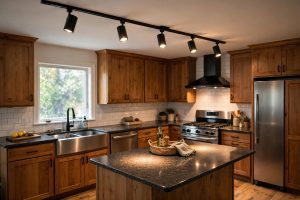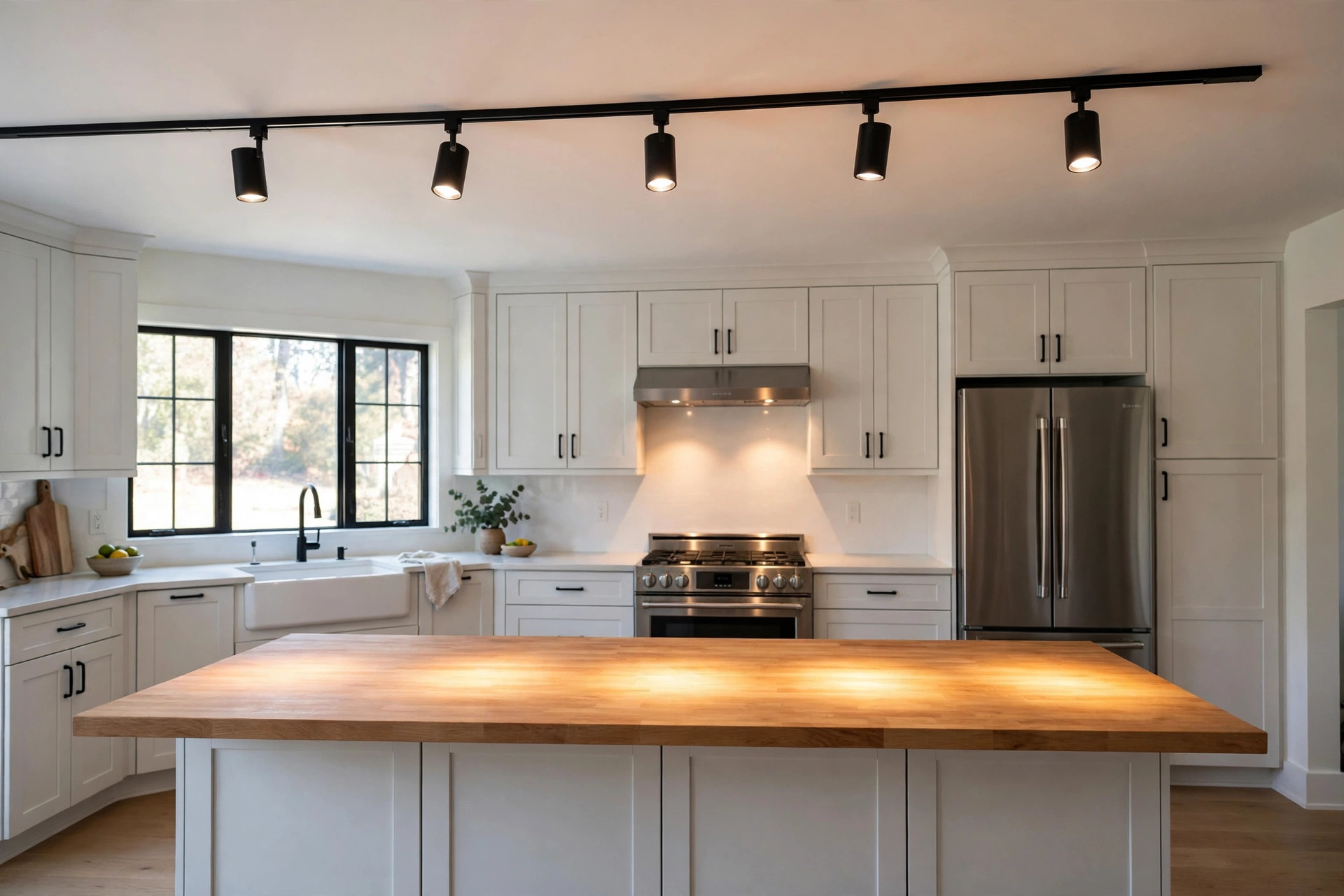

When the evenings grow dark and the work in the kitchen goes on, good light makes all the difference. Many shoppers now type kitchen track lighting deals near me into a search box when they want new fixtures close to home. They want to see the lights in person, compare prices, and bring them home the same day. This guide explains how to find those deals, what to look for in track lighting, and how to choose a set that suits a kitchen.
Why Track Lighting Matters in a Kitchen
A kitchen needs light that is both strong and exact. You need to see the knife and the cutting board. You need to read a recipe. You also need light that feels warm when friends gather at the table. Track lighting does both jobs well. A track is a long rail that holds several lamp heads. Each head can turn and point at a different spot. One head lights the sink. Another lights the stove. A third points at the island where the children do homework.
Track lighting also suits rooms where one ceiling fixture is not enough. A kitchen is often long and narrow, or split into zones for cooking and eating. A track runs the full length of the room and covers each zone. It can replace several small fixtures and give a cleaner look on the ceiling.
Because each head moves on its own, the light can change with the day. Point the heads down for cooking at night. Tilt one toward a plant or a picture on the wall. When you move the furniture, you can re-aim the heads in a few minutes. Few other fixtures offer that much freedom for the price.
What to Look for When You Buy: Kitchen Track Lighting Deals near Me
Track Length and Layout
Measure the space before you shop. A track over an island should run the full length of the counter. A track for a galley kitchen can run the length of the room. Tracks come in common lengths such as two, four, and eight feet. Some can be joined end to end. Lumens shows how tracks and heads are sized for different rooms, and it is worth studying the diagrams before you measure.
Also think about the shape. A straight track is the most common. L-shaped and flexible tracks exist for corners and large rooms. If your kitchen has a beam or a duct in the middle of the ceiling, a flexible track can curve around it.
Number of Heads and Beam Spread
The number of heads sets how many spots you can light. Three heads are enough for a small kitchen. Five or six heads serve a large kitchen with an island and a dining corner. Heads come in narrow spot and wide flood beams. Spot beams work well over a counter. Flood beams fill the room with soft light.
Many kits let you buy extra heads later. That is useful if the kitchen changes. You can add a head instead of buying a whole new fixture. Check the pack before you buy, because the price of the deal often depends on how many heads are in the box.
Bulb Type and Color
Most new track lighting uses LED bulbs. LEDs last for years and use little power. They run cool, which matters in a kitchen that is already warm. When you compare deals, look at the lumens number. Lumens measure brightness. A kitchen task area needs about 50 to 70 lumens per square foot, according to the advice on Energy Star pages about home lighting.
Color temperature also matters. It is measured in kelvin. A bulb at 2700 kelvin gives warm, soft light like an old lamp. A bulb at 3000 to 3500 kelvin gives clean white light that is good for cooking. Most cooks pick 3000 kelvin for the work areas. Dimmable heads let you lower the light for dinner, and Philips explains how dimming and color choice change the feel of a room.
Style and Finish
Track lighting is no longer the rough metal fixture of old. New designs come in brushed nickel, matte black, oil-rubbed bronze, and white. Pick a finish that matches the faucet and the cabinet handles. Lamps Plus lists many finishes side by side, which helps you picture the fixture in your own kitchen.
The shape of the heads also changes the look. Round heads look soft and modern. Rectangular heads look sharp and new. Exposed-bulb heads give a warm, open feel. If you want a track fixture that looks like art, see the options on Lamps Plus before you settle for a plain set.
Types of Kitchen Track Lighting
Track lights come in several styles, and each suits a different ceiling.
H-type track lighting is the most common. The rail has a deep channel, and heads clip in from the sides. Most stores carry H-type parts, so extra heads are easy to find.
J-type track lighting has a slimmer rail and a flat contact. It is common in older homes. If your kitchen already has a J-type rail, you can often keep it and buy new heads. That saves the cost of a full new set.
L-type track lighting uses a single wire in the rail. It is simple and light. It suits small kitchens and rental homes where you do not want a heavy fixture.
Monorail and cable systems bend and curve. They look modern and fit kitchens with odd shapes. They cost more than straight tracks, but they turn the fixture into a design feature.
If you are still learning the basics, a kitchen track lighting buying guide on this site walks through each type in more detail. You may also want to compare track lights with kitchen island pendants and under cabinet strips, since many kitchens use all three together.
How to Find Kitchen Track Lighting Deals Near Me
Start With Local Home Stores
The big home stores in your town are the fastest way to find a deal. The Home Depot and Lowe’s both stock track lighting kits in-store and online. Check the weekly flyer for both stores. Many deals appear as open-box or clearance items at the end of an aisle. Ask a clerk about floor models, which are often marked down.
Local lighting shops are also worth a visit. They sometimes beat the big stores on price for quality brands, and they offer advice that a warehouse store cannot. Bring your measurements and a photo of the kitchen. A good clerk will sketch the layout with you.
Shop Online and Pick Up in Store
Online shopping gives you a wide view of prices, but shipping can be slow. The fix is to shop online and pick up at the store. Both The Home Depot and Lowe’s let you order a kit online and collect it the same day. You can also check the store stock on the product page before you drive over.
Watch the seasonal sales. Track lighting often goes on sale in late winter and during summer clearance events. Black Friday and the January sales are strong times for fixtures. If you can wait a few weeks, you may save a third of the price.
Compare Prices the Right Way
A deal is not only about the sticker price. Check what the box includes. One kit may hold four heads and a rail for eighty dollars. Another may hold three heads and no rail for sixty dollars. Count the total cost to finish the job: the kit, any extra heads, the bulbs if they are not included, and the dimmer switch if you want one.
Read the reviews on sites such as Consumer Reports and The Spruce. They test lights for brightness, color, and build quality. A cheap kit with weak heads is no deal if you have to replace it in a year.
Cost and Price Guide
Track lighting kits vary in price by size and brand. Small kits with three heads cost between forty and ninety dollars. Mid-size kits with four to six heads cost between ninety and two hundred dollars. Large or designer kits with flexible rails cost between two hundred and five hundred dollars.
Extra heads cost between fifteen and forty dollars each. LED bulbs, when not included, cost between five and fifteen dollars each. A dimmer switch costs between twenty and fifty dollars, plus the cost of an electrician if you do not do the wiring yourself.
Installation adds to the total. If the kitchen already has a ceiling box where the track will hang, many handy owners can install the track themselves. If new wiring is needed, an electrician may charge between one hundred fifty and four hundred dollars. Always get a written quote before the work starts.
The U.S. Department of Energy notes that LED fixtures use far less power than old halogen ones, so a new LED track will cut the electric bill over time. That saving is part of the real price of the deal.
Care and Upkeep
Track lighting is easy to keep in good shape. Dust the rail and the heads once a month with a soft cloth. Grease from cooking will build up on fixtures near the stove. Wipe them with a damp cloth and mild soap. Never spray cleaner on a hot bulb.
Check the heads twice a year. Make sure each head is tight on the rail. Re-aim any head that has drifted. Replace a burned-out LED by matching the wattage and color temperature of the old bulb. Write the bulb type on the inside of a cabinet door so you do not forget.
If a head flickers, first check that it is seated on the rail. Flicker often means a loose contact, not a dead bulb. If the whole track flickers, check the dimmer. Not every LED works with every dimmer. The list on Philips shows which bulbs pair well with common dimmers.
Safety Notes
Safety comes first with any electrical fixture. Turn off the power at the breaker before you touch the track or the heads. Test the wires with a simple voltage tester. If you are not sure, call an electrician.
Do not hang track lighting too low. The bottom of the heads should be at least seven feet above the floor. Over an island, the track can hang lower, but keep it clear of tall cooks and raised pot lids. Leave space between heads and wood cabinets so heat can escape.
Use only bulbs made for the fixture. Check the maximum wattage stamped on the head. LED bulbs run cool, but the wrong bulb can still harm a fixture made for low heat. If the fixture feels very hot to the touch, turn it off and check the bulbs.
For homes with children, choose heads with guards or lenses. Bare bulbs at head height can burn a curious hand. Keep pull chains short or out of reach.
FAQ
How many track lights do I need in a kitchen? Count the work zones first. A small kitchen often needs three to four heads. A large kitchen with an island and a table may need six to eight heads. Plan one head per major task area: sink, stove, main counter, and island. You can always add heads later.
Can I install track lighting myself? If a ceiling box already exists where the track will hang, many owners can do the job with basic tools. Turn off the power first. If new wiring is needed, or if the ceiling is old, hire a licensed electrician. The cost is worth the peace of mind.
What is the best color temperature for a kitchen? Most cooks prefer 3000 to 3500 kelvin. This range shows food colors well and feels bright without being harsh. Use 2700 kelvin if you want a warmer, cozier feel. Avoid very cool light above 4000 kelvin in an eating area.
Do track lights use a lot of electricity? Modern LED track lights use very little power. A six-head LED track may use as little power as one old incandescent bulb. The U.S. Department of Energy reports that LEDs cut lighting energy use by a large share compared with older bulbs.
Can track lighting work on a sloped ceiling? Yes, with the right parts. Most track heads can tilt and turn, which helps on a slope. For steep slopes, look for a track made for angled ceilings, or use a short drop stem so the track hangs level. Ask the store clerk to confirm before you buy.
Are smart track lights worth the extra cost? Smart heads let you dim and change color from a phone or a voice speaker. They cost more up front, but they are handy in a kitchen where your hands are often busy. If you already use smart bulbs in the home, a smart track fits in well.
A Short Final Word
Finding kitchen track lighting deals near me is a task that rewards a little homework. Measure the room. Learn the track types. Visit the local stores, check the weekly flyers, and compare the full cost of each kit. Pick LED heads with the right color, mount them at the right height, and wire them with care. Do that, and your kitchen will have bright, honest light for years to come.
References
Consumer Reports. (n.d.). Product reviews and ratings. https://www.consumerreports.org ENERGY STAR. (n.d.). Energy efficient products. https://www.energystar.gov Lamps Plus. (n.d.). Lighting and home decor. https://www.lampsplus.com Lowe’s. (n.d.). Home improvement products. https://www.lowes.com Lumens. (n.d.). Lighting and ceiling fans. https://www.lumens.com Philips. (n.d.). Lighting products. https://www.philips.com The Home Depot. (n.d.). Home improvement products. https://www.homedepot.com The Spruce. (n.d.). Home and garden advice. https://www.thespruce.com U.S. Department of Energy. (n.d.). Energy efficiency and renewable energy. https://www.energy.gov
Was this guide helpful?

About Lisa Anderson
The My Garden US editorial team writes practical, in-depth home and garden guides for American homeowners — tested advice, no fluff.
You May Also Like

Indoor Grow Lights: Where to Buy Them in the USA
August 7, 2026 0 views
Indoor Wall Sconces Deals Near Me: How to Find Good Value Close to Home
April 17, 2026 0 views
Indoor Wall Sconces for Florida Homes USA: A Practical Guide
May 30, 2026 0 views