
Kitchens do hard work. Food gets washed, cut, cooked, and served there. A single ceiling light often leaves dark spots on the counters. Track lighting fixes that problem in a simple way. The lights sit on one rail, and each head points where you need it. This kitchen track lighting buying guide usa readers can use covers the parts, the types, the costs, and the safety rules. Read it before you shop, and you will buy once and buy right.
Why Track Lighting Suits the Kitchen
Kitchens change over time. Cabinets move. Islands get added. A desk corner becomes a breakfast nook. Fixed lights cannot follow these changes, but track lights can. You loosen a head, slide it along the rail, and aim it at the new work zone. The room stays bright without a full rewire.
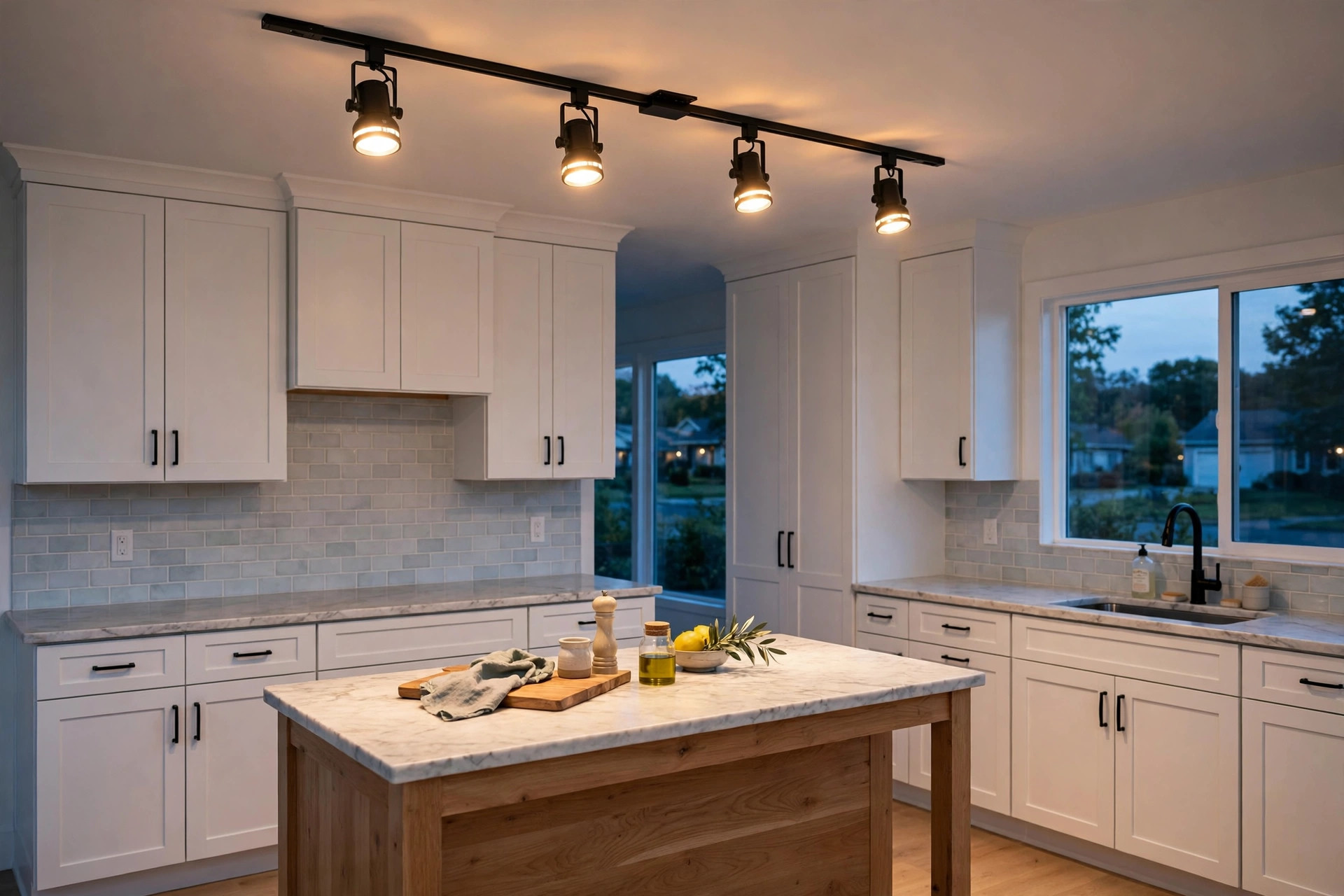
Track lighting also layers light well. One kitchen needs three kinds of light. Ambient light fills the room. Task light falls on the cutting board and the stove. Accent light shows off the backsplash tile or the glass cabinet doors. A single track can do all three at once if the heads aim in different directions.
Renters like track systems too. Many kits screw into the same electrical box that held the old ceiling fixture. When the lease ends, the system comes down with a few screws. For owners, track lighting raises the room’s appeal at a low cost.
This guide is written for American homes and American stores. Sizes, voltages, and wiring rules here follow US standards. If you live outside the United States, check your local codes before you follow these steps.
What to Look for When You Choose: Kitchen Track Lighting Buying Guide Usa
Start with the job, not the fixture. Stand in your kitchen at night and watch where the shadows fall. Note the dark strip along the counter, the dim sink, the gloomy corner by the pantry. Your track should serve those spots first and the rest of the room second.
Track Types and Rail Systems
Three track standards rule the US market. H-type is the most common and has two hot wires in the rail. J-type uses one hot wire with a different clip shape. L-type has a slim profile and its own clip shape. The letters matter because heads from one type do not fit the other two. When you buy, make sure every head and every rail carry the same letter. If you plan to expand later, buy from a large brand so matching heads stay on store shelves.
Track shape comes next. Straight rails fit most kitchens and cost the least. Curved or flexible rails bend around corners and suit L-shaped counters. Monorail systems hang from short stems and curve by hand, which gives a modern look. Each shape needs its own connectors, so choose the shape before you buy parts.
Track length should match the work zone. Measure the counter run or the island length, then add about one foot on each side. A four-foot rail serves most galley runs. Six-foot and eight-foot rails serve long islands and open kitchens. Rails can join end to end with couplers if one length is too short.
Heads, Sockets, and Bulbs
The head is the part you see, and it decides the light’s spread. Spot heads throw a tight beam good for task work. Flood heads spread a wide wash good for general fill. Gimbal heads tilt and turn, which makes aiming easy. Cylinder heads hide the bulb and suit clean, modern rooms.
Sockets follow the head. GU10 bases take small twist-in bulbs. E26 bases take standard screw bulbs. MR16 bases take low-voltage pins and often need a transformer in the rail. Check the bulb type printed on the head before you buy spares, because the wrong base will not fit.
Bulb choice shapes the room’s mood and the power bill. LED bulbs win in almost every kitchen. They use far less power than halogen, run cool to the touch, and last for years. The U.S. Department of Energy notes that good LED lamps cut lighting energy use sharply compared with old bulbs. Look for the ENERGY STAR mark when you shop; the Energy Star label points to models that passed independent tests for brightness and color.
Color temperature matters as much as brightness. A warm 2700K bulb feels like candlelight and suits dining areas. A neutral 3500K bulb feels like morning light and suits most kitchens. A cool 4000K to 5000K bulb feels like noon sun and suits heavy prep zones. Many LED track bulbs now let you switch between temperatures with a small dial on the bulb.
Brightness, Spacing, and Aiming
Brightness is measured in lumens, not watts. Old shoppers learned watts, but LEDs give far more light per watt. Aim for about 300 to 400 lumens per track head for task work over counters. A kitchen that is twelve by fifteen feet needs roughly 3,000 to 4,000 total lumens from all its lights combined, including under-cabinet strips.
Head spacing follows a simple rule. Place heads about one foot apart for every foot the track hangs above the work surface. If the rail sits eight feet high over a counter, space the heads about two feet apart. This rule prevents bright stripes and dark gaps on the countertop.
Aiming takes a few minutes but pays off for years. Point each head about thirty degrees down from straight, aimed at the front edge of the counter rather than the back wall. This angle lights your hands, not the splash of tile behind the sink. Stand at the counter, ask a helper to adjust, and check that your own shadow does not cover the cutting board.
Types of Kitchen Track Lighting
Standard line-voltage track runs on normal household power. It is the most common choice in American kitchens because it connects to the existing ceiling box with simple wiring. Kits from Home Depot and Lowe’s usually include the rail, heads, and mounting hardware in one box.
Low-voltage monorail track runs on twelve volts through a transformer. The rail is thinner and the heads are smaller, which suits modern kitchens with clean lines. The transformer adds cost, and dimming needs a matching low-voltage dimmer, so read the spec sheet twice.
LED track lighting for kitchen islands has become the top seller in recent years. In these kits the LEDs sit inside the heads with no replaceable bulb. The whole head gets replaced when it fails, which may take ten to fifteen years. Built-in LED kits cost more up front but remove the bulb-buying chore for a long time.
Kitchen track lighting for small kitchens often uses a short two-head or three-head kit. A tiny rail over the sink or the main counter adds task light without crowding the ceiling. Choose slim heads in white or brushed nickel so the fixture blends into a light ceiling.
For contrast, some cooks pair track lights with a pendant over the island. The track handles the counters while the pendant marks the seating zone. Our guide to dining room chandeliers covers statement fixtures for nearby dining spaces if your kitchen opens to one.
Cost and Price
A basic three-head track kit costs between 50 and 120 dollars at large US retailers. Four-head and five-head kits run 100 to 250 dollars. Designer monorail systems with slim heads can reach 400 to 800 dollars for a full kitchen run. Bulbs add 8 to 20 dollars each if the kit does not include them.
Installation cost varies by wiring. If a ceiling box already exists, a careful homeowner can mount a kit in an afternoon. If new wiring must run through the ceiling, an electrician in most US markets charges 150 to 400 dollars per fixture run. Permits are rarely needed for a fixture swap, but new circuits often need one. Call your city office before you cut drywall.
Running costs stay low with LEDs. A six-head LED track drawing sixty watts total costs about seven dollars a year if it burns three hours a day at average US power rates. The same look in old halogen would cost five times more and would heat the kitchen like a toaster. A dimmer switch adds twenty to forty dollars but saves more energy and sets the mood for dinner.
Watch for hidden costs. Some designer rails use heads that only fit that brand, which locks you into pricey replacements. Check that extra heads, couplers, and end caps are sold separately and are in stock. A cheap kit with rare parts costs more in the long run than a mid-price kit from a brand stocked by Lamps Plus.
Care and Upkeep
Track lighting asks for little care. Dust the heads and the rail every two or three months with a soft cloth. Kitchen grease rides on steam and settles on warm fixtures, so wipe the heads with a damp cloth and mild soap once a season. Let the bulbs cool before you touch them.
Check the aim once a year. Vibration from doors and daily bumps can shift a head by a few degrees. Stand at each work zone and confirm the light still falls on the counter. Retighten the locking screws gently; over-tightening cracks plastic heads.
Replace bulbs in pairs when color match matters. Two bulbs of the same model can differ slightly in color after years of use. Buying a fresh set for the whole rail keeps the light even.
Inspect the wiring every few years. Turn off the breaker, remove one head, and look for scorched plastic or loose wire nuts. If the track feels hot to the touch or flickers when a head moves, call an electrician. Heat and flicker signal a loose connection, which is a fire risk.
Safety in the Kitchen
Kitchens mix water, heat, and electricity, so safety rules matter. Track lighting over kitchen sinks needs a damp-location rating if steam rises directly onto it. The rating is printed on the box; look for “suitable for damp locations.” Standard dry-location track belongs over dry counters, not the steamy zone above the range.
Keep a safe gap from cooking heat. Do not aim heads straight down at a gas burner, and keep the rail at least a few feet from the range hood’s hot air path. Heat shortens bulb life and can warp plastic parts. If the ceiling is low, choose heads rated for the heat they will face.
Dimmer switches need a match. LED track lights need an LED-rated dimmer, not the old dimmer built for incandescent bulbs. The wrong dimmer causes buzzing, flicker, and early failure. Bulb makers like Philips publish dimmer compatibility lists; check the model before you wire.
Turn off the breaker before any work. This rule covers mounting, aiming, and bulb changes on line-voltage systems. Test that the power is truly off with a non-contact tester. If you are unsure about any wire, stop and call a licensed electrician. A short call costs far less than a shock or a fire.
For mood lighting beyond the kitchen, indoor wall sconces add warm accent light in halls and living rooms without new ceiling wiring.
Frequently Asked Questions
How many track heads do I need for a kitchen?
Count one head per two to three feet of counter you want to light. A ten-foot counter run needs four to five heads. An island that seats four needs three to four heads aimed down at the top. Add one extra head for the sink or the stove if those zones sit apart from the counters.
Can track lighting replace recessed lights in a kitchen?
Yes, in most cases. Track lighting gives the same task light and adds easy aiming, which recessed cans lack. The trade is looks: some buyers prefer the clean ceiling of recessed cans. A hybrid plan works well, with cans for general fill and a short track over the main prep zone.
Is track lighting hard to install myself?
A basic kit that uses an existing ceiling box is a fair do-it-yourself job for a careful homeowner. The steps are simple: kill the power, mount the rail bracket, connect three wires, and snap in the heads. New wiring through walls or ceilings belongs to a licensed electrician in every US state.
What color temperature is best for kitchen track lighting?
Most cooks pick 3000K to 3500K for the main kitchen. This range shows food colors truly and feels neither yellow nor blue. Use 2700K over a breakfast nook for a warm morning feel, and 4000K over a serious prep zone where true color judgment matters most.
Do LED track lights work with old dimmer switches?
Often they do not. Old dimmers were built for high-wattage incandescent bulbs and may buzz or flicker with LEDs. Buy an LED-rated dimmer from a brand your bulb maker lists as compatible. The swap takes minutes and fixes most flicker complaints.
How long does a kitchen track lighting system last?
The rail and the wiring can last thirty years or more. Replaceable-bulb heads last as long as you can buy bulbs for them. Built-in LED heads last ten to fifteen years of normal kitchen use. Specialty track head styles change over time, so browse current options at Lumens before you commit to a rare design.
A Short Final Word
Good kitchen light is not about the brightest fixture. It is about light that falls where your hands work. Measure your counters, match the track type to your heads, choose LED bulbs in a color you like, and aim each head with care. The result is a kitchen that feels larger, safer, and easier to cook in. For more lighting ideas beyond the kitchen, our guide to landscape spot lights covers outdoor options, and The Spruce offers room-by-room lighting plans worth a look.
References
ENERGY STAR. (n.d.). Energy efficient products. https://www.energystar.gov Lamps Plus. (n.d.). Lighting and home decor. https://www.lampsplus.com Lowe’s. (n.d.). Home improvement products. https://www.lowes.com Lumens. (n.d.). Lighting and ceiling fans. https://www.lumens.com Philips. (n.d.). Lighting products. https://www.philips.com The Home Depot. (n.d.). Home improvement products. https://www.homedepot.com The Spruce. (n.d.). Home and garden advice. https://www.thespruce.com U.S. Department of Energy. (n.d.). Energy efficiency and renewable energy. https://www.energy.gov
Was this guide helpful?

About Sarah Mitchell
The My Garden US editorial team writes practical, in-depth home and garden guides for American homeowners — tested advice, no fluff.
You May Also Like

LED Recessed Lights Texas Homes USA: A Plain Guide
April 21, 2026 0 views
Indoor Grow Lights American Homes Guide
April 27, 2026 0 views
Reading Floor Lamps for California Homes in the USA: A Buyer’s Guide
March 8, 2026 0 views